
Mosquitoes are universal pests. Anyone who does anything outside has to contend with THEM. Not only are they annoying, but their bites cause itchy welts, and they can carry disease. Plain and simple, mosquitoes suck. Humankind has been dealing with mosquitoes for a very long time. Historians have found many substances and techniques used by people over the millennia.

While they may have worked well, today we don’t want to cover ourselves in mud or tie a string of leaves across our body, so we are more dependent on chemical repellents.
Repelling mosquitoes is a practical solution to keeping yourself from getting bit, but it would be nice to get rid of them for good.
To do that we need to trap them. Not only is that mosquito gone, but so are hundreds of possible offspring.
In this article, we are going to look at several different homemade mosquito traps and determine which one works best.
To research this article, My wife and I spent a weekend building and testing each trap in an area that we know holds a lot of mosquitoes and other flying insects.
Table of Contents
The Anatomy of a Homemade Mosquito Trap…
The quickest mosquito trap is to add something sugary (table sugar, banana peels, honey) along with some water and maybe some vinegar in a narrow container like a bottle. The insects will have a hard time getting out once they get in.
Some General Considerations
When it comes to trapping mosquitoes, there are a few things about their behavior that needs to be considered when you are determining the materials to you or the location to put the traps.
The first is that mosquitoes do not like the hot sun. Their tiny bodies can quickly dehydrate, so they prefer to stay in the cooler, shaded areas until dusk. Secondly, mosquitoes generally fly between four to six feet above the ground.
While they will go both below and above, this is the most generalized flight path. Third is that mosquitoes are more attracted to darker colors. For this reason, I chose to use green soda bottles for our trap test.
Helping keep the traps in the most likely area that mosquitoes will be, and making them more attractive to the mosquitoes, should help increase their effectiveness.
Homemade Traps That DO Work
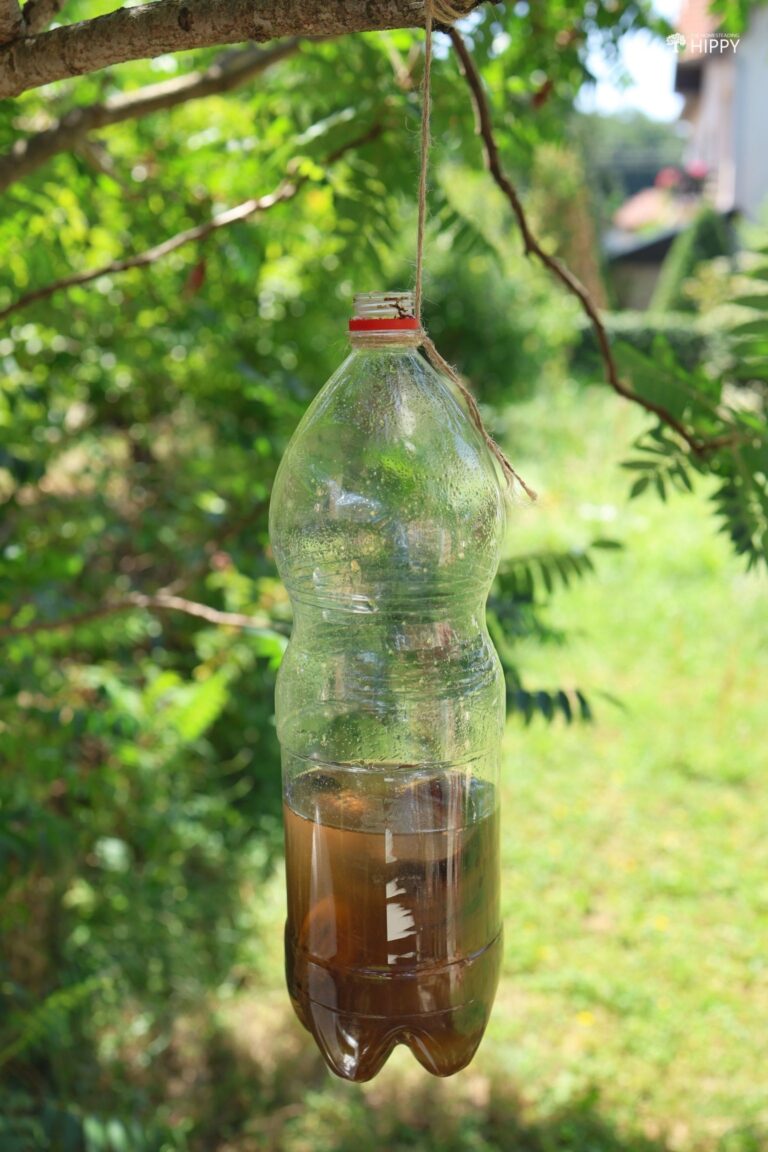
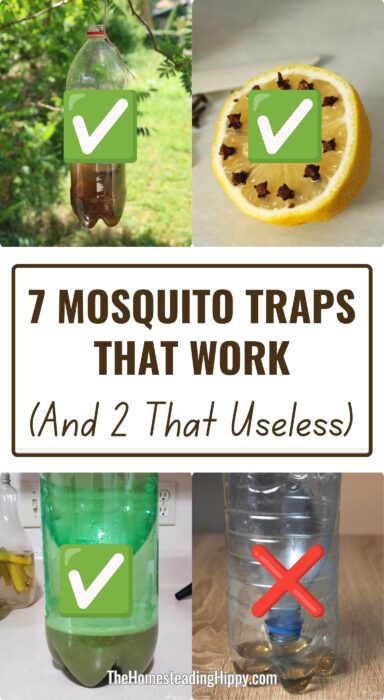
Trap #1 – Amish Flying Insect Trap
The first trap we decided to try was the Amish Trap. We found a few different variations online, but they all had the same ingredients, just the container, and location to place them changed.
This trap is supposed to give off a scent that insects are attracted to, and once they fly in, they land in the fluid and drown. It is supposed to be hung in a tree, or place on an elevated area to help get the scent into the air.
To make it, you will need:
- 1 cup of sugar
- 1 cup of vinegar
- 1 or 2 banana peels
- 2 cups of water
- 1 2-liter soda bottle
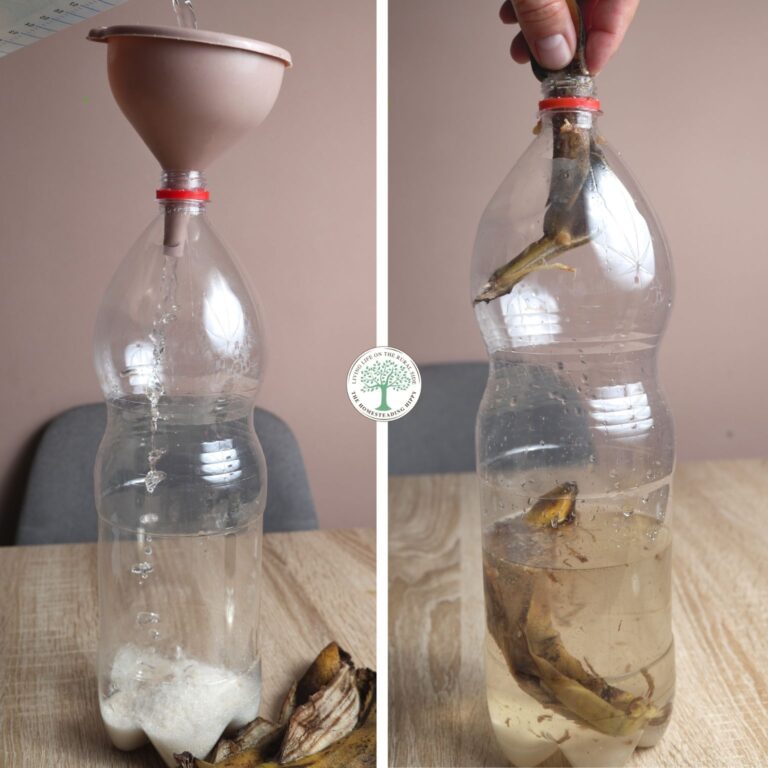
For a container, we used an empty 2-liter bottle since that was the most recommended, and it was being used in a majority of the traps. We didn’t cut the bottle, just tied a string around the neck to hang it from a tree.
Once we had everything mixed, we gave it a good shake, and then used the handle of a wooden spoon to make sure the banana peels were submerged in the liquid.
We then took it out and hung it from a tree branch. The trap was a bit heavy, and we had to make sure to find a sturdy branch to hold it up. The first couple we tried, the trap pulled the branch all the way to the ground. We let it sit for 24 hours to judge its effectiveness.
Results
This trap was surprisingly effective. There were so many bugs in the trap, I couldn’t count them individually. I would estimate 40 to 60 insects, which included flys, mosquitos, at least two yellow jackets, and an assortment of others. I could see this trap making a difference in the number of flying insects in an outdoor area.
Trap #2- Brown Sugar and Yeast Bottle Trap
The next trap that was tested was the Brown Sugar & Yeast Bottle Trap. This trap consisted of a two-liter bottle with the top 1/3rd cut and inverted back into the bottle.
By putting the top of the bottle down into the bottom, it creates a “funnel” with a small opening at the bottom.
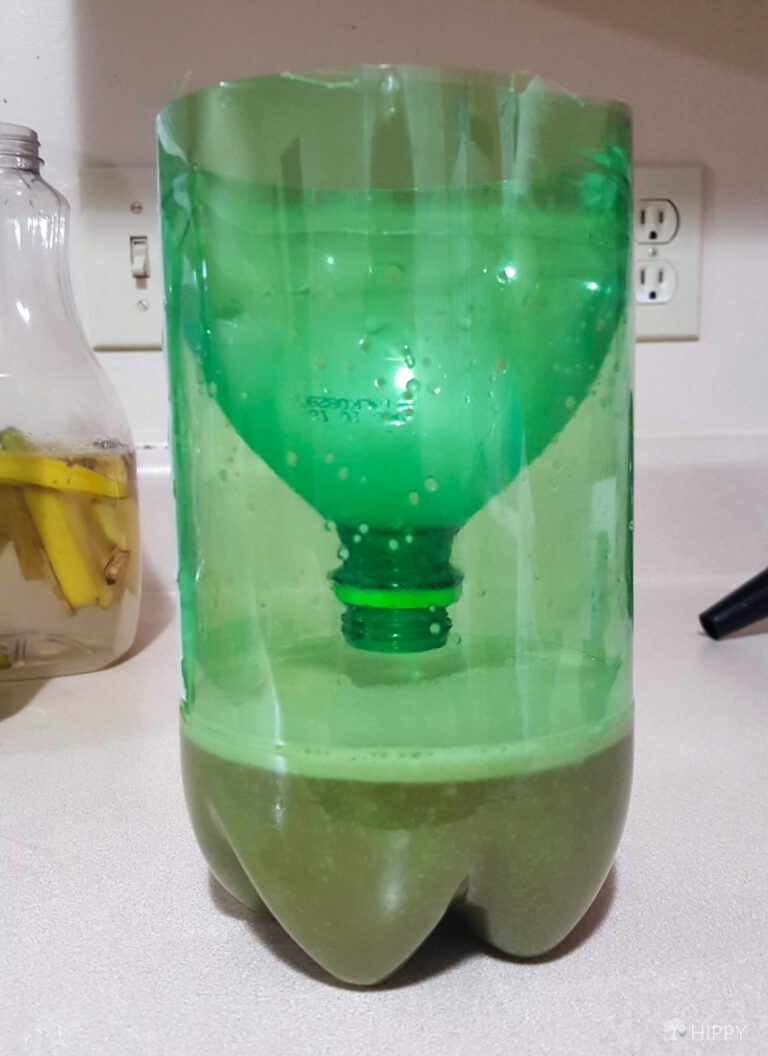
To make this trap, you will need:
- 1 cup of brown sugar
- 1 packet (or 1 tablespoon) of dry yeast
- 4 cups of warm water
- 1 2-liter soda bottle
Mix and stir until well combined and then pour into the bottle.
The yeast is supposed to react with the water and sugar and produce carbon dioxide, which is the gas we breathe out, and what the mosquitos are attracted to us for.
We placed the trap in a high mosquito trap and allowed it to sit for 24 hours to judge its effectiveness.
There are some advantages to using this style of trap. It’s not only inexpensive to make but it does not use dangerous chemicals, as is the case with the first trap. No maintenance is required, either.
Results
After 24 hours out catching bugs, this trap had six mosquitos in it. Not an impressive amount, but better than nothing. You would have to have a lot of these to make any difference.
There are ways of improving this design, and people seem to have mixed results. This trap here seems to be one of the best ones but does require more materials and time:
Trap #3 – Dish Soap & Light Trap
This trap has a different design than the first three. It uses a container filled with water and dish soap, with a light to attract the mosquitoes.
Mosquitoes can stand on water, so landing in water is no problem for them. However, the addition of dish soap removes the surface tension of the water, which is what allows the mosquito to stand on it.
Therefore, when they come in and land on the water, expecting to stand on top of it, they drown.
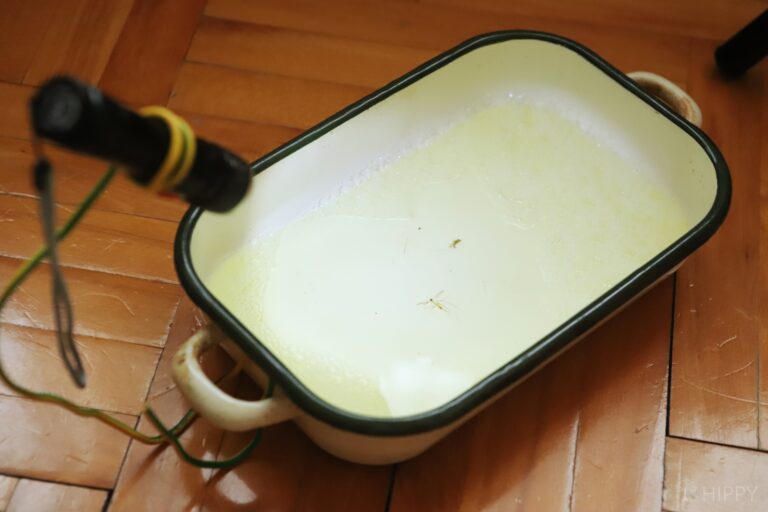
To make this trap, you will need:
- A container (tall and slender work best)
- Water
- 1 teaspoon of regular dish soap
- 1 light source
Fill your container with approximately 1/3 full of water. Add in the dish soap and stir until combined. You will have bubbles, but as long as it’s minimal, it will be fine.
Next, place the container in our chosen area, and suspend the light source over the container.
Finding a suitable place, and setting it up correctly can be more complicated than it sounds.
The way we managed to get it to work best, was we attached the container to a tree (duct tape), and then hung a small LED flashlight over the top of it, leaving about 3 inches of clearance from the top of the container.
The trap was placed in a highly active mosquito area and allowed to sit for 24 hours to judge its effectiveness.
Results
This trap after 24 hours had seven mosquitoes and numerous other small insects. I had expected this trap to perform better with the light source, but it proved to be about average.
Considering the extra difficulty in setting this one up and finding a good place to position it, this trap seems more trouble than it’s worth.
Trap #4 – Vinegar & Dish Soap Bottle Trap
The next trap we tried was another bottle trap. The Vinegar & Dish Soap Bottle trap uses the same design as the Vinegar and Baking Soda and the Brown Sugar & Yeast traps.
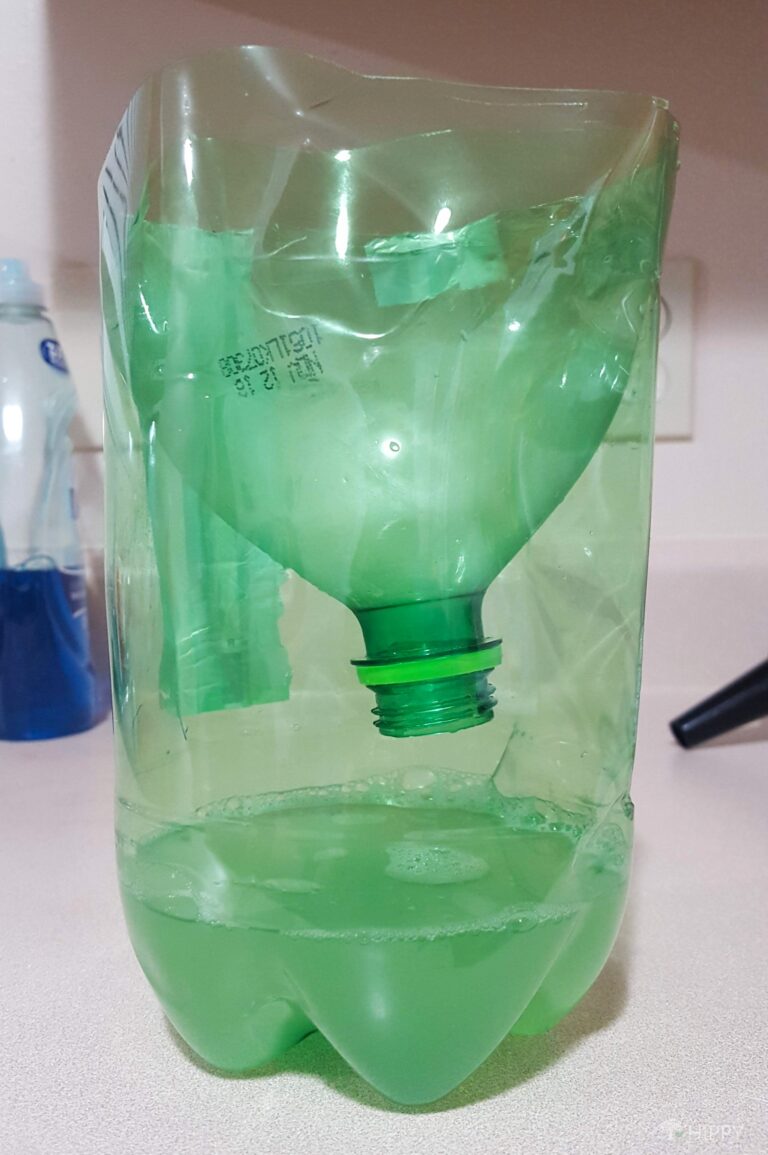
To make this trap, you will need:
• 2-liter soda bottle
• 3 cups of apple cider vinegar
• 1 tablespoon of regular dish soap
Cut the top of the bottle off and invert it, placing it down inside the bottom of the bottle. Add the vinegar and dish soap and mix well. Place in your designated area.
As with the other, the trap was placed in a highly active mosquito area and allowed to sit for 24 hours to judge its effectiveness.
Results
After 24 hours this trap had zero mosquitoes. Matter of fact, there was zero anything in the trap. I am not sure if the apple cider vinegar was not enough to lure on its own, it if the mosquitoes just didn’t care, but this trap was utterly ineffective.
Trap #5 – Fan Trap
The Fan Trap is a much different design than the other traps listed. This trap uses a fan and mosquito netting to catch mosquitos.
The fan sucks up the mosquito and blows them into a piece of mosquito netting. Once there, the constant wind will dehydrate and kill the mosquito.
To make this trap, you will need:
- A fan
- Mosquito Netting
- Cardboard
- Staple gun
- String
Place the fan face up on the ground. Cut cardboard the length of the fan, and about 8 to 10 inches wide. Build a frame out of the cardboard strips, placing one on all four sides of the fan.
Stretch the mosquito netting (you can use “Tulle,” which can be found in most fabric sections if you can’t find mosquito netting) over the frame and cut to fit, leaving about one-inch excess.
Fold the netting over the frame and staple it in place. Run a string across the sides, and the top & bottom, and tie in the back. The strings will hold your frame against the fan, but allow easy removal for cleaning.
We placed the fan trap in out high mosquito area and left it out there running for a full 24 hours to judge its effectiveness.
Results
The fan trap caught what appeared to be a significant amount of mosquitos and other insects. It was impossible to count due to the individual insects being dried up and in small pieces.
Trap #6 – Bat Trap
Attracting bats to your property is an indirect – albeit effective – way to get rid of these pests for good. To do this, you will need to put up some bat houses. Bats are communal and drawn to these houses, and will easily help to reduce your mosquito population.
If you don’t want a ton of bats flying around near your home, you may want to consider putting these traps at the very edge of your property.
Trap #7 – Citrus Traps
Another easy – and better-smelling – way to get rid of mosquitoes is to use fruit slices. Simply cut a lime or lemon in half and stick a bunch of whole cloves inside the fruit.
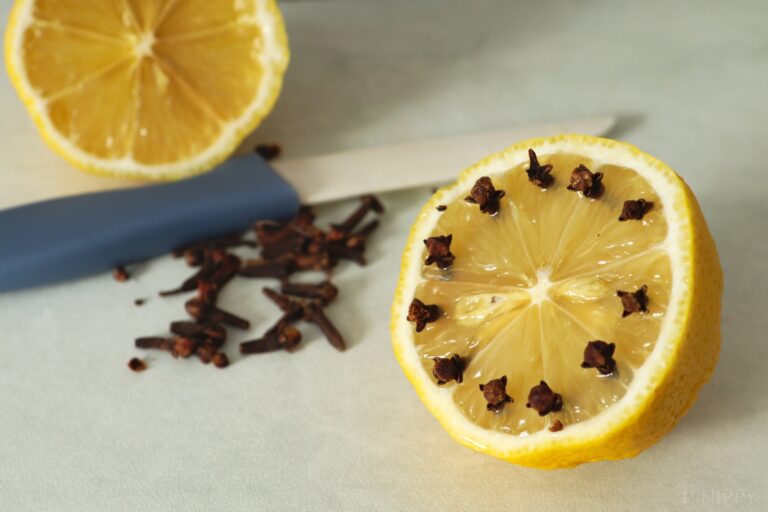
Set each slice a few feet from the outdoor area where mosquitoes tend to congregate. Chances are, the mosquitoes will stay far away.
Other Ways to Get Rid of Them in the House
There are a few other ways you can eliminate mosquitoes in your house.
First, if you live in an area where there are a lot of mosquitoes – and, in particular, a lot of mosquitoes with the potential to carry dangerous illnesses – you may want to use a mosquito net for children younger than two months of age.
When you’re outside, wear clothing from head to toe, and try not to wear black or other dark colors. These will keep your body hot, and body heat attracts mosquitoes.
Try not to wear perfumes or other scented products, either. Instead, eat more garlic – I know, it doesn’t sound pleasant! But mosquitoes hate the smell of it.
Around the house, take the time to use weather stripping to seal up door gaps. This will protect your home from potential intruders like mosquitoes – as well as other pests! You can use screen patches or silicone caulk to seal up entry points.
Make sure your screens are free from holes and that you use fans instead of air conditioning – the fans can break up carbon dioxide in the air and confuse mosquitoes in their flight pattern.
Get rid of any and all standing water near your home. As I mentioned before, mosquitoes are fond of laying their eggs in warm, shallow water.
If you have any areas that tend to attract pools of water after a heavy rainstorm, make sure you fill them in so mosquitoes aren’t attracted. The same goes for pools, birdbaths, and other stagnant bodies of water.
Adding certain types of plants can help deter mosquitoes, too. While some plants – particularly dense vegetation that is tall and unruly – can actually attract mosquitoes, growing plants like chives, catnip, marigold, and citronella can keep pests at bay.
Finally, remember that you can use some natural compounds to help keep mosquitoes away from your living space. Many of these can be disturbed near doorways, or can even be burned in diffusers.
Options include castor oil, lemongrass oil, citronella oil, cinnamon oil, and peppermint oil. I don’t recommend using them directly on your skin, as they can be irritating.
Traps that DON’T Work
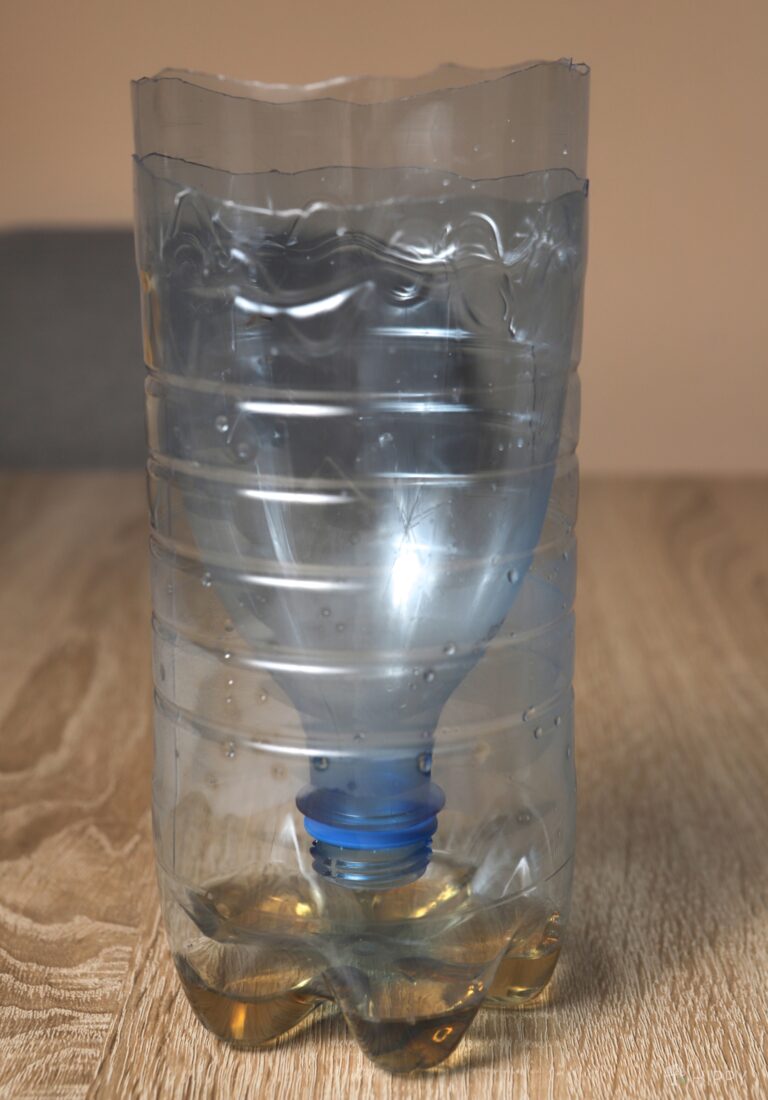
❌ Beer Trap
Can you really trap mosquitoes with just beer? If you were looking for an excuse to by more, I hate to burst your bubble. This is just a myth, and I’ve yet to see anyone who says it works.
On the other, there is some research that says that beer drinkers are actually more attractive to mosquitoes. There’s a Japanese study, and another one that’s more recent that was done on some music festival attendees.
On the other hand, there is some evidence that beer works against snails and slugs – when used as a pitfall trap.
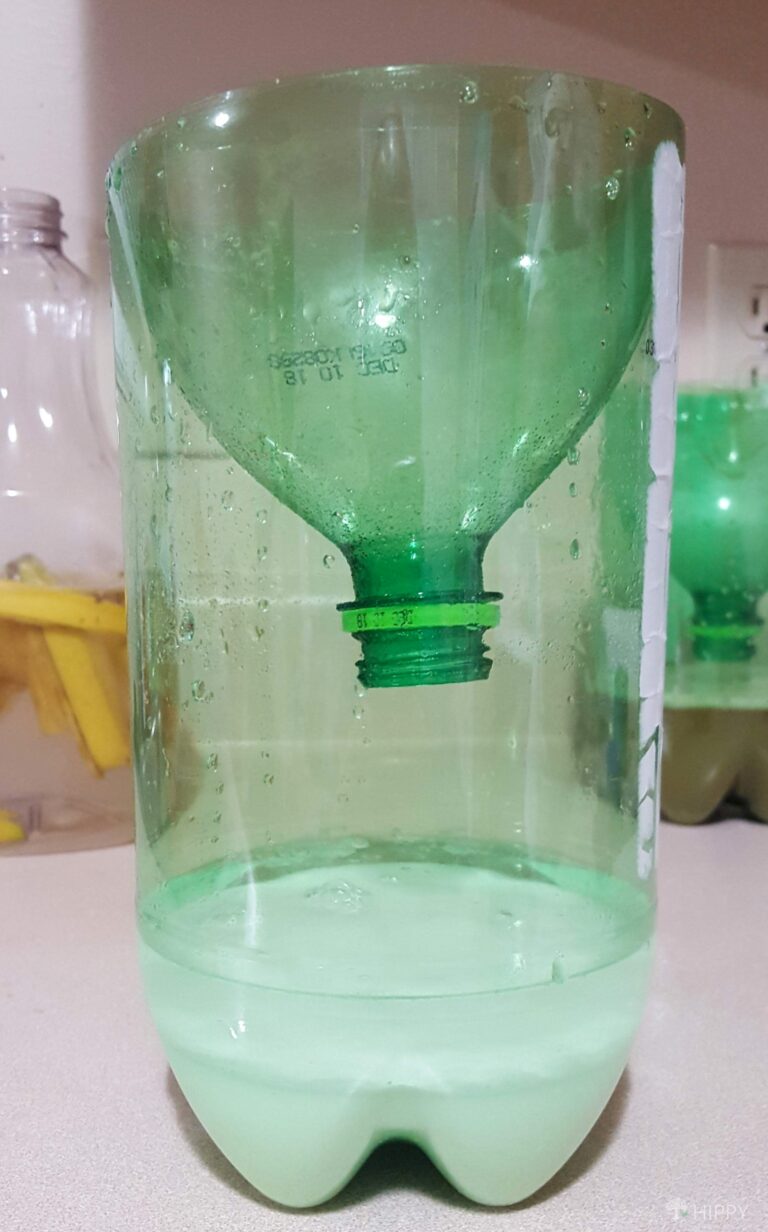
❌ Vinegar and Baking Soda Trap
Another one I tried myself was the Vinegar and Baking Soda Bottle Trap. This one is made the same way as the Brown Sugar & Yeast Bottle, by cutting the top off a 2-liter bottle and inverting it into the bottom to create a funnel.
It also works the same in that the vinegar and baking soda react to produce carbon dioxide to attract the mosquitoes.
If you donÄt believe me and want to waste time making it yourself, you will need:
- 1 cup of baking soda
- 4 cups of apple cider vinegar
- one 2-liter soda bottle
Place the baking soda into the bottom of the bottle. Place the container into a position where you want it to stay, and then add the vinegar.
Same as the other, this trap was placed in a highly active mosquito area and allowed to sit for 24 hours to judge its effectiveness.
Results
As expected when we added the vinegar we got a lot of bubbling and fizzing, but that was pretty much all of the action this trap had. After 24 hours there was 1 small fruit fly, but no mosquitoes. This trap was utterly ineffective.
Commercially Available Traps
When you visit a link in this article that takes you to a different website where you can purchase something, I may earn a commission. Read my full disclosure for more details.
There are some ready-made available traps on the market. Two popular options are the DynaTrap DT2030SR, which uses a UV LED light and a fan to trap the insects, and the Catchmaster 75M, which uses baited glue boards to attract and catch the insects.
While commercial traps are very effective, they require a purchase and a somewhat expensive. Homemade traps can be made as needed, and use inexpensive ingredients you probably have on hand.
Another thing to keep in mind is that commercial mosquito traps often contain chemicals. Some are naturally-occurring and can be found in plants (like permethrin, which is found in chrysanthemum flowers) but others aren’t as benign.
If you don’t like the idea of using chemical-based insecticides at home, you may want to steer clear of some of these commercial alternatives.


Steven has made a career in law enforcement, fire and rescue, but also as a professional writer. He writes a lot about preparedness, self-reliance, and what to do in an emergency (among other things). Learn more about the team.
the first trap sound like the bes. If you do not have a suitable tree use a shepherds hook. They are very sturdy.
Can the banana peels be substituted with anything?
How did the Amish trap affect pollinators, especially honey bees? I don’t want to contribute to the elimination of pollinators. Except, maybe, wasps!
How low to the ground did you leave your trap and where did you hang it? Closer to the trunk of the tree or further away? Since I do not have a colored soda bottle, would you recommend using food coloring in the liquid mixture?
It was suggested four to six feet high…so about head high to you probably would be suitable. I don’t know if food coloring would alter any of the solution’s effectiveness or not. You could test one out and make another but cover it with a scrap of an black, blue, deep red etc tshirt or fabric. something dark. Wrap it around and duct tape to top edge of trap and around bottom where needed to keep it place. Your question made me think about this for mine when I make it soon. Thanks!
Or buy a big bottle of ginger ale for 99 cents!
I tried the yeast and brown sugar one. Didn’t work, Zero bugs, not even a gnat. I’m going to try the Amish one. Sounds like a winner to me.
The one major difference of the Amish trap from all the other traps was banana peels. Come mosquito season I’d be tempted to try all of the above Plus banana peels and see if results improve (like, could I fashion a fan with a banana peel in the center to draw mosquitoes To the trap instead of passively collecting?)
I think the problem with some of these traps is that they will kill indiscriminately – a lot of beneficial insects will also get trapped.
Mozzies are attracted to CO2 so sticking to CO2 traps is going to be more environmentally beneficial.
For trap #3 the difference is supposed to be heat, since insects are attracted to it. This type of trap would be better indoors as homes usually have a/c so the insects would go to the heated area. Not as good outdoors since the heat from the source you are using disperses since there is essentially almost infinite area where the heat from the source can go. I’ve used this type of trap on fleas so I know.
Does anyone know if the Amish trap attracts Japanese beetles?
Made these for 2 yrs caught more flies than mosquitoes. I use Pinesol to rid my patios of flies and I spray the old brown listerine from a spray bottle anytime I go outside on my patio. That and mosquito coils make all the difference.
I’m using the apple cider vinegar + dish soap trap in my kitchen right now: it doesn’t work for mosquitoes at all, but it sure does work for those tiny gnat-like fruit flies that you bring into your home when you buy ripe fruit.
I did it on a much smaller scale: I took a clear glass soda bottle (275 ml) with a small opening, filled it with a mere inch or 2 of apple cider vinegar and a small squirt of dish soap, shake it up, then let it sit out. The bubbles subside and 24 hours later, there’s 2 dozen bloated fruit flies floating in it.
can you tell me where you spray the pine sol/listerine? is it just in the air, on furniture or? THANK YOU
I came here looking for a humane (vegan) trap, a trap which doesn’t kill mosquitos but just catches them without harming them in any way from the spaces I live in so I can release them somewhere in the wild where they won’t bother me anymore.
Can you add some ideas please?
Thanks!
Joey
Hi Joey,
Sorry for the late reply. I don’t think you can make any humane traps at home. I did find this one which has a collection cup to catch the insects without harming them: https://www.johnwhock.com/products/mosquito-sandfly-traps/cdc-miniature-light-trap/
pardon my ignorance but I don’t understand: vinegar + sugar + banana peel + water; what’s the “danger chemicals”?
Hey,
I’m not sure I follow the first part of your question. Are you skeptical that the mix works to deter mosquitoes?
As for the chemicals, the author was referring to the store-bought stuff that’s not safe to inhale. Typically when you use commercial sprays, you have to first leave the room empty for 15 mins to let the substance do its work, then aerate it – to avoid inhaling those substances.
I made the Amish traps earlier this year. I had been researching mosquito repellants since my wife had been ravaged with bites over the years. So I came across this site, made the traps out of smaller bottles (we hardly ever have big soda ones as we don’t drink that stuff) while cutting the amount in 3rds. As I didn’t have banana peels handy, the orange peels were used
After a week with nothing in the traps during a hot weather spell, the bottles starting filling up with mosquitos. I find the Amish trap highly effective as my wife has been getting fewer and fewer bites.
Have restarted the new traps, this time using banana peels. Let’s see how they do.
Btw, over here in Southern Cal, the ankle biters like to hang low to the ground, so the bottles are placed on the steps below both the front and the back doors.