
For many homesteaders, the dream is not just to have a homestead of your own but to have one that is completely self-sufficient: totally off-grid! I know it sounds like an impossibility in our increasingly connected world, but I can assure you it is doable.
Better yet, you can do it without giving up that most essential modern amenity: electricity. Whether you want to run a few crucial appliances and tools or keep your house powered up more or less like you always have, you’ve got options.
And even if you don’t care about cutting the cord entirely, it’s a good idea to have your own power generation capability in case of disaster. Whatever camp you fall into, keep reading, and I’ll tell you about 8 proven and reliable ways to make your own power below.
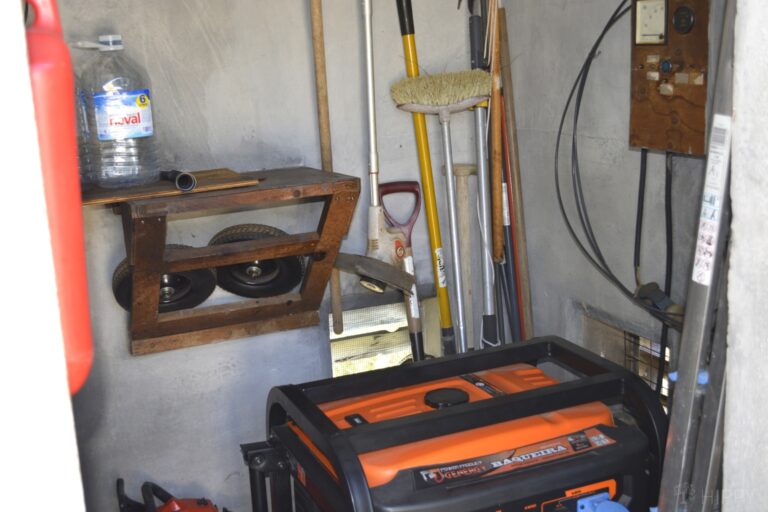
Gas/Diesel/Propane Generator
This is the first thing most homesteaders will think of, and something a lot of us have already. Whether your generator is powered by gasoline, diesel, or propane, it’s the perfect solution for running tools and a few appliances or even powering your whole home.
Generators come in many different sizes with drastically differing capabilities. More portable units, commonly called job site generators, do just what the name implies, supplying power to a few high-drain devices or multiple smaller ones.
If you want to keep most of your house powered up, you’ll need a whole-house or backup generator.
The latter is typically connected to the home power grid on a full-time basis, and it’s possible to connect a smaller generator using specialty hookups.
The upside of generators is that they are readily available, reasonably affordable to obtain and install, and an easily understood, reliable technology—one that can supply you with plenty of electricity.
The downsides are that they tend to be maintenance hogs, quite noisy, and have high rates of fuel consumption, increasing costs and necessitating on-site storage of dangerous liquids.
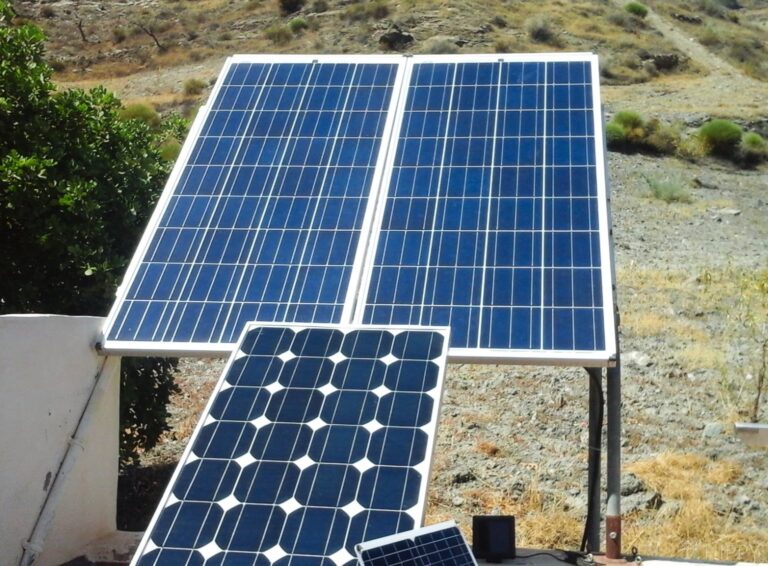
Solar Panels
One of the most prolific and, in many ways, best sources of off-grid power. Solar panels come in all shapes and sizes and are perfect to get into making your own off-grid electricity—and doing so quietly and safely!
Although entirely dependent, obviously, on the presence of the sun and the solar index in your region, solar power is highly reliable, dependable, and flexible.
Smaller panels can be used to run electric fencing, lighting, and low-drain appliances and tools, while larger arrays can power an entire house – if you cut out power-hogging devices like electric heaters, clothes dryers, and so on.
Once a solar system is set up, it’s easy to maintain, and there’s certainly no shortage of sunlight in most places, making it a versatile option. Although it will always do best in areas that have long days, get lots of sun, and few clouds, even a small solar array is worthwhile in most places.
You’ll need to account for a few shortcomings, though…
These will only give you power when the sun is out and shining, the arrays must be oriented directly at the sun for the best results, and you’ve got to combine these with a battery system to cover peak demand in many cases.
Large arrays can also be pretty expensive to purchase and set up – though prices have come down dramatically over the past few years.
But in the end, if you don’t mind being more frugal with your choices and your consumption, solar power can be ideal for your homestead.
Wind Turbines
Another clean, green, and fairly popular choice for off-grid power. Wind turbines are nowhere near being a good solution for power generation at scale or a viable replacement for coal or gas at the societal level, but they definitely have perks for our purposes.
Like solar power, wind turbines, sometimes called windmills, are quiet and make use of a resource that is entirely free and abundant.
Unlike solar power, in most places wind is far less predictable and fickle. You might be enjoying peak output one day, and the very next day, the blades will barely be turning.
Timing is another factor affecting your life with windmills: unlike the sun, it doesn’t keep to a set schedule.
You might need more power in the morning or evening, and the wind will be barely a breeze. On days you don’t need it as badly, you’ll be dealing with a gale.
On the other hand, it does blow at night, meaning your windmill could keep generating even after the sun has set.
This makes windmills better for supplementing other types of off-grid power generation unless you are using one or multiple turbines to charge batteries for subsequent use on demand.
Carefully assess your property for wind patterns, obstacles, and seasonal changes before you commit to even a small wind turbine system; they can be expensive, as can maintenance and periodic replacement parts!
Waterwheel / Hydroelectric Generator
One of the oldest and best sources of off-grid power. If you can make use of it, you absolutely should!
A classic waterwheel or other type of hydroelectric generator makes use of one of the most powerful, persistent, and plentiful sources of energy on the planet: moving water, and nothing more!
Even that slowly burbling stream with the tiny waterfall at the back of your property can, with the right setup, be turned into a nearly limitless source of clean, quiet electricity. Best of all, as long as the water is flowing, this system works at all hours and in all conditions.
The only interruptions you’ll really need to worry about are freezing, drought, and the occasional blockage upstream—hopefully it’s not a beaver!
The smaller portable versions are basically small propeller drogues that you anchor on the shore and throw out into the water. They have a cable trailing back to a base station for transmitting the electricity.
You can install a hydroelectric power system anywhere there is moving water, and the generator can be permanent, semi-permanent, or even portable. If you live in the desert or just far from a river or stream, you’ll be out of luck.
Biogas System
Biogas is a remarkable, sustainable, and scalable way to generate electricity on your off-grid property. It’s also one that requires substantial technological know-how and certain climate conditions to work as advertised.
Biogas relies on the natural decomposition and digestion of organic materials by certain microorganisms, all of this taking place in an oxygen-less environment.
A byproduct of this process is methane and carbon dioxide, both of which can be captured and repurposed as fuel for electrical generation.
The input for the system is stuff you might already have plenty of, like crop residue, animal manure, and even kitchen scraps. Loading these materials into a core component called a digester will subsequently lead to the production of methane-rich gas in a collection vessel.
That vessel can then be used to power a specialty biogas generator just like the liquid fuel generators we talked about above. This process is naturally highly renewable, sustainable, and very eco-friendly.
The continued production of your electricity is dependent only on how much biomass you have to feed the system, the size of the system itself, and the climate…
The decomposition processes work best in warm environments, and cold environments will necessitate substantial insulation or even a heated shed for the process.
If you’re willing to invest in and master a novel system, biogas electricity might be the perfect complement to your homesteading operation.
Wood Gasification System
Another neat and, some say, underutilized method for electricity off-grid, wood gasification or syngas (short for synthesis gas) is perfect for folks with access to huge supplies of wood and wood-processing byproducts.
This is a science-heavy method, one I will do my best to explain…
To start the process, wood, of whatever kind, is heated in a component called a gasifier, but without enough oxygen present for the actual combustion process to complete.
Under these conditions, instead of catching fire and burning, the heat will break down the biomass in the wood into various gases, vapors, and charcoal.
The gas is what we’re after: the aforementioned syngas, a mixture of methane, hydrogen, and carbon monoxide. It’s highly combustible and subsequently sent into a specialty stove or engine, in this case, a generator just like the ones we talked about previously.
The process is highly efficient, not only in the yield of gas but also because you’ll get charcoal, which can later be burned in a stove or fire pit or used in other ways.
This minimizes actual waste, and as long as you have a steady supply of wood, you can always rely on wood gasification for electricity. It makes a great complementary system to wind or solar, too.
The only real drawbacks with wood gasification power are the fact that the systems are fairly intricate and complex to set up. You’ll have to do some homework and learn the ins and outs of managing such a system.
They also require frequent, intensive cleaning to remove ash and other byproducts, especially tar, which can clog everything up.
If you’re willing to put in the work on an ongoing basis, and have access to tons of wood, this is one of the very best high-output systems for homesteaders.
Manual Generator
In a pinch, or if you have a large family that can take turns in shifts, manual power generation might be an option for you. It’s exactly what it sounds like: the generation of electricity by manual, that is, human-powered, operation of a generator.
At its simplest, this could be a hand-cranked dynamo that can charge up a battery, something like a slightly larger version of a crank-powered emergency radio…
More intricate setups might have a treadle or pedal arrangement, something like a stationary bicycle. Take a look at this:

It’s even possible to fashion something like a large, ground-bound waterwheel that is powered by someone walking inside of it. It sounds comical, but don’t laugh: these things can be surprisingly effective!
In the case of a stationary bike-type unit, they can power multiple lights or even something like a modest radio set.
This can also be a way to turn downtime or exercise time into electricity useful on demand by charging a battery system.
The great thing about these systems is that they will supply electricity as long as stamina holds out, and they will start producing as soon as you start pedaling or cranking.
Ultimately, these are probably insufficient for actual household demands, but still a viable method for charging batteries or running the most essential appliances in the aftermath of a disaster or a gri.
Thermoelectric Generator
Last but not least on our list is thermoelectric generation, a method that functions on the principle of converting heat energy into electricity.
One of the most scalable alternate electricity generation systems available, thermoelectric generators are available as small camp-sized stoves all the way up to huge power plant installations and everything in between.
Chances are you won’t need a power plant, but something that looks a little bit like a large wood-burning stove can furnish plenty of electricity for your home, as long as you use it wisely.
Whether you’re burning wood, pellets, paper, or even trash (where legal and ethical), these specialized generators can supply power directly or, more commonly, charge a battery bank for subsequent use.
This technology tends to be more on the expensive side, but the efficacy of such a system isn’t really illustrated by the raw numbers in the spreadsheet.
If you are already going to be relying on wood for heat, incineration for disposal, or burning anything else for any number of reasons, thermoelectric generation of electricity is a big value-added proposition.
However, a unit that you are likely to afford and install in your home is not going to be adequate for supplying electricity directly to high-drain devices and appliances day in and day out…
That’s because you’d be burning tons and tons of fuel to make that possible, and those same devices will drain battery banks very quickly.
But if you want to stick with basic lighting, one or two countertop appliances, and perhaps a radio and Wi-Fi router, definitely look into this technology.


Tim is a farm boy with vast experience on homesteads, and with survival and prepping. He lives a self-reliant lifestyle along with his aging mother in a quiet and very conservative little town in Ohio. He teaches folks about security, prepping and self-sufficiency not just through his witty writing, but also in person.
Find out more about Tim and the rest of the crew here.
I’m looking for a way to make a small solar system that can put several solar panels in a stack where they sit on an angle so I could have plenty of them in a small space. Also I would need to know what type of back-up battery bank and control system to use. I don’t have a lot of money since I’m retired but if it’s cheap enough I could do it. I pray you will have something to suggest for me that isn’t a scam.
Thank you very much for your time,
Barry Kin