
The Amish are well known throughout the northern reaches of America. This traditionalist fellowship of Christians emphasizes clean and simple living and hard work, and even though they keep themselves apart from the rest of society, they are highly regarded both for their work ethic and the quality of their craftsmanship.

Despite foregoing most modern amenities and technology, the Amish still make use of a huge variety of old-fashioned tools. And in spite of their obsolescent or even completely antiquated nature, most of these tools remain remarkably effective in the right hands—as long as the user can supply plenty of elbow grease!
Homesteaders can definitely learn a thing or two from the Amish. If you’re looking to simplify your life and workflow or just check out options for getting work done off-grid, you should make use of the following non-electric devices that they use all the time.
A Note on Amish Affiliations
Before we dive into the list proper, I want to make a quick note about the various Amish affiliations. Despite appearances to outsiders, the Amish are not a monolithic bloc.
There are various schools of belief and doctrine, typically referred to as affiliations, that vary significantly regarding the acceptance of technology.
For instance, the Nebraska and Swartzentruber Amish are some of the most restricted, going without gas, propane, and electric tools entirely for the most part, with very few exceptions.
In stark contrast, the Nappanee and Kalona Amish are quite permissive, allowing the use of everything from gasoline lawn equipment to electric and pneumatic tools like milking machines, jackhammers, pressure washers, baling equipment, and a whole lot more.
I’m not going to break down the different affiliations; I mention this only so that you readers understand that some Amish communities might use all the same tools that you and I do!
Nonetheless, you can certainly expect to find all of the following tools in constant use among the more conservative affiliations.
With that out of the way, let’s get to our list…
Carriage
For many of us “English,” the horse-drawn carriage is the most visible and inseparable icon of the Amish lifestyle.
Nearly all fellowships avoid the use of automobiles and other motorized conveyances. It might be easy to turn your nose up at the idea, but consider that for the vast majority of human history, animals were the primary “prime movers”! They still work just as well today.
Bucksaw
A bucksaw is a large one- or two-man crosscut saw that’s used for cutting tree trunks or other large sections of wood into smaller sections. This act is known as bucking, as in bucking the trunk. Hence the name of the tool!
Kept sharp and used with good rhythm, a bucksaw can fly through even hardwoods with remarkable speed.
This has been a mainstay of forestry, woodworking, millwork, and other related fields for centuries—and with very good reason. The Amish make use of it to process rough timber quickly, and you can do the same.
When you visit a link in this article that takes you to a different website where you can purchase something, I may earn a commission. Read my full disclosure for more details.
Hand Drill
Chances are good that you take your trusty electric power drill for granted. Anytime you need to pop holes in sheet goods or wood, it’s the first tool you reach for on your tool belt.
Most Amish don’t have it that easy (by design), but they still need to drill holes in all sorts of materials. For that, they use the hand drill.
Sometimes referred to as a hand auger, this tool is exactly what the name suggests: it’s a hand-powered drill that uses a fixed or interchangeable bit to drill a hole in wood or other materials to a specific size.
It certainly requires more effort and time, but these can be remarkably precise tools when careful joinery is needed.
Axe
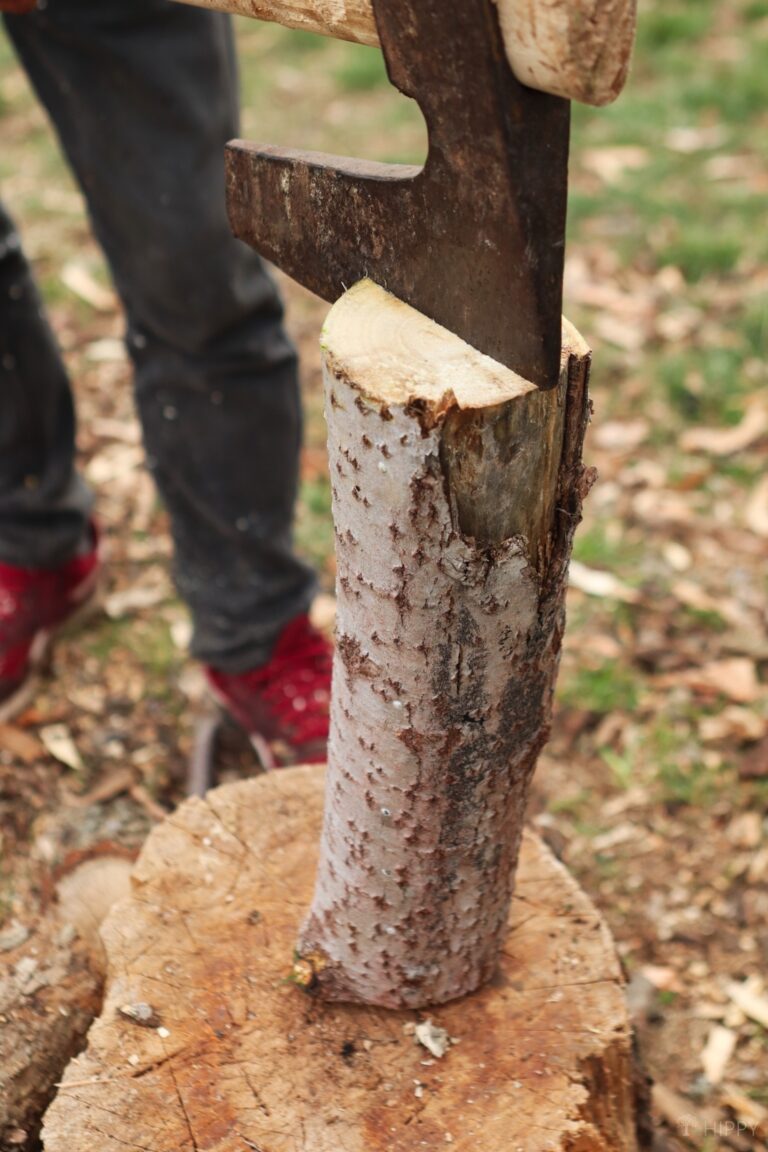
The quintessential forestry tool. Axes see constant use in Amish communities for all the reasons you’d expect. From chopping down trees to lopping off branches, splitting firewood, and even shaping beams and other rough-hewn pieces of wood, nothing beats a good axe.
If you can supply the muscle, you can take care of most quick and dirty tasks around your property with a good forestry or camping axe.
For greater versatility or longer working sessions, consider the classic double-bit axe, a particularly popular option with the Amish. This allows you to keep two sharpened edges ready to go—one sharp edge for clean cutting or detail work and a duller one for clearing knots or chopping near the ground.
Adze
No, your eyes aren’t playing tricks on you. An adze, which sounds just like “ads,” is very much like an axe, only the head and cutting edge are turned perpendicular to the handle.
Adzes are used predominantly as shaping tools, ideal for quickly, easily, and roughly shaping trunks and other large pieces of stock after the tree has been brought down.
They also come in really handy for quickly knocking branches and knots off trunks, and specialized versions are sometimes used for clearing out roots prior to tilling and other fieldwork.
Definitely a more specialized tool that has fallen out of favor in other parts of society, but one that is primed for a comeback with homesteaders in my opinion!
Draw Knife
A draw knife is another vintage woodworking tool, one used for shaping, debarking, and other tasks.
Essentially, this is a long horizontal blade with a profile that is kind of like a chisel, and it has a handle on either end. Imagine holding it kind of like the handlebars on a bike, and you aren’t far off.
In use, a draw knife is pulled, or drawn, toward the user to shave off long, thin strips of wood quickly, easily, and with good control.
These are super handy to have for processing smaller trees and shaping finished lumber for special purposes. They’ve been used for ages in shipmaking and furniture-building trades.
Wood Stove
Most Amish affiliations shun the use of modern fuels like propane, gasoline, and kerosene. Naturally, wood is still where it’s at when it comes to heating and cooking. You’ll rarely find any Amish household or workshop, save the most permissive, that doesn’t have a wood stove in it.
Cast Iron Cookware
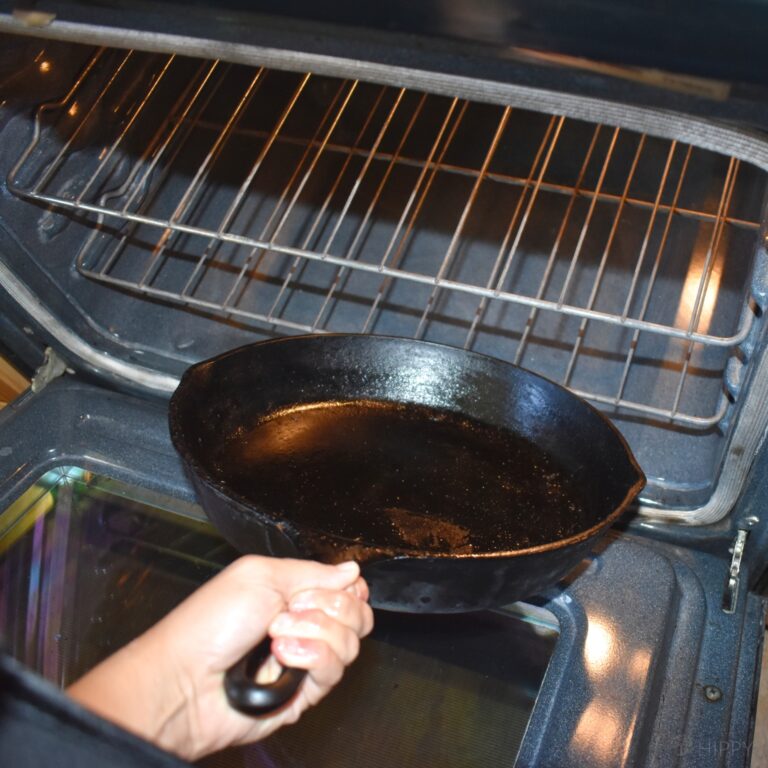
You know it, you love it. Cast iron has been around for ages, and that’s because it lasts for ages. So simple that it’s almost elemental, cast iron cookware is incredibly durable, supremely versatile, and naturally nonstick if given just a little bit of care.
This is one quintessentially Amish tool that many homesteader households have already!
Grain Mill
A grain mill can take many forms, from a small hand-operated unit that can fit on a sturdy table to larger versions that must be powered by beasts of burden or even the wind in the form of a classic windmill.
Whatever size and whatever form they take, grain mills are used for processing grain into flour so that it can be used for making bread and other foods. The Amish depend on them for independence and sustainability, and so should you!
Butter Churn
This is another old-fashioned kitchen tool and one that is, to many, absolutely inseparable from the image of the Amish. A butter churn, sometimes called a hand churn, is used to agitate milk cream repeatedly until it turns into butter.
Be warned: hand-churning butter is a lengthy and tiring process, a task that is typically given to children and other members of the household so they don’t wind up with too much free time.
But there’s nothing like the taste of authentic, hand-churned butter! Once you try it, there’s no going back.
Oil Lamps
Oil lamps have been used for lighting since antiquity, and accordingly, the Amish still make heavy use of them. Many different styles can be found throughout Amish settlements.
Treadle Sewing Machine
The Amish wear distinctive but sturdy and simple garments, and communities make virtually all of their own clothing. Most Amish fellowships rely on traditional treadle or foot-powered sewing machines to facilitate the production of their clothing.
It takes considerable skill, and more than a little stamina, to operate one of these, but once you know how, you can free yourself from the need for electricity when sewing.
Horse-Drawn Plow
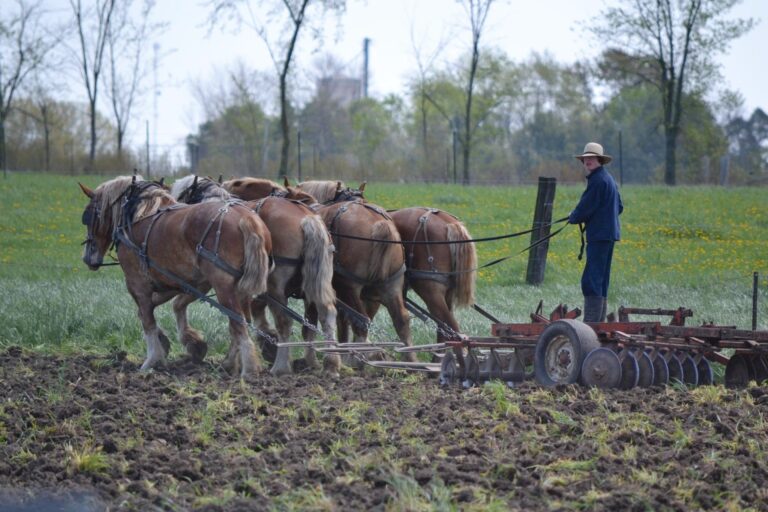
Horses or other beasts of burden take over for tractors in the Amish fields…
A good, maintained plow, skilled driver, and fresh horses can process a lot of land in a single day. This was the standard for hundreds of years prior to the advent of the tractor—and with good reason.
Horse-Drawn Seeder
A complementary tool to the plow, mass seeders pulled by horses or oxen can sow seeds across a prepared field far faster than hand-planting them.
These once-essential farm implements are rarely encountered today outside of Amish settlements and countries with a low technological base.
Manual Auger
A manual auger is a large, corkscrew-shaped tool designed to be operated by one or two people and used for manually—and often laboriously—digging holes in the ground, often for driving in posts or pilings.
It’s a good workout in soft soil and grueling in hard soil, but it’s still one of the most effective ways to get the job done without power equipment.
Dibber
A rudimentary but useful gardening tool, a dibber is a small hand tool that looks like a T, with the bottom part of the T sharpened into a cone. Its purpose? Punching a hole in prepared soil to the desired depth for planting a seed.
Hand Pump
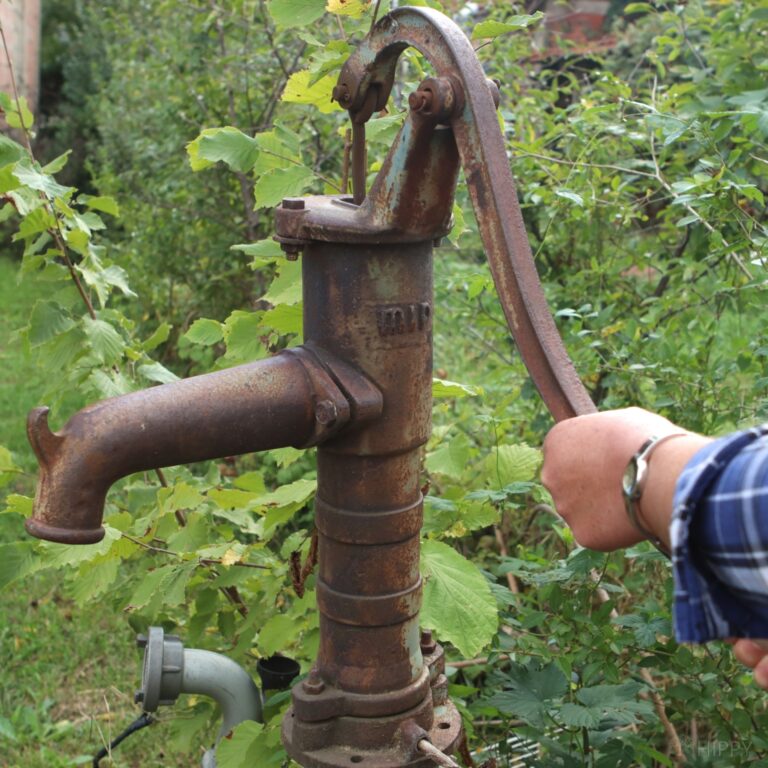
For bringing water out of a well or storage tanks, the Amish use a variety of hand pumps in most cases. You can use them for the same thing on an off-grid homestead or as a reliable backup in case you lose power for your electric pumps.Pitchfork
Another ancient tool, pitchforks are just the ticket for pitching hay, manure, and other loose but clumpy materials.
Remember what I said above about how most Amish don’t use gas or electric farm implements? That includes hay balers! This means pitchforks will see constant use during the summer when the hay is being brought in.
Scythe
Scythes are a remarkably efficient tool for harvesting grains or simply cutting down tall grasses.
The more conservative Amish fellowships and communities that don’t allow the use of powered harvest and lawn care equipment still use these today for basic property maintenance and also for bringing in cereals and other crops.
You’d be surprised at how fast you can clear land with one of these once you get the technique down.
Hoe
Arguably the most important gardening tool there is. If you have nothing else but your own effort and a good hoe, you can soon prepare a patch of ground for planting. If you plan on gardening, you’ll reach for one of these time and time again.


Tim is a farm boy with vast experience on homesteads, and with survival and prepping. He lives a self-reliant lifestyle along with his aging mother in a quiet and very conservative little town in Ohio. He teaches folks about security, prepping and self-sufficiency not just through his witty writing, but also in person.
Find out more about Tim and the rest of the crew here.