
If you own chickens, you’ve got to know how to pick them up. Whether you’re moving them around, checking their feathers or for injuries, or you just want to enjoy a little quality cuddle time with your favorite member of the flock, you’ve got to do it right.
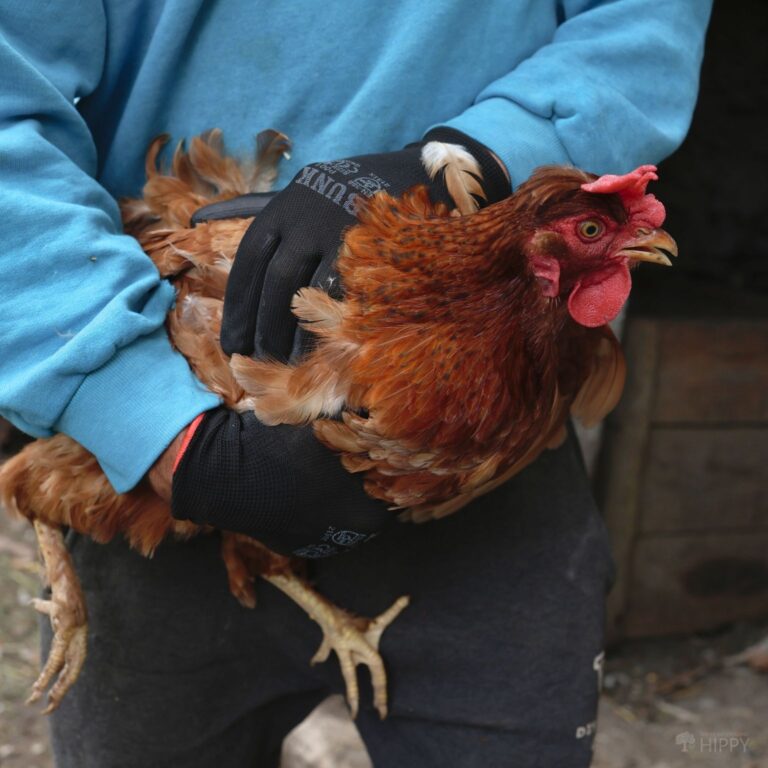
Picking up a bird haphazardly is a great way for it to get injured and also for you to get some scratches yourself. Improperly restrained, your bird may struggle, peck, and scratch, and larger birds or roosters can give you legitimate injuries.
The good news is that picking up a chicken is just about as simple as it gets. You just got to learn how to do it, and I’ll teach you in this article.
Pro Tip: Don’t Stress Your Bird Unless You Have To
Before we go any further, I should remind you that you generally want to avoid stressing out your chicken if at all possible, and you should think twice about picking up one that’s already agitated – unless you’ve got no other choice.
If your chicken is running away from you, struggling, pecking at your hands and generally being resistant to the whole process, if you can put off picking it up for a little while you should. Give it time to calm down first.
If you must pick up a stressed chicken, hold it firmly but gently and keep control over it. A chicken that slips out of your grip is more likely to injure itself and that will make a bad situation worse.
Learn the Technique
Step 1: Place the chicken facing you. For picking up a generally agreeable bird, start with the chicken facing you. It can be on the ground, on an examination table or on any other surface.
Step 2: Place one hand under chicken, palm up. Using the arm you prefer for supporting the chicken, place your hand under the bird’s body, between its legs, with your palm facing up. Keep the chicken in place, if needed, with your other hand.
Step 3: Slip chicken’s legs between fingers, middle finger in between. Next, slip the chicken’s legs, at the ankles, between the fingers of the supporting hand, one on each side of your middle finger.
Apply gentle pressure with your fingers to restrain the chicken’s legs. This is the magic technique that is officially taught by poultry associations, farmers and other groups that deal with chickens day in and day out.
Step 4: Slide hand up to chicken’s belly. Now simply slide the supporting hand up to the chicken’s belly making sure its legs stay between your fingers as described in the previous step. Adjust pressure with the fingers of the supporting hand as needed to control the bird and maintain your grip.
Step 5: Cradle chicken with supporting arm, palm up. You can now easily support the weight of the bird. Bring your arm in close to your body, holding the chicken in the same manner that you would carry a football. This will reduce strain on your arm and provide much better control over the bird.
Step 6: Place other hand on chicken’s back. You can use your other hand for inspections or, if you need additional control, place it on the bird’s back near the base of the neck.
Step 7: Control chicken as needed. You now have total control over your chicken and can support and direct it easily. You can maintain this position for as long as practical or needed.
Step 8: To release, lower chicken to ground and let go of legs. Don’t just drop your chicken when it’s time to let it go. When it’s time to release, lower the chicken to a safe and stable level surface until its feet are touching it, then release your grip with the supporting fingers and lower the bird until it stands under its own power.
Helpful Hints
Using the technique above you can turn your chicken any way needed. Don’t be afraid to flip your chicken over, roll it to the left or right, or point it up or down as needed to inspect it for injuries, sickness and overall health. If your bird trusts you and you do this smoothly, you shouldn’t stress it out too bad. Just keep a good grip on it.
Reverse your grip if your chicken is trying to peck you. Even restrained, some will try to peck the daylights out of you while you’re holding them. Instead of dodging pecks to your chest, neck and face you can use the technique above only with the bird facing away from you so you can protect yourself as needed.
Avoid “pedaling” by rolling your supporting hand inward a little bit. Similar to pecking, some chickens will aggressively try to kick scratch, and others try to run instinctively even while they’re held off the ground. Using the technique above this is easily avoided simply by rolling your palm inboard a little bit, which will roll the chicken’s legs away from you.
Aggressive or frantic birds should be controlled some other way. If a bird is genuinely panicked for whatever reason or extremely aggressive, don’t try to pick it up with this technique. Shoo them into a pet carrier, drop a net on them or even a sturdy cardboard box instead for transport.

Tim is a farm boy with vast experience on homesteads, and with survival and prepping. He lives a self-reliant lifestyle along with his aging mother in a quiet and very conservative little town in Ohio. He teaches folks about security, prepping and self-sufficiency not just through his witty writing, but also in person.
Find out more about Tim and the rest of the crew here.