
If you have sheep of your own and want to expand your flock without spending a fortune, you’ve got to learn how to breed them. Breeding sheep seems easy on the surface: put a boy sheep and a girl sheep together, give them a little bit of privacy, and pretty soon you’ll have some adorable lambs running around, right?
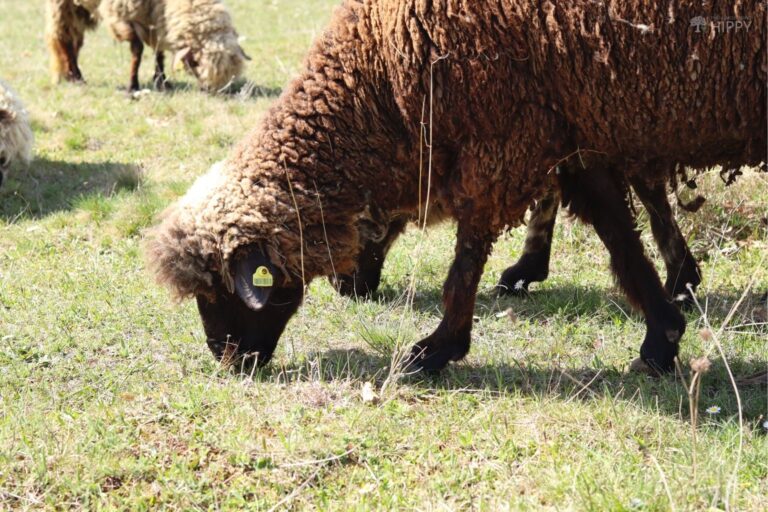
That’s one way to do it, but if you care about the health and long-term integrity of your flock, you’ve got to put more effort into it than that.
For countless generations, folks who’ve carefully selected and bred sheep for health, fitness, and desirable characteristics. You need to do the same.
It can be a lot to take in and even a little intimidating if you’ve never done it before. But you need not sweat it since I’m here to help you with a step-by-step guide that will take you through the entire process, done right, from front to back.

Breeding Sheep Properly is More than Just Mating
The first thing you need to understand about breeding sheep correctly, responsibly, and safely is that it’s more than just the process of mating. Left to their own devices, domestic sheep of all breeds will feel the urge to mate, and they’ll get down to business…
But if you don’t have any input over the process, such as choosing or disqualifying individual animals based on fitness, lineage, and traits, you won’t be able to maintain a standard among your flock.
Animals that are sick, genetically compromised, puny, or have any other problems are likely to pass those problems on, and then their descendants are likely to further pass on those problems.
Before you know it, you’ve diluted and disrupted healthy genes with bad ones.
Instead of letting nature run its course and come what may, you need to start thinking about the breeding process starting with the selection of the sheep you choose for reproduction. It’s a crucially important step, and I’ll take you through everything you need to know below.
Step 1: Select Ewes
The very first thing you must do is choose female sheep, ewes, for reproductive fitness. Assess all of the following factors, and allow or disqualify accordingly.
Age
Age is a biggie when it comes to the reproductive health of sheep. You must not allow very young ewes to breed because this can severely endanger their health and the health of their offspring.
Breeding a ewe that is less than a year old will put considerable strain on her, slow her weight gain, and reduce milk production. Waiting until they are a year old, or sometimes even two, will ensure that she is still genetically sound and physically completely mature.
Likewise, you should never attempt to breed an ewe that’s too old. A rule of thumb is that the maximum age for safe, reliable pregnancy is 10 years old, but depending on the individual sheep and her treatment over the years, this cutoff date might arrive at just 5 years.
Generally, the longer you delay the first pregnancy, the more years you will get out of your ewe.
Health
The overall health of the ewe is also crucially importantbesides age alone. You want to breed animals that are in exemplary condition, with no hoof, udder, teeth, or other body condition issues. You should also avoid breeding ewes that are chronically sick or seem to lack energy.
Doing so will, at best, endanger the lives of mom and her babies, but it can also pass on poor genetics that will create more problems for you in the future.
Characteristics
Ewes should always be selected for ideal or at least very good breed characteristics. If you’re keeping a dairy breed, her milk production should have been as expected or better. Likewise for wool or meat breeds.
Lackluster sheep have lackluster offspring.
Pedigree
If you have access to the pedigree or lineage of your girl, check them and compare records to see how healthy her offspring were.
If many of her lambs had significant problems of their own that could not be attributed to the sire, you should think twice before breeding her again.
Lambing History
If this isn’t the first lambing for your ewe, consult your notes or those of her seller to see how easily or how painfully delivery went.
Problematic delivery is a major problem, especially if she subsequently suffers from prolapse. It’s only going to get more and more likely, and more dangerous, with each pregnancy and as she gets older.
She might be young and in the prime of her life, but if she cannot deliver her lambs on her own, safely and reliably, you should not breed her for the wellness of all involved.
Step 2: Assess the Ram
Obviously, you aren’t going to get any precious little lambs without the services of a ram. But as with the ewes above, you need to assess the ram for reproductive fitness, and ruthlessly disqualify any that don’t measure up.
Health
The overall health and wellness of the ram is even more important than that of the ewe. During mating season, especially if he has to service a large flock of dozens of females, rams will be living in overdrive the entire time.
This takes a tremendous toll on them, and it’s not unheard of for them to drop dead from the strain of it all.
Accordingly, he should be absolutely free of any health issues and in excellent physical condition overall.
Testes
Yes, you need to carefully inspect the testicles of any ram you are choosing for mating. Knock it off, no jokes. Any ram you pick should have large and mostly symmetrical testicles that are free of defects, injury, and any other visible issues.
Tail
After you’re done checking the ram’s testicles, look at his tail closely: it should be firm, erect, and proud from his body as this indicates the substantial sperm production he’ll need to inseminate multiple females.
Even if you only have a handful of females, low sperm production means that reproductive success will suffer and that pregnancy is a lot less likely.
Pedigree
If you have access to it or the seller can provide it, you’ll definitely want to check the pedigree of the ram.
Make sure his own grandfather and father have likewise sired other healthy offspring. If there have been a few issues, it’s not an instant disqualifier, but a clean and hardy family tree is what you are looking for when it comes to the boys.
Also, closely cross-check the pedigree to ensure there has been very, very little if any inbreeding in the lineage.
Size of Offspring
If the ram has sired lambs before, get what info is available concerning the size and weight of those offspring. You’ll certainly want to know if they are large for the breed, and you’ll definitely want to know if they are undersized or puny.
Step 3: Stud or Buy Ram
Depending on your plans for the flock and your own living situation on the homestead, you might consider renting a ram to perform stud services for your flock, or you might buy your own.
As for myself and most other shepherds I know, we prefer to rent stud services. Rams can be large and aggressive, and they often have horns which means they can easily injure people and other sheep when they get ornery.
Having a specialized breeder or owner that offers stud services offer a high-quality ram to do the deed makes life easy for you the rest of the time and keeps havoc to a minimum.
That said, owning your own ram gives you total control over the process as well as the care and health of the male.
Both approaches are valid, just make sure you do your homework on your chosen male regardless before you sign on the dotted line and hand over your cash.
Step 4: Fitness Checkup Prior to Mating
This might seem redundant, even wasteful, but it is imperative that you have your vet give your male a thorough checkup about a month and a half prior to the onset of the breeding interval.
Like I said above, if the male isn’t up to the challenge, it is going to reduce the conception rate of your ladies.
This is often referred to as a breeding fitness or breeding soundness checkup. The vet should check the reproductive organs of the ram, his libido, ability to ejaculate, sperm count, and his baseline vital signs to ensure that he is healthy enough for mating.
Assuming you get the green light from your vet, you’ll be ready to introduce the ram to the ewes in the near future. If renting stud services, ask for checkup papers from the owner.
They should be able to provide evidence of a clean bill of health, and if they can’t, ask around to make sure they have a sterling reputation from other sheep owners in your area.
Any evasiveness in this regard is a big red flag!
Step 5: Provide Sheep a Good Diet to Ensure Fertility
Prior to mating, make sure rams and ewes both get good, nutritious food. This should be plenty of hay in addition to their usual forage.
Good choices for rams include bluegrass, timothy, ryegrass, and orchard grass; they will need tons of calories and protein to keep up the intense activity over the coming days and weeks.
A good diet is especially critical for ewes once they’re pregnant, but don’t neglect it ahead of pregnancy; this practice, called flushing, typically increases the chances they’ll have multiple lambs and do so successfully.
Start supplementing the diet of ewes with grains about 2 to 3 weeks before she is put out with the ram. Oats, soybean hulls, and barley are ideal for this. Corn should be fed very sparingly if at all, as too much will disrupt her rumen.
Step 6: Give Ewes a Sanitary Shave Prior to Mating
It’s a small thing, but an important one to ensure easy mating for the ram and minimize complications for the females. You’ll want to clip the wool on the female’s rear end around her vaginal opening and anus for about 6 inches in all directions.
This will allow more reliable penetration when the ram mounts her, and reduce the likelihood that wool or feces will get pushed into her vaginal opening, something that can cause a nasty infection that might compromise the pregnancy.
If you don’t shear your sheep yourself, have a professional groomer or shearer do this for you.
Step 7: Separate Ewes and Rams into “Mating Flocks”
You’ve got options for putting your sheep together. A single ram can service 20 females easily, and he might be able to take care of as many as 50, though this will put a considerable strain on him.
If you care about the health of your ram and want to be sure that he’ll spread his love around, if you know what I mean, you can break up your flock of females into multiple smaller breeding flocks, and house them in a pen or paddock with a single ram.
Anywhere from 10 to 20 ewes to a single ram is a good ratio.
This trick will also prevent competition between sexually mature rams which can, and often will, get violent.
Step 8: House Males and Females Together to Ensure Mating
To be sure that your sheep will mate successfully, you’ve got to house them together for at least two or three weeks. Longer is often better, especially if you have a large flock being serviced by only one or two rams.
As it turns out, even when a female is in heat and the male is sexually mature and willing, they won’t go at each other immediately, especially if people are watching. They need time to get used to each other!
Also, make sure you have your mating attempts tied to mating season, typically early in the fall when the days start to get shorter.
This is when most sheep breeds will become hormonal and eager to mate, and it will also time lambing for early spring when the babies have the best chance of healthy delivery.
Step 9: Use Marking Harnesses to Track Mating Attempts
Here’s a pro tip that will make keeping track of all the festivities easy: fit your rams with a marking harness, which looks a little bit like a dog harness only it has a large crayon or blotter attached to it on the underside.
When the ram mounts a ewe, this will leave a temporary mark on her that you can’t miss.
This will, at a glance, let you see if any sheep haven’t been mated, let you roughly track how much progress the male is making, and keep track of which ram mated which ewe assuming you are housing them together.
This will necessitate the use of two different colored crayons.
If you don’t use a marking harness and you aren’t observing your flock 24/7, you’ll ultimately be guessing at how many pregnancies to expect. Keep in mind that sometimes a ram will show a marked preference for just a few ewes, neglecting the others.
Step 10: Keep Sheep Together Until Multiple Matings Occur
It’s wise to keep your sheep together for at least two weeks to ensure that multiple matings take place. Keep in mind that most females will go into heat every 16 or 17 days, so the interval that they are “turned out” together should account for that.
If you can put males and females together several days prior to the females going into heat, a couple of weeks should be sufficient. If estrus is variable or unknown, I’d keep them together for at least a month.
As a general rule of thumb, you shouldn’t consider a female likely to get pregnant unless she’s been bred at least twice. Three times is better.
Don’t worry: assuming your ram hasn’t locked on to his special lady and is ignoring the rest of the flock, if he is young and virile, he should easily be able to take care of this!
If he’s showing preferential treatment to some of the ladies and not others, once they have been mounted enough times successfully, you can remove them, putting them out of sight where he can’t see them, so he will attend to the rest of the flock.
Step 11: Keep Track of Mating Attempts
I know all of this is downright chaotic, but it’s important that you keep track of known and suspected matings in a log book. For instance, which ram mounted which female and on what day.
Even if you suspect she has already been mated, keep track of the following attempts if you have evidence of them. Changing out the color of the marker in the male’s harness once a week can facilitate this.
This is important info if you have multiple rams, and will help you zero in on the actual gestation period of the ewes as their pregnancy progresses.
Identifying Pregnant Ewes
At the end of the weeks or months that you keep rams and ewes together, with a little luck, most or all of your ladies will be pregnant.
However, they won’t show signs of pregnancy for quite a while! In fact, sheep can be downright sneaky when it comes to hiding their pregnancy!
You’ll have to look closely for indicators, or resort to testing. Keep an eye out for the following or use the following tests to verify that your girls are actually with lamb.
Swollen Belly
Your ewe might have a bun in the oven, but chances are she won’t show it for a long time, usually until she’s quite far along and soon to deliver. Nonetheless, keep your eyes out for any swelling bellies about 4 months after successful impregnation.
Enlarged Udder and Teats
Closing in on the last few weeks of pregnancy, a ewe’s udder and teats will start to swell, droop, and engorge because they’re filling up with milk in preparation for the lambs’ arrival.
Weight Gain
If you are able to weigh your sheep easily enough, a better indicator of pregnancy prior to her belly starting to pop and her udder filling up is weight gain.
If she starts putting on weight, seemingly for no reason, a couple of weeks after mating, chances are good she’s pregnant.
Increased Heart Girth
Measuring the heart girth of the ewe, this is the circumference of her torso around her chest immediately behind her forelegs, is another good way to determine pregnancy without testing, but only if you know what her baseline heart girth is.
As the fetus develops, her organs will move around a little bit and increase the circumference of her chest.
Note that you should only try to measure her heart girth if she is completely comfortable with you and won’t resist the process: restraining her or stressing her out in any way might cause a miscarriage!
Missed Estrus
Another common indicator of pregnancy: when a ewe stops going into estrus on her usual cycle, unless she has some other health problem that might cause it, you can bet your bottom dollar she is with lamb.
No More Interest in Males
When females go into heat, they usually show considerable interest in males if they are around. If this suddenly stops, that’s another sign she’s pregnant.
Increasing Appetite
You know how it goes: when ladies are pregnant, they are eating for two or more, and the same goes for sheep. She might not show an increased appetite a couple of weeks after breeding, but that will change when she enters the midpoint of pregnancy.
A steady uptick in appetite is normal, and she’ll become ravenous once she starts producing milk and nearing delivery.
Urine Test
One of the surest ways you have to determine pregnancy on your own is through the use of a P-Test urine analysis kit. I know, they really nailed the name. This detects hormones in urine that are created by the placenta, and it is extremely accurate.
The trick is that you need to collect some urine from the ewe, and it usually entails putting her in close confines so you can get a collection vessel under her. Then simply add some of the urine to a vial included in the kit.
Once it’s done reacting with the compounds in the vial, compare it to a color chart included with the kit to determine pregnancy.
The downside to this method is that it’s only dependable about 60 days after successful fertilization of her eggs.
Blood Test
One of the most accurate and quickest ways to test for pregnancy is through a blood test. You can have a vet draw blood from a ewe, or you can do it yourself if you have the skills, then send the sample out to a laboratory for testing.
Note that this still requires a kit with the correct vials and labels to ensure accurate test results.
It usually takes a lab about 3 to 5 days to process the samples once they have them, but you can draw blood from your girls just 30 days after successful insemination.
Ultrasound Examination
Performed by a skilled vet, an ultrasound examination won’t hurt your sheep and can confirm pregnancy 100% of the time, and also tell you how many lambs to expect.
It’s possible to get an ultrasound machine yourself and learn how to operate it, but they are very expensive and generally only viable for the largest sheep farming operations.
How Long are Ewes Pregnant?
Sheep have a gestation period that ranges from 142 to 152 days. Again, if you kept good records when you had your flock turned out, you should have a calendar week when you can expect the lambs to arrive.
Tim is a farm boy with vast experience on homesteads, and with survival and prepping. He lives a self-reliant lifestyle along with his aging mother in a quiet and very conservative little town in Ohio. He teaches folks about security, prepping and self-sufficiency not just through his witty writing, but also in person.
Find out more about Tim and the rest of the crew here.