
One of the coolest and most gratifying things about owning chickens is that no matter what your preferences are, no matter what strikes your fancy, there’s bound to be a breed out there that will fit the bill: Sizes big and small, every color of the rainbow, and suitability for any kind of purpose.

There are also plenty of chicken breeds for those who appreciate birds that are a little bit out of the ordinary. For those searching for something different, some of the most interesting breeds are those with feathered feet.
Whether you want chickens with festive and fuzzy boots or full-blown feathered leggings, one of the breeds on the list below is guaranteed to appeal to you.
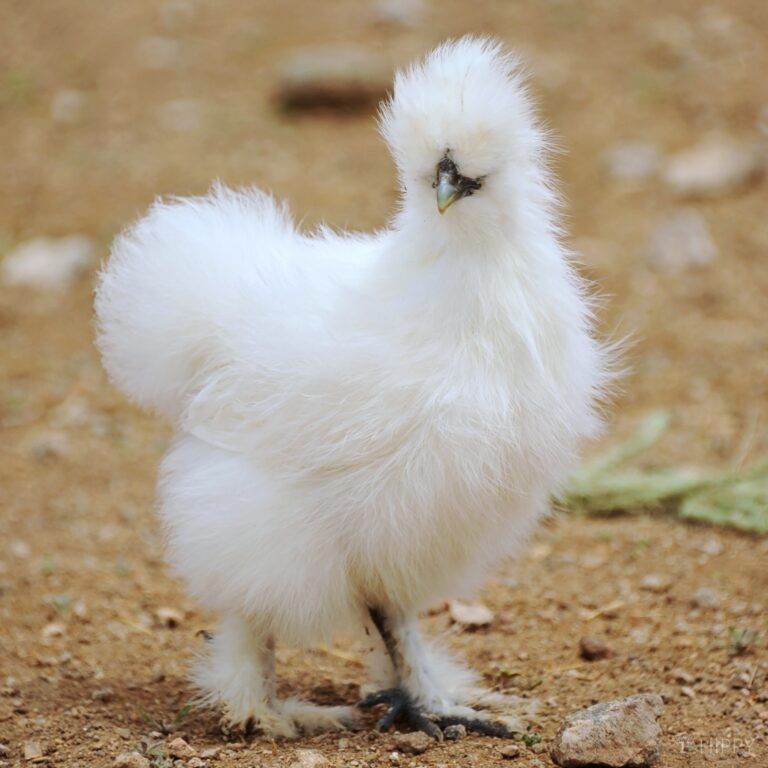
Silkie
One of the most endearing and famous chickens out there, the Silkie is bred and born to be an attractive showbird, and if you want feathered feet they’re one of the very best.
Silkies are covered from the tops of their heads all the way down to the ends of their toes in incredibly fine, fluffy feathers. The feathers are so fluffy it makes it look like they have true fur.
If you like the look, they are undeniably appealing, but they come with some downsides: though they have a reputation for being very gentle and people-friendly, they are not a great bird if you want eggs, as they lay very few compared to most other breeds and only a couple a week at most.
Upkeep is also a nightmare, as they are prone to getting wet and dirty and suffering from frostbite, hypothermia, mite infestations, and more.
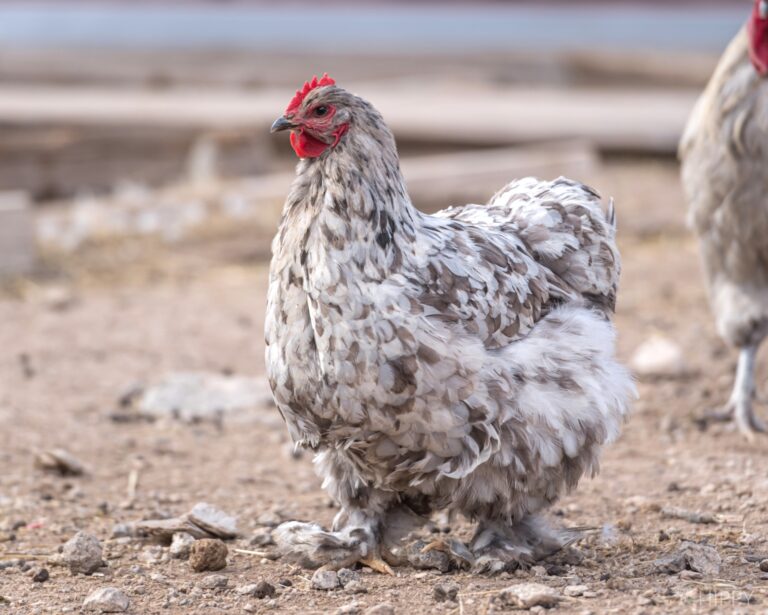
Cochin
Well known for their immense size, and among chicken fanciers for their feathered feet, Cochins are big, gentle birds and have a well-deserved reputation for their classic good looks and also for their amenable attitudes towards people and even children.
Though the origins of the Cochin are in Southeast Asia call and they were originally bred for utility, long generations of selection for looks have somewhat diminished their laying capability. It’s still quite productive, though, and will produce anywhere from 180 to 200 eggs or a few more yearly.
Plenty for a backyard flock, and they’re also known for laying through the winter! There are certainly pretty birds with wonderfully fluffy feet, but still a good utility choice for a homesteader.
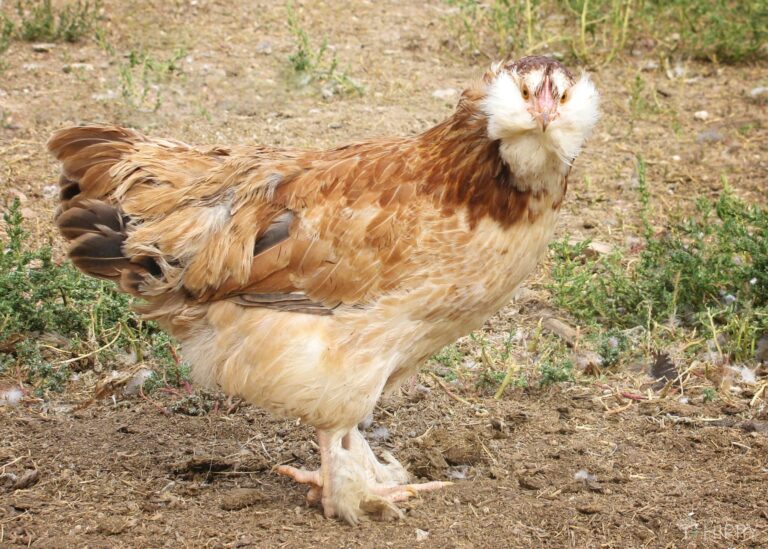
Faverolles
A French breed with a famous look thanks to its Salmon-colored feathers and intriguing patterning, Faverolles are recognizable by their unruly “beards” and “muffs”- tufts of feathers on their head and neck.
They’re also known by their lightly feathered feet, with the feathers on the front of their legs and toes growing almost like chaps, leaving the other half of the foot and leg bald as usual.
But there’s a lot more going on with these birds than just beautifully colored and textured feathers; they are naturally curious and get along well with people and most other animals, and their explorations of larger runs and properties are a source of endless entertainment for owners.
The Faverolle is no mere pet, however, and is still a solid layer of eggs, with younger hens producing about four eggs a week.
Sultan
A truly regal chicken with a famous backstory, the Sultan breed was once exclusively kept as the property of royalty in Turkey where they roamed gardens on palace grounds. And no wonder!
Their upright posture, wide crown of feathers, gracefully arcing tail feathers, and tapering, fully feathered legs and feet lend these birds a look like no other.
They are an ornamental breed through and through, and they were selected mostly for good behavior, if you can believe it: they don’t tear up plants as a rule and tend to be very quiet compared to most other chickens.
The downside is that they are accordingly poor foragers and don’t lay too many eggs, so they make a poor choice if you want a steady supply from your self-sufficient flock. Despite this, they are so beautiful that most owners are more than happy to own one or two of these majestic chickens.
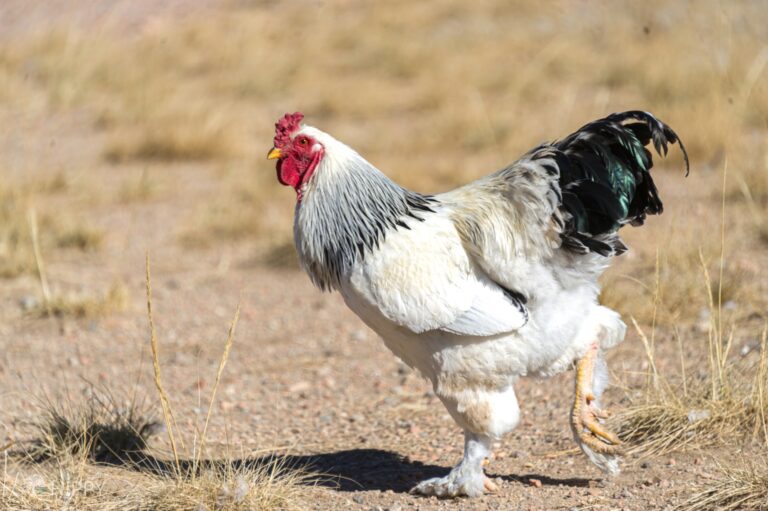
Brahma
Another huge breed on our list, Brahmas really are as big as they look, covered from neck to ankle in increasingly fluffy, thick feathers. The lower you go the rougher and thicker their plumage gets!
Looking at the legs and feet specifically, the feathers start loosening up and take on an appearance that is closer to the down of young chicks, compared to the usual feathers on the rest of their body.
Brahmas are also a fine addition to almost any flock, being very agreeable with people and other animals alike, and often serving as peacemakers in mixed flocks. Despite their size and strength, they don’t have a tendency for aggression or for being bullies towards smaller birds.
Brahmas remain a true dual-purpose breed, good for producing eggs and meat, though they’re not a great choice for hot climates owing to their extra insulation; heat exhaustion and heat stroke are a real risk with these big beauties!
Booted Bantam
The first true bantam breed on our list, the Booted Bantam is tiny, gorgeous, and purely an ornamental chicken that has rough feathers extending all the way down to the tops of the feet and toes.
These feathers also perfectly match the color and pattern on the rest of their body, making them look almost like a painting that has come to life.
Known for beguiling and beautiful patterns and colors, and big personalities out of all proportion with their diminutive stature, if you want to add some fun to your life and yard the Booted Bantam is a great choice.
But that is all they will bring to the table, unfortunately: they’re far too small to be worth the trouble of slaughtering for meat, and they lay incredibly tiny eggs at a slow rate.
Worse, this breed’s health is not nearly as good as other breeds on our list, and they have proven to be susceptible to a variety of diseases as well as extreme temperatures, both hot and cold.
Pekin Bantam
The second bantam on our list, and one that actually hails from Great Britain (where it’s officially recognized), not China as is sometimes reported- though it is descended from various chicken breeds brought to the UK from there.
These pint-size birds are notable for their extremely heavy feathering which extends down along the legs and over the feet. And what feathers they have! The Pekin comes in a huge variety of colors, though the most common are black, buff, blue, partridge, and barred.
But more colors are being developed by breeders all the time, so there is no telling what you’ll see out there! And if you want eggs or meat you might want to look elsewhere; aside from their small stature, Pekins don’t lay many eggs, and the ones they do lay are quite small.
These birds are, though, uniquely suited as pets, and not just because of their attractive appearance.
They tend to be gentle and docile as long as they were raised with plenty of human interaction and treated well, and because they are so small this makes them a fine choice for families with small children. They can’t do much harm even if they do get upset!
However, it’s worth noting that roosters tend to get territorial and surly once they are sexually mature and especially after they take a few hens as mates. This can be managed with proper socialization, however.
Serama
Seramas are Malaysian chickens with the distinction of being the very smallest breed in the world. Fully grown, adult birds weighing barely half a pound are common!
Like all the breeds on our list, they have feathered legs, and those wonderful, fuzzy legs and feet also contribute to their amazing appearance.
These birds are known for their unique, almost totally upright stance with the head carried high and back over a puffy, protruding chest. From the side, they look like they are standing at military attention!
As you might expect, Seramas are bred and kept predominantly as ornamental and showbirds, and competitions in their native homeland can be quite festive with huge sums of money changing hands for being awarded best-in-show.
Surprisingly, they are also quite productive when it comes to eggs with healthy hens laying anywhere from four to five eggs weekly. Unfortunately, these eggs are truly tiny, and you’ll need several of them to equal even a single egg from a larger breed.
Marans
Sometimes called the Maran, this is another French breed named for the town in which it originated.
Originally descended from feral game chickens which were recaptured and subsequently bred with other related Asian stock, the Marans is a dual-use chicken through and through.
They produce a modest volume of eggs yearly, although individual hens are highly variable, laying anywhere from 150 to 200. Of note, the shells of their eggs are an extremely dark brown color.
And, of course, this breed is another one known for its feathery legs, although this breed’s status as a “feather leg” is a topic of some contention.
The breed is selected for feathers in its native France and in the US, while UK breeders prefer to select for clean, featherless legs.
This preference has trickled down from various poultry association guidelines, and accordingly, in the United States, the APA (American Poultry Association) only recognizes birds with leg feathering.
Barbu d’Uccle
Small, beautiful, friendly and inquisitive: these are the essential characteristics of the Barbu d’Uccle, sometimes called the Belgian d’Uccle depending on who you’re talking to. A beloved but rarely seen ornamental bird here in the United States, these chickens are unique in two regards.
The first is the fact that they come in nearly two dozen different colors! But one pattern, referred to as a mille fleur, French for million flowers, is the most famous: This gorgeous pattern consists of a light tan or copper base color with white and black bands at the end of each feather. It is instantly distinctive!
Also notable is the fact that the feathering on the legs stops at the feet with only the outermost toe sprouting feathers. It definitely lends these already attractive birds an even more distinguished look.
Even better for your average backyard chicken connoisseur is the fact that these chickens are friendly, curious, and love both attention and affection from people. They make a wonderful pet bird!

Tim is a farm boy with vast experience on homesteads, and with survival and prepping. He lives a self-reliant lifestyle along with his aging mother in a quiet and very conservative little town in Ohio. He teaches folks about security, prepping and self-sufficiency not just through his witty writing, but also in person.
Find out more about Tim and the rest of the crew here.