
Every homesteader knows that a big part of taking care of animals, any animals, is cleaning up after them. That is certainly the case for chickens…
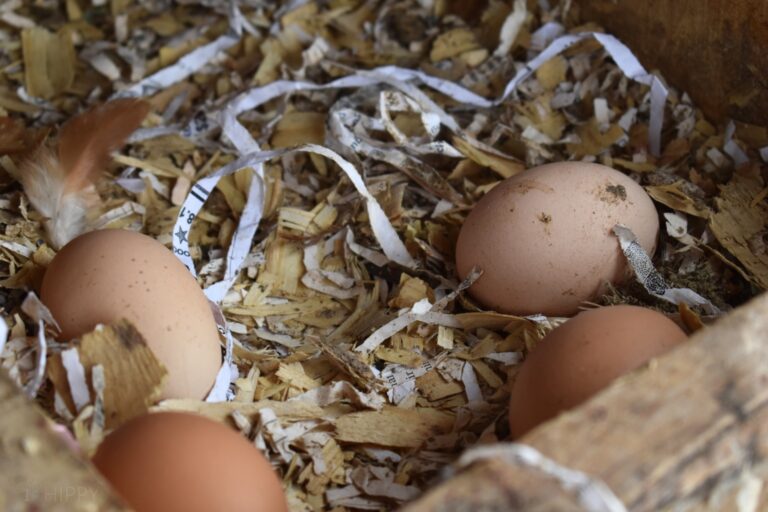
Despite being very small and space-efficient, and very cheap, chickens can make one hell of a mess, and a big part of that mess is their poop.
Chickens poop a lot. A whole lot! They poop when they are awake, and they poop when they are asleep, and whenever the urge strikes them, they just go wherever they happen to be.
Cleaning out the coop, run, and other locations where they roam is just part of it, but it’s not something you should take lightly: chicken poop can actually be a significant biohazard to you and animals, including the chickens themselves.
If you don’t take precautions, it could make you severely sick. Learn about the dangers and proper handling procedures in this article.
Poop Invariably Has Dangerous Toxins
So why is chicken poop so dangerous? For starters, it is because it always contains various dangerous toxins. We’ll talk about the big ones below:
Ammonia
Ammonia is a major hazard associated with chicken poop and is present wherever their droppings are allowed to acculate.
As you know, chickens don’t have a urinary tract like mammals do, and so they discharge urinary waste as a solid white substance on some of their droppings. If you’ve seen this white goop before, you’ve seen uric acid.
The problems with ammonia start when bacteria start to break down the uric acid in the feces; they excrete ammonia as a byproduct of their digestion. Ammonia is highly reactive and profoundly irritating to mucous membranes, eyes, and lung tissue.
This is part of the reason why ventilation in the coop is so important for the health of your birds, and if you’ve ever stepped into a coop that’s overdue for a clean-out, you know how bad this stuff can rock you!
Hydrogen Sulfide
Worse than ammonia is hydrogen sulfide, produced by poop as certain kinds of organic matter start to decompose in anaerobic conditions, meaning conditions where there is no oxygen.
This stuff is severely irritating like ammonia, but worse yet, it’s a genuine poison that affects both humans and animals. Exposure to high concentrations can cause dizziness, loss of coordination, unconsciousness and straight-up respiratory tract failure!
The dangers posed by ammonia and hydrogen sulfide together are reason enough for you to take poop management seriously!
You’ve got to use serious care in handling and disposal, and stay on top of sanitation and hygiene considerations with religious dedication to avoid injury or illness for yourself and your flock.
Arsenic and Other Chemicals
But, believe it or not, there’s more to worry about from direct exposure to your flock feces: your birds’ poop can also have nasty chemicals that have been passed down through the food chain from fertilizers into their food, and also toxic compounds from herbicides and pesticides.
Arsenic is one toxic compound that’s increasingly associated with consuming and handling chickens, and repeated contact with their poop can significantly elevate your exposure to arsenic.
Arsenic is infamously deadly, especially for its long-term health risks. It can cause damage to nervous system tissue, cardiovascular problems, persistent lesions and necrosis of the skin, and a lot more.
Serious stuff so far, but the hazards don’t stop here…
Chicken Poop Spreads Disease
No matter the animal, feces is always a huge vector of disease. Chickens are no exception in this regard. Chicken turds contain dozens of dangerous pathogens, though only a handful are a severe risk to life and limb.
Salmonella
The most well-known is salmonella, caused by a bacterium. Salmonella causes severe abdominal cramping, high fever, diarrhea, and other problems and while usually not fatal, it can be fatal for the very young, very old, or those with compromised health already.
E. coli
E. coli and its many strains are also directly transmissible through chicken feces. It is infamous for causing immense stomach and intestinal trouble, and if untreated, it can result in kidney failure.
Bird Flu
Bird flu is the off-again, on-again Boogeyman that the media can reliably trot out when they are talking about something exotic like COVID or Ebola, and as you might expect, is something you can pick up from direct or near exposure to chicken poop.
As the name suggests, this disease primarily affects birds… It can be absolutely devastating, but only a few strains are a significant danger to people. Most strains of avian influenza will only make you feel like you have a cold, though some feel like a proper flu bug.
The worst can compromise the respiratory system and require prolonged medical intervention and supporting care.
Other Infectious Agents
Lastly, careless handling of or exposure to this poop can give you a variety of parasitic infections are less common but still serious bugs like campylobacter.
This causes yet more gastrointestinal calamity, but is noteworthy because some people experience life-altering complications that result in the immune system attacking the body’s nerves. Not good!
I could go on, but I think you get the picture. Chicken poop is far worse than just being gross.
Leaving Your Coop Dirty Can Hurt the Health of Your Chickens
Like I said above, your chickens will poop constantly, including while they are asleep. That means that their Coop will readily fill up with crap and soiled bedding.
Leaving this nastiness to accumulate inside the coop will start to cause respiratory, mucous membrane, and skin irritation in your chickens, and greatly increase the chances of an outbreak that will affect the whole flock.
Because of this, it’s up to you to keep the coop cleaned out and sanitary, anywhere from once a week to once a month depending on the type and depth of bedding you are using. Your birds aren’t going to do it themselves! We’ll talk more about that in the very next section…
Here’s How to Disinfect a Dirty Coop
Properly cleaning out and disinfecting a coop isn’t hard but it must be done intelligently and with an eye for detail to eliminate dangerous microbes. Simply pulling out soiled bedding and replacing it with fresh isn’t going to do the job…
- Start by removing everything from the coop that can be removed, including perches and roosting bars, waterers, and the chickens themselves.
- After that, carefully pull out all of the soiled bedding and loose feces. Handle this stuff as you would any other kind of hazardous material.
- Once that is done, give everything a thorough washing inside using a water hose or a pressure washer to loosen caked-in material.
- After that, you should douse all surfaces, including the walls, with a poultry-specific disinfectant or a mild bleach solution.
- Let this sit for at least 30 minutes or according to the package directions before you rinse and allow everything to dry.
- Then, put down clean bedding and replace any removed fixtures and equipment.
Should You Wear Protective Gear When Handling or Cleaning Up Poop?
Absolutely. I know plenty of homesteaders who aren’t afraid of getting dirty, but fear has nothing to do with the consequences…
At the very least, you should wear gloves and sturdy, waterproof rubber or neoprene boots that will keep solids and liquids from coming into contact with your skin while remaining easy to clean themselves.
If you’re dealing with a neglected coop or other large quantities of waste, a respirator that is rated for harmful vapors and biological solids is a necessity. A respirator is especially important if you are operating a pressure washer or dealing with a dusty environment.
Consider wearing safety glasses or goggles to protect your eyes from getting splashed with liquid or particulate.
Chickens Often Eat Their Own Poop. But Should They?
It’s true. Chickens will routinely eat their own poop. They typically do this instinctively because they can smell undigested food in their own poop, but scientists also speculate that they do it to improve overall flock immunity.
Regrettably, this is very much a trial-by-fire method of improving flock immunity because it makes chickens more likely to contract many of the diseases we talked about above, including bird flu, salmonella, and a wide variety of parasites.
Your birds are going to do it, and you can’t entirely stop it, but you can go a long way toward preventing negative outcomes by staying on top of sanitation as we’ve discussed above.
Chicken Poop Can Make Beneficial Fertilizer, Though
Now, I’ve certainly covered all of the scary stuff concerning chicken poop, but don’t forget that this has been a beneficial resource for homesteaders and farmers for generations and generations.
But to use it safely without spreading disease, you’ll need to compost it. Composting is simple but is a skill unto itself and beyond the confines of this article.
In short, you’ll need to collect the poop and the soiled bedding from the coop along with other organic materials like wood, leaves, grass clippings, and the like.
Then, pile this stuff up or place it in a container or bin for the purpose. By properly balancing nitrogen and carbon-enriched materials, moistening, and turning the pile, it will break down into a nutrient-rich and disease-free compost that you can use on your crops or in your garden.
It almost makes all of that nasty, hard work cleaning up after your chickens worth it!

Tim is a farm boy with vast experience on homesteads, and with survival and prepping. He lives a self-reliant lifestyle along with his aging mother in a quiet and very conservative little town in Ohio. He teaches folks about security, prepping and self-sufficiency not just through his witty writing, but also in person.
Find out more about Tim and the rest of the crew here.
Thank you for the information. I clean my coop weekly, I do have stick fleas that I’m fighting to keep my flock clean. I’ve sprayed them but, i think birds bring them in the run. It’s a constant battle and I’ loosing.