
Even if you don’t own any chickens, you’ve heard the expression pecking order before. It’s a term, or sometimes a colloquialism, that simply means hierarchy: who’s the top bird, who’s the second in command, who are the middle managers, and who are the grunts down at the bottom.
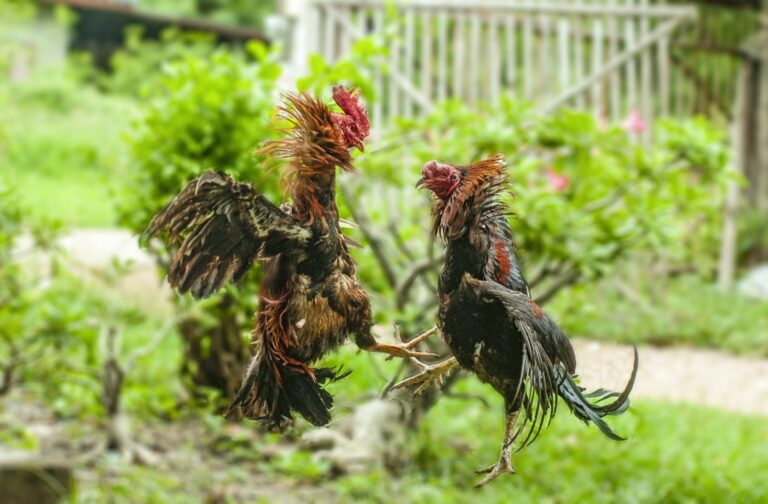
It might not be a surprise to you that this is a very real consideration in a flock of chickens. Chickens actually do have a pecking order, and it’s a truly sophisticated system of social status.
Don’t be too quick to file this away under trivia: understanding the pecking order, how to manage it, and how to resolve seemingly irreconcilable conflicts within this hierarchy is critical for keeping your flock happy, healthy, and safe. Keep reading, and I’ll tell you everything there is to know about it.
Pecking Order: What It Is, What It Isn’t
For every real fact about the pecking order out there, there are at least two myths or half-truths. Believing the wrong info can lead you dangerously astray with your own birds, so it’s helpful to determine what the pecking order is specifically and, just as importantly, what it isn’t.
The pecking order refers to inter-flock dynamics between individual birds and also between and within the sexes. It involves access to food, yes, but that isn’t all it is. It also determines who gets access to premium roosting and other resting spots, more personal space, access to mates, and more.
The pecking order is often ugly when you see its formation; it often involves violent but typically non-life-threatening and non-injurious spats between birds until the details are ironed out. Once established, though, any serious ongoing conflict is a sign of a problem that I will teach you to diagnose.
In short, it is a sometimes scary but always necessary factor for proper cohesion and harmony in every flock of chickens.
Pecking Order Dynamics
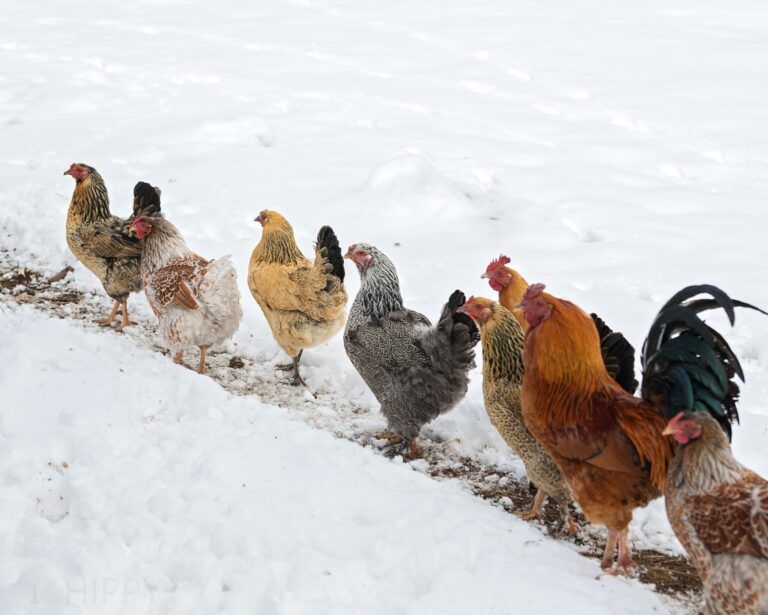
To understand pecking order dynamics, the first thing you have to do as a keeper is understand the individual pressures. Think of the pecking order not as a ladder but rather more like links in a chain—or better yet, chainmail.
Each is an important part of the whole, and when one link fails, it can cause others to fail. Understanding this truth will allow you to better diagnose and deal with any issues with ease.
Flock
Every chicken in the flock has a status, or hierarchy, related to every other. At the top, you have the alpha birds, be they male or female. If a rooster is present in the flock, it will almost always be him and his rivals or subordinates—however you prefer to think of them—if they are present.
Some individual chickens get along wonderfully and have their own friends inside the flock. Conversely, some birds just hate others for whatever reason, and this can turn into a constant source of issues, especially if the alpha is not assertive enough to squash these squabbles.
Removing the alpha bird from the flock will usually cause a period of chaos, as the other chickens will vie for supremacy and the whole hierarchy will be shaken up.
Rooster/Rooster
There can be only one! It’s not a Highlander movie, but it might as well be…
Ask any keeper, and they will tell you: there can only be one truly top bird, and except in a larger flock, there really should be only one rooster. He will lead all of the hens, protect them, keep them in line, and vanquish any challengers to his title.
If you have more than one rooster and plenty of hens to go around, the roosters will still fight amongst themselves for overall dominance. But nothing lasts forever; any sign of weakness, and the subordinate roosters might try again later.
Rooster/Hens
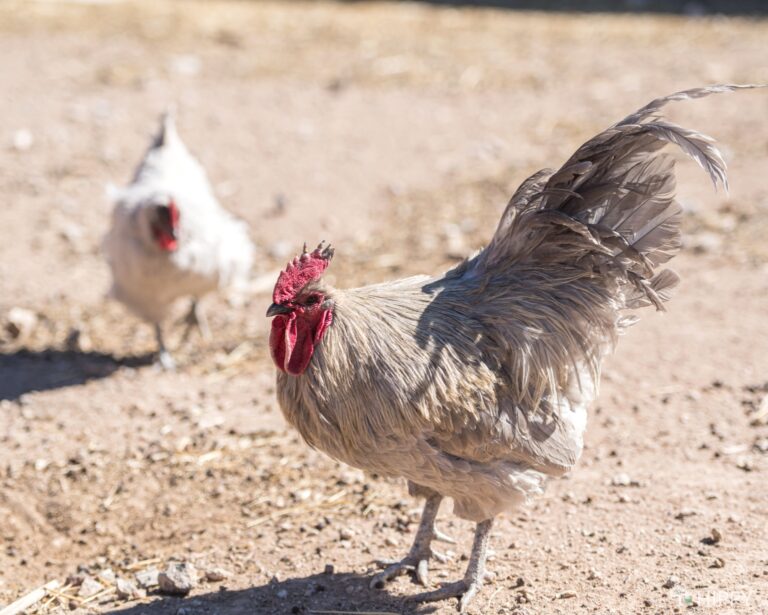
As a rule of thumb, any given rooster will always be superior to hens, although every once in a while a particularly belligerent and unruly hen might run off even a fearsome rooster!
Roosters also have their own harem of preferred mates, with their main squeeze being near the top of the pecking order and superior to all of the hens below her. See the next section.
Hen/Hen
If you don’t have any roosters, one hen will establish herself as the flock leader, or matriarch, out of necessity. Usually, this works fine, but the girls aren’t as suited for the job as the boys, and neuroses between hens can sometimes lead to issues.
As mentioned just prior, if a rooster is present, there’s still a secondary pecking order among all the hens in the flock.
Social Pressures Manifest in Chickens at Just 6 Weeks Old
The pecking order isn’t just something that affects adult flocks; this behavior begins to appear and establish relationships in chicks that are a little over a month old!
It can be hard for new keepers to watch those cute little fuzzballs turn into churlish, even bullying, young birds, but again, this behavior is natural and necessary.
Problems
Chickens enforce the pecking order. That’s it. “Enforce” means that force is used to achieve the desired result.
If a bird starts to buck their place, makes a bid for better status, or just doesn’t meet the standards of the flock in terms of health or behavior, other birds will start to invade their space, peck them, pluck their feathers, and worse.
When you see chickens seemingly being run away from food and water until other members of the flock are done eating and drinking, or if you see birds being pushed off of roosting areas, you’ll know that enforcement is underway. If it stops, the job’s a good one. But if it doesn’t stop, that means problems for you.
The progression usually looks something like this:
Bullying Causes Stress and Injuries
Birds that are getting repeatedly bullied become stressed or, by accident or malice, get injured. Injuries are typically inflicted by a chicken’s beak or by repeated feather plucking. Roosters and larger hens can inflict injury by flogging, scratching, and spurring.
Stress and Injuries Lead to Loss of Efficiency
Even low-status chickens can lead happy lives if they accept their place. But, if they are the target of ongoing harassment, stress and injury will lead to a loss of efficiency, meaning fewer eggs laid and slower growth.
Injuries Can Cause Cannibalism!
When a chicken gets injured as the result of pecking order squabbles, it’s usually the start of a downward spiral. Injured chickens prompt flockmates to continue bullying them, leading to ever more injuries, ever more stress, and more attacks.
This culminates in a poor bird being killed and often torn apart and eaten!
Unhinged Flocks Can Tear Themselves Apart
Most harrowingly, this death cycle of stress is a sort of social contagion: members of the flock will start doing it more and more, and in short order, the flock will tear itself apart unless you intervene.
You Can’t Prevent Pecking Order Squabbles—And You Shouldn’t Try
All this sounds very scary. And it can be! But you need to keep in mind that minor squabbles, dust-ups, and even rivalries are completely normal.
You shouldn’t waste your time or stress yourself out trying to prevent every little skirmish and force your birds to be peaceful at all times like a classroom of kindergartners.
The only time you should start to worry is if the fighting draws blood or if a bird is getting picked half-bald. Even if the dust is flying and the birds are screaming, if there’s no blood, there’s no fowl- er, no foul!
But You Can Cause Them If You Aren’t Careful
Where you need to be especially cautious, though, is that you do not exacerbate pecking order problems. The number one way to do this is by removing a member of the flock and reintroducing them after a couple of days, or by introducing a new chicken with no warm-up period.
Even the arrival of a single new bird causes the whole hierarchy to come crashing down more or less, to be reset from the ground up.
To prevent this, you should aim to always introduce new birds in pairs so they have mutual support from one another. Put them in a separate enclosure adjacent to your existing run so the flock can see them, smell them, and take their measure.
After several days, you can let them in to join the flock—but do be prepared for a few squabbles as detailed above! Follow this procedure if you’re forced to remove a member of the flock and are putting them back in after several days.
Have a Contingency Plan for Defusing Major Drama
Lastly, a couple of things that will help you prevent disaster if things start to get out of hand: have a small, separate run or at least a chicken crate so you can rescue any birds that are getting ruthlessly bullied or injured. You can also help diffuse ongoing issues by providing extra perches in the run and small cubbyholes or openings to serve as hiding places.
Any chickens that are seriously injured or sick should not be reintroduced until they are well; chickens naturally seek to eliminate ill birds for the good of the flock. Brutal, but that’s just the way it is!

Tim is a farm boy with vast experience on homesteads, and with survival and prepping. He lives a self-reliant lifestyle along with his aging mother in a quiet and very conservative little town in Ohio. He teaches folks about security, prepping and self-sufficiency not just through his witty writing, but also in person.
Find out more about Tim and the rest of the crew here.