
All plants need water to survive. Everyone knows that, even non-gardeners! But gardeners understand it — I would say feel it — more than most. All of us with green thumbs have known the pain of losing plants or botching a harvest simply because we forgot to water or didn’t water our plants enough.

It is heartbreaking when it happens, but whether you are forgetful, dealing with lengthy periods of low rainfall, or just live in a scorching hot, dry environment, there is still hope for your garden.
There are lots of plants out there that are truly drought-resistant, requiring very little water or only infrequent waterings to survive and thrive.
Whatever your purposes, if that sounds like a good deal to you, you’ve got to check out these 20 awesome drought-resistant plants. I’ll tell you all about them down below.
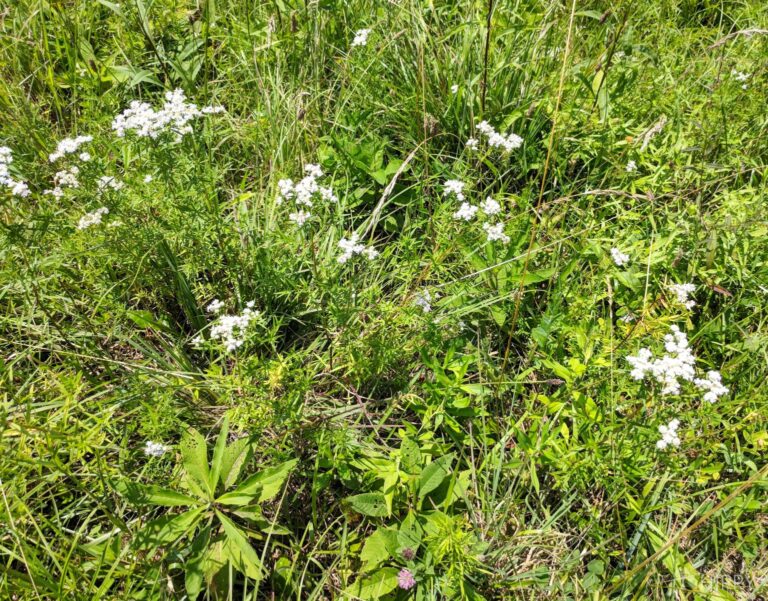
Yarrow (Achillea millefolium)
- Sun Exposure: prefers full sun, can tolerate partial shade.
- Soil Type: well-draining and sandy or loamy
- Soil pH: 5.5 to 7.0
- Blooms: early to mid-summer, continues through early fall.
- Lifespan: perennial.
This famously drought-resistant perennial herb grows natively all across the Northern Hemisphere.
Aromatic and adorned with small, flat clusters of tiny blooms, it thrives in poor soil and bad, dry conditions. You can find it in the U.S. growing alongside highways, paths, and in badlands.
There are many different varieties of yarrow out there, but all of them are easy to care for and highly resistant to drought conditions and insect pests. It can thrive nearly anywhere.
One fun fact about yarrow is that it has several known health-boosting and medicinal properties, and has been used for such going back to ancient times.
Cacti (Cactaceae spp.)
- Sun Exposure: full sun.
- Soil Type: sandy, very well-draining.
- Soil pH: 6.1 to 7.9 depending on the species.
- Blooms: spring or summer, again depending on the species.
- Lifespan: varies by species; some can live for a century or more.
The first plant that most people think of when they think of minimal water requirements, cacti are certainly the most iconic desert plant, and naturally, they are among the most drought-resistant.
Cacti do need water just like every other plant, but they have a unique mechanism for managing their water needs, drawing up any moisture they can get and storing it in their fleshy stems for long-term use.
There are many dozens of succulents out there suitable for cultivation. Some of the most popular, chosen for their inherent beauty or gorgeous blooms, include the Saguaro and the tiny, container-ready Mammillaria.
These are some of the very best choices for lazy or forgetful gardeners — like me — but do watch out for their spines!
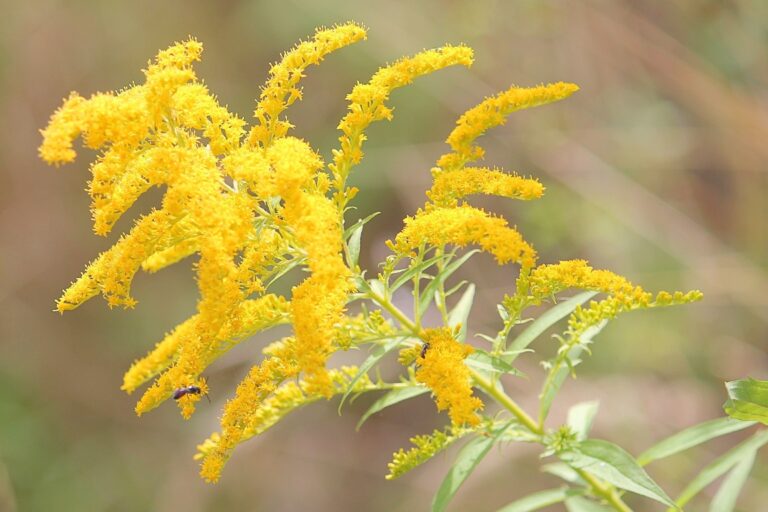
Goldenrod (Solidago)
- Sun Exposure: loves full sun, can tolerate some shade.
- Soil Type: sandy or loamy and well-draining.
- Soil pH: 5.5 to 7.5
- Blooms: end of summer through fall.
- Lifespan: perennial.
The bright yellow, reedy blooms of goldenrod often get a bad rap because it is commonly confused for ragweed, a notorious allergen! Goldenrod, though, is typically non-allergenic or minimally so.
A good thing, too, considering it will grow just about anywhere it gets a foothold, and it spreads quickly because of its rhizomatic growth habit.
Reaching up to 6 feet tall, goldenrod can make a gorgeous border plant for your property or garden, or an impressive centerpiece.
It’s also a pollinator magnet, drawing in bees, butterflies, hoverflies, and a lot more. Just take care to keep it contained because it can easily go out of control if untended.
Yucca (Yucca spp.)
- Sun Exposure: full sun.
- Soil Type: versatile, likes rocky or dry, sandy soil.
- Soil pH: 6.0 to 8.0
- Blooms: mid-spring through most of summer.
- Lifespan: perennial.
Another desert-dwelling plant, and one native to North America, yucca is instantly recognizable for its long, tapering, blade-shaped leaves with a sprout of tangled, drooping bell-shaped blooms in the middle.
This is an especially hardy plant, one that is incredibly resilient and able to grow nearly anywhere. It is often found growing wild and is cultivated for its beauty and dramatic appearance.
Aside from drought conditions, these plants can also survive extreme cold, easily withstanding temperatures below zero!
They will go on living if you ignore them, and virtually nothing short of physical destruction will kill them. However, if you want them to thrive, aim to lightly water them once a week.
Coneflower (Echinacea purpurea)
- Sun Exposure: full sun.
- Soil Type: well-draining sandy or loamy soil.
- Soil pH: 6.0 to 7.5
- Blooms: summer through most of fall.
- Lifespan: perennial.
This tough, pretty, and showy flower is loved by gardeners both for its appearance and its utility.
The pretty, radial, daisy-like blooms speak for themselves, but coneflower is also an important source of food and interest for pollinating insects, hummingbirds, and other birds that nibble on their seed pods.
Speaking of seeds, if you want to maintain an orderly garden, you will need to prune back seed heads to keep the plant from scattering them nearby.
Aside from that, you only need to water it lightly and occasionally once the soil completely dries out. This is a great companion plant that can support a healthy ecosystem in the rest of your garden.
Beardtongues (Penstemon digitalis)
- Sun Exposure: full sun to partial shade.
- Soil Type: well-draining and sandy; can thrive in rocky soil as well.
- Soil pH: 6.0 to 8.0
- Blooms: late spring through summer.
- Lifespan: perennial.
Tall, striking, and distinguished by their disc-shaped arrangements of pale pink, white, and purple flowers, beardtongues are native to North America but commonly cultivated in gardens with other desert and arid plants.
Unlike so many other plants in this category, they do great with lots of sun but can also grow well and bloom even if they get lots of shade.
The trick is that they need dry conditions most of the time. Heavy soils that retain water will invariably cause root and crown rot. You should only water them regularly while they are establishing themselves.
Once mature, cut back on the watering to once a week or a little less. Beardtongues of all kinds are favorite plants of hummingbirds, and a great way to keep them coming back to your yard year after year.
Winter Jasmine (Jasminum nudiflorum)
- Sun Exposure: full sun to partial shade.
- Soil Type: adaptable to many soil types as long as they are well-draining.
- Soil pH: 5.5 to 8.0
- Blooms: end of winter to early spring.
- Lifespan: perennial.
There’s nothing quite like the fragrant, soothing scent of winter jasmine. This climbing plant will adorn any surface — be it a trellis, wall, arch, or anything else — with a splash of petite and pretty yellow blooms.
The very best attribute of winter jasmine is how reliable it is: given a little water or a lot, extra care or complete apathy, it will always produce blooms.
Even when out of season, it’s shapely and attractive. One of the earliest bloomers around and with minimal care requirements: what’s not to love?
Hens and Chicks (Sempervivum spp.)
- Sun Exposure: full sun to partial shade.
- Soil Type: can thrive in sandy, rocky, or gravelly soil as long as drainage is ensured.
- Soil pH: 6.0 to 7.5
- Blooms: summertime.
- Lifespan: perennial.
The humorously named hens and chicks is a succulent that’s ideal for very dry environments and suboptimal soil. There are also many different varieties out there that offer different shapes and colors to fit any decorative desire; you can get the usual greens, variegated or not, but also pink, orange, and red types. They make a wonderful accent plant!
You only need to water hens and chicks until the central rosette is mature. Once it is, you can let it live on rain alone or water it every couple of weeks.
This plant gets its name from its growth habit: once it establishes itself, a larger, central formation will start sending out tendrils that will grow smaller copies of itself. It looks somewhat similar to a mother hen and her baby chicks flocking around!
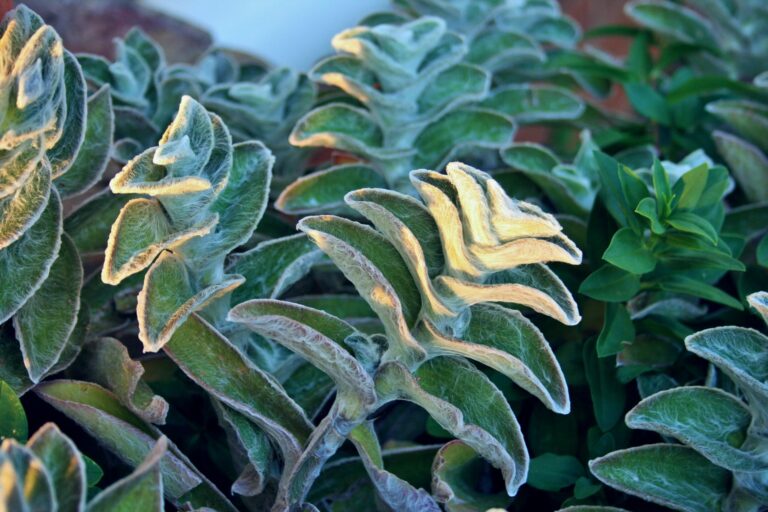
Lamb’s Ear (Stachys byzantina)
- Sun Exposure: full sun to partial shade.
- Soil Type: well-draining, sandy or loamy preferred.
- Soil pH: 6.0 to 7.5.
- Blooms: mid-spring to early summer.
- Lifespan: perennial.
Lamb’s ear is a plant of contrasts: it has long, tapering, flexible leaves that are covered with a fuzzy, silvery down of fine hairs. It looks, and feels, a lot like a lamb’s ear! The leaves are so tough, soft, and absorbent they were even used in ancient times as bandages.
This plant is phenomenally tough: it’s native to the Middle East and it thrives in the hottest and driest conditions, and it can even grow well in the poorest of soils. As long as they have good drainage, they will do well.
Lamb’s ear works wonderfully as a border plant, but some varieties are non-flowering and grow particularly low, making them a good ground cover.
Desert Spoon (Dasylirion wheeleri)
- Sun Exposure: full sun.
- Soil Type: rocky or sandy, well-draining soil.
- Soil pH: 6.0 to 8.0.
- Blooms: summertime.
- Lifespan: perennial.
Most of what you need to know about desert spoon is in the name. You know it is supremely resistant to drought because it is indeed a desert-dwelling plant — and also on this list — and its long, slender, cupped leaves look vaguely like spoons when they are short.
When mature, they look more like saw blades; each is lined with sharp, aggressive, hooked spines, so wear gloves when handling or tending to it.
This plant is slow-growing, but there’s a big payoff if you are patient. When it blooms, it sends up a truly towering flower spike that can clear 13 feet tall! Surprisingly, this plant does best if you avoid watering it at all until it is mature. Plant it and forget about it!
Little Bluestem (Schizachyrium scoparium)
- Sun Exposure: full sun.
- Soil Type: well-drained sandy soil preferred.
- Soil pH: 6.0 to 7.5.
- Blooms: late summer through fall.
- Lifespan: perennial.
This North American grass is vitally important to prairie ecosystems, providing both food and shelter to various organisms and paving the way for other plants and subsequently more creatures that will flourish once it is established. It is also important to lots of pollinator species.
Neat stuff, but gardeners are far more apt to grow little bluestem because of its wispy growth habit and gorgeous coloration.
Blue-green blades of grass turn purple and orange in the fall, then turn green again in the spring and summer. It’s amazingly colorful, and watching it ripple in the wind is one of life’s greatest small pleasures.
Little bluestem will readily self-seed and spread, so take steps to control it if you don’t want that to happen, or let it go if you want it to spread.
Lilacs (Syringa vulgaris)
- Sun Exposure: full sun to partial shade.
- Soil Type: well-draining and loamy.
- Soil pH: 6.0 to 7.5.
- Blooms: late spring.
- Lifespan: perennial.
One of the most loved ornamental shrubs, lilacs only look delicate with their dense bushels of pastel-colored blooms. But surprisingly enough, these plants are remarkably tolerant to drought conditions, and will only need water from you periodically if at all.
Keeping their root zone moist using mulch or other ground covering is essential until they are established, however.
If you want to add some beauty and interest to your garden, lilacs are one of the best choices. You can keep them as small, singular shrubs, plant them as hedges, or cultivate and train them to grow as trees. Mature specimens can clear 25 feet!
Catmint (Nepeta racemosa)
- Sun Exposure: full sun or partial shade.
- Soil Type: sandy or loamy is fine as long as it’s well-drained.
- Soil pH: 6.0 to 7.5.
- Blooms: begins in late spring or early summer, tapers off with the arrival of cool weather.
- Lifespan: perennial.
This fragrant, tough herb smells pleasant to people and apparently also to cats. Cats are attracted to it thanks to the nepetalactone content the plant contains.
The jazzy, eye-catching blue and indigo blooms are gorgeous in their own right and reason enough to grow this one, but it’s also super attractive to various pollinating insects.
Catmint has minimal water needs — about once a month — and is highly resistant to insect and mammal pests. It is hardy enough to survive and thrive in poor or depleted soils.
However, it will need a little help from you in times of extreme heat: water slightly more often during high temperatures.
Creeping Phlox (Phlox subulata)
- Sun Exposure: full sun to partial shade.
- Soil Type: well-draining, sandy or loamy is okay.
- Soil pH: 6.0 to 8.0
- Blooms: springtime.
- Lifespan: perennial.
If you’ve had trouble getting other ground-covering flowers to persist in your environment because of heat and dryness, you’ve got to give creeping phlox a try.
This gorgeous ornamental produces a dense carpet of pink, purple, or white blooms in the spring, and they persist through the summer. It will grow across rocky soil, along walls, and easily take hold in crevices, gaps, and cracks.
As you need more, you can also partition off or divide mature plants to relocate them, and it transplants wonderfully. Note that it is only drought-tolerant once it is well established; while it is young and growing, water it frequently but don’t overdo it or else you risk fungal infection.
Sage (Salvia officinalis)
- Sun Exposure: full sun.
- Soil Type: tolerates most well-draining soils, does best in sandy or loamy soil.
- Soil pH: 6.0 to 7.5.
- Blooms: usually late spring, might bloom in early summer.
- Lifespan: perennial.
One of the most beloved kitchen herbs used around the world, and cultivated both for its beauty and aroma, sage is a rockstar if you’re dealing with dry, hot conditions and an extreme sun index.
The only trick is getting it established. Once it is, it can shrug off all but the worst droughts. As long as you get even occasional rainfall, it will do fine, but if the drought drags on for weeks and weeks, water it occasionally to keep it thriving.
Sage can grow up to 3 feet tall, and when blooming sends up spires of intensely indigo flowers. It’s an intriguing look that can add texture and contrast to any arid ornamental garden, and it’s also a surefire pollinator attractor: bees and butterflies simply cannot resist it.
Bearded Irises (Iris germanica)
- Sun Exposure: full sun to partial shade.
- Soil Type: well-draining sandy or loamy soil.
- Soil pH: 6.5 to 7.5.
- Blooms: late spring to summer.
- Lifespan: perennial.
Another dramatic, tough ornamental perennial, bearded irises are native to Europe but popular cultivated flowers in North America, and they’ve even gone native in some regions.
Despite their delicate beauty, these blooms can withstand intense heat and very little water, along with lots of other substandard conditions. However, do note that in cooler weather they tend not to produce as many flowers.
Spreading via rhizomes, they can be tricky to contain if you aren’t careful, but this also makes it easy to split them off and plant them elsewhere.
Note that when you do water bearded irises, you should water them earlier in the day so they have time to dry out completely; these, more than many others, are quite vulnerable to bacteria and fungi in damp conditions.
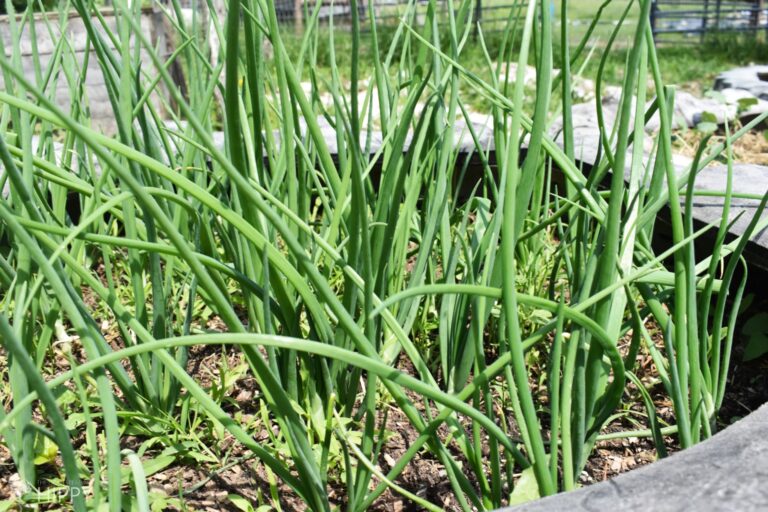
Alliums (Ornamentals)
- Sun Exposure: full sun to partial shade depending on the variety.
- Soil Type: well-draining soil is a must. Tolerates different soil types but you should avoid clay.
- Soil pH: 6.0 to 7.0
- Blooms: spring or summer depending on the variety.
- Lifespan: perennial.
Seasoned gardeners probably perked up at the mention of alliums: if you are thinking of onion or garlic, you are right! Surprisingly enough, there are varieties of both, and other allium genus plants besides, that are kept not as food but for their ornamental blooms.
Most send up a stand of round flowers which are pest-resistant and highly attractive to beneficial pollinators and garden predators like wasps.
As with most varieties that we grow for food, they thrive in drier conditions though they will need a little water from you during extended droughts.
Daylilies (Hemerocallis)
- Sun Exposure: full sun to partial shade
- Soil Type: tolerates most soil types as long as they are well-draining and free of rocks.
- Soil pH: 6.2 to 7.8.
- Blooms: summertime.
- Lifespan: perennial.
One of the greatest ornamental perennials out there, and also one of the easiest to care for, daylilies come in a variety of colors but are best known for their striated, curling orange and red blooms that are so iconic.
Daylilies might be associated with delicate beauty, but make no mistake. These are some seriously hardcore flowers, ones that will tolerate heat and cold, drought and deluge, poor soil, heavy clay, and everything in between. These are also some of the best choices for stabilizing soil and preventing erosion.
This showy plant stores water and nutrients in its roots, meaning it will easily survive periods of lack.
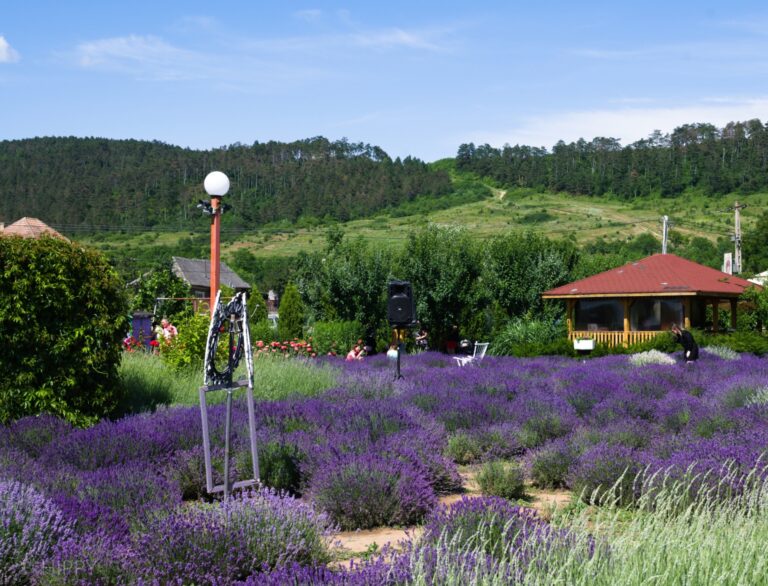
Lavender (Lavandula angustifolia)
- Sun Exposure: full sun.
- Soil Type: well-draining and sandy.
- Soil pH: 6.0 to 8.0
- Blooms: late spring or summer.
- Lifespan: perennial.
Arguably the king of the aromatic herbs, lavender has a magnificent fragrance and adds an interesting note of floral sweetness to baked goods.
The tall strands of tiny, delicate blooms will add gorgeous color to any garden or landscape, and even when they aren’t in bloom, the plants themselves are gorgeous.
They tend to do well in loose, unmaintained soil that stays dry and well-draining, so consider planting it in areas where you’ve had a hard time getting other plants to grow. Whether you want to enjoy its beauty or harvest it for making products or food, lavender will never disappoint.
Artemisia (Artemisia spp.)
- Sun Exposure: full sun is best, but it can tolerate partial shade.
- Soil Type: loose, well-draining soil.
- Soil pH: 5.5 to 7.5, most varieties. Some will only tolerate 6.0 and up.
- Blooms: summertime.
- Lifespan: perennial.
Lush, plush, and intriguing, Artemisia is noteworthy for its dense, dome-shaped growth habit. The individual leaves are a silvery, soft green, and they grow so tightly together you can’t see through them. It looks a little bit like the upper part of a mushroom!
There are many different varieties, and all the ones suitable for growing as ornamentals in your garden are highly drought-resistant and crave lots of sunshine. Most produce few blooms, and they thrive in poor soils.
Note that some ornamental varieties are considered invasive in some U.S. states, so double-check before you order or bring any home to plant.

Tim is a farm boy with vast experience on homesteads, and with survival and prepping. He lives a self-reliant lifestyle along with his aging mother in a quiet and very conservative little town in Ohio. He teaches folks about security, prepping and self-sufficiency not just through his witty writing, but also in person.
Find out more about Tim and the rest of the crew here.