
Bird feeders are one of the best ways to bring a little life to your backyard, and it never gets old seeing what kind of birds show up to get a little snack. Fortunately, birds aren’t the only thing that will show up at your feeders.

Rats happen to be some of the most persistent and destructive thieves that will steal all of the seed right out of your feeders, and worse yet, move right into your house when they are done.
You definitely don’t want that to happen, and if you are sick of throwing money away on birdseed that is just going to disappear down the gullets of rats, you need to learn how to keep these rodents far away.
They might seem hopeless with the wrong approach, but I’m happy to tell you that it is entirely possible using the right techniques…
Keep reading and I’ll tell you how to keep rats away from and out of your bird feeders.
Isn’t it Okay for Rats to Have a Little Birdseed?
No, it isn’t. Not if you care about the health of your birds and potentially the health of you and your family.
Let’s face it, rats might be cute at a distance, but in the wild, they are terrible vectors of disease. If they’re hanging around your bird feeders, it’s only a matter of time until they get too comfortable and then try to move into your home or attic.
When that happens, they will contaminate food, leave urine and feces all over the place, chew up insulation wiring, and more. Believe me; you do not want that to happen.
For these reasons, we must keep rats at a distance and that means denying them the easy source of food represented by the bird feeder. I’ll give you some techniques for doing exactly that in the following sections.
Isolate the Feeder
Your very first step should be to isolate the feeders. No, I don’t mean keeping them far away from each other or as far away from your house as possible, I mean keeping them away from any structure, obstacle, or object that might give rats the boost they need to climb up to it or jump to it.
For instance, if you have a bird feeder sitting on the railing of your deck, rats can climb right up to it easily and munch away. Similarly, a rodent-proof feeder won’t do any good if it’s close enough to a nearby branch for a rat to climb the branch and then jump to the feeder.
You’ve got to think smart. The only way you should leave for a rat to get to the feeder is by climbing the pole itself and then you make that pole impossible to climb.
Stick with Metal or Glass Feeders Only
One fun bit of trivia you should know about rats is that they have amazingly sharp teeth that grow continually, meaning that rats must sharpen them by continual chewing on hard objects and surfaces.
This is easier said than done, because a rat’s teeth are coated with naturally occurring minerals that basically make them the biological equivalent of chisels. Rats can chew through nearly anything!
For this reason, you must make sure the material of the feeder itself is metal or glass. They can easily chew through plastic ones to break them open even if you have other countermeasures in place to stop the seed from coming out when a rat gets to them.
Same thing goes for the pole, too. Stick with metal poles if you are not hanging it from something else. Rats have been known to gnaw through plastic poles to drop the feeder to the ground entirely!
Use Rat Baffles Above and Below
One of the smartest things you can do for bird feeder protection is to install rat baffles above and below. These baffles are cone- or dome-shaped, for upper baffles, and sometimes tube-shaped for lower ones.
The idea is that a rat will be unable to maintain his grip trying to traverse them to keep climbing the pole and then get to the feeder.
Basically, if you have the feeder installed on a pole that’s stuck into the ground, you’ll need:
- a lower baffle that prevents the rat from climbing the pole, usually installed a couple of feet off the ground,
- and then an upper one that is dome shaped placed directly over the fear itself so they can’t shimmy down onto it from above.
If you are hanging your feeder, you only need an upper baffle.
Keep Seeds from Hitting the Ground
I know this might sound impossible when you see what kind of mess birds make, but everything you can do to keep seed up off the ground is going to do wonders for keeping rats at bay generally.
That’s because the seed that is on the ground is the easiest food for them to get, and having consistent amounts of easy food is bound to keep rats in the neighborhood.
To do this, you’ve got a couple of options: You can place a tray beneath the feeder to catch it, but that would be just another location that rats might be able to get to depending on the arrangement of your feeder.
Another thing you can do is to sweep up the fallen feed periodically. Don’t allow it to accumulate and it is a lot less likely to attract packs of rats.
You might also consider investing in suet blocks and other types of feed or feeders, right combination of the two, that will allow birds to get only a little bit of feed at a time and avoid spilling it.
Also, don’t get lazy and directly scatter seeds on the ground, even for your ground-feeding birds. That would totally defeat the purpose!
Try a No-Waste Seed
No-waste birdseed is a spendy but effective approach for directly minimizing its attractiveness to rats, mostly by cutting down on so-called junk seed that birds either discard or miss in the mixture.
Any birdseed that has shells and hulls removed, or a higher percentage of fruits and nuts compared to grains is usually a good choice.
This will definitely be one of the more expensive options for helping to repel rats, and if they’re already well established in the area and know that your feeder is a good spot to grab dinner, this probably won’t work the way you hope.
Nonetheless, combined with other methods on this list it can make a difference but don’t be afraid to try those before resorting to this more expensive feed.
Spike the Seed with Hot Pepper Oil
My personal favorite method for repelling rats is to turn them against birdseed by spiking it with hot pepper oil, or by buying specialty rodent-repellent formulas.
Don’t worry, we’re not poisoning them and we’re not hurting the birds either: These rat-deterring birdseeds, including my own special homebrew, have nothing more than scorching hot pepper oil added in.
Spicy peppers only affect mammals, including people and rats, but don’t disturb birds in the least and they can’t detect it at all. Your birds that visit will love the spicy seed the way they always have, but any rats that try to steal bite are going to get lit up something fierce.
Hopefully, the resulting pain and anxiety will be enough to deter them from eating anymore and trying again.
Don’t underestimate the intelligence of rats: they are quite clever and will put two and two together, believe me! It won’t take more than a handful of feedings before they decide to try their luck somewhere else.
Use an Exclusionary Bird Feeder
If you don’t mind switching bird feeders, an exclusionary feeder will help keep rats from getting to the seed if they do make it to the feeder itself.
These feeders are either precisely weighted and balanced to only support the weight of a bird without tipping, or else they have a sensitive pressure plate for any visitors that will close off access to the seed if an animal weighs more than just a couple of ounces.
This means that rats or squirrels that make it to the feeder will trip the pressure plate and shut off the supply of food.
A worthwhile approach, especially combined with other control methods listed elsewhere on this list.
Spray Rat Repellent
Rat repellent is definitely something you should try if you know or suspect that rats have started to visit your feeder.
You can use an all-natural and non-toxic rat repellent in the form of an over-the-counter commercial formula designed for mice and rats, or nothing more than certain essential oils that are naturally repulsive to them.
Clove oil, peppermint oil, tea tree oil, white pepper, red pepper, garlic, and onion are all good ones to try.
Spray them all around your bird feeders, and all over the poles, and hopefully, it will send the rats packing when they show up. If using an over-the-counter product, follow the instructions that come with it to the letter.
Remove Cover and Nesting Areas
You can reduce the likelihood that rats will even make a move on your feeders if you don’t give them any comfortable places to live and breed nearby.
Do an assessment of your property and get rid of any brush piles, tall grass, overgrown old gardens, large and unmanicured shrubs, and similar places where rats might live in congregate.
Don’t forget to check in old, neglected sheds, too! A little spring cleaning will go a long way towards giving rodents the boot.
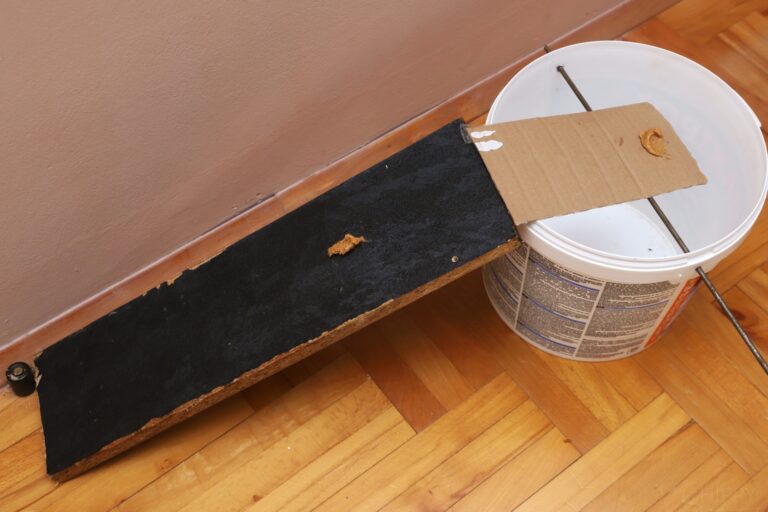
Place Traps to Catch Rats
If all else fails, or if your property is just swarming with rats, you have to catch them and get rid of them. This is best done with traps, either live catch traps that will allow you to kill the rats yourself later or relocate them if you prefer, or you can go lethal immediately using several trusty standbys.
If you want to go non-lethal, I strongly recommend a teeter-totter or rolling log-style bucket trap that doesn’t need rearming and can catch many rats at once in the course of a night.
For lethal traps, consider using electronic models that will kill instantly and reliably, as these are less likely to harm other animals that you don’t want to bag.
I urge against the use of poison, though. Poison is an indiscriminate killer, even a random one. That’s because rat poison can kill almost any animal that eats it, or any animal that eats a rat that ate the poison previously.
You can’t tell where the circle of violence will stop, so avoid using the poison unless you have no other choice!

Tim is a farm boy with vast experience on homesteads, and with survival and prepping. He lives a self-reliant lifestyle along with his aging mother in a quiet and very conservative little town in Ohio. He teaches folks about security, prepping and self-sufficiency not just through his witty writing, but also in person.
Find out more about Tim and the rest of the crew here.