
Mice are often beneath notice, moving invisibly as they do through fields, lawns, and brush piles. But they are only beneath notice when they are outside your home. Once they get inside your house, you’ll know they are there. Believe me!

Mice will scurry and scratch around in your home, breaking into food, chewing wires and insulation, leaving disgusting trails of feces and urine, and spreading disease.
Sure, they’re just looking for food, water, and shelter like any living thing, but you can’t let your feelings get in the way of what must be done.
The mice have got to go, and if they’re in your home, chances are very good they’ll take up residence in the attic.
This can make getting rid of them a lot trickier, but the good news is there are still several strategies you can rely on to do just that. Keep reading and I’ll tell you about 9 ways to get mice out of your attic.

How Will You Know You Are Dealing with Mice?
If you suspect mice are inside your home, you need to make sure. If it turns out to be some other critter you might need a different approach from what I will share with you below.
For starters, listen for mouse activity especially in the evening and middle of the night when they’re most active.
If you hear gentle scampering above your ceiling, scratching, chewing, and things like that, it’s probably mice. An occasional knock or thump might be something landing on your roof or a nearby branch brushing against it.
Also, pay close attention to your pantry and any other potential food source. If you find nibbled packages, holes in walls, tiny brown grains of rice- mouse droppings- or strange, greasy trails along baseboards and floors that have been strangely swept clear of dust, you’re dealing with mice for sure.
And, keep your eyes peeled: you might see a mouse moving around in your house at night! Once you are sure, take action without delay because mice reproduce extremely quickly.
Try a DIY or Commercial Mouse Repellent
Mouse repellents can be surprisingly effective at keeping mice away or dislodging them from your attic if you know about where they are staying.
Mice, like all rodents, have unbelievably sensitive noses and there are many kinds of things out there, some of them all-natural, that can repel them.
Though harmless to people and pets, these things can drive them crazy: Peppermint oil, tea tree oil, clove oil, and mothballs are some of the most effective, and reasonably affordable to use for the purpose.
Some folks also report very good luck using garlic, red pepper, black pepper, and commercially available mouse repellent.
In the case of oil or other liquids, you can sprinkle, spray, or smear the substance along paths that you know mice are taking and near any entrances that they are using or were formally able to use (see the section after this list).
Another option is to soak cotton balls in the substance and then leave them in strategic locations.
The goal is to blanket an area with these offensive odors that will drive the mice away or they can live somewhere else more comfortably, or at the very least get them moving around so they are more likely to fall into one of your traps. More on that in just a minute.
Use Ultrasonic Rodent Repellers
When you visit a link in this article that takes you to a different website where you can purchase something, I may earn a commission. Read my full disclosure for more details.
If you want to start with a completely clean and humane method of getting rid of mice, you might try an ultrasonic rodent repeller.
These electric devices, usually battery-powered and sometimes rechargeable, employ a super-high-frequency shriek or siren that is sort of like a dog whistle. But believe it or not, it is so high-pitched that even dogs can’t hear it! But mice can and this makes being near the things basically intolerable to them.
Sonic repellers have proven effective at displacing mice from a nearby area, and placing a network of them in your attic might get them to move out and move on (but be ready for them to head elsewhere in your home).
Also, for whatever reason, these devices aren’t 100% effective all the time, and even ones from trusted manufacturers just flat-out fail to affect certain rodents.
I can’t tell you to count on these as a sure thing for solving your mouse problem, but they are definitely worth a try especially if you don’t want to do a ton of work up in the attic or mess with bait and traps. Just make sure you have a plan B!

Place Live-Catch Traps
My very favorite category of mouse traps is live-catch traps, also called non-lethal traps. Don’t get me wrong: while I don’t want to hurt mice if I don’t have to it’s got nothing to do with mercy. I use these traps because they work, and they save me a ton of time and effort.
The great thing about live catch traps is that most designs are self-resetting, meaning they need no interaction from you once they catch a mouse, and they can hold multiple mice, sometimes many!
That means you set them up once and check on them only occasionally to then release or kill the mice they have captured. Sounds like a bargain to me!
Generally, these traps, whatever design they are, consist of one or more one-way entrances with some bait in a central holding area which is basically a little mouse corral.
Mice can smell the delicious food inside, and once they enter the gate or ramp to get to it, they can’t get back out- and they can’t chew their way out of the metal walls of the trap!
Then you come along and take the mice somewhere far, far away to release them or kill them via drowning or some other means.
Place Glue Boards
If you don’t care to catch and release, but you don’t want to risk mice getting away once they enter a trap, glue boards work wonderfully.
Glue boards are exactly what they sound like: a panel or a rigid sheet that is coated with an extremely strong and touch-sensitive adhesive.
Once mice step on the board, they can’t step back off, and their frantic efforts to free themselves only wind up with them getting more ever more stuck in the sticky glue.
But even if you would free them, know that that is a no-go with these traps: glue boards are lethal one way or the other, with death usually resulting from positional asphyxiation, starvation, dehydration, or shock.
The good news is you can collect a “used” glue board and then just dump the whole thing with the carcasses in the trash with no need to extricate the corpse of the mouse. And larger glue boards can easily catch multiple mice and other critters besides.
But once a glue board is used up by being covered with dust or other contaminants from being out too long it is useless and must be discarded. They are disposable, after all.
Try Electronic Traps
Electronic traps or another type of lethal trap, but one that kills via relatively “clean” and instantaneous electrocution. Typically powered by multiple large cell batteries, once a mouse enters an electronic trap to get a bite of tasty bait, the electrodes activate and fry them instantly.
They’re seen as a more humane and hygienic option compared to traditional lethal mouse traps and certainly glue boards, but they are expensive and made more so by their dependency on batteries.
The good news is that they can sometimes kill multiple mice with no intervention from you, although multi-kill capability is variable depending on the manufacturer.
If you have the money, they are a good option if you’re squeamish about dealing with potentially mangled mouse carcasses.
Use Bar or Jaw Traps
The oldest and still most effective type of lethal mouse trap in production today. These mouse traps rely on spring-loaded bars or toothed jaws that slam shut on any mouse that actuates the trigger. The trigger, naturally, is usually set with bait to entice the poor critter.
They are cheap, highly lethal, and unlikely to let a mouse get away injured when set properly with the right bait, like peanut butter.
The downside is that they’re so sensitive they are prone to inadvertent activation, and they require constant checking and resetting to depopulate mouse infestations. Plus, you’ll have to deal with the often messy carcass in between.
Call a Professional Exterminator Company
If you’re dealing with a significant infestation or you just don’t fancy crawling around up in your attic and risking a tumble through the ceiling, leave it to the pros: call a professional exterminator in your area and let them handle it.
Remember that your time has an associated cost with it, and you might be better off spending it working around your homestead or on other projects rather than tracking down and getting rid of mice.
Hire a Trained Mink Team
Certainly one of the coolest and most interesting methods for mouse removal, some specialized exterminators make use of a trained mink, or teams of minks, to absolutely, positively obliterate mice by the dozens or even hundreds.
If you have a major infestation of mice run amok, one that is about to run you out of your home, this is a worthwhile option.
Fast, relentless, and possessing senses that are every bit as good as the mice they hunt for, a trained mink can find and kill dozens of mice in an hour, and that’s because it can go everywhere that they can go and move much faster the whole time. As far as the poor mice are concerned, the arrival of a mink is the apocalypse!
The only downside is that “minking” is an ancient skill that is only just now being revived and so might not be available in your area.
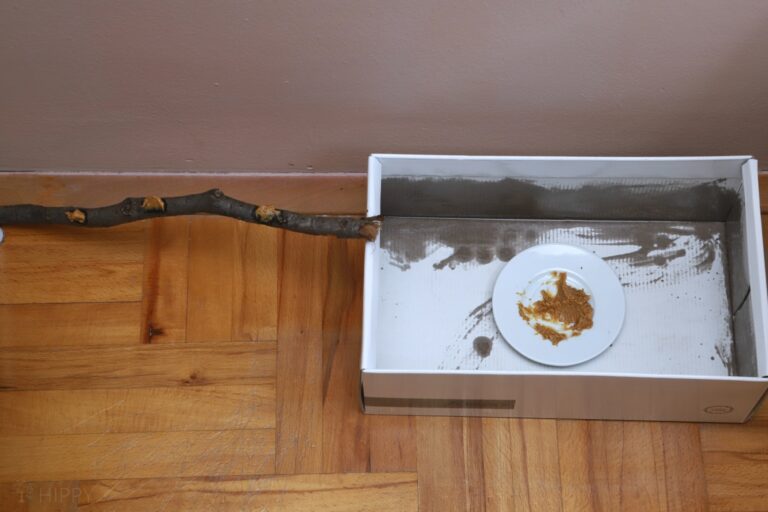
Use Poison Bait
Everybody knows about rodenticide as mouse poison, by now surely. Although undeniably effective, it comes with significant risks if you want to use it against mice in your attic.
For starters, any other animal or child that eats the poison will be affected by it, as will any animal that eats a mouse that has eaten the poison.
The other major concern, and one that you should not discount, is the fact that mice that are poisoned don’t die instantly as with the traps above, ready for summary collection.
Instead, they will find some quiet and hidden place in your walls or elsewhere in the attic to die, and then start stinking up the joint when they decompose!
If you’ve exhausted every other option, poison might be worth considering if you’re going to lose your house otherwise. But it should not be your first choice both for safety’s and sanity’s sake!
Prevention is Always the Best Defense
Now as always, the best way to get mice out of your attic is to prevent them from getting in there in the first place. It’s a cliché, but a cliché for a reason: an ounce of prevention is worth a pound of cure.
The very first thing you must do is also the most difficult. But it must be done because otherwise, mice can keep getting into your home.
Starting with your crawl space and the exterior of your home, go around and seal up any crack, any crevice, and any hole or gap large enough to allow a mouse to squeeze through.
This might be quite a job depending on how well your house is built because mice can squeeze through a gap that is just a quarter of an inch in diameter or width. That’s a little smaller than a dime!
The rule of thumb is that anywhere a mouse can fit their skull through they can go, and this means that holes allowing pipes and wires to go from the crawl space to the attic or from the outside to the inside can easily let rodents in and give them free rein to move around.
Grab construction adhesive, foaming gap filler, caulk, weather stripping, and steel wool, and close up those gaps! Use steel wool in conjunction with the caulk to discourage mice from attempting to chew through it and get back in.
Also, don’t give mice any temptation to come into your home or stick around outside it. Clean up sources of food or water that they might have easy access to.
Eliminate brush piles, trim grass, rake up leaves, and keep storage in your shed and outbuilding tidy to discourage them from hiding and living nearby. When the weather turns cold, mice will invariably leave these places and look for a warmer sanctuary inside your attic.

Tim is a farm boy with vast experience on homesteads, and with survival and prepping. He lives a self-reliant lifestyle along with his aging mother in a quiet and very conservative little town in Ohio. He teaches folks about security, prepping and self-sufficiency not just through his witty writing, but also in person.
Find out more about Tim and the rest of the crew here.