
Hummingbirds are amazing. They’re indisputably gorgeous, incredibly agile, and also important pollinators. Though the vast majority of all the many species out there reside near the equator, a few are migratory and do travel through North America.

If you look forward to the arrival of hummingbirds every year, you can greatly increase the chances of seeing them and keeping them around by raising the right plants that will provide these super active, tiny birds with the nectar they need to survive.
In this article, I’ll be telling you about 20 such plants that are hummingbird magnets, and also about those that won’t give these little birds any incentive to hang around. We’ll get right into it below…
Lavender (Lavandula spp.)
- Growth Zone: 5 through 9.
- Growth Habit and Size: shrub-like, 1 to 3 ft tall depending on variety, perennial.
- Typical Colors: various shades of purple, and sometimes pink and white or bluish.
- Blooms: mid-spring through summer.
Incredibly fragrant and renowned for its use in aromatherapy and sometimes as a kitchen herb, the tall, spiky clusters of lavender blooms are fairly attractive to hummingbirds and irresistible to many bees and butterflies.
If you love this stuff and hummingbirds, it’s a match made in heaven…
Make sure you plant it in well-drained soil where it gets tons of sun. It’s a good mainstay for hotter regions because it is highly drought-tolerant.
Esperanza (Tecoma stans)
- Growth Zone: 8 through 11.
- Growth Habit and Size: shrub, up to 6 ft tall.
- Typical Colors: various tones of yellow and orange.
- Blooms: mid-spring through fall, usually done blooming before the frost arrives.
One of the best ornamentals if you live in a scorching hot region, the heat-craving Esperanza produces dense clumps of deep, trumpet-shaped flowers that are bursting with nectar. They are perfect for refueling hungry hummingbirds!
Tolerant of heat and also drought, Esperanza is a great choice anywhere soils are questionable for more sensitive plants or heavy feeders; as long as it is well-draining, expect them to thrive.
Fuchsia (Fuchsia spp.)
- Growth Zone: 6 through 11 as a perennial.
- Growth Habit and Size: usually shrub-like, some varieties and ideal conditions might reach a towering 8 ft tall though most are smaller.
- Typical Colors: white, purple, pink, red.
- Blooms: spring all the way through fall.
The vivid, almost neon blooms of fuchsia flowers will draw in hummingbirds by the dozen. But you’ve got to take care to keep these pretty plants out of intense sunlight.
Partial shade is usually a good bet, but certain cold bars can still bloom, although reservedly, in full shade. Keep the soil moist but well-drained.
If you don’t have a ton of space to spare in your garden or elsewhere on your property, you’ll find that fuchsias will still easily attract hummingbirds in containers or in hanging baskets.
Impatiens (Impatiens spp.)
- Growth Zone: grows readily in cooler zones as an annual, but only grows as a perennial in zones 10 through 11.
- Growth Habit and Size: anywhere from 6 to 24 in tall.
- Typical Colors: red, white, purple, pink, orange.
- Blooms: late spring through fall, at least until the first frost.
There is an impatiens variety for every taste and every color preference and you’ll find that all of them are a great way to draw in plenty of hummingbirds.
They also tend to bloom a little bit earlier in the warmer season so you can catch the early migrators and get them to stick around. Keep the soil moist and give these flowers partial shade during the hottest parts of the day.
Azaleas (Rhododendron spp.)
- Growth Zone: most grow best in zones 4 through 9.
- Growth Habit and Size: shrub, tree-like, or spreading. Usually between 1 and 8 ft tall, but some can get much taller.
- Typical Colors: pink, red, white, purple.
- Blooms: mid to late spring, last through summer.
One of the most varied and interesting hummingbird attractors on our list, azaleas always do best in acidic, well-drained soil and benefit from at least partial shade.
A favorite in gardens across America and much of the world, the vivid, chunky blooms of azaleas will get the attention of hummingbirds from far away and many produce ample amounts of nectar to feed them.
Petunia (Petunia spp.)
- Growth Zone: perennially in 9 through 11.
- Growth Habit and Size: anywhere from 6 in to 1 1/2 ft tall, spreading varieties may become up to 4 ft wide.
- Typical Colors: pink, red, purple, white, yellow, or blue.
- Blooms: spring through the first frost in fall.
Among the most popular and beloved annuals grown around the world, petunias will still grow as perennials in warmer regions. Their big, broad, and deep blooms are a natural fit for hummingbirds.
Note that you should choose a large and showy variety that’s known for considerable nectar production if you want hummingbirds to stick around; multiflora varieties that are indigenous to equatorial countries are a good bet.
Lantana (Lantana camara)
- Growth Zone: 11 as a perennial, grows annually in zones 1 through 7 depending on variety.
- Growth Habit and Size: shrub-like, anywhere from 2 to 6 ft tall, certain types spread rather than grow tall.
- Typical Colors: bicolor, white, pink, yellow, orange, red, and purple.
- Blooms: spring through the first frost in the fall or winter.
Loved for its tightly packed clusters of small flowers, this sun-loving ornamental does best when you let the soil dry out between waterings. Unless you live in a really warm zone, expect it to die off over the winter.
Depending on the variety, your lantana might have blooms of uniform color or multiple colors, but all of them are irresistible to hummingbirds.
Morning Glory (Ipomoea spp.)
- Growth Zone: grows best in zones 3 through 10, may grow as an annual beyond.
- Growth Habit and Size: vining, usually maxes out at around 10 ft but can grow taller.
- Typical Colors: pink, purple, blue, white.
- Blooms: starts in early or midsummer, continues through fall.
The uniform, dish-shaped blooms of morning glories are often found cultivated or growing wild anywhere there is plenty of sun and very well-drained soil.
A quick and tenacious climber, morning glories will cover fences, trellises, arches, and other structures rapidly if left to their own devices.
At the end of the season, they spread their seeds and will come back in even greater abundance next year assuming they survive the winter, so control is once again important.
They do a great job of attracting hummingbirds, but if you prefer to keep a very orderly garden these might be a bit too much work to keep in line.
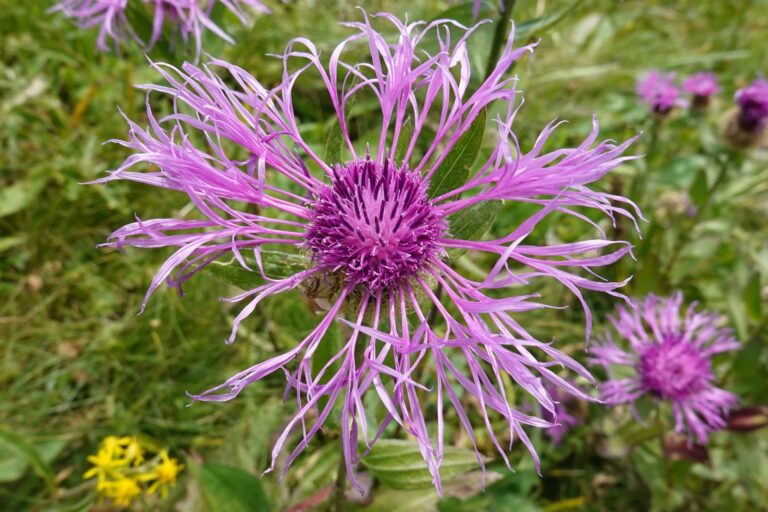
Bee Balm (Monarda spp.)
- Growth Zone: 4 through 9.
- Growth Habit and Size: 2 to 4 ft tall and about half as wide.
- Typical Colors: pink, red, purple, white.
- Blooms: early summer through early fall.
This North American native is, just like the name suggests, irresistible to bees and other insect pollinators but lots of people don’t know that hummingbirds love the stuff too, especially the vivid pink and purple varieties.
You’ve got to make sure that your bee balm gets plenty of sun, but most will tolerate partial shade as long as other conditions are good.
Keep the soil moist but make sure it’s well-draining because they are vulnerable to root rot and also other types of fungal infestation.
Make sure they get plenty of airflow and don’t crowd them to prevent this. Deadheading will help maximize blooming through the summer.
Annual Geranium (Pelargonium spp.)
- Growth Zone: 1 through 8 as an annual, grows as a perennial in zones 9 through 11.
- Growth Habit and Size: most varieties show a symmetrical growth habit being equally tall and wide, anywhere from 1 to 3 ft.
- Typical Colors: purple, pink, red, orange, and white.
- Blooms: reliably blooms in the middle of spring and all the way into fall until the frost.
No matter how you got your garden set up, there’s bound to be a geranium that is right for you.
Do you want to grow them in containers or raised beds? Do you want to grow them in containers or even as a climbing vine? They can do almost anything!
Although gorgeous and a common ornamental in gardens and landscaping, you’ve got to take care to protect them from insect pests because they tend to be quite vulnerable, especially to aphids. But assuming you can do that, they’ll draw in tons of hummingbirds for you.
Bird of Paradise (Caesalpinia gilliesii)
- Growth Zone: 9 through 11.
- Growth Habit and Size: most varieties are small, maxing out at around 6 ft. Some can grow taller than 15 ft, though!
- Typical Colors: yellow and red bicolor, orange.
- Blooms: early spring through the summer.
A plant that’s poetically suitable for attracting hummingbirds, bird of paradise is named because of its gorgeous, showy flowers resemble tropical birds in flight. In any case, visitors to your yard will love the ample nectar they produce.
Although they can be difficult to start, as long as you plant them in full sun and give them nutritious but fast-draining soil, you’ll find that they are hardy and easy to care for once mature, and they are naturally resistant to many kinds of pests, including mammals.
Bleeding Heart (Lamprocapnos spectabilis)
- Growth Zone: 3 through 9.
- Growth Habit and Size: up to 3 ft tall, typically a little wider than it is tall.
- Typical Colors: white and pink.
- Blooms: mid-spring through early summer.
A romantic and striking flower, bleeding hearts got their name because of the unique shape of their blooms; they really do resemble a pink cartoon heart with a white droplet coming out of the bottom.
Dramatic, unique, and showy, hummingbirds can feed from these flowers, believe it or not, and love to perch on their horizontal stems.
As long as you plant them in partial shade and rich, well-drained soil, your bleeding heart will reliably return year after year. Do take care, though: all parts of the plant are toxic to mammals, including people!
Snapdragon (Antirrhinum majus)
- Growth Zone: 7 through 10 as a perennial, annually in cooler zones.
- Growth Habit and Size: up to 4 ft tall, most varieties are half as wide as they are tall.
- Typical Colors: many shades of red, pink, yellow, purple, orange, and white.
- Blooms: springtime all the way through fall. Usually gives up before winter arrives.
If you think that snapdragons just look like a flower that would be appealing to hummingbirds, you’d be quite right! Since each plant produces copious blooms, and each of those yields lots of nectar, hummingbirds will be all over them.
Be advised that taller varieties usually need support to keep them from falling over. They do best in cooler temperatures, and don’t be surprised if they stop producing when summer takes hold. Be patient, and they’ll start again near the end of the season.
Foxglove (Digitalis purpurea)
- Growth Zone: 4 through 10 as a biennial or perennial.
- Growth Habit and Size: anywhere from 2 to 5 ft tall.
- Typical Colors: typically pink, purple, or magenta with white speckles. Yellow and other varieties exist.
- Blooms: late spring through early summer, rarely through midsummer.
This toxic beauty often takes time to produce its bell-shaped flowers, with many plants only blooming in their second year at the earliest – but if you love hummingbirds the results are undeniable.
The dense, tall clusters are easily accessible to hummers and other hovering pollinators, and assuming they have a little bit of shade and fertile soil, they need little care as they easily resist mammal and insect pests.
A member of the digitalis genus, take care to keep pets and kids away and avoid ingesting any part of the plant.
Daylilies (Hemerocallis spp.)
- Growth Zone: 3 through 9.
- Growth Habit and Size: 1 to 4 ft tall.
- Typical Colors: red, pink, orange, yellow, purple.
- Blooms: summertime.
Although the name Lily tends to conjure up thoughts of delicate, dainty beauty, the reality of the plant is actually quite different, though they are still quite beautiful!
These are hardy, rugged, and resistant ornamentals that draw in hummingbirds, butterflies, bees, and other pollinators as if by magic.
Resistant to pests, drought, and suboptimal soil conditions, there is no garden where daylilies won’t grow. There are countless varieties, including hybrids, out there so feel free to experiment with the ones you like the look of best.
Zinnia (Zinnia violacea)
- Growth Zone: annually in zones 2 through 11.
- Growth Habit and Size: grows large blooms on tall, upright stands, anywhere from 1 to 3 ft high.
- Typical Colors: purple, red, pink, white, orange, and yellow.
- Blooms: usually midsummer, persists until the first frost in fall.
One of the easiest hummingbird attractors to grow on our list and another beloved annual among gardeners, people and birds alike can’t miss these big, bold, upright flowers.
All varieties are highly enticing to hummingbirds, and you can grow them anywhere as long as they get lots of sun and you don’t let them stay moist; mold and mildew are a problem. Also, note that you can easily regrow zinnias from cuttings!
Hollyhocks (Alcea rosea)
- Growth Zone: 3 through 9, can grow in zones 2 and 10 in ideal conditions.
- Growth Habit and Size: big! Can clear 7 ft tall, but rarely wider than 2 ft even at most.
- Typical Colors: various shades of purple, red, pink. Some cultivars are white, yellow, or black.
- Blooms: in and through the summer.
A gorgeous, almost imperious, ornamental, hollyhocks grow tall and ramrod straight, and bloom alternating columns of broad, trumpet-shaped flowers that are immediately appealing to hummingbirds and other pollinators.
Give them lots of sun and make sure the soil is well-drained and they can pretty much take care of themselves, though the largest and tallest individual plants may need trellising.
Stay on top of controlling them at the end of the season because they can and will self-seed prolifically!
Honeysuckle (Lonicera spp.)
- Growth Zone: 4 through 10.
- Growth Habit and Size: most are vining shrubs, can easily grow longer or taller than 20 ft.
- Typical Colors: yellow, white, red, pink.
- Blooms: mid-spring through the end of summer.
Fragrant, pretty, and dramatic if allowed to grow vertically and drape, most readers probably already associate honeysuckles with pleasant childhood memories.
Do you remember the first time you got a little drop of nectar out of one? I do! Hummingbirds recognize and home in on honeysuckles for the same reason, and once they are established, they need very little care.
They require so little care, in fact, that they’re considered invasive and highly destructive in many places, so do make it a point to control them and keep them off surfaces you want to preserve.
Columbine (Aquilegia spp.)
- Growth Zone: 3 through 9, produces fewer blooms in extremely hot weather.
- Growth Habit and Size: 1 to 3 ft tall.
- Typical Colors: purple, white, blue, yellow, red.
- Blooms: mid-spring through early summer.
Although they don’t stay in bloom for very long, the delicate, almost ethereal blooms of Columbine are a good source of nectar for hummingbirds and also make for a nice perch.
No matter which variety you choose, you’ll draw a bunch of these adorable little birds. As ever, red and yellow varieties tend to be more attractive but all can do the job.
Maximize the short blooming season by deadheading them, and think twice before planting if you live in a very hot region; the plant will live, but they will struggle to bloom.
Wisteria (Wisteria spp.)
- Growth Zone: 5 through 9.
- Growth Habit and Size: vining, may clear 25 ft!
- Typical Colors: purple, white, blue, pink.
- Blooms: springtime.
One of the most show-stoppingly gorgeous ornamentals you might plant in your garden or elsewhere, and a constant favorite of hummingbirds, is wisteria.
The long, dramatic drooping vines will be covered from stem to tip in a riot of small, flat blooms.
It’s easy to care for if you give it plenty of sun, but be prepared to put in work: it spreads tenaciously and requires lots of pruning to keep it from going out of control.
Also note that all parts of the plant are toxic to mammals.
Plants That Repel Hummingbirds
Hummingbirds can feed from many kinds of flowers, but not all. The following plants are not very appealing to them, usually because they produce very little nectar.
Once hummingbirds recognize them, they’re unlikely to stick around, so think twice before you plant these if you want to attract hummers to your yard and garden.
Forget-me-nots (Myosotis spp.)
These popular perennials are another no-go for hummingbirds since they don’t produce nectar as a rule, and their flowers are very small and tough for hummingbirds to get at easily.
Hummingbirds tend to investigate them, but quickly lose interest once they figure out what they are.
Lily of the Valley (Convallaria majalis)
With tiny blooms and almost no nectar, lily of the valley is a non-starter for hummingbirds. End of story.
Marigolds (Tagetes spp.)
Though beautiful and easy to grow almost anywhere, marigolds aren’t a good choice for attracting hummingbirds. They don’t produce very much nectar, and as you know hummingbirds need a lot of it and all the time to sustain their ridiculous metabolism.
Also, what nectar they do produce is more difficult for hummingbirds to get because of the shape of the blooms.
Sunflowers (Helianthus spp.)
Whether you’re dealing with a small variety or a truly towering giant, these sun-craving and often towering plants can’t really feed hummingbirds: the petals grow around a dense head of seeds with precious little or even no nectar to be found.
In any case, hummingbirds just don’t seem to know what to do with them. You’ll have plenty of seed-eating birds show up, but they’re the only ones that will stick around.
Lilacs (Syringa vulgaris)
Lilacs smell wonderful and are a favorite of gardeners around the U.S., but they’re of next to no interest to hummingbirds…
They don’t produce very much nectar at all, and the tiny, clustered flowers make it tough for these little birds to get what is there.
Daffodils (Narcissus spp.)
This ubiquitous and fun springtime favorite makes precious little, if any, nectar, and even if it did, the shape of the flowers precludes hummingbirds from lapping it up easily and they tend not to even perch on this plant.
They avoid it entirely, which means it’s useless for our purposes!
Crocuses (Crocus spp.)
Crocuses bloom very early in the springtime, and some varieties are done blooming before summer is even over.
That means many hummingbirds will miss out on them entirely depending on their migration habits, and even then crocuses don’t produce much nectar for them.
Gardenias (Gardenia spp.)
These gorgeous evergreens smell so good you would naturally assume they’ll be downright irresistible to hummingbirds but surprisingly enough, nectar production is next to non-existent.
Besides, the shape and bulk of the flowers are also a turnoff for these little birds. I know this one’s a heartbreaker, and I love them myself, but you can’t depend on them to keep hummingbirds hanging around.
Irises (Iris spp.)
Irises are a marginal choice, though happily, they’re not one that hummingbirds truly scorn…
They produce some nectar, enough to be a good snack for hummers, but the shape and configuration of their purple, blue, white, or yellow blooms mean that these birds have to work harder to get it and they already work hard enough.
Irises alone will not keep the hummingbirds flocking to you.
Dianthus (Dianthus spp.)
This tall ornamental is another one that produces tiny blooms that are ill-shaped for hummingbird feeding, and they don’t yield very much nectar at all.
I’ve watched hummingbirds fly past dianthus, being the only flowers around, looking for more suitable food sources so you know they don’t care for them.
Peonies (Paeonia spp.)
If there’s one flower that is bound to aggravate hummingbirds, I would put my money on it being peonies.
The vivid pink, red, and yellow blooms will certainly catch their eye from a distance, but once they close in they’ll find that these large flowers have very little for them to eat inside. I know I would be upset if I were them!
The real risk of peonies is that hummingbirds might assume other, similarly shaped and colored flowers are likewise barren and move on.
Roses (Rosa spp.)
The most alluring and iconic of all flowers, roses have nonetheless been hybridized and tinkered with so much that they have no nectar to offer hummingbirds even if they could reach it.
And they can’t, because roses have dense and obtrusive whirls of petals that just aren’t worth the trouble for the little guys.
Tulips (Tulipa spp.)
Another incredibly popular flower, and one that comes in a variety of vivid colors that are sure to entice hummingbirds, tulips cannot dependably feed them regardless: their nectar production is just too low and the orientation, shape, and size of the blooms are far from ideal for them.

Tim is a farm boy with vast experience on homesteads, and with survival and prepping. He lives a self-reliant lifestyle along with his aging mother in a quiet and very conservative little town in Ohio. He teaches folks about security, prepping and self-sufficiency not just through his witty writing, but also in person.
Find out more about Tim and the rest of the crew here.