
One of the very best things you can do for the health of your goats, or any livestock animals really, is to let them free-range…

Roaming around on the pasture will give goats exercise, entertainment, and a wider variety of natural foods to eat. It’s a great way to improve their overall physical and mental well-being.
But when it comes to food, goats aren’t sheep and cannot subsist on grass and low-growing, leafy plants alone. Goats are browsers, not grazers, and that means they tend to eat the choice bits off of a wide variety of different plants.
Accordingly, your pasture might have picture-perfect grass and lots of it, but that isn’t going to keep your goats healthy.
Whether you are trying to improve an existing pasture or revitalize one you’ve been using for a while, I’m bringing you 10 great choices for nutritious plants that your goats will love. We will dive right in below.
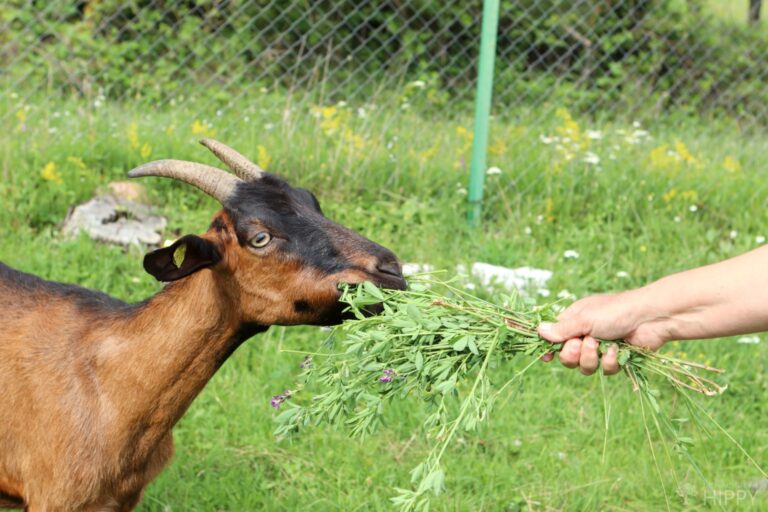
Alfalfa
If you’ve been a goat herder for any length of time, you’re probably already well acquainted with alfalfa.
One of the most nutritious and protein-packed types of forage for goats and other livestock species, it’s loaded with calcium and lots of other essential nutrients and is especially good for lactating mothers and rapidly growing kids.
And even better, goats tend to love the stuff. Plus, it is a nitrogen-fixing plant and can help improve nutrient levels in the soil.
The downside is that you can’t let your goats get too much of it: it is very rich, and especially when it is young, fresh, and lush, it can easily cause bloat, especially if they aren’t adapted to it.
Try to contain your goats and only allow them to feed on mature alfalfa, and make sure there’s plenty of variety so they don’t overindulge.
Buckwheat
Buckwheat is another great crop that goats will love and a well-rounded source of nutrients. Fast-growing and a great way to suppress weeds and other unwanted plants, this can be a mainstay summer forage when your goats are out in the pasture.
This is also one of the very best options out there for folks who live in dry, hot climates since most varieties are so drought-tolerant.
It isn’t a huge bloat risk compared to alfalfa, but as with all things on a goat’s menu, moderation is key: some goats might develop photosensitivity if they eat too much buckwheat too often, but this is a minor concern as long as they have lots of other tasty plants to choose from.
Fescue
Another pasture mainstay for lots of livestock species, fescue, whatever the variety, is a hardy and hearty grass that can be a consistent source of nutrients and calories throughout the year, and most types stay green and nutritious long after most other grasses go dormant.
Fescue can be a particularly good choice because it withstands intensive, repeated attention from heavy feeders like goats, and it is also capable of thriving in a wide variety of environments.
If I was going to put just one kind of grass in my pasture, I would be tempted to go with fescue for reasons of efficiency alone.
However, there’s one thing you’ve got to keep in mind with this stuff: fescue can become infected with endophytes, which then produce toxic alkaloids that can cause chronic poisoning in goats.
Make sure you do your due diligence and seek out a variety that is endophyte-free to maximize benefit while minimizing risk.
Clover
Clover might be a huge pain in the butt in your own lawn, but it’s a great thing to have in your pasture since goats love the stuff, and it’s a great source of nutrition.
Like alfalfa, this is a high-protein and tasty option and also a nitrogen-fixing plant as described previously. It is also known to boost milk output in lactating does.
But just like alfalfa, this is another notorious forage since it’s likely to cause bloat if goats overindulge, and it’s downright infamous for doing so if they eat it while it is wet.
Rotational grazing strategies using paddocks and cultivating alongside different types of grasses and other plants will mitigate the risks, and as ever, take pains to slowly introduce this to your animals so their rumen has time to adjust.
Comfrey (Symphytum officinale)
Comfrey is an herbaceous plant known for its deep, sprawling root networks, high protein content, and excellent variety of minerals and vitamins, with potassium and calcium being the standouts.
This fast-growing plant can produce multiple sets of nutritious leaves in a single growing season, meaning this is one plant that will make your life a little bit easier when pasturing your goats.
But be aware that this can be a controversial offering: ostensibly, excess consumption is connected with liver damage and other health problems…
But, based on my research, this is only really an issue if your goats eat the young leaves or pull up and eat the roots.
Something that’s not likely to happen as long as you let the plant mature between rotations and they have plenty of above-ground leaves and other food to eat!
As long as your goats are eating only the stems and mature leaves, there shouldn’t be any issues whatsoever.
Willows
Willows can be a wonderful menu item for your goats, and they will adore the leaves and twigs from bushes or trees.
With a moderate amount of tannins, willows can help goats manage internal parasite loads, which will make your life easier and their health significantly better.
Willows are also quite easy to manage, and they routinely undergo fast growth spurts when they are pruned back or, in this case, nibbled by hungry goats!
Whether you’re dealing with consistently dry or moist conditions, there is bound to be a willow variety out there that will grow in your area, and this adaptability combined with the tendency to produce continuous forage throughout the year means this is one of the most valuable pasture plants on our list.
Blackberries
All goats love blackberries, and not just the berries themselves: leaves, twigs, and all will go right down the hatch.
The berries and the rest of the plant are a wonderful source of varied vitamins, minerals, fiber, and calories, and you don’t need to worry about thorny varieties causing problems for your goats. They’re adapted for eating even the spiniest plants with no problems…
If your pasture has wild blackberries, your goats can help keep them under control. Otherwise, consider planting them in rows or as hedges.
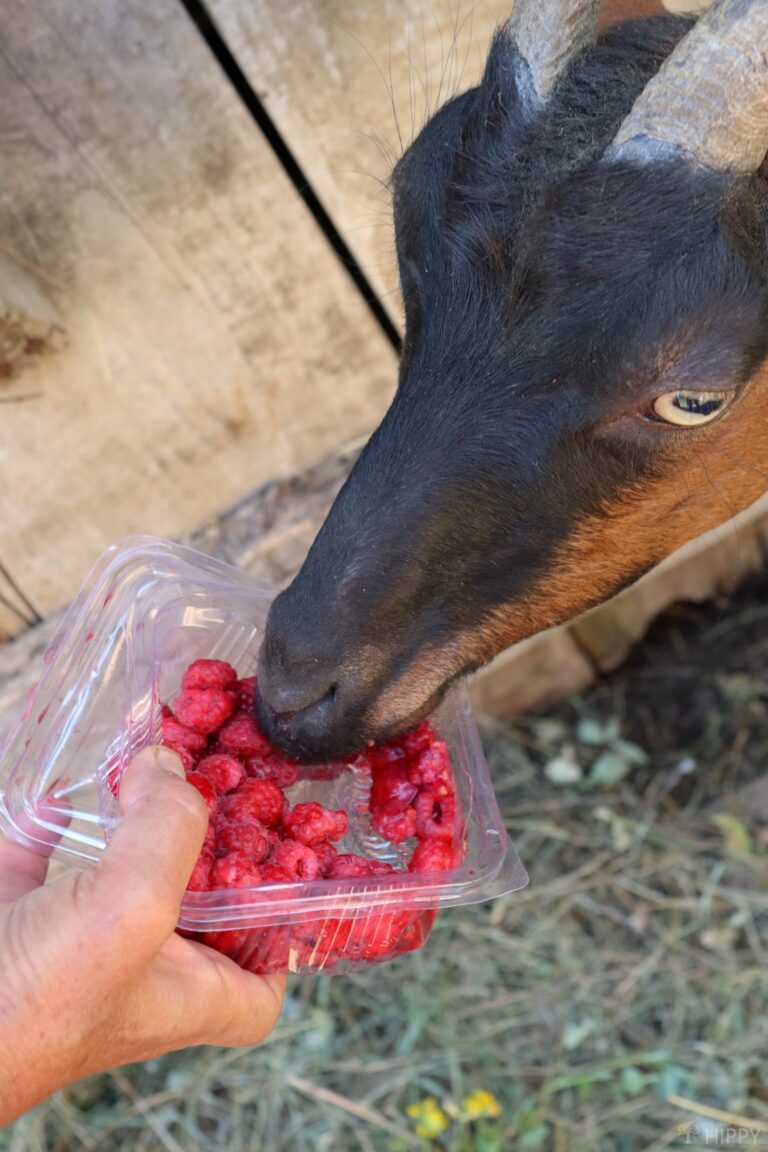
Raspberries
Raspberries are very much like blackberries as far as goats are concerned. Like most brambles, goats will eat them, thorns and all, with no issues, and they can be a great source of quick energy, fiber, vitamins, and minerals.
Compared to blackberries, though, most raspberry varieties aren’t quite as tenacious in their growth habit, so you should take care to prevent your goats from completely clear-cutting them if you want them to return year after year. Otherwise, you’ll likely have to replant them.
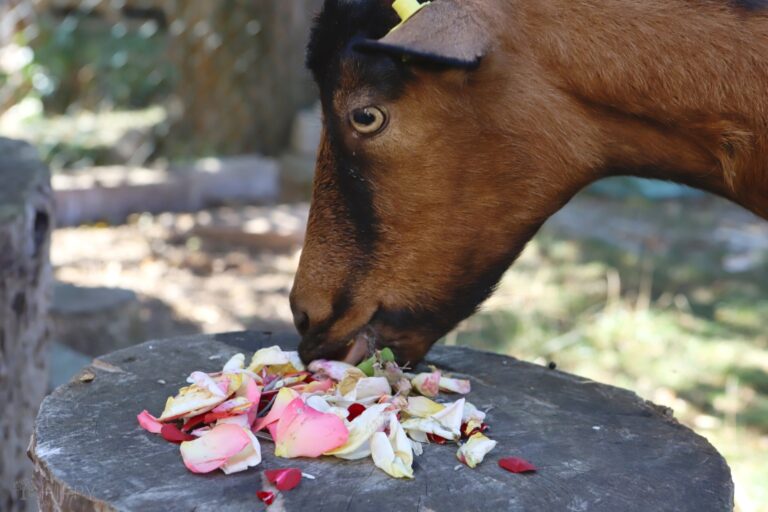
Roses
Ask anybody who grows ornamental roses what goats will do to them given half a chance! I know more than a few folks who had their gorgeous landscaping wiped out by these hungry critters.
I guess if you can’t beat them, might as well join them, and you can leave any wild roses to grow in your pasture or cultivate them yourself for the enjoyment of your herd.
Blooms, buds, hips, leaves, and stems are all on the menu, and the buds and hips particularly are packed with vitamins, trace nutrients, and fiber. Once again, as thorny as they are, it won’t hurt or deter goats in the least, so don’t worry about that.
You’ll need to worry about goats obliterating these plants, though; wild roses tend to be tougher than most people think, but if goats eat them right down to the ground, it’s unlikely that they will grow back.
Rotate regularly to allow your roses to recover, and they can be an ongoing food item for your goats.
Hazelnuts
And last but not least, you should consider planting hazelnuts in your pasture. This is one of the most wonderful browsing items that goats can have.
The nuts are delicious, calorie-dense, and rich in healthy fats and protein. They aren’t something that goats should eat all the time, but in moderation, they are superb.
Whether your hazelnuts are growing as a shrub or tree, the leaves and twigs also make for tasty and easily digestible food. Hazelnut varieties can also serve as a core component in silvopasture systems if you want to go that route and can provide abundant shade when mature.
