
Whatever kind of plants you are raising, if you want them to be fruitful and multiply, they’ve got to be pollinated. It’s possible to pollinate your own plants, but it’s a lot easier to let mother nature take the wheel on this one.
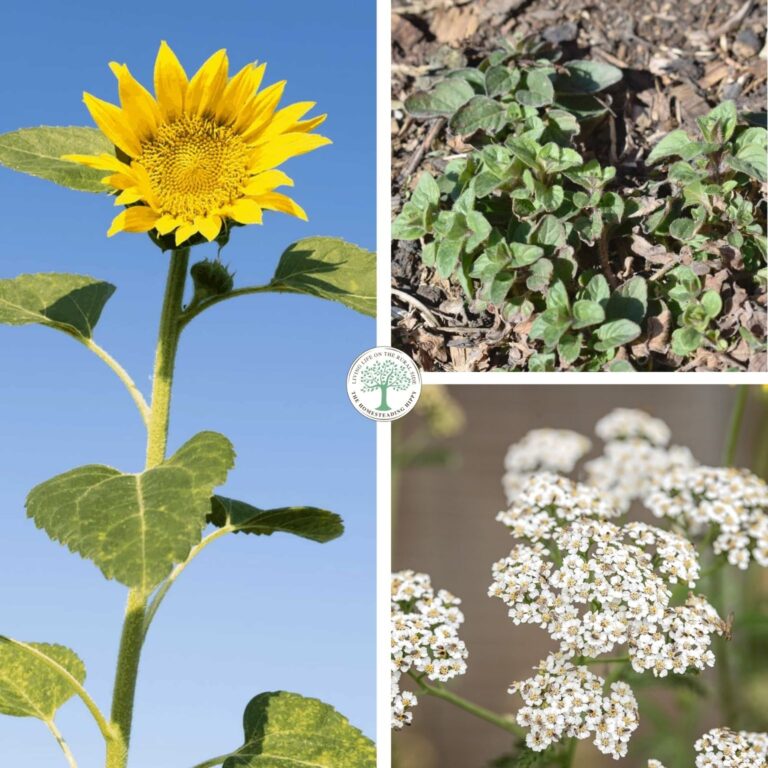
Helpful pollinators include bees, wasps, butterflies, hummingbirds, and more, and each prefers certain kinds of plants to forage from.
By interacting with your plants and then moving on to others, these creatures will scatter pollen and improve the reproductive rates and health of your plants and all the others in the nearby area.
But you need to know which plants will actually attract them. Some are highly attractive to certain species; others, not at all.
To help you make your property a magnet for pollinators, I’m bringing you a list of 30 clever plants that will bring them flying in. We’ll get right into it below…
Nasturtium – Tropaeolum majus
- Blooms: End of spring or early summer through the end of fall.
- Usually Attracts: Moths, carpenter and bumblebees, hummingbirds.
- Growing Zone: Zones 9 through 11 as a perennial, zones 4 through 8 as an annual.
Nasturtiums are popular flowers that come in a huge variety of colors, and whatever color you like, all are like a lighthouse to pollinators, providing abundant nectar. They’re also easy to grow and prefer to be direct-started in the ground.
Aside from attracting pollinators, nasturtiums are highly attractive to aphids. Bad news for these flowers, but good news for the rest of your garden because they can act as decoys.
Once again, make sure you start them after the last spring frost because any frost will kill them. Plenty of sunlight ensures you’ll get more blooms, but do protect them from the hottest hours of the day if you live in a warm region.
Blanket Flower – Gaillardia pulchella
- Blooms: The entirety of summer through mid-fall.
- Usually Attracts: Many kinds of bees and butterflies.
- Growing Zone: Zones 3 through 10.
Growing either as a drought-tolerant annual or, more commonly, as a short-lived perennial, the blooms of blanket flower might be confused with daisies even though the growth habit of the plant itself is very different. Available in yellow, orange, or various shades of red.
If you have trouble keeping ornamentals alive, blanket flower can be a great choice because it’s hard to kill: poor soil, a lack of water, and even pest attack, this is one tough flower!
Catmint – Nepeta faassenii
- Blooms: Spring through early to mid-summer.
- Usually Attracts: Bees and butterflies.
- Growing Zone: Zones 4 through 8.
Catmint is one of the best choices if you need an attractor that’s drought-tolerant and can also serve as a ground cover: the stuff has a low-growing, clumpy, creeping growth habit but it’s easy to manage.
You’ll love the aromatic smell of catmint, which I think is somewhere between traditional mint and rosemary. Its dull, gray-green leaves can also provide some much-needed contrast for showy flowers.
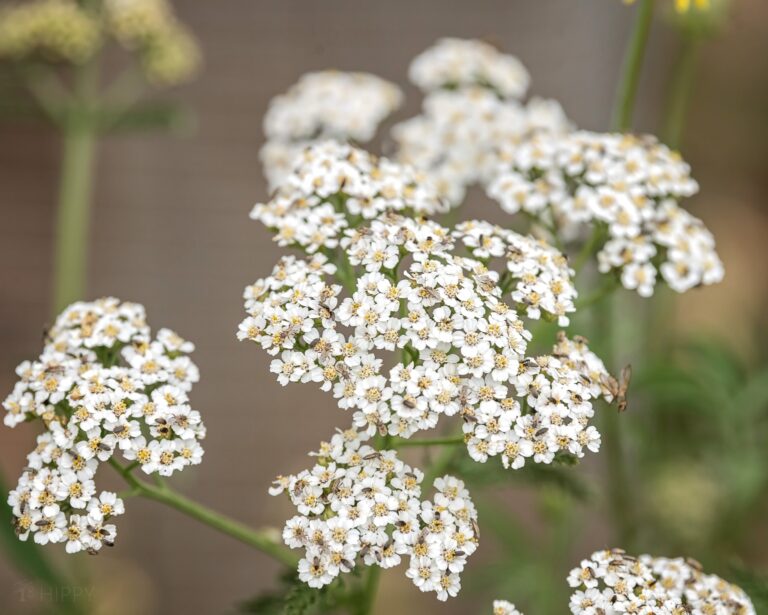
Yarrow – Achillea millefolium
- Blooms: In the springtime, and all the way through fall.
- Usually Attracts: Bees, hoverflies, butterflies, ladybugs.
- Growing Zone: Almost anywhere, grows best in zones 3 through 10.
Yarrow produces tight heads of small, fuzzy flowers which butterflies, bees, and hoverflies find irresistible. Interestingly, ladybugs seem attracted to yarrow too.
Yarrow is also one of the hardiest pollinator attractors on our list, and can grow quickly and in a sprawling fashion even if soil nutrient levels are low.
Ensure that the roots don’t stay wet at all times, though, and avoid overwatering. If you live in an arid region, you are in luck because many varieties thrive in the hottest places.
Hollyhock – Alcea rosea
- Blooms: Summer through early or mid-fall.
- Usually Attracts: Many bees and hummingbirds.
- Growing Zone: Zones 3 through 9.
Hollyhock is a short-lived perennial that thrusts its showy single or double blooms aloft on tall, spiky stems.
Available in a huge variety of colors to suit any taste, hollyhock is a known favorite of all kinds of bee species and hummingbirds.
It likes plenty of sun but will benefit from protection during the hottest part of the year or if you live in an arid environment.
Calendula – Calendula officinalis
- Blooms: Mid-spring to late fall.
- Usually Attracts: Butterflies, bees, hoverflies, certain wasp species.
- Growing Zone: Zones 2 through 11.
Calendulas are short, almost stocky plants with a bushy growing habit. They produce large, multi-petaled flowers that range in color from orange to yellow and even a rosy pink.
Aside from being a fantastically attractive plant for pollinators, calendulas are edible and highly nutritious and can make a tasty garnish in salads and various other dishes.
When they start blooming, they will keep doing it until winter truly takes hold, but you can increase productivity by removing the old, shriveled blooms when they start to curl up.
Just make sure you start them or transplant them outside only after the last spring frost; they won’t make it otherwise!
Phlox – Phlox paniculata
- Blooms: Summer through fall.
- Usually Attracts: Hummingbirds, bees, some butterflies.
- Growing Zone: Zones 4 through 8, some varieties are hardy in zones 3 and 9.
Another upright and showy perennial, you can get phlox flowers in many different shades of pink, red, white, and purple.
They grow well in containers or when directly sown, and they can be another good choice for a border plant that will draw pollinators by the hundreds.
Give them highly nutritious soil, lots of sun, and infrequent but deep waterings, and you’ll see them take off like there’s no tomorrow!
But stay on top of pruning to encourage continual blooming, and don’t overcrowd them: provide plenty of space to encourage good air circulation and prevent fungal infestation.
Salvia – Salvia spp.
- Blooms: May bloom year-round in ideal weather, but expect them to bloom through spring and fall.
- Usually Attracts: Hummingbirds love it, also attracts bees and butterflies.
- Growing Zone: Typically zones 7 through 11, some varieties will tolerate colder, lower zones.
These sun-loving flowers encompass a truly huge family, as there are more than 800 known domestic and wild species.
The great thing about salvia is that, no matter what kind you get, you’re bound to get plenty of visits from pollinators and there is sure to be one that is perfect for your garden, pots, or beds.
Some are small, suitable for a window sill, and others turn into huge bushes taller than a man!
Just make sure to avoid overwatering them because root rot can be a real issue. Most salvia varieties are drought tolerant and prefer soil that stays just moist.
Verbena – Verbena bonariensis (various other hybrid species exist)
- Blooms: Early to mid-spring until first winter frost.
- Usually Attracts: All kinds of butterflies, and occasionally hummingbirds.
- Growing Zone: Zones 5 through 11.
Although they have a reputation for being fussy and susceptible to various diseases, it’s actually easy to grow verbenas as long as you carefully choose the variety and keep the soil well-drained.
I know many gardeners that simply give up on them too quickly because they take so long to germinate.
Starting indoors anywhere from 8 to 12 weeks before the last anticipated frost will give them a head start and keep you from getting discouraged.
Note that there are hundreds of varieties of verbenas, so I strongly recommend you talk to a trusted fellow gardener who grows them or your local nursery for advice on which ones do best in your region.
Blazing Meadow Star – Liatris spicata
- Blooms: End of summer.
- Usually Attracts: Hummingbirds, bees, hoverflies, butterflies.
- Growing Zone: Zones 3 through 8 in specific biomes.
This gorgeous, distinctive indigo flower looks like tangles of thread or yarn when in full bloom. A known and irresistible attractor of butterflies, blazing meadow star will also draw in various bees, beneficial flies, and even some hummingbirds.
It has a relatively wide growing zone; it grows best in its native environment of grasslands and prairies. Water heavily but infrequently as it won’t do well if the roots stay wet. It can do okay with partial shade.
Marigold – Tagetes spp.
- Blooms: Late spring until winter.
- Usually Attracts: Bees, some butterflies, moths.
- Growing Zone: Year-round in zone 10. Zones 2 through 11 otherwise.
Another distinctive and instantly recognizable annual, marigolds are red, yellow, orange, or any combination thereof.
Aside from being highly attractive to beneficial pollinators, they also repel known and notorious garden pests like moth larvae and even some tiny critters that live in the soil and chow down on your plants’ roots.
Once more, only put them outside or start them once you are sure the last spring frost has gone. They need lots of sun and consistently warm temperatures. Don’t be afraid to prune them back because many are voracious growers.
Agastache – Agastache foeniculum
- Blooms: Starts in spring, blooms prolifically in summer, tapers off and ends in the fall.
- Usually Attracts: Butterflies, all kinds of bees, many hummingbirds.
- Growing Zone: Will grow anywhere as an annual, central zones as a perennial depending on variety.
Also known as anise hyssop, this plant is a favorite of hummingbirds and many insects, and the tall, composite rods consisting of countless hundreds of tiny flowers come in a huge variety of colors, from shimmering peaches and pinks to dark and alluring blues, violets, and more.
This stuff smells great, so no wonder it’s so attractive to pollinators. But once again, you’ll need to tailor your approach to planting and care depending on the variety. Most, though, prefer full sun and highly nutritious soil.
Just make sure the soil is well-drained because root rot is an issue for these, as is powdery mildew. You don’t need to do much to start it from seed, either: scatter the seeds, lightly tamp, and avoid burying.
Lavender – Lavandula spp.
- Blooms: Year-round in amenable climates, summer through fall everywhere else.
- Usually Attracts: Bees by the bucket load!
- Growing Zone: Typically zones 6 and 7.
There’s nothing quite like the fragrance of real lavender. And there’s nothing quite like it if you want to attract bees to your property!
Bees truly cannot resist the stuff, and even better, lavender has known pest-repelling properties, particularly against mosquitoes and other garden pests you don’t want chowing down on your plants.
If you want your lavender to thrive, make sure it gets full sun but some shade in mid-afternoon and keep the soil well-drained. Lavender will not tolerate soggy soil at all, so be wary of overwatering.
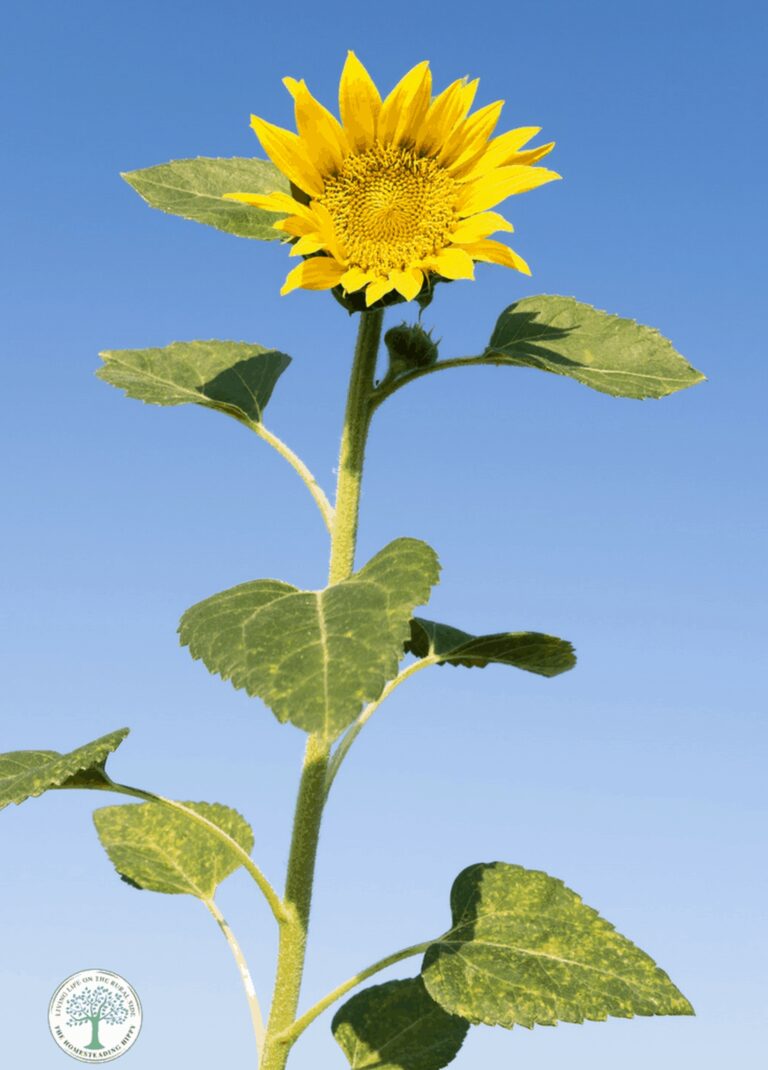
Sunflowers – Helianthus annuus
- Blooms: Early summer through fall.
- Usually Attracts: All kinds of birds and bees.
- Growing Zone: Everywhere!
Sunflowers are commonly associated with huge, towering blooms that often need support.
Those varieties are one of my favorites, but you don’t have to go with varieties like Mammoth or Goldie Double; smaller ones that are suitable for container planting or that sprout multiple blooms on a single stalk are just as attractive to the critters we want in our yard and garden.
As you might have suspected already, sunflowers love full sun. In fact, all varieties will actually turn to face and follow the sun!
For best results, make sure you plant them after the last spring frost, and consider starting them indoors if you want them to bloom earlier in the season.
Cosmos – Cosmos bipinnatus
- Blooms: Early to mid-spring until first winter frost.
- Usually Attracts: Butterflies, moths, bees, various birds.
- Growing Zone: Reliably as an annual in zones 2 through 8, may grow as a perennial in lower zones.
Cosmos are one of my favorite flowers, with their huge, clumpy pollen-laden heads surrounded by trumpet-like petals on all sides. One of the tallest plants on our list, many varieties will grow upwards of four feet, meaning you’ll need to support them with a trellis or other structure.
I also really like them because they’re such a cinch to get started. Throw some seeds down on prepared soil after the last spring frost, and you can expect them to take off assuming some critter doesn’t take off with your seeds.
Be cautious of overfeeding them because they will tend to get leggy and grow more foliage than flowers.
Make sure they get lots of sunlight, and only give them partial shade if you live in a really hot climate.
Cleome (Spider Flower) – Cleome hassleriana
- Blooms: Summer through mid-fall.
- Usually Attracts: Hummingbirds, various bees, butterflies.
- Growing Zone: Grows everywhere as an annual, perennially in zones 10 and 11.
Cleome, better known as spider flowers, gets its colloquial name from the long, thread-like stamens that radiate out from the blooms. Plenty of folks find them unsettling because it looks like a big daddy long-legs perched on top of the stems!
Despite this creepy feature, the flowers themselves are beautiful and come in pink, purple, or white. Regardless of color, all are a magnet for bees, butterflies, and hummingbirds.
Milkweed – Asclepias spp.
- Blooms: Not long, just spring partway through summer.
- Usually Attracts: Butterflies. Also a critical link in the monarch butterfly lifecycle.
- Growing Zone: Variable, depends on variety.
Milkweed is known by many folks, but what you might not know is that there are dozens and dozens of different species, and many of them look like completely different plants from one another in terms of growth habit, flowering, and even foliage.
But all have one thing in common, and that is that they are magnets for butterflies.
The trick is that one species of milkweed might fail to grow entirely in your zone, while others will grow like the natives they are.
Do some homework before you select a variety, and that way you’ll know what to expect concerning care requirements. But once you’ve zeroed in, get ready for a veritable butterfly invasion!
Heliotrope – Heliotropium arborescens
- Blooms: Midsummer through the end of fall.
- Usually Attracts: Many hummingbirds and all kinds of butterflies.
- Growing Zone: Grows best in zones 9 through 11.
One of my favorite plants on this list, the intoxicating, sweet, and creamy fragrance of heliotrope is second only to the beauty of its vivid, dense umbels of flowers. Butterflies and hummingbirds can’t resist this one.
But you’ll have to work a little harder to make it available to them. Heliotrope will not tolerate a lack of water, and the soil needs to stay moist but also well-drained to prevent oversaturation.
When temperatures climb too high, it will require shade. This is a fussy flower, but well worth the trouble!
Penstemon – Penstemon spp.
- Blooms: Variable depending on species, typically spring through mid-fall.
- Usually Attracts: Hummingbirds, bees.
- Growing Zone: Zones 3 through 10.
This is a versatile choice for a pollinator attractor because the group includes hundreds of different varieties.
Penstemons can be had in types suitable for potting, starting indoors, direct sowing, or even bordering your garden with a veritable hedge; some close in on six feet tall, like Palmer’s Penstemon!
If you’re growing them in a hot region or during a particularly hot summer, make sure they’ve got afternoon shade. They also love loose, loamy soil.
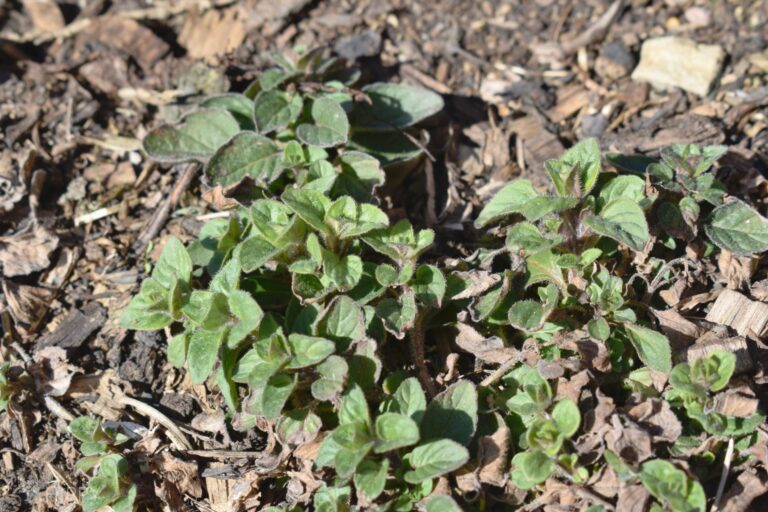
Oregano – Origanum vulgare
- Blooms: Summer through fall.
- Usually Attracts: Bees, hoverflies, sometimes hummingbirds.
- Growing Zone: Grows pretty well in zones 7 through 9 with partial shade. Protect from intense sun in hot weather, or it will cook.
Oregano needs absolutely no introduction when it comes to kitchen herbs. It’s one of the most popular used all around the world!
What you might not know is that it is also highly popular with pollinating insects like bees and hoverflies, and sometimes hummingbirds on an intermittent basis.
Oregano is also highly adaptable in this role because it grows so well in containers. You can start it inside and then bring it outside in the springtime, or bring it in as winter approaches to keep it alive.
Coneflower – Echinacea purpurea
- Blooms: Usually middle of summer, persists through beginning or middle of fall.
- Usually Attracts: Many butterfly species, bees, some wasps, and various birds including songbirds.
- Growing Zone: Zones 3 through 9.
These tough, purple flowers are sometimes confused for daisies, but they are one of the most enduring and easy-to-care-for plants on our list.
They love full sun in all zones, but will still grow well even if partially shaded some of the time. All you need to do is give them rich soil and keep the roots from staying too wet, so provide good drainage.
Make it a point not to overwater coneflowers because they are quite drought tolerant. If purple isn’t your color, there are other varieties to consider like Orangeberry or Bubblegum.
Zinnia – Zinnia elegans
- Blooms: Variable depending on planting time.
- Usually Attracts: Hugely popular with butterflies, also attracts bees.
- Growing Zone: Everywhere.
If you want a straightforward planting that’s bound to attract butterflies and bees, it’s hard to do better than zinnias.
Zinnias are annuals in all zones but highly vulnerable to frost, so time your planting accordingly. They have another big drawback in their susceptibility to fungus, and powdery mildew in particular. Don’t mist them!
Give them full sun and well-drained soil and you can expect blooms in just two months no matter when you plant.
Aster – Aster alpinus
- Blooms: Usually late summer through most of fall.
- Usually Attracts: Honey bees, carpenter bees, bumblebees, various butterfly species.
- Growing Zone: Depending on variety, grows best in zones 3 through 10.
One of the most beloved perennials around, the delicate, cheerful blooms of aster may be big or small and come in any color of the rainbow, but all of them are potent attractants of insect pollinators.
The trick to getting a bumper crop of asters is to keep the soil moist and give them lots of sun when temperatures are cooler.
If you live in a hot region or are struggling with a hot summer, they will need partial shade. Keep the soil comfortably moist and they should thrive otherwise!
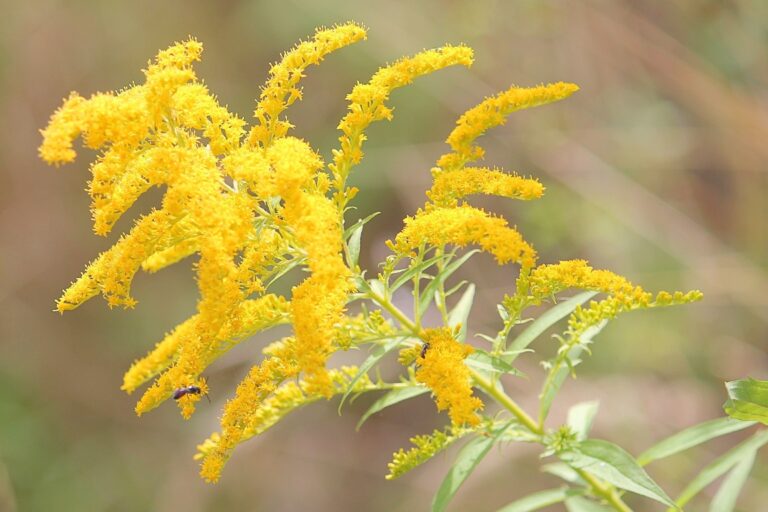
Goldenrod – Solidago spp.
- Blooms: Late summer most of the way into fall.
- Usually Attracts: Butterflies, honey bees, carpenter bees, bumblebees, hoverflies, and various wasp species.
- Growing Zone: Everywhere depending on variety.
Often mistaken and eradicated as ragweed, goldenrod is a completely unrelated plant but those shimmering, fuzzy yellow blooms are easily mixed up for that allergenic lookalike; goldenrod is not an allergen for the vast majority of people!
Keep in mind that most goldenrod varieties can reach up to 5 ft tall and spread very aggressively, outcompeting nearby plants. Have a plan for that!
Goldenrod can put up with a lot, partial shade to minimally nutritious soil, but it will not put up with poor draining soil.
Bee Balm – Monarda spp.
- Blooms: Spring through the end of fall, some varieties quit blooming in early fall.
- Usually Attracts: Bees, and a whole lot of them! Also fairly attractive to hummingbirds and butterflies.
- Growing Zone: Zones 3 through 9.
I trust you probably already guessed that bee balm is extremely alluring to bees! It is right there in the name, after all!
Bee balm is easy to cultivate, easy to manage, highly fragrant, and surprisingly pretty; it bears nectar-rich flowers that grow in colorful clumps, and depending on the variety they can be had in nearly any color.
Give it shade in a really hot climate, and plant it in nutrient-rich soil for best results. Bee balm can make a wonderful border plant because it does not spread quickly or aggressively and so is easy to tame.
Bachelor’s Buttons – Centaurea cyanus
- Blooms: Not for long, usually late spring only to the middle of summer.
- Usually Attracts: Typically just butterflies.
- Growing Zone: Zones 2 through 11.
Sporting small, spiny blooms in a variety of colors, from white and pink to blue and indigo, bachelor’s buttons bring interesting shapes and a pop of color to almost any garden.
They grow readily in most zones as long as they get a little bit of shade in the hottest climates.
Like so many other flowers, they must be protected from frost, but that’s about it: they need very little in the way of food or water otherwise!
One limitation with using bachelor’s buttons as a pollinator attractor is that they bloom for only a short time, usually the very end of spring through the middle part of summer. If you want to get more life out of them, prune off the dead blooms.
Joe-Pye Weed – Eutrochium purpureum
- Blooms: Midsummer through early to mid-fall.
- Usually Attracts: Honeybees, carpenter bees, hoverflies, butterflies.
- Growing Zone: Zones 4 through 9.
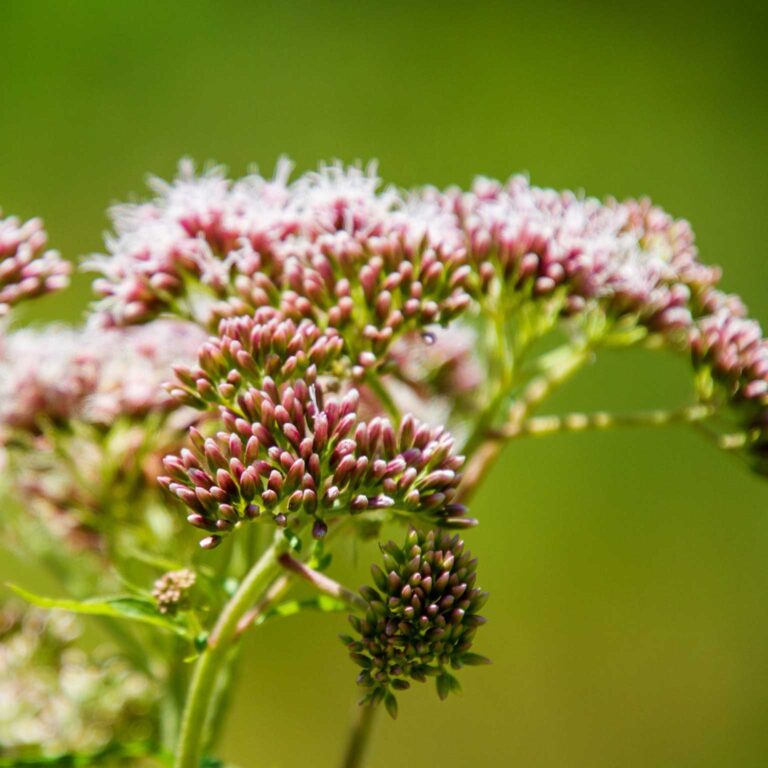
This herbaceous perennial doesn’t produce blooms for long, but when it does, watch out because you’ll have pollinators crawling all over the place!
The spiraling clusters of leaves and dome-shaped clutches of pink or purple flowers are pretty and irresistible to many insects, but it won’t do much to attract hummingbirds or other birds.
If you want to grow Joe-Pye weed for the purpose, keep the ground quite moist but make sure it drains just as quickly; in nature, you usually find this stuff alongside streams, ditches, and other waterways.
Pincushion – Scabiosa atropurpurea
- Blooms: Spring through fall.
- Usually Attracts: All kinds of butterflies, moths, and bees.
- Growing Zone: Zones 3 through 8; some varieties might go as low as 10.
Pincushions look very much like their namesake, and consist of plump, rounded blooms.
A compact plant, pincushions are easily planted in the ground, in raised beds, or in containers, but you’ll want to keep them only slightly moist and out of intense heat and humidity.
This can be a tricky plant to keep alive if conditions aren’t ideal, so perhaps consider another choice if you live in the Deep South, Southwest, or anywhere else with a sweltering climate.
Lupine – Lupinus perennis
- Blooms: Late spring through summer.
- Usually Attracts: Bees and butterflies.
- Growing Zone: Zone 3, in ideal conditions, through 8.
With palmate leaves and clusters of tiny, pea-like flowers growing atop tall stems, lupine is a showy and elegant pollinator attractor. Bees especially love the stuff, but you also have good luck attracting butterflies with it.
It’s generally easy to care for, but it greatly prefers well-draining soil and lots and lots of sunshine. Keep it out of the shade for best results.
Borage – Borago officinalis
- Blooms: Late spring through the end of summer.
- Usually Attracts: All kinds of bees, some flies.
- Growing Zone: Everywhere!
Borage is a plant that is well known, you might even say infamous, to some gardeners: it grows vigorously, grows fast, is difficult to kill, and will reseed itself prolifically when reproducing.
In fact, you’ll be working harder to prevent it from spreading unless you stay on top of pruning back flowers before they go to seed.
Borage provides lots of food for all kinds of bees and flies, but it can provide food for you too. The indigo-colored flowers are edible, tasty, and nutritious. Just be careful handling them because the thick leaves have prickly spines.

Tim is a farm boy with vast experience on homesteads, and with survival and prepping. He lives a self-reliant lifestyle along with his aging mother in a quiet and very conservative little town in Ohio. He teaches folks about security, prepping and self-sufficiency not just through his witty writing, but also in person.
Find out more about Tim and the rest of the crew here.