
You might have heard it said before that everything likes the taste of chicken. And I’ll tell you what, that old assertion is absolutely true!
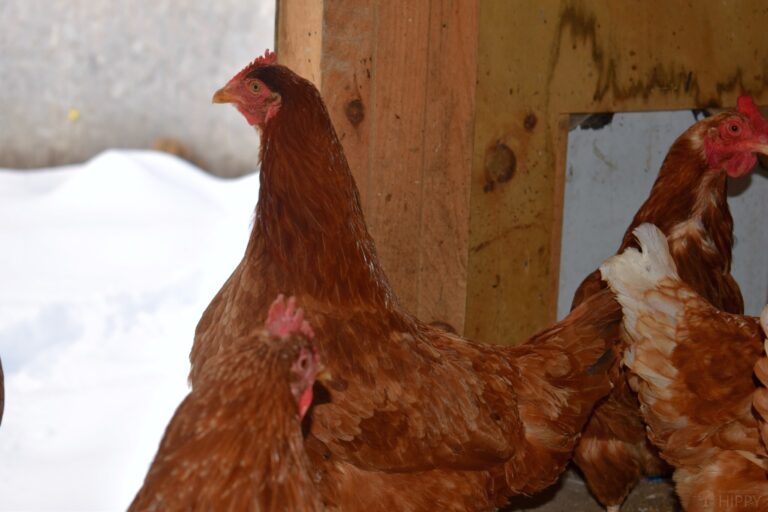
Pretty much every single carnivorous critter on this Earth can and will eat chickens under the right circumstances. Chickens aren’t at the very bottom of the food chain, but by golly, they are close!
One of the worst possible predators you can encounter is the humble skunk…
They aren’t as prolific as coyotes, not as clever as raccoons, and not as nimble as foxes, but they’ll still massacre your chicks, eggs, and even adult birds, and they invariably discharge their stinking defense mechanism as soon as there is a scuffle.
If you see a skunk hanging around or suspect that you’ve been visited by one, it’s only a matter of time until it comes back. You need the right info and the right response to protect your birds and send this stinky coop raider packing. I’ll tell you what you need to know below…

All Skunks Will Prey on Chickens
When you imagine a skunk, you probably think of the typical striped skunk, endemic to North America. You know: glossy black coat, cute face, long white stripes down the back and tail. They are among the most common skunks that prey on chickens, but there are others besides.
The hooded skunk, Eastern spotted skunk, and the rare hog-nosed skunk are all carnivores, and all of them will love nothing more than to make a meal of your precious birds.
Accordingly, it’s a good idea to figure out what skunk species are in your area so you know what to expect in terms of population density and size of the animal. This will affect your planning to repel them.
Skunks Prefer Baby Chicks and Eggs
Skunks are omnivorous predators, but they are highly opportunistic. They don’t go out of their way to run down prey or get into fights. If they find something that’s tasty and they can take it down or eat it without any risk of a real struggle, they will do so.
This means that both chicks and eggs are high on their list of priorities when it comes to preying on chickens.
Skunks have a good sense of smell and surprisingly good hearing, so they’ll be attracted to your chicken coop by the odor but also by the sounds coming from within.
If they make it inside, you don’t need me to tell you (again) what’ll happen!
Skunks Will Still Attack Adult Birds
Although you can count on skunks going after eggs and chicks, it’s far from out of the question that they will kill and subsequently eat adult birds.
They might not prefer adult chickens, but if they’re hungry and have no other options or must defend themselves from the attack of a broody hen or rooster, they will certainly eat them.
Smaller breeds and bantams are especially vulnerable to skunks, as they have large and powerful jaws, and stout teeth. Skunks typically kill adult chickens by biting out the throat or crushing their head, which kills almost instantly.
It’s not out of the question that the combined efforts of several adult birds, or a particularly large and ferocious rooster could drive off a skunk, but they tend to be persistent and will usually succeed in bagging a bird or two during an attack.
Skunks Usually Kill and Eat On Site
How can you tell that a skunk has raided the coop in the middle of the night? Simply look for the scene of the crime: once a skunk has made a kill, they usually settle down to eat where they are instead of carrying off the carcass.
Look for lots of clumped and bloody feathers, a pile of guts, and bits of viscera. If you notice lots of broken eggs and missing chicks, that’s further evidence that it was a skunk.
When Skunks Attack a Spray is Likely!
Your nose will tell you right away if a skunk has made it into the coop because it’s very likely that it will spray once the birds start attacking it or get in its way. In fact, it’s highly likely that you’ll smell it before you ever crack the door on the coop itself!
This is another major pain associated with skunk predation because, even if your valiant roosters manage to run the critter off, it is highly likely it will leave you a parting gift to remember it by and you’ll have to wait weeks for the smell to fully dissipate. Some things like plastic feeders might never be the same again.
Protecting Your Flock from Skunks
So, if you know or suspect that skunks are in the area, what should you do to deal with them?
Comprehensive protection is a matter of keeping skunks at bay and, hopefully, off of your property but if that can’t be done you’ve got to keep them out of the coop and run at the very least. Do the following:
Remove Attractants
The first thing you need to do is get rid of things that will attract skunks in the first place.
Obviously, you can’t get rid of your chickens 😊 but you can get rid of smelly garbage, animal feed, pet food that’s left out, carcasses that might be left to rot somewhere on your property, and so forth.
Also, note that skunks are constantly on the lookout for dens and safe havens which they will find under your sheds and decks, and old misused animal burrows, piles of branches, etc.
Make your property as unattractive to skunks as possible and that will hopefully keep them from zeroing in on the presence of your chickens.
Perimeter Protection
Ideally, skunks will be kept off of your property by sturdy fencing, but fencing alone is not enough. Skunks are remarkably good diggers and can easily slip under the strongest fence to get closer to food.
To stop them from digging under fencing, bury a couple of feet worth of welded wire fence on either side to form a type of moat that they cannot dig through.
Some folks have reported good success using large gravel, because it can tear up their paws, but this does not seem as successful at deterring skunks as it does foxes, coyotes, and dogs.
You might also try motion-activated lighting, ultrasonic pest deterrents, noise makers and skunk repellent sprays or DIY solutions for the same around the edge of your property.
Skunk-Proofing the Coop
Skunks are mostly nocturnal, and you can bet your bottom dollar they will be out looking for your chickens at night. This means that, if you’re a responsible keeper, your flock will be shut up in the coop at this time.
You must ensure that the skunk cannot get in or it’s over! The door to the coop should have a sturdy, complicated latch that a skunk could not open or deactivate.
Likewise, any openings leading in must be small enough to prevent a skunk from squeezing in there; their bodies are much smaller and slimmer than their fluffy fur would suggest.
The rule of thumb is that if they can fit their head through a hole, they can get in. Close off these gaps using sturdy wire mesh or hardware cloth, and make sure that the skunk cannot knock it out.
Lastly, don’t forget about the bottom of the coop. If your coop is sitting on the ground or does not have a solid floor, a skunk will immediately start digging under the wall to gain entry.
You’ll need to use woven wire fencing as a buried perimeter all the way around the coop in this case, though a sturdily built wood coop or one sitting on a concrete pad should prove adequate to resist attempts at them getting in.
How To Get Rid of Skunks Hanging Around Your Property
If you’ve already lost birds to a skunk attack, or you fear it is only a matter of time until one makes a pass at the coop, you need to take action to eliminate the threat one way or another.
Check Local Laws
Before you do anything else, make sure you check your local and state laws on dealing with skunks. In some places, like throughout Canada for instance, they are considered protected wildlife. States throughout the US have different laws and codes on the matter.
In some places, you might be able to eliminate a skunk that is being a nuisance on your property but not legally allowed to trap it. In others, you might trap but not kill. And you might need licensing to do anything about it at all.
Don’t assume, because you risk a serious misdemeanor or even a felony if you fall afoul of these laws.
Deter
Running the skunk off is your best bet. I wouldn’t hesitate to use spotlighting, noise makers, a water hose, and skunk-deterring sprays to try and convince the critter to move on.
Skunks tend to be fairly timid and don’t want confrontation, but at the same time, they know they don’t have many natural predators owing to their stinky spray – so those that live near human habitation are notoriously bold.
You shouldn’t need me to tell you this, but whatever you try, you need to keep as much distance between you and the skunk as possible.
They can aim and spray anywhere from 10 to 20 feet, and even without the benefit of a direct hit everything in the area that catches even a molecule of the stuff is going to reek.
Hopefully, with a little bit of incentive that’s the last time you’ll see the skunk, but it will remember your chickens and so you shouldn’t be surprised if it comes back.
Trap
One of the best but still riskiest ways to get rid of a skunk is to trap it using a live cage trap. Skunks will readily charge into it to get some easily accessible food, and you can use anything from fruit to tuna or anything else that might be appealing to them as bait.
Now, the trick with trapping is that once the animal is trapped, you’ve got to relocate it and that’s also obviously risky…
The best advice I can give you is to cover the cage on the long ends with a sturdy tarp. This will still allow you to see in the short ends to check for the presence of the animal, and also provide you a decent shield when it’s time to approach the cage and move it.
You would be wise to have the cage setting on another tarp that you can lift up to wrap all sides with to keep the skunk in the dark and hopefully calm.
Move the cage gently and stay quiet, and put it in the back of a truck or other open vehicle to minimize the chances of catastrophe if it decides to spray in transit. Take the skunk somewhere far, far away from your home, and then release it.
Eliminate
If eliminating the skunk as a pest is legal in your area, the most direct and successful method is usually just to kill it. Firearms will work, of course, but you should strive for a headshot and an instant kill so the skunk doesn’t reflexively spray. If you can’t do that, consider the use of a body hold trap.
Poison is also an option, but that will have laws all its own covering their use, and remember that poison is an indiscriminate killer that can easily claim the lives of chickens and other animals that get to it, so think twice.

Tim is a farm boy with vast experience on homesteads, and with survival and prepping. He lives a self-reliant lifestyle along with his aging mother in a quiet and very conservative little town in Ohio. He teaches folks about security, prepping and self-sufficiency not just through his witty writing, but also in person.
Find out more about Tim and the rest of the crew here.