
Most homesteaders pride themselves on preparedness. Whether it’s natural disasters, lean times, or just staying ahead of rising prices at the grocery store, it’s always a good idea to keep plenty of food on hand.
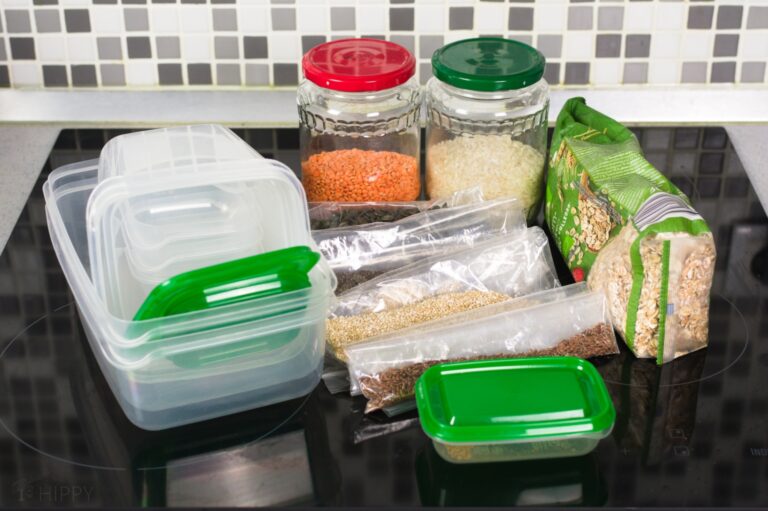
Buying food in bulk is the best way to go in that regard. It will save you money and space compared to smaller quantities. Unfortunately, most purveyors of bulk foods don’t ship them in sturdy containers that will last for a long time.
If you want to avoid spoilage and infestation, you’ll have to take care of repackaging your food yourself. Keep reading, and I’ll tell you how to do the job quickly and easily, and how to get at least double the shelf life out of it.
The Two Keys to Long Shelf Life Storage
Storing bulk foods long-term is easier than you might think when you know where to keep them and what to keep them in. It’s that simple.
The right containers and the right environment are both crucial if you want to depend on a long shelf life. And you can’t do one or the other: a good container in a terrible environment will still fail, and a poor container in an ideal environment will still go bad quite quickly.
It’s not so much a balancing act as it is a checklist: take care of both, and your job is basically done. I’ll give you all the specifics you need regarding both of these factors below.
Environment
All foods have a specific environment in which they will store best. Some foods need dry conditions, others need a little more moisture.
But when it comes to bulk foods of the kind we are talking about today—things like grains, beans, flour, and so forth—the equation is quite simple.
Your storage environment must be dark, dry, and quite cool. Temperatures should be no higher than 70°F, and ideally, you should keep them down around 50°F / 10ºC.
A relative humidity of 20% or lower is ideal if achievable, but if not, choosing the right container and packing the food properly will help make up for a deficiency here.
Whatever location can provide these conditions, keep it in the dark.

Containers
You’ve got to have the right container if you want your food to go the distance, but the good news is that you have many good choices in this regard.
Whichever one you choose, always endeavor to use up as much internal space in the container as you can; leaving air in the container will promote spoilage!
Zipper Food Storage Bags
For quick and easy food storage, or foods that won’t be kept for many months or years on end, your typical zipper-locking plastic food storage bag can work pretty well. It’s also a decent choice for smaller quantities of food or if you want to pre-portion it.
The downsides of these bags are that they aren’t opaque and, however good they might be, they do let in air and some moisture over time.
Plastic Airtight Food Storage Tubs, Trays, Etc.
Common plastic food storage containers, whatever shape they might be, are a decent option as long as they have a truly airtight lid.
They tend to do a better job of keeping out air and moisture compared to plastic bags. However, they aren’t particularly pest-proof, and overall, they are just a so-so choice.
Food-Storage Buckets
For storing truly large quantities of bulk food and doing so with high efficacy, nothing beats food-grade plastic buckets. These five-gallon buckets are usually equipped with what’s called a gamma lid, a tightly fitting gasketed top that has a threaded cap for access.
Although they cost more than more common containers, they are a go-to choice for folks who are really stocking up.
Mason Jars
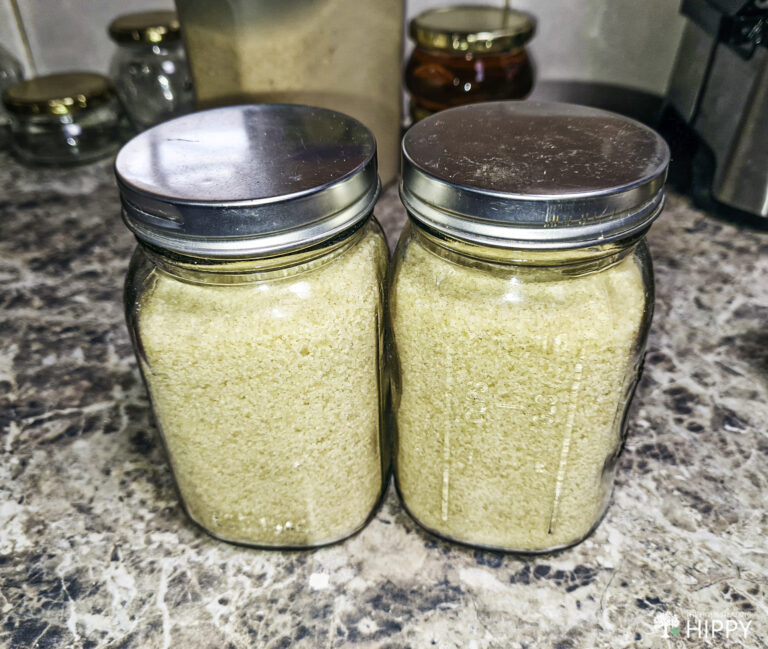
You know them, you love them. Common mason jars with attached reusable or two-piece disposable lids can do double duty for storing bulk foods easily and conveniently. They are reliable, affordable, and easy to stash just about anywhere.
Glass also works much better than plastic long-term. One thing to keep in mind is that these containers are particularly vulnerable to light, so take pains to keep them in the dark at all times.
Mylar Bags
The go-to choice for folks who are serious about long-term storage. Mylar is a fancy name for a material that is easily understood, being nothing more than metalized polyester.
Compared to common plastic bags, Mylar bags, when properly sealed, will stop the intrusion of all air and moisture, making them a supreme choice for long-term storage.
They also come in many different sizes, meaning they are adaptable to nearly any storage plan.
The only drawbacks with Mylar bags are that they cost more than common plastic bags and that you’ll have to go through the sealing process, though this can be done easily with a special kitchen gadget or a common clothes iron.
Vacuum Storage Bags
Vacuum storage is all the rage for food storage these days, and with good reason. Air is one of our primary enemies that contributes to spoilage or, at best, staleness.
Vacuuming out all of this air immediately prior to sealing the contents of a special plastic bag means that’s one factor you won’t have to worry about.
Plus, these vacuum-sealed bags tend to be very space-efficient and easy to store on their own or in other containers. The trick is that vacuum storage is at its best when working with smaller bags and smaller quantities; properly processing and sealing larger bags can be challenging.
The Best Storage Solutions for Common Bulk Foods
You can extend the shelf life of nearly any food with the right approach, but the following bulk foods will give you the longest possible shelf life and the most bang for your buck.
Grains
- Best Storage Solution: glass jars, Mylar bags, food storage buckets.
Grains are a true staple of long-term storage. Whether you want wheat, oats, rice, corn and cornmeal, or something else, store it right, and it will last for decades, potentially even indefinitely in good conditions.
Flour
- Best Storage Solution: glass jars, Mylar bags, food storage buckets.
Whatever kind of flour you prefer, it is ultimately just processed grains of one kind or another. They can be stored the same way, and you can expect it to last a long time, but flour is even more vulnerable to moisture.
Take pains to keep it in the driest possible environment and use your very best containers and other storage solutions to preserve it.
If that sounds too tricky, you can equip yourself with a home grain mill to process the grains when you take them out of storage and turn them into flour.
Pasta
- Best Storage Solution: vacuum-sealed bags, Mylar bags, food storage buckets, or large glass containers.
Another grain-based product, pasta is convenient, tasty, and versatile for bulk storage. But it has a drawback in that the different shapes tend to be fragile and take up more room. Storing it in smaller containers for smaller portions will usually end up wasting quite a bit of space on your shelves.
Legumes
- Best Storage Solution: Mylar bags, food storage buckets.
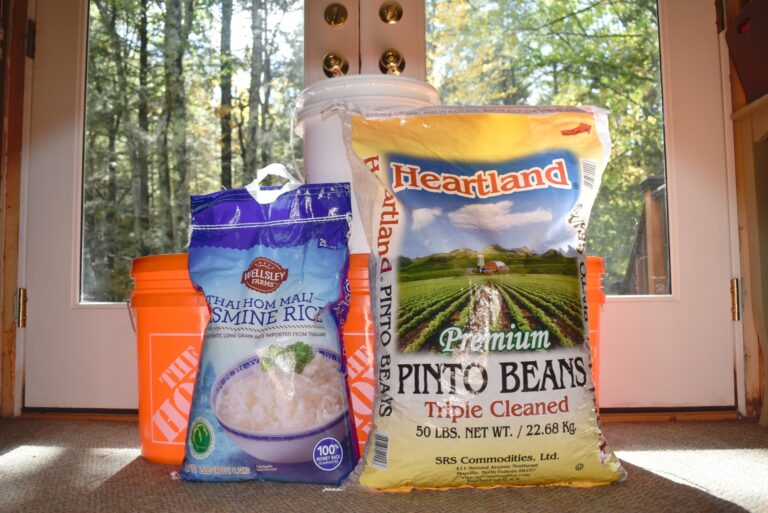
Dry legumes, from kidney beans to chickpeas, sweet peas, and anything else you can think of, represent the ultimate in long shelf life for lots of homesteaders. Kept dry and in the dark, beans truly last forever! They are also amenable to many different storage solutions, but I say go big or go home with five-gallon buckets or large Mylar bags.
Oils
- Best Storage Solution: decant into opaque, airtight glass bottles.
Believe it or not, oils can keep for a very long time in storage, especially in a good container. A good container is not the plastic bottle they come in, though. Either buy brands that come factory sealed in a good glass bottle or decant into your own clean bottle or jar for the purpose. Make sure it’s completely airtight, and do whatever it takes to protect these bottles from light; light can easily cause oxidative damage in oils, which will lead to rancidity.
Sugar and Salt
- Best Storage Solution: glass jars, Mylar bags, food storage buckets, other food storage containers.
As long as you protect salt and sugar from moisture and, in the case of the former, pests, it won’t spoil in storage, though it will get hard and clumpy. Keep it in anything you want and store it in a dry location.
Honey
- Best Storage Solution: glass jar (liquid), Mylar bag or glass jar (powdered).
Most people know that honey is another staple food that will last, very literally, forever as long as it isn’t contaminated. It might crystallize, but it will still be edible. In its liquid form, honey should be decanted from a plastic bottle into a glass jar, leaving as little headspace as possible before sealing. Powdered honey can be stored like you would flour, but it’s best in a Mylar bag.
Shelf-Stable Dairy
- Best Storage Solution: Mylar bags or glass jars.
Don’t count out dairy foods just yet! Shelf-stable dairy in the form of powdered milk, butter, and eggs can be great items to include in your food storage plan. Carefully transfer them into Mylar bags or large glass jars prior to storage.
Freeze-Dried Food
- Best Storage Solution: keep in factory container. Place containers in larger bucket for extra protection.
Individual freeze-dried foods and complete meals have grown increasingly popular during the past decade. These can be good things to keep on hand, but unlike everything else we’ve talked about, you don’t want to open these up!
Leave them in their factory containers (you can remove outer boxes or wrappers, just leave the sealed part of the package intact). If extra protection is desired, place the factory packages in a large food storage bucket.
Your Very Best Food Storage Container Solution
If you can afford it and are willing to go through the trouble, nothing beats packing your food in a Mylar bag with an O2 absorber (more on those in a minute) and then storing those sealed bags inside a food storage bucket with a gamma lid.
This combo affords extraordinarily good protection from air, moisture, light and pests.
Oxygen Absorbers: Your Best Friend for Food Storage!
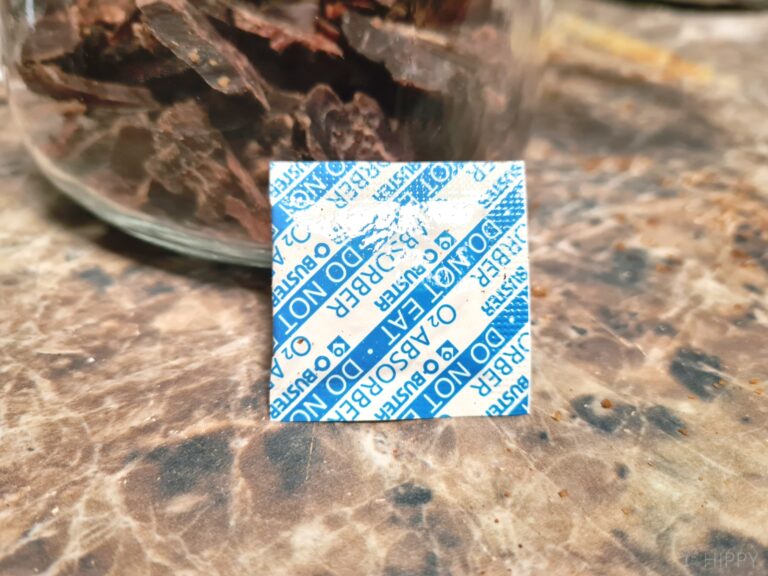
An ace in the hole that every homesteader should know about is oxygen absorbers. These tiny packets do exactly what the name suggests: they absorb ambient oxygen through a chemical reaction, allowing you to seal up a container of food with one of these inside and then sit back knowing that all of the air will be removed in short order.
It’s a great way to take your food storage game to the next level and is especially important for super-sensitive foods like flour and some bulk grains. The very best storage solution you can get in most cases is to drop one of these inside a Mylar bag prior to closing it up.
Two things to know: these devices are rated for a certain capacity, measured in cc’s. For smaller containers like gallon zipper bags, you’ll need ones rated for between 300 and 500 cc’s. For larger 5-gallon Mylar bags, plan on a 2000 cc packet.
The other thing is that as soon as you open up the factory package on these O2 absorbers, they activate and start working. If you leave them sitting around opened, even for a short time, they will absorb air to their maximum capacity and then be useless for our purpose!
Here’s how to use them right: wait until you are ready to pack several bags of food before you open the package of O2 absorbers. Try to use up the package and seal the individual bags or other containers as quickly as possible for best results.
If you do need to open the factory pack to get just one or two, transfer the remainder into the smallest possible mason jar you have before sealing the lid; once they absorb all of the O2 in the jar, the reaction process will stop and they will stay viable!
Picking the Right Location
Even if you packed your food in the best possible container, even if it’s in a Mylar bag with an oxygen absorber, it’s still important to put it in the right place if you want it to last. The very best spot is a dedicated, climate controlled storage room but that isn’t an option for all.
Below is a breakdown of the pros and cons for more common storage locations:
Pantry
Keeping your bulk food in your pantry might be convenient, but it’s usually not a very good spot. Pantries tend to have fluctuating temperature and humidity levels and are often quite warm if in or near the kitchen.
Opening the pantry or turning on the lights also exposes stored food in transparent containers to light. Nonetheless, it’s viable if you only want your food to last several months before you use it.
Root Cellar
Root cellars are ideal for storing fresh fruits, veggies, herbs, and more, and they can also be a great spot for our packaged bulk foods since they tend to be temp- and humidity-stable.
But, a properly designed cellar will be quite humid, and that works against us with grains, beans, flour, and more. If yours is very dry for whatever reason, it can still be a good option.
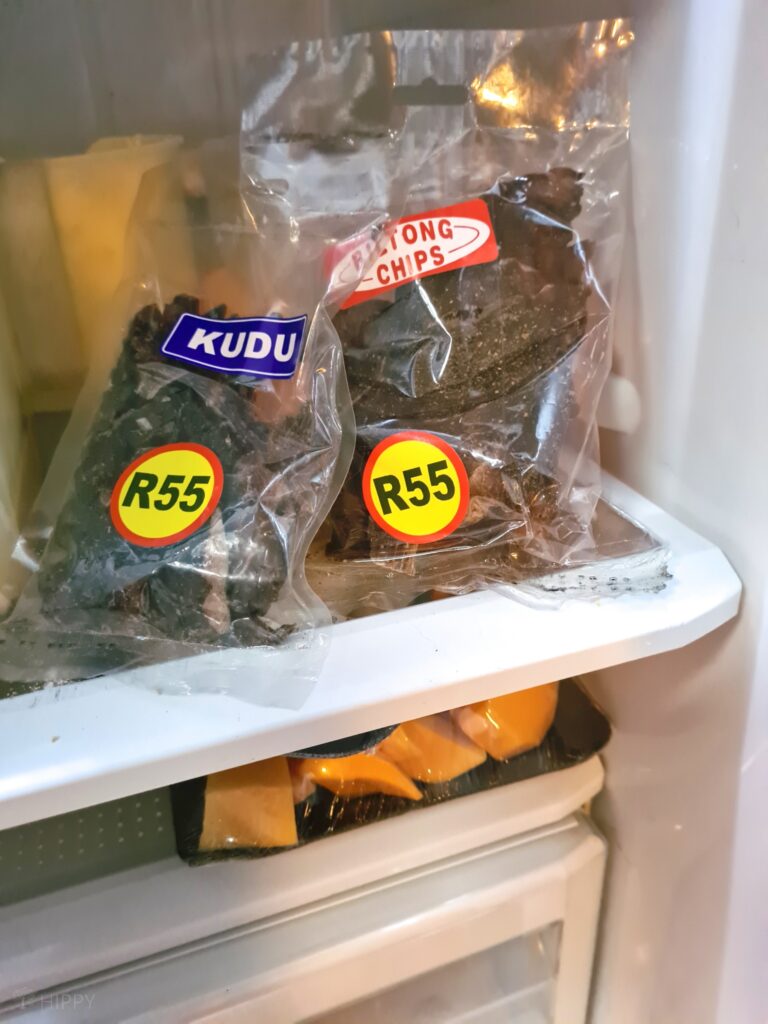
Fridge
Lower temperatures make for longer shelf life and can also prevent spoilage from microorganisms, insect eggs, and other hazards.
The issue is that your typical refrigerator tends to be quite humid. If you live in a hot environment, though, a dedicated fridge and properly packed food might be your best bet as long as you aren’t opening and closing it all the time.
Freezer
Freezing is even better than refrigeration when it comes to shelf life. Frozen foods, even dry bulk foods like the ones we are dealing with, can last even longer in these frigid temps.
The drawbacks are the same as the fridge: moisture levels can be a significant issue if you open and close the freezer regularly.
Consider a dedicated chest freezer if you want to go this route. Also, avoid freezing honey because it will burst the container it’s in.

Tim is a farm boy with vast experience on homesteads, and with survival and prepping. He lives a self-reliant lifestyle along with his aging mother in a quiet and very conservative little town in Ohio. He teaches folks about security, prepping and self-sufficiency not just through his witty writing, but also in person.
Find out more about Tim and the rest of the crew here.