
Water kefir is a probiotic drink that gets fizzy like pop. It’s a great way to get you and your family off of pop if that is an issue for you, since its fizzy sweetness has that “pop” feel. Easy to make at home, in any size batches, your kefir starter “grains” will multiply to make larger and larger batches or for you to share with others. They are not really grain, but actually a SCOBY, which stands for Symbiotic Culture Of Bacteria and Yeasts.
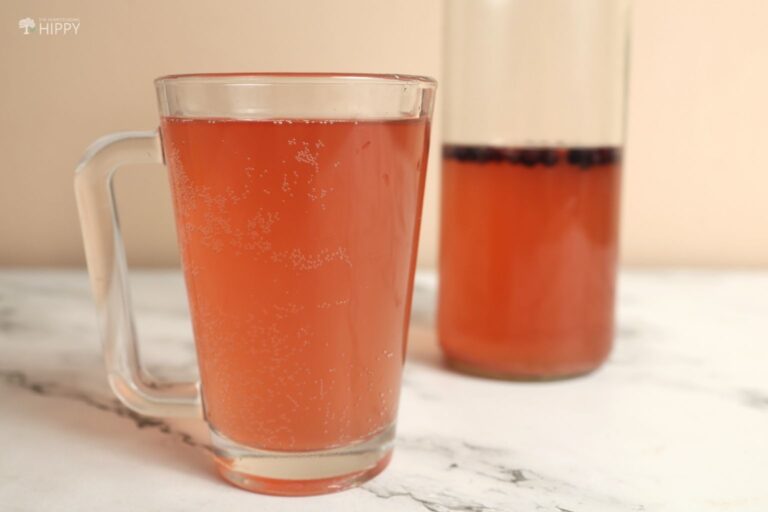
It sounds a bit weird, but all you need to know is that they can make a tasty, refreshing and gut-healthy drink, one that is enjoyed around the world. And unlike fermentation processes needed to make beer, wine and other beverages, this one is virtually foolproof as long as you start off with good ingredients and a little bit of know-how.
If you want to give it a try, keep reading and I will walk you through the entire process.
Ingredients and Equipment
Equipment
Mason jar, ½-gal.: Glass is the very best choice for fermenting water kefir. You’ll want to avoid any metal containers as they may negatively react with process and spoil the end result. Your jar should have a tightly fitting lid or cap.
Spoon: Plastic or nylon is best, again, to avoid potential reactions with metal. However, a quick stir with a steel spoon is generally safe.
Strainer: for filtering out your kefir grains. Once again, use nylon or plastic if possible.
Dry erase marker: Helpful for labeling the jar with the start date and contents, if you are tracking “crops” of different grains.
Ingredients
Water, 1 liter: Use spring water, filtered water, or dechlorinated tap water. Don’t use plain tap water! The chlorine can harm or kill the kefir grains. If you must use tap water, let it sit for 24 hours, longer if possible, and then boil to totally remove the chlorine and other potential bio contaminants. Note that distilled water is okay, but not ideal, as it lacks minerals that help the process along.
Sugar, ¼ cup: Mineral-rich sugars like sucanat or coconut sugar work best, as they again provide needed nutrients for the kefir grains. White sugar is merely acceptable; it is far less nutrient- and mineral-dense. DO NOT use honey, as it can actually kill the grains! Read the next section for more info.
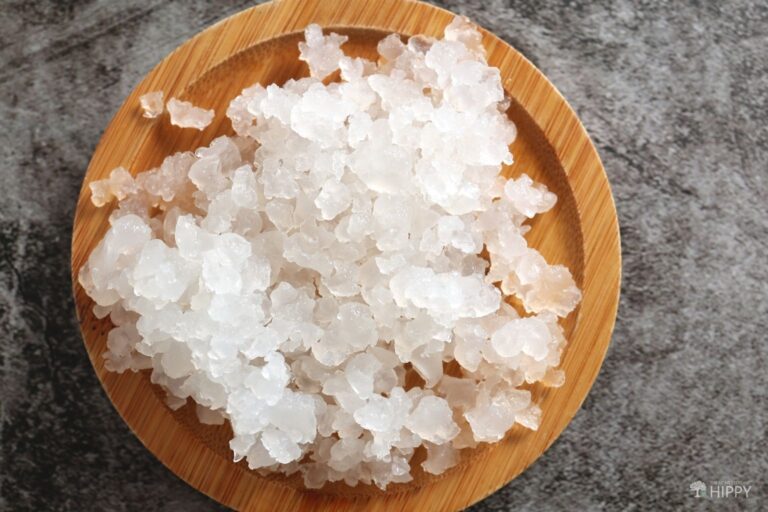
Kefir grains, 3 Tbsp: Source these from reputable suppliers or a friend who’s already into the kefir scene. Healthy, reliable grains are a must!
Dried Apricots, unsulfured, x2: These provide even more minerals and a nice flavor profile. Unsulfured fruit is a necessity for all water kefir because it is safe for the grains. Sulfured fruit is harmful or deadly to it! Other viable unsulfured substitutes include raisins, figs, and dates.
Lemon, organic, 1 slice: Adds more flavor and acidity. Organic is the way to go to avoid chemical pesticide.
Frozen fruit, ½ cup per type: for flavor and finishing your kefir water.
Picking the Right Sugar for Your Water Kefir
When it comes to making water kefir, the sugar is the star; think of it like the fuel that drives the engine that is the kefir grains. It quite literally feeds those little blobs and it shapes the flavor of your finished drink.
The traditional choice for a traditional flavor is sucanat, an unrefined cane sugar with a rich, vaguely molasses-like taste. Most important for our purposes, sucanat is packed with vital minerals for the kefir grains, especially calcium and magnesium. This nutritional profile improves both speed and reliability of fermentation. It will also impart flavor kind of like caramel that perfectly complements fruit flavors.
Another viable pick is coconut sugar. It’s got a similar nutrient profile and yields a somewhat warmer, toastier flavor. It pairs great with tropical fruits, berries and dates. Yet another option is plain, old organic cane sugar. It works fine, though not as good as the previous sugars. This is a good choice for a clean, neutral tasting kefir that lets the fruit and herbs standout. Keep in mind, due to fewer minerals the grains might not multiply as quickly and this can cause a batch failure if you are starting with weaker grains.
Now, plain white kitchen sugar can also work, but I urge you to go a different route. Grains can survive on it for a time, but the process will be sluggish. If you are in a real pinch, augment white sugar with a half-teaspoon of molasses stirred in. That will add those minerals back in that the grains desperately need.
No matter what, you cannot use honey or maple syrup! Both are antibacterial in nature, and will actively harm or even kill the grains! Stick with the options above and your water kefir should turn out fine.
Instructions
Step 1: Fill 1/2 gallon mason jar with 1 liter (just over a quart) of water.
Step 2: Add 1/4 cup sucanat or other sugar of your choice. DO NOT use honey!
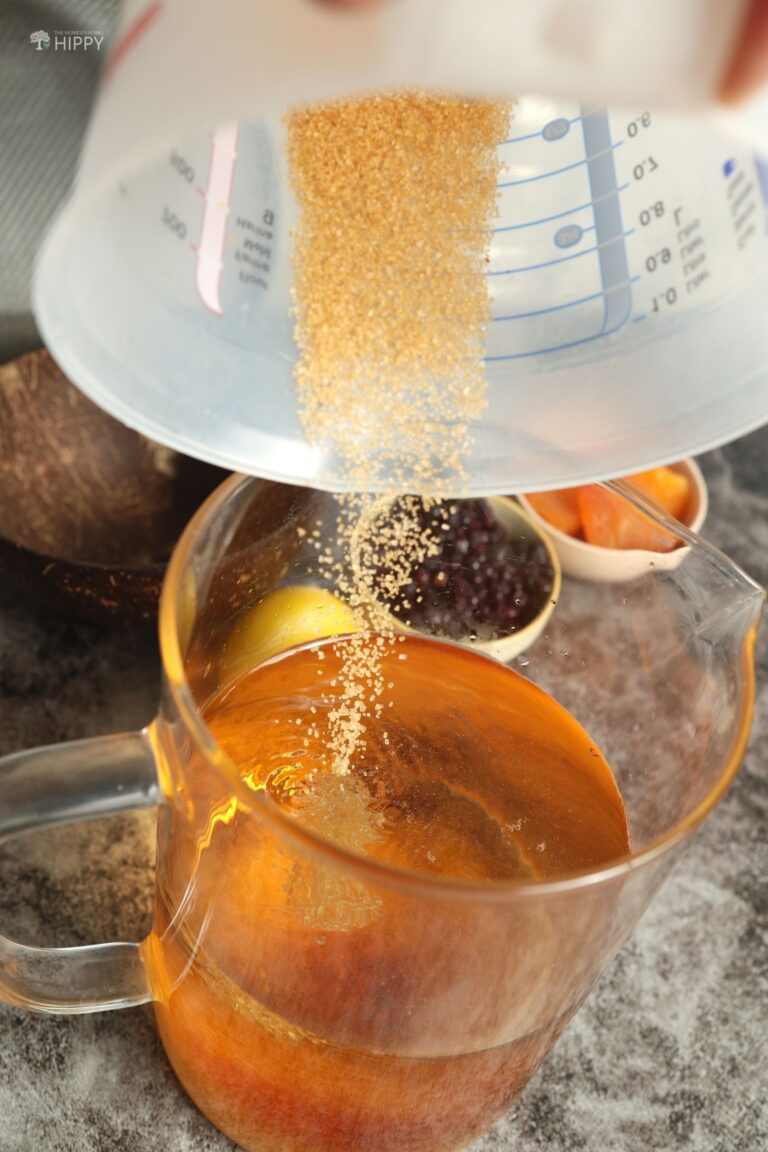
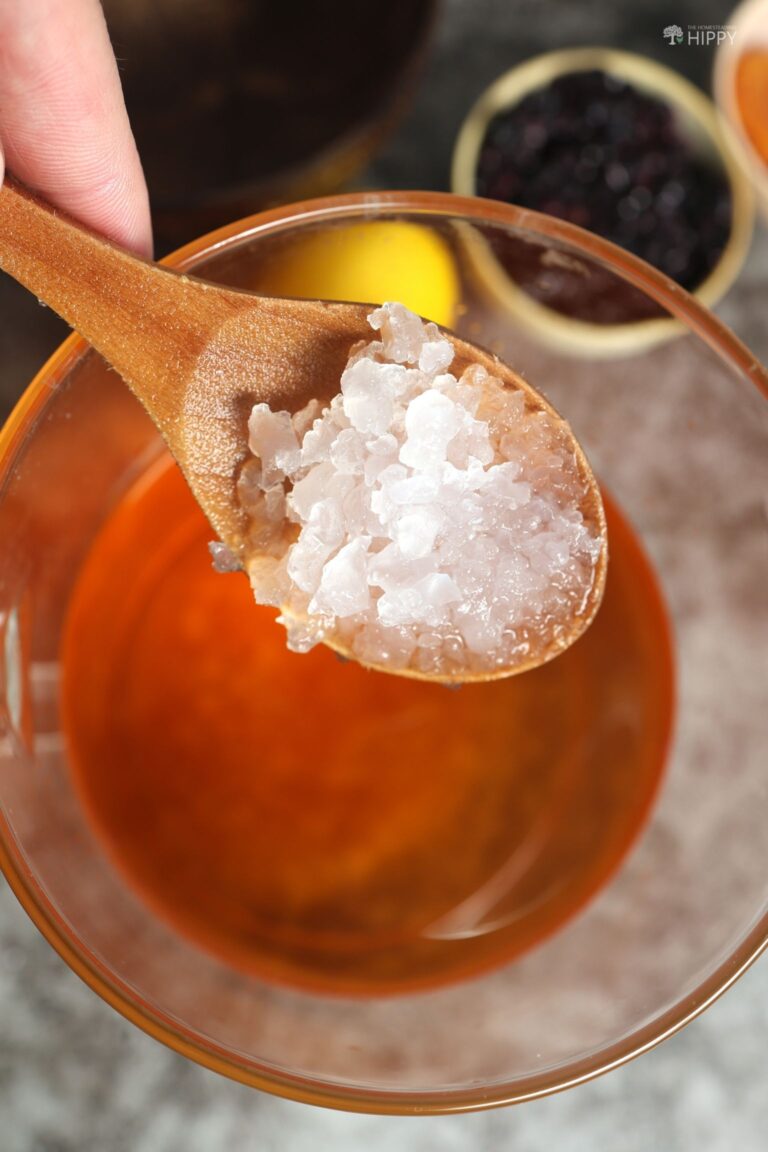
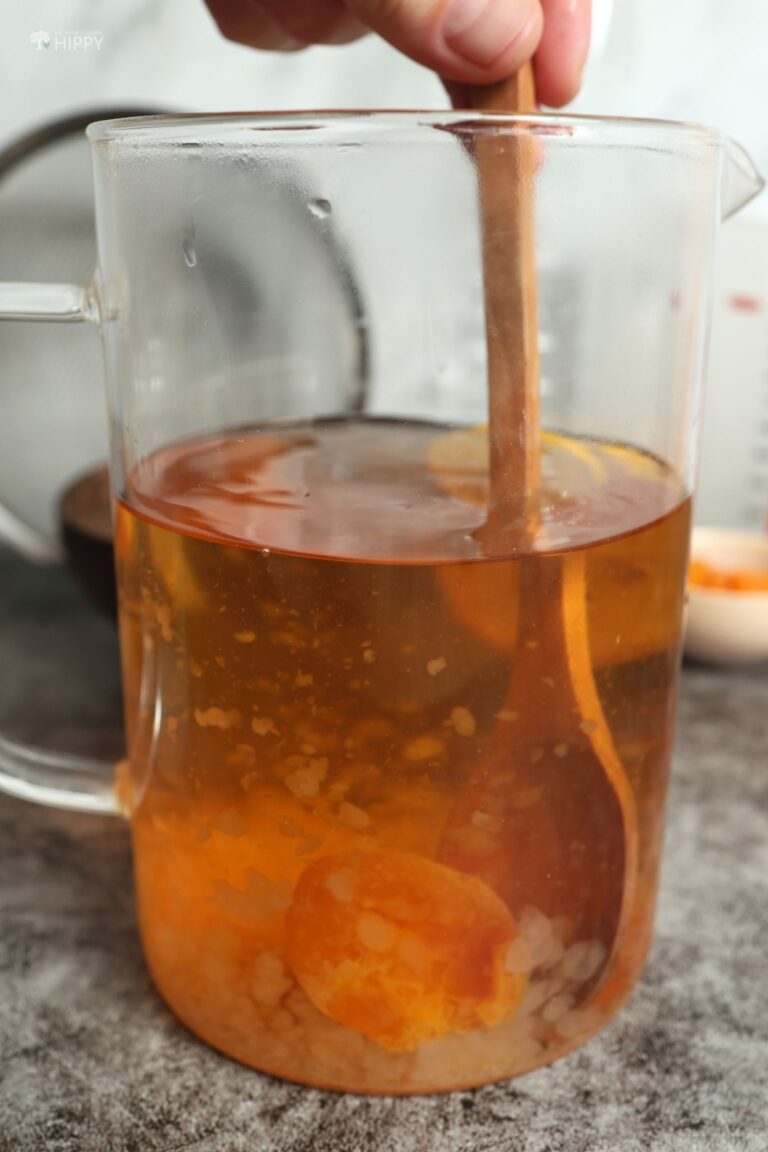
Step 3: Add 3 Tablespoons of kefir grains, 2 dried, unsulfured apricots, and a slice of organic lemon. Be sure you use unsulphured fruit, as the sulpher in some dried fruits can harm the grains.
Step 4: Stir it up a bit, and cover with a paper towel.
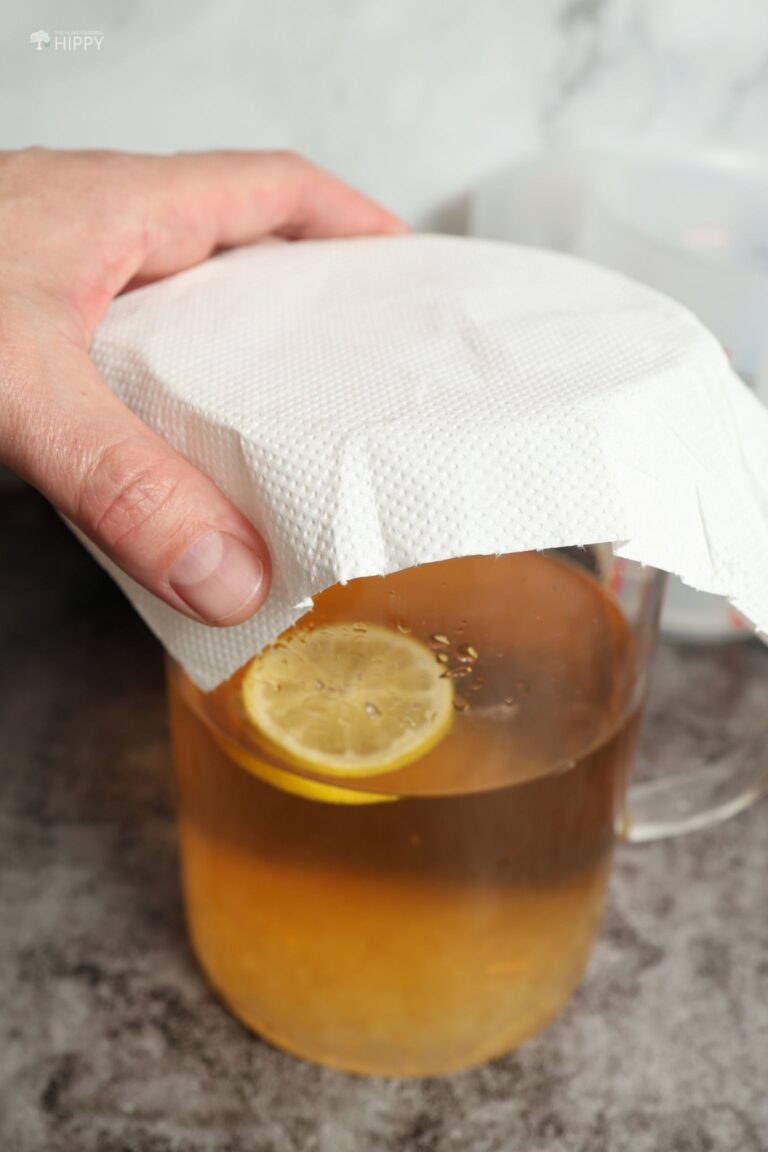
Step 5: After 24 hours of fermentation, do a taste test. It should still be slightly sweet, with a light tangy sourness to it. If it is still very sweet, let it ferment another 12-24 hours and test again.
Step 6: Using a strainer, pour the finished kefir water into a clean jar or bottle. The strainer keeps all those little grains safe and sound.
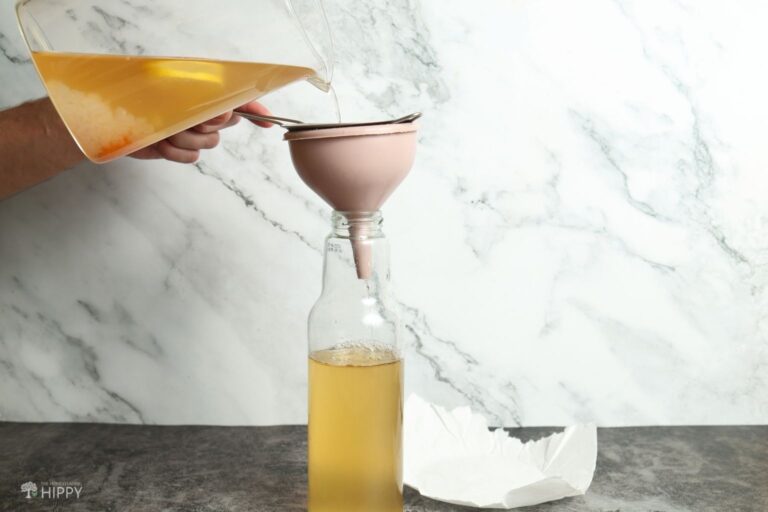
Note: Conventional wisdom says that you should only use plastic strainers for kefir, as they can react with metal. I use metal because that is what I have. Personally, I don’t notice a taste difference and I don’t currently want to spend more money on one.
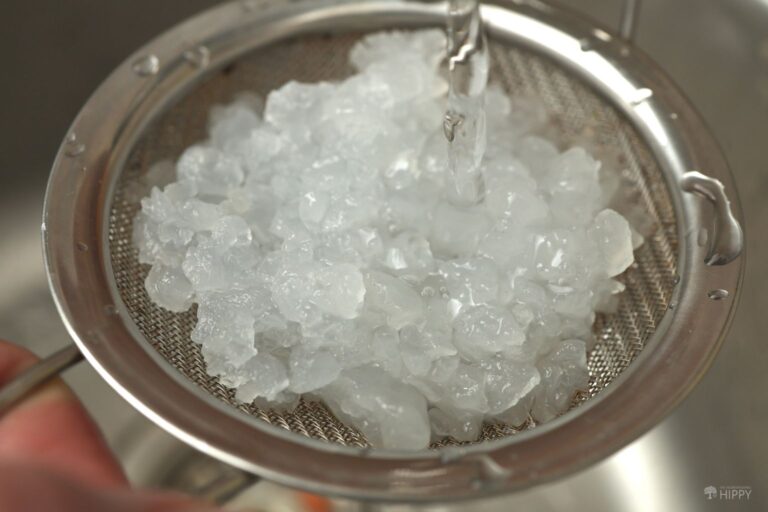
Step 7: Rinse the grains well with water, and start the process over with fresh sugar water and fruit if you want to make more batches:
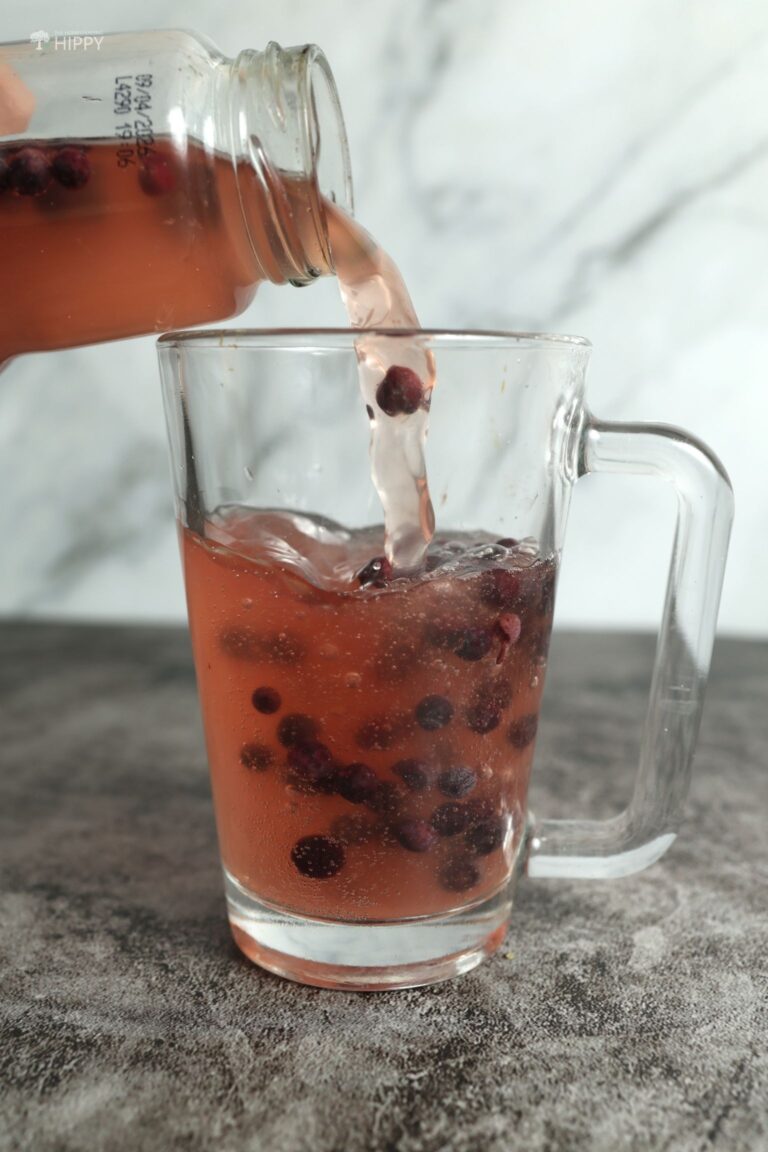
Step 8: Add a handful of frozen fruit to the finished water, cap it off again, and give it another 24 hours to further ferment. It is ready to drink after!
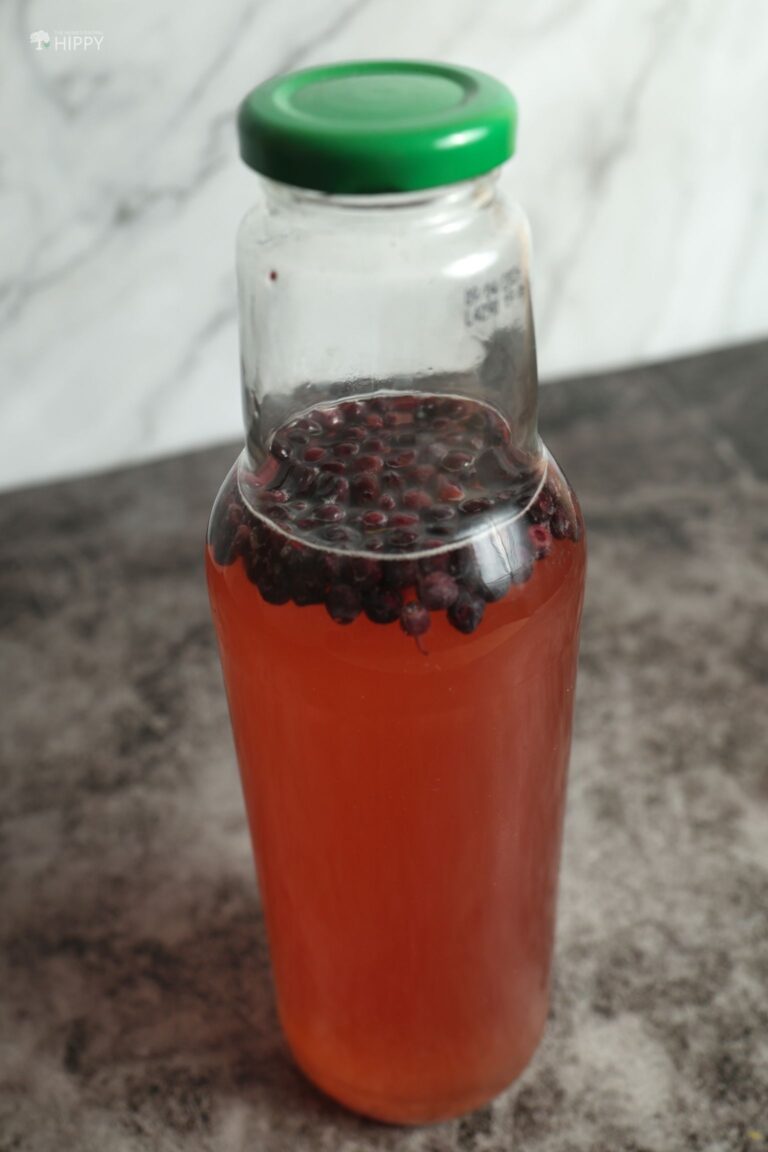
Experiment with adding fruit and herbs to find a combo you and your family will love. Some flavor combinations you should try:
- Triple berry
- Peach and Ginger
- Watermelon Mint
- Cucumber Basil
- Strawberry Kiwi
Can You Do the Whole Thing in an Airtight Jar?
Yes, it is, and I commend you for thinking “safety!”
If you’re new to making water kefir, you might be nervous about capping a glass jar tightly during the fermentation process. Fermentation produces gas, of course, and contained gas creates pressure; nobody wants a glass mason jar blowing up in the middle of the night! Don’t sweat it, because water kefir doesn’t produce anywhere near as much carbonation as something like beer during the fermentation stage. The pressure factor just isn’t there.
In our half-gallon mason jar, for instance, an inch or two of headspace means that the gas isn’t going to cause any drama, and these jars are made to handle a little pressure. Screw that lid down tight and don’t worry. If you’re really worried, or if your grains seem hyperactive, just give the jar a quick “burp” by cracking the seal on the lid to let out a bit of accumulated gas.
Bottom Line: As long as you’re using a strong jar and leaving a bit of headspace there is no danger. But just to be sure, you can just cover the jar with paper towel.
Have you ever made water kefir before? What is your favorite flavor? Be sure to pin this for later!


Heather’s homesteading journey started in 2006, with baby steps: first, she got a few raised beds, some chickens, and rabbits. Over the years, she amassed a wealth of homesteading knowledge, knowledge that you can find in the articles of this blog.
Learn more about Heather and the rest of the writers on this page.
I will have to share this with my mom, she makes kefir daily but I’m not sure she’s made a strawberry kefir yet!
I really need to get some water kefir grains! This sounds great!
That looks delicious! Can’t wait to try it.