
Most chicken keepers start keeping these ubiquitous domestic birds for one reason more than any other: a steady, almost limitless supply of the freshest, best eggs you will ever taste.
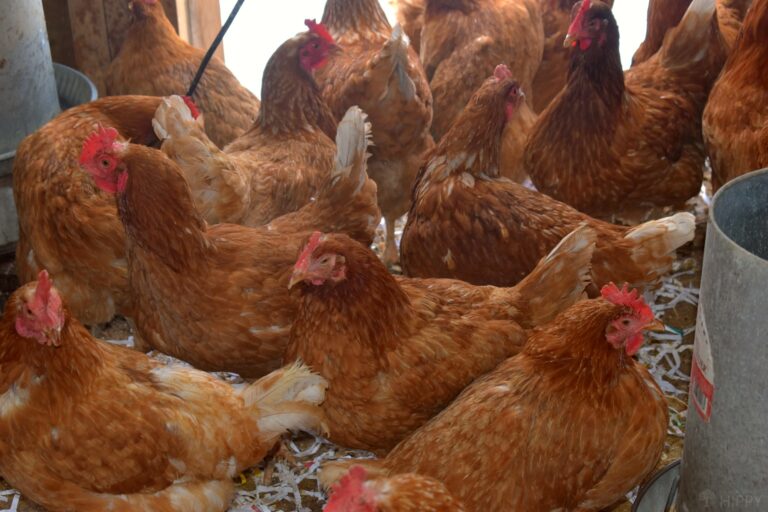
But I say almost limitless because hens won’t lay eggs forever. They have two, maybe three good years in them and then will slow down production precipitously until they stop altogether in their later years. The issue is that past-their-prime hens can live for years on end after their useful laying days are well behind them.
What to do when that time comes? You need to be thinking about it now. There are many things you can do with a hen that has stopped laying, from the humane to the purely practical. I’ll tell you about nine of them below.
Keep Them as Pets
The first, and for many of us, most obvious thing to do for our older hens is to just keep them around. Just because they aren’t overtly useful doesn’t mean we don’t love them, right?
Older hens are like any other old animal, broadly speaking: they tend to slow down, have a few more health problems, and need a little more care to get through their day. But they can still be pleasant, lots of fun, and useful in other ways, as we will learn.
If you plan on letting one of your old girls live out her life in peace despite the end of her laying days, you’ll have to make some accommodations for her.
Lowering the lowest roosting bar is a good idea, as is making any ramp or ladder entries into the coop shallower in pitch. Arthritis is a factor for chickens, too, you know!
You’ll also want to change up her diet: layer feed is not a good idea for older hens past their prime; it will actually have too much calcium for them now, and that can cause gout and other health issues.
Obviously, giving just one chicken a special diet is logistically impossible in a flock setting. That means you’ll need to change the entire flock’s diet—typically not a good idea—or keep your old girl separate or with other retired ladies so they can share some age-appropriate foods.
Do make sure you stay on top of regular healthcare, and be prepared when things get too tough for your favorite old hen to go on; that’s something we’ll talk about a little later.
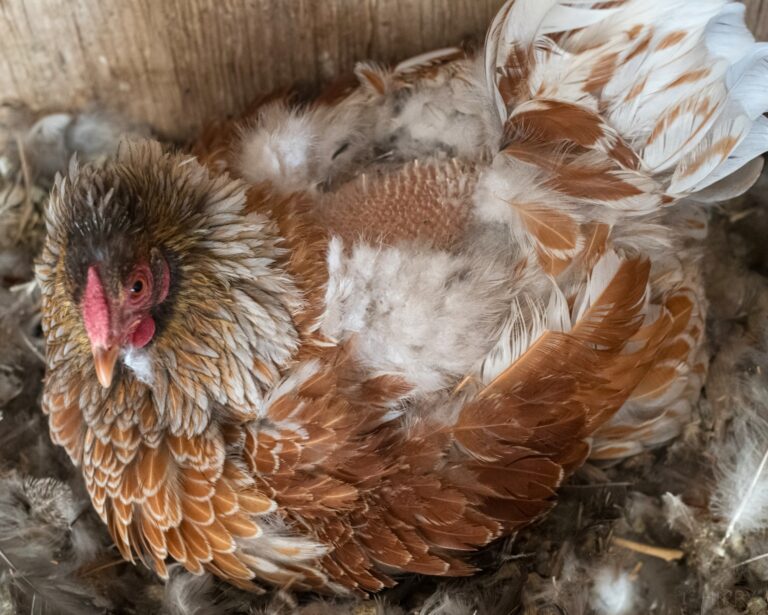
Use Them as Surrogate Sitters
Keeping an old hen around when she’s done laying isn’t just a nicety or something that you’ll do because you don’t have the heart or the guts to retire her: these seasoned girls can still be quite useful, most notably as surrogate sitters!
Most chickens will get a little broody from time to time, and some breeds like Orpingtons are infamously broody. But through a quirk of biology, when a hen’s egg output starts to drop, she tends to get much, much more broody than she was previously. She will have a hankering to hatch some eggs once she is older!
Use this to your advantage by making her the designated mom for fertilized eggs laid by other birds, assuming you want to expand your flock the natural way. “Veteran” hens also tend to be great moms who are very capable of protecting and teaching chicks.
Put Them to Work in the Garden
Something you might not know about your birds is that they can be great assistants in your garden.
Chickens scratch, peck, and poop constantly—something that can be annoying when it tears up your yard in other parts of your property but just the thing for keeping garden soil tilled and naturally fertilized.
Turning your older hens loose inside an enclosed garden can get you set for a great season: they will loosen up the soil, clear debris, eliminate gestating and live garden pests, and leave behind droppings that are packed with nitrogen and other beneficial plant nutrients.
This type of enrichment is also good for the birds themselves, who will get enjoyment and fulfillment out of exploring such a novel environment compared to the run they are used to.
That’s really all there is to it! Now, obviously, this works better when you have a larger flock of birds to let loose in the garden. It will take one or two birds a lot longer to do a thorough job.
Also, think twice before turning your birds loose in the garden when you’ve got fruits, veggies, and ornamentals coming in; they are just as likely to eat those as anything they find on the ground!

Put Them on Bug Patrol
Speaking of eating bugs, all chickens are expert bug hunters, and even a modest flock can dependably depopulate a sizable property of many kinds of insects, including various pests like ants, termites, ticks, and a lot more.
Your old girl might not be laying any eggs these days, but I promise her appetite for insects will be undiminished.
Keep her around with the flock or in a separate senior colony, and move them around in a tractor or let them free-range. As long as she isn’t having trouble walking and pecking, she’ll be picking off insects all day long.
My favorite technique to make older hens into useful bug hunters is to locate the senior flock near typical trouble areas like my outbuildings, wood piles, and other locations where insects tend to get out of control.
Your birds will appreciate the extra nutrition, and you will appreciate a property with a lot fewer pesky bugs on it.
Give Her to a Family Member or Friend with Plenty of Room
Let’s get real. For many of us who own chickens, as much as we might like them, even love them, the relationship is one of livestock and owner.
It’s not your fault that your older birds have stopped laying or lay only rarely, but if eggs are what you are after or new birds to add to your flock, these old dried-up girls are just taking up space and consuming resources…
It makes good sense to get rid of these used-up chickens, but if you are a bit of a softy, or your family just cannot bear to face the harsh facts of life in this regard, consider rehoming an old bird to a family member or friend who has chickens and plenty of room.
For every keeper out there who keeps a flock for eggs or meat alone, there is another who seemingly keeps chickens just for the joy of doing so. And that’s just fine! An older hen can’t ask for a better retirement than spending her life moseying around with other birds until age finally claims her.
Donate to an “Old Birds” Farm
Another possibility, and a good one for washing your hands of any dirty work, is to hand over an old hen to a farm that will take her and, likely, process her for food of one kind or another.
There are many farms throughout the country that take older birds and other animals for this purpose. While you might think it is cruel to do so, this ensures that every chicken is maximally productive and that waste, ultimately, is reduced.
Some will process old hens into stew meat or other products like pet food or render them into their base components, which can be incorporated into other things. But whatever happens, it will be out of your hands and you won’t have to worry about it.
Rehome to a Petting Zoo
If you cannot bear the idea of giving your hen away to a farm that is going to slaughter her, consider reaching out to any petting zoos and animal outreach programs in your area.
Many such organizations would love to have an old, gentle hen to add to their own flock for teaching children and providing up-close experiences for curious adults who don’t have any hands-on time with chickens or other livestock.
These options won’t be available for every keeper, mostly because these institutions and programs aren’t active everywhere, but they are generally reliable for rehoming an old bird humanely, and an especially good choice in areas with large suburban developments or many elementary schools.
There might be some stipulations, though, to be aware of: typically, any animals, including chickens, being rehomed by one of these programs will require healthcare records, proof of vaccination, and other such documentation.
If you haven’t been keeping up with that stuff or if you have deferred such healthcare, it might be a no-go.

Butcher
The time-honored option for getting your money’s worth out of an old hen. Chickens that are harvested for their meat are typically harvested much younger, usually within a few months of hatching and invariably within a year. This is done for reasons of quality, namely flavor and tenderness.
Older birds won’t be tender, I can promise you that, but that doesn’t mean they aren’t tasty. Old birds are often used for stew meat, pressure canning, and various other methods of preparation or cooking techniques that will tenderize their tough meat, making them palatable once again.
Now, obviously, if you want to harvest one of your birds for meat you’ve got to dispatch the bird and process the carcass. Depending on your own proclivities, this will be just another day on the homestead or borderline impossible.
Plenty of keepers will tell you this is reason number one why you don’t name your birds, and you should consider the impact this will have on your family members, especially kids, if they witness the act. I’m not judging one way or the other, but you need to think this through if you plan on going this route.
If you are okay with harvesting and eating one of your old hens but you don’t want to do the processing yourself, you can always send them to a butcher, processor, neighbor, or friend who has the skills and is willing to do it for you.
Euthanize
If all of the above is impossible or simply non-viable for you, you can euthanize old chickens that have stopped producing. Ideally, you’ll do this before their health declines to the point that they are suffering.
Traditional methods of euthanizing chickens are decapitation and wringing of the neck, and obviously both must be done carefully to avoid botching the job and inflicting undue suffering.
Wringing the neck by hand, especially, takes practice to get it right every time and immediately. Even with instruction, you should expect to screw it up a few times if you don’t already know how to do it.
As an alternative, you can contact an avian or livestock vet who can do it via injection.
Dealing with a Dead Chicken
Whether your old gal died from age, injury, illness, or other complications like a botched slaughtering, you’ll have a body to deal with. What should you do?
For a pet chicken or an unexpected death, the simplest option is just to bury them if you have access to enough land.
Wrap the corpse in a trash bag or plastic wrap to help contain odors, which could attract digging pests and predators, then bury them far away from the rest of the flock at least two feet deep.
Cremation is an option, either done through your vet or simple incineration in a fire pit or burn barrel at home. The latter is recommended if you suspect the bird died of communicable diseases.
Depending on where you live, you might be able to send the corpse off to a landfill with household garbage, but make sure you check your state and county regulations before you do this…

Tim is a farm boy with vast experience on homesteads, and with survival and prepping. He lives a self-reliant lifestyle along with his aging mother in a quiet and very conservative little town in Ohio. He teaches folks about security, prepping and self-sufficiency not just through his witty writing, but also in person.
Find out more about Tim and the rest of the crew here.
I have an old hen who is the sole survivor of our small flock. Do chickens get lonely? I would like to give her to one of our neighbors who have chickens, but my partner thinks that might not be practical.
Aw, poor ol’ gal. I don’t know about loneliness but they are birds who naturally flock together to survive/live in groups.
It certainly couldn’t hurt to ask those neighbors at least, as long as she’s healthy. If they agree to taking her then bring her over along with what remains of her food as a matter of good measure. But know that once she’s given away she belongs to them so they may soon decide to “dispatch” her regatdless. At least it won’t be you though I guess.