
Most folks who get even a couple of goats tend to want more. Whether you’re keeping them for your own purposes and provision or for income, growing the size of your herd is the best way to scale their production.
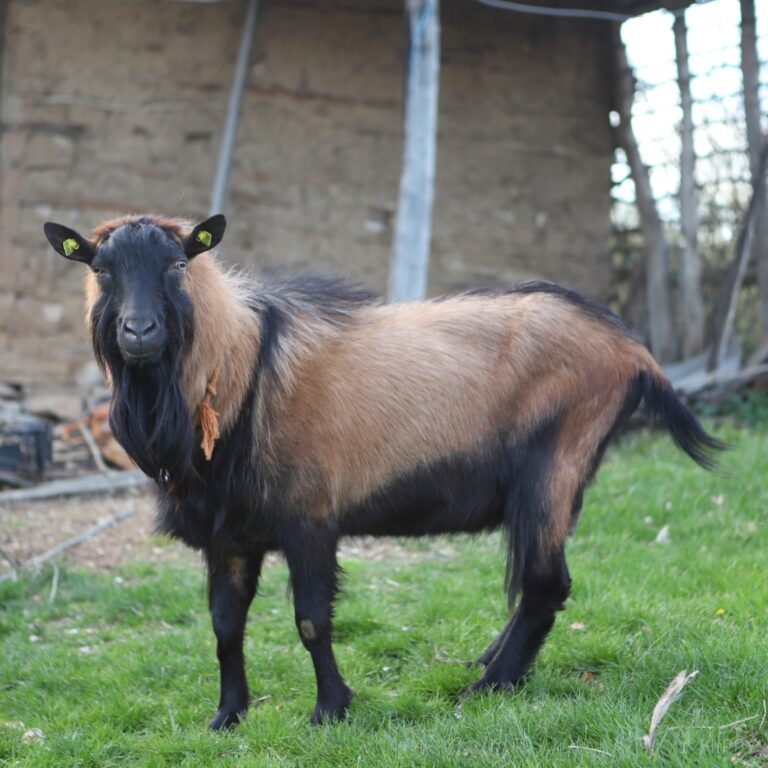
But unless you want to drop a small fortune on buying more, you’ll need to increase their numbers the old-fashioned way, and that means through breeding. I know so many goat herders who balk at the idea, but it’s really not as complicated as you might think.
To help you get started and avoid common pitfalls, I’m bringing you a short and sweet guide on goat breeding. Read on, and you’ll soon know everything you need to…
Breeding Basics for Total Beginners
The basics of breeding domestic goats are much like those of any other kind of livestock: we don’t want to put the boys and girls together and then let nature take its course with our fingers crossed.
Smart, sustainable, and ethical breeding begins with paying careful attention to the health of your goats and selecting breeding stock that has the right combination of traits you want to improve: size, milk production, health, or whatever.
Pick healthy goats, select for good traits while minimizing bad ones, pay attention, and you should have an easy time of it.
Breeding Age for Bucks and Does
This varies between males and females. Male goats, called bucks or sometimes billies, are sexually mature at just two or three months and capable of reproduction. Does, on the other hand, are usually considered ready to breed at 12 months of age to be on the safe side.
It is possible for does to breed before that, but it’s a bad idea, as it increases the risks of miscarriage and potentially injury or death for the mother.
Mating Season Varies by Breed
The next important element you need to understand about goat breeding is mating season, sometimes referred to as the rut. This varies from breed to breed and sometimes individually among goats.
The rough rule of thumb is that warm-weather breeds, often referred to as equatorial breeds, tend to breed year-round if given the opportunity. If you have Nubians or Pygmies, for instance, you can breed them whenever it’s convenient for you or most efficient.
On the other hand, typical cold-weather breeds, including many popular dairy breeds like Alpines or Saanens, are typically in season between August or September and December or January.
Typically, cold-weather breeds will deliver their kids in the spring…
Keep Intact Bucks Separated From Does If Not Expanding Your Herd
This is one lesson you’ll have to learn the hard way, like I did. Do not count on breeding season or anything except neutering to prevent unwanted pregnancies in your goats!
Intact bucks that are on your property must be kept completely away from the females: out of sight, out of smell, and hopefully out of mind. Otherwise, chaos will ensue.
Males especially, but also females, can go plumb crazy for each other, leading to irrational or aggressive behavior, escape attempts, and, of course, pregnancies.
If you can’t properly separate males and females, enclosures must be built strong and completely goat-proof.
Smart Keepers Will Skip a Season with Their Does
It’s possible to breed a doe as soon as she’s of age, around 12 months, and it’s even possible to get two pregnancies a year out of her. Most responsible keepers will tell you this is a bad idea, though.
Pregnancy is extremely hard on goats, especially young goats. You shouldn’t breed them more than once a year if you care about them and want to keep them in optimal health for years to come.
A measured breeding pace makes for fewer problems for mom and kids in the long run, and that means fewer problems for you.
The Basics of Managing Bucks
Like so many animal species, a disproportionate number of problems arise from keeping sexually intact males. This is certainly the case with goats.
Bucks might be necessary to your breeding program, but they can be a nightmare if you don’t know how to manage them. Keep all of the following in mind before you take on the responsibility.
Ratio
A good rule of thumb is that you’ll need one mature buck for every 10 to 20 does, or up to 30 in the case of especially energetic and prolific sires.
If maintaining maximum genetic diversity in your herd is a factor, and it can be depending on why you are raising your goats, you want to keep a smaller ratio or potentially go even smaller with something like one male for every five females.
Whichever way you slice it, this is good news because it means you won’t need but a few bucks to service even a large herd of ladies!
Don’t Let Young Bucks Mate Too Much
It is difficult to overstate just how enthusiastic bucks will be during the rut. Trust me, you can count on them to get the job done, and that’s all I’ll say about it!
But jokes aside, it’s up to you to rein in young bucks: they can quite literally exhaust themselves to the point that they hurt their health or even perish! If you’re using yearling bucks, be prepared to separate them after they mate with a few ladies so they can rest and recover their strength.
Rent or Own?
You can buy a buck or two for your herd, but you don’t have to. Many owners are happy to rent out their bucks for stud services, and I urge you to take advantage of these services if you value your sanity.
Ask any seasoned goat herder, and they will tell you that raising even the most mild-mannered herd of does can be problem enough, but bucks are only going to compound that aggravation and misery if you have to care for them full-time.
Unless you are truly dedicated to the goat game, I recommend you rent bucks rather than buy.
Bucks Are Nasty and Ornery
Case in point, bucks are gross at the best of times, and during the rut, they turn positively disgusting. They are worse than the worst pig, and that’s a fact!
Aside from secreting foul-smelling pheromones that the ladies love, bucks have the dreadful ability to pee all over themselves, including their bellies, beards, and even their mouths. This is the equivalent of goat Old Spice, but for humans, the smell of a musky billy goat is nasty enough to peel paint and wake the dead.
I’ve warned you.
Warning: Bucks Can Be Dangerous!
Speaking of warnings, I’d be remiss if I didn’t give you the straight dope on big, strong billy goats.
A young male with horns intact headbutting you might be aggravating, maybe even cute, but when a strong and sturdy specimen does it, it can knock you off your feet or potentially even break bones. It’s easy to underestimate them, but you shouldn’t do that.
Don’t turn your back on them, and be prepared for a buck that’s gone crazy over the ladies to break down gates and fences or even make risky jumps in order to get to them.
All Goats Need More Nutrients When Breeding
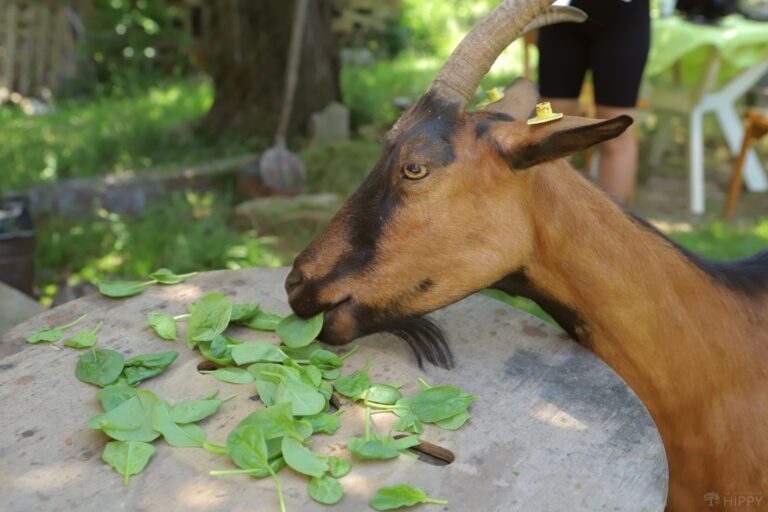
Males and females alike need a lot more food during breeding periods. Females, obviously, need it to help grow their fetuses and then produce milk for them. Bucks will simply be physically exerting themselves so hard and so often that they can burn out without extra rations.
A good rule of thumb is to give males an extra 10 to 15% ration, and females around 20%, increasing or decreasing as needed according to their lactation once they deliver.
Gestation Period and Confirming Pregnancy
If everything goes according to plan, and it’s very likely that it will, your does will have those little buns in the oven for between 145 and 150 days on average, regardless of breed. Note that larger breeds, as a rule of thumb, take a little longer than smaller ones.
The good news is you can quite literally mark your calendar once you have confirmed a doe’s pregnancy. Watch for her to not go back into heat, show increased appetite, or act calmer and more affectionate. Vets can confirm pregnancy with an ultrasound or through blood tests.

Tim is a farm boy with vast experience on homesteads, and with survival and prepping. He lives a self-reliant lifestyle along with his aging mother in a quiet and very conservative little town in Ohio. He teaches folks about security, prepping and self-sufficiency not just through his witty writing, but also in person.
Find out more about Tim and the rest of the crew here.