
I think everyone understands that every living thing can benefit from optimum nutrition, and the same certainly counts for our chickens. They depend on getting the right amount of calories and, just as importantly, the correct micronutrients in the correct ratios to thrive.
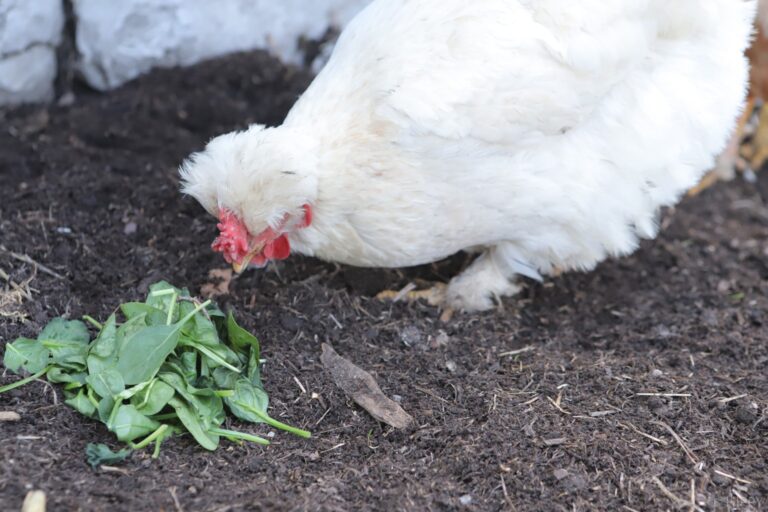
Speaking of micronutrients, one of the most important for chickens overall is calcium. Calcium is crucially important, obviously, for the overall quality of eggs and the hens that lay them, but it also plays many other important roles in the body.
A lack of calcium is one of the most common ailments that can affect the health and productivity of your flock.
To help you deal with it, I’m bringing you a list of all-natural calcium sources for your flock, and much more need-to-know information besides. Keep reading and we’ll get right into it…
Why is Calcium Important for Chickens?
Calcium, as I said above, is critically important for the overall health of chickens.
To get the obvious out of the way, calcium is absolutely vital for laying hens, and they need a lot more of it daily compared to other adult chickens- adult, laying hens need 4 to 5 grams daily!
Roosters, on the other hand, only need 2 to 2 ½ grams daily at most assuming they are not deficient.
Eggshells are made up of mostly calcium carbonate, and if hens aren’t getting enough of it to devote to the production of good, strong eggshells all sorts of problems in the laying process can result, or at best egg quality will decline.
But that’s not the only reason why chickens need calcium in their diet. It’s essential for good health because:
- of its importance in the initiation and sustainment of other vital bodily processes,
- including cardiovascular health in the form of setting and stabilizing a chicken’s heartbeat and blood clotting,
- the health and maintenance of nervous system tissues,
- hormone production,
- muscle activation,
- bone growth and healing and even digestion.
Calcium is also needed as a secondary element or even catalyst for the absorption of some other nutrients and their utilization for these processes and more, with phosphorus being foremost among them.
In fact, when either phosphorous or calcium levels get out of whack in a chicken’s body, either too high or too low, this will often impact the other in a vicious cycle that can get worse and worse.
Bottom line: chickens must get plenty of calcium in their diet, no exceptions!

Symptoms of Calcium Deficiency
Assuming you have a flock with laying hens, you’ll be able to tell that all of your birds are suffering from a calcium deficiency when you start noticing problems with the eggs that they lay.
If your eggs are soft, deformed, have shells that are incomplete, or, most worryingly, eggs are being laid without shells at all (typified by a present membrane but no hard outer layer) you’ll know that a pronounced lack of calcium is probably to blame.
Also, make sure you inspect your girls closely because these issues often herald major and potentially life-threatening problems like egg binding, infection, and potentially even infestation from maggots that will try to get at the egg yolk remnants left behind in the poor thing’s vent.
But that isn’t all that can affect your chickens if they have too little calcium, and a lack of calcium isn’t just a problem for hens. A serious lack of calcium during development for young chicks will result in retarded development of bones and subsequent deformities.
Calcium is needed for overall muscular control and since muscular contractions are required to actually move an egg through the oviduct and then lay it, you can expect hens to struggle more when trying to lay what eggs they can produce. Osteoporosis and early onset of aging are related problems, too.
How Can You Tell Your Chickens Are Suffering from Low Calcium?
Adult chickens will also start to lose feathers more frequently and also peck at them, often plucking them out.
If several of your birds seem sluggish, uncoordinated, or unable or reluctant to stand and don’t seem to be infected or suffering from any other disease, it could be from a lack of calcium.
Also be on the lookout for any chickens, male or female, that suddenly show a tendency toward egg-eating.
Several factors can cause egg cannibalism, but one of the most common and most insistent is a lack of dietary calcium. Chickens instinctively know that those eggshells contain ample calcium, and that’s why they’ll start eating them!
If you notice any of these symptoms, you must investigate but it’s safe to assume if there are afflicting several members of the flock at once that a lack of dietary calcium is the culprit.
Is Too Much Calcium Bad?
Absolutely, yes! I wanted to cover this before we dash straight down to the list of the best calcium sources. Not only is it easy to give your chickens too much calcium, but too much can be extremely harmful to them!
Concerning eggs, it turns out that you can have too much of a good thing, even something that is as essential as calcium for egg health. Excess calcium in a laying hen’s diet can manifest as bumpy or pebbly eggshells.
While really a practical problem concerning the overall quality of the egg itself or the hen’s health, it is symptomatic that she has a little bit too much calcium in her system.
A far worse concern is hypercalcemia, literally excess calcium in the blood. This can result in systemic organ damage, including significant damage to the liver, the production of urinary tract stones, calcification of the kidneys, and even direct damage to the heart.
A chicken can cope with a little bit too much calcium, even over time, with very little issue by excreting it in waste, but when there is too much for the liver and the kidneys to deal with that is when the trouble starts and it can start fast.
Assuming you are carefully monitoring their diet for calcium intake, you usually don’t have to worry about this issue but there are always conditions where it might occur without warning.
For instance, if you have any of your girls on a high-calcium diet and then she, for whatever reason, stops laying eggs but continues to eat tons of calcium, that can cause trouble before you can react to it if you aren’t paying attention to them.
Another common cause of calcium overdose is through the use of calcium supplements, but I’ll talk more about those later. Now, on to the list.
The Best Natural Sources of Calcium for Chickens
Chicken Feed
Not much of a surprise here! Domestic chickens always do best when their diet is predominantly made up of a nutritionally balanced chicken feed, and specifically one that is selected for their stage of life.
That means starter feed for chicks, standard feed for adult chickens, and layer feed for hens that are cranking out the eggs.
A good chicken feed will have everything that they need, and in the right amounts, to thrive, including plenty of calcium. That being said, it’s good to anticipate that your chickens will need a little bit extra, particularly for hens, and that’s where the other foods on this list come in.
Crushed Oyster Shells
Oyster shells are a time-tested and honored food, or I guess an additive, for getting lots more calcium into the diet of hens. That’s why you’ll usually see it sold right by the chicken feed anywhere you can get supplies for livestock and poultry in particular.
Oyster shells contain tons of calcium, and they are also ideal because they linger in the digestive tract longer so that chickens take more from it before passing it.
But, check the size of the ground shell pellets closely: You might think that smaller is better for edibility, but what you really want is a product that is about a quarter-inch in diameter or a little smaller.
These larger bits can still be broken down by chickens in the gizzard and will take longer to digest, meaning maximum benefit.

Crushed Eggshells
I thought we were trying to avoid having our chickens eat their own eggs? We are, but that doesn’t mean that crushed eggshells aren’t a great calcium supplement for your flock – and the ideal way to recycle common kitchen waste in a useful and environmentally friendly way.
This really is as simple as it sounds: Take any leftover eggshells from the breakfast you are making and grind them up into small flakes. Then mix those bits in with other kinds of food that your chickens want to eat, either feed or whole foods.
This part is important because otherwise egg shell flakes will move through their digestive tract too quickly and they won’t be able to extract much calcium from them.
Talk about the circle of life: Your birds can lay your breakfast and then you can give them the scraps that will help them to keep laying your breakfast!
Eggs
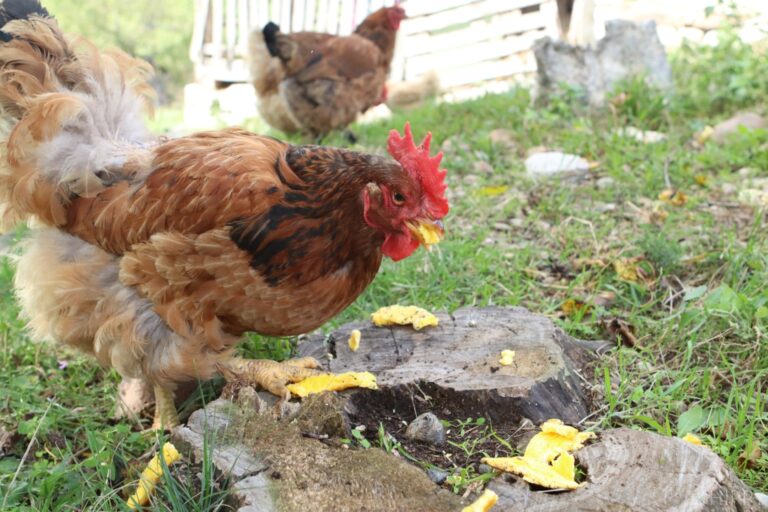
Eggs themselves, specifically the whites and the yolks, are a fairly calcium-rich food for chickens and one with many other nutritional benefits besides.
However, you must never, ever give your chickens raw eggs under any circumstances because this will promote egg cannibalism. Turns out that chickens quite like the taste!
The solution, then? Simply scramble the eggs and cook prior to serving. This will change the aroma, shape, and texture enough that your chickens won’t associate eggs, scrambled, with eggs, whole, as a food source. Easily done and totally worth it.
Broccoli
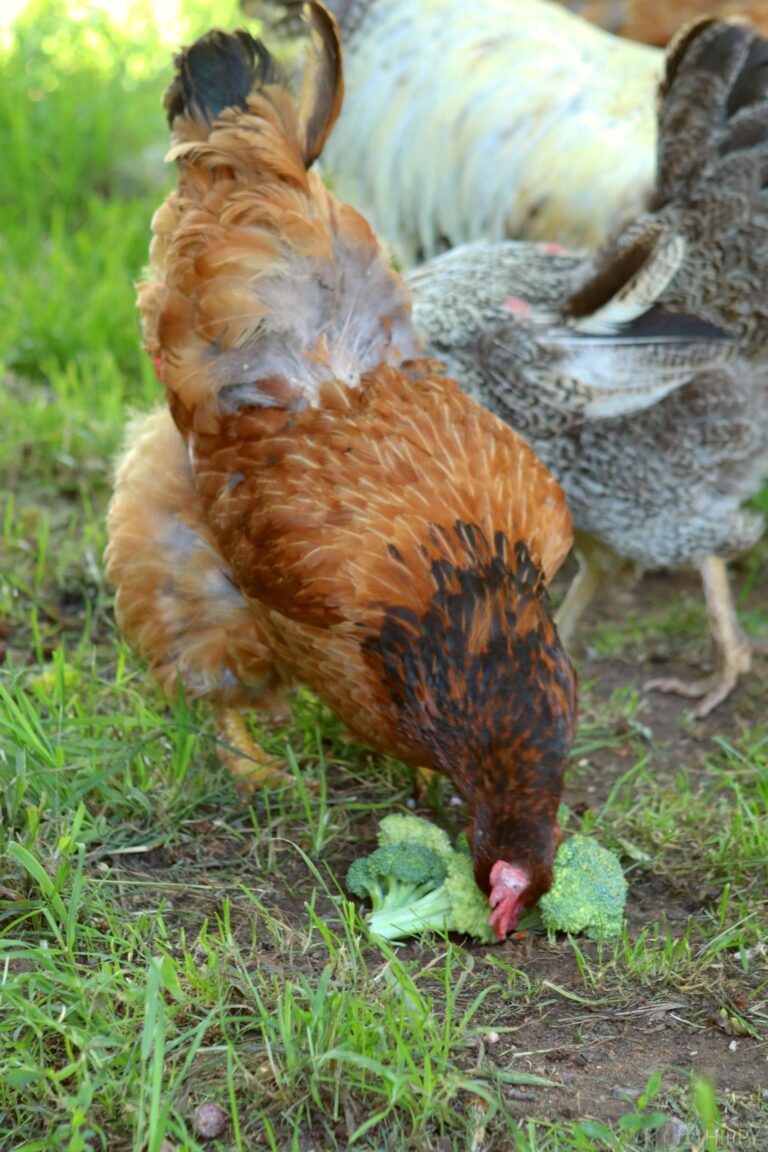
Broccoli can be a decent source of calcium, but one that your birds are only likely to nibble the florets off of.
Broccoli is also packed with other vitamins and minerals that chickens need, but this is only a supplemental or novel food for them, not something they should be eating all the time.
Nonetheless, if you made it a point to give your birds a highly varied diet for entertainment and their overall wellness, they can have broccoli a couple of times a week in small amounts along with other safe produce.
When you visit a link in this article that takes you to a different website where you can purchase something, I may earn a commission. Read my full disclosure for more details.
Black Soldier Fly Grubs
Black soldier fly grubs are highly nutritious fly larvae that just so happen to be a favorite of chickens and many other birds.
Easy to eat, easy to digest, and packed with both phosphorus and calcium, they are a great treat and dietary supplement for chickens that can also supply them with a big boost of calories and protein.
Mealworms
Mealworms are another common treat or supplement for your flock, one that is jam-packed with protein, calcium, and many other essential micronutrients.
As expected, chickens go absolutely bonkers for mealworms and you won’t have to struggle in the least to get them to eat up. This makes them a worthwhile tool in your arsenal for quickly and easily supplying your birds with calcium when they need it most.
Bone Meal
Chickens don’t eat bones, not large ones, but they can digest them if they are ground up into power. Bone meal, in the same way that eggshells are, makes a great source of calcium that is readily accessible for chickens.
But as you might expect, this one is to be used as a supplement by mixing it in with feed or other food sources like it. Used as an additive that can supercharge feed that has low or inadequate calcium levels, it works wonderfully and tends to be affordable.
Diatomaceous Earth
Every chicken owner and gardener who’s been around the block a few times is already highly acquainted with diatomaceous earth.
This powdery stuff is actually made up of the ancient, ground shells of aquatic organisms called diatoms, and in that regard, it is similar to ground oyster shells. However, it has a few other perks besides…
DE is a good source of calcium, yes, but it also has powerful antiparasitic properties and can help chickens deal with intestinal parasites.
Mixing this stuff into their food, occasionally and in strictly regulated amounts, can give your birds a good boost of calcium and also help them cope with nasty critters that can hurt their health.
Warning: Ensure you use only food-grade DE for your chickens; filter-grade DE has dangerous silica levels!
Sunflower Seeds
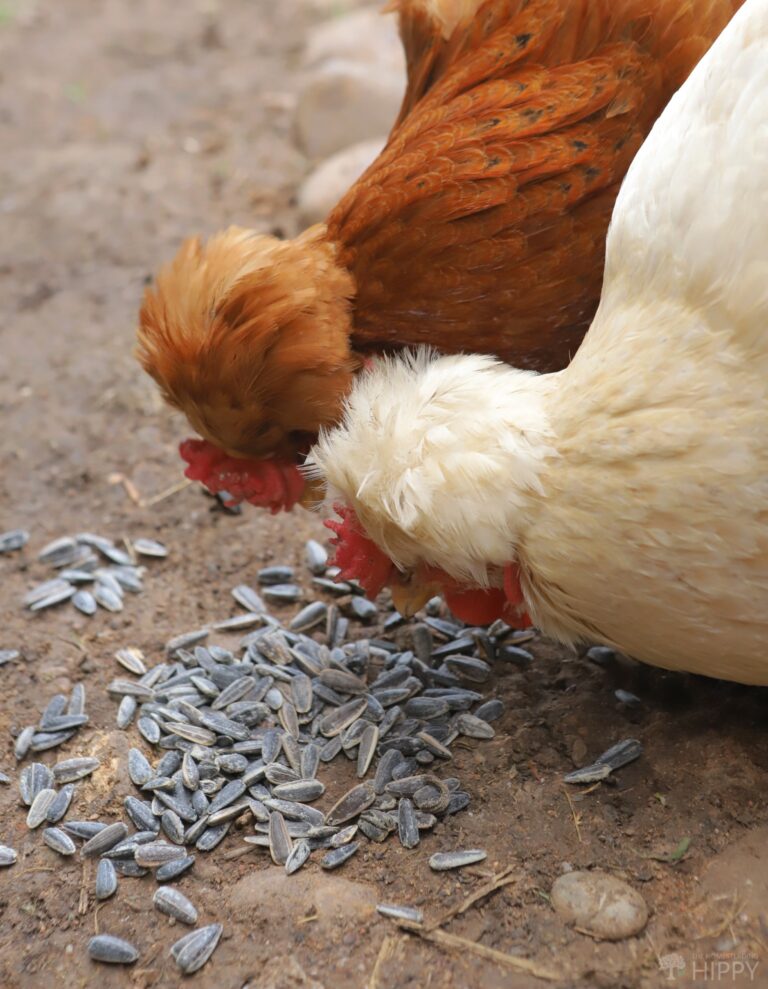
Everyone knows that chickens love seeds. Of course! And you probably already know that sunflower seeds are among their very favorite.
Aside from being tasty and a wonderful source of calories and nutrition generally, sunflower seeds are also a phenomenal food for supplying calcium, and one that is a little bit slower to digest so that your birds can get maximum benefit.
If you’ve already made sunflower seeds a routine part of their diet, or just a preferred treat, chances are pretty good they’re probably getting all the calcium they need between that and their feed.
In any case, know that you can always reach for sunflower seeds, whether they are whole or sprouted, to give your layers a boost of nutrition and most importantly calcium.
Fennel
Fennel is most known in our own kitchens for lending a distinctive, licorice-like flavor to various dishes.
Love it or hate it, chickens will eat this herb fresh, wherever it grows, or if you hand it over to them after harvesting. It’s incredibly rich in calcium and is another good, all-natural dietary source of calcium that is easy for them to digest.
Basil
Basil is arguably the most popular kitchen herb the world over, but what isn’t arguable is how much calcium it has and how much good it can do for your hens.
The tender, fragrant leaves of basil are highly attractive to chickens, and you can let them out to forage on it or you can pluck it yourself, chop it up and then give it to them mixed in with other foods.
Thyme
Another herb, another wonderful way to give calcium to your flock. Although not as appealing to chickens as fennel and basil, thyme is also supremely rich with calcium and many other minerals besides.
Spinach
Contrary to what is sometimes asserted, chickens can eat spinach safely though they should only have it in very limited quantities.
It is a good source of calcium, but the problem is spinach is that it contains high amounts of oxalic acid, a compound that can bind to calcium and prevent chickens from absorbing it.
Seems like it defeats the purpose, but chickens can still get calcium and many other nutrients besides from spinach, meaning it is a worthwhile- if highly limited- addition to their usual diet.
To be totally clear, under no circumstances should chickens be allowed to free range on spinach and you should not be feeding it to them any more than once a week in very small quantities.
Consider OTC Calcium Supplements if Needed
Something else you might consider is over-the-counter calcium supplements for chickens. These can be had in the form of specialty treats or even in liquid additives that you can put in their water.
These supplements are often highly concentrated and a great way to quickly get lots of calcium into a neglected or imbalanced flock.
The downside is that ignoring the dosage schedule, or making a mistake, can easily lead to overdose. When taking in such concentrated levels of calcium, this can easily lead to unwanted issues and side effects for your poor birds.
For instance, one study by Dameron and Flunker found that intake of water with an added calcium supplement did indeed improve calcium levels in chickens, but also led to a reduction in overall feed intake, citing in the abstract, linked above, that “Feed consumption was also depressed by waterborne calcium in both studies when 3.5% dietary calcium was given(…)”.
The rule with these supplements, as always, is to read, heed and strictly follow the manufacturer’s instructions for feeding or dosing. Ignore those guidelines at your own peril!


Tim is a farm boy with vast experience on homesteads, and with survival and prepping. He lives a self-reliant lifestyle along with his aging mother in a quiet and very conservative little town in Ohio. He teaches folks about security, prepping and self-sufficiency not just through his witty writing, but also in person.
Find out more about Tim and the rest of the crew here.