
Every gardener who knows which end of the trowel to use knows that plants need fertilizer. They need food just like we need food! But proper fertilization can be one of the trickiest elements of gardening to get right. It’s just as much art as science.

I know lots of green thumbs who prefer to use natural resources in their gardens to produce happier, healthier plants with less worry about creepy chemicals going into the soil and potentially into their food supply. This is all well and good, but it adds another layer of complication to the task.
One thing you can use to make your life a lot easier and your plants a lot happier is coffee grounds.
Strange as it sounds, coffee grounds have a distinguished historical track record as fertilizer for all kinds of plants, and in this article, I’ll tell you everything you need to know about doing exactly that. Sound good? Then brew some bean water, grab your gloves, and let’s get a move on.
Coffee Grounds? Seriously? Why?
Yes, seriously. And it’s because they work wonderfully as fertilizer and are easy to use. Below are four great reasons why coffee grounds have been used as a garden fertilizer for ages, and why you should use them too.
Nutrients for Plant Growth
Coffee grounds are a great source of nitrogen, an essential nutrient that all plants need and many need in abundance. Coffee grounds also contain smaller amounts of phosphorus and potassium, which support root development and overall plant vigor.
These nutrients are released slowly as the grounds break down, providing a steady, gentle feed that won’t burn your plants like some synthetic fertilizers can. Plus, the organic nature of coffee grounds means they’re less likely to cause nutrient imbalances when used correctly.
Soil Improvement
Coffee grounds are organic matter, and by mixing them into soil, you can improve its structure and texture, which will directly lead to better drainage, aeration, and water retention. This is especially helpful for heavy clay soils that compact easily or sandy soils that drain too quickly.
Over time, coffee grounds help create a crumbly, loamy texture that plants love, making it easier for roots to spread and access nutrients. They also attract beneficial microorganisms that further enrich and stabilize the soil.
Reduced Costs of Fertilization
Over-the-counter fertilizer can get expensive, and fast. By using natural, reclaimed materials like coffee grounds, you can save a bundle. If you drink coffee yourself, you’re already generating this resource daily, so why toss it in the trash when it can be put to work in the garden?
Even if you don’t brew your own, local coffee shops are often happy to collect and give away their used grounds for free. It’s a win-win: you get free fertilizer, and they reduce waste.
Sustainable and Eco-Friendly
Not for nothing, coffee grounds are highly sustainable and eco-friendly. No crazy chemicals, no dangerous runoff, and no weird stuff that will get into your plants or onto your skin from your ornamentals.
If you’re growing fruits or veggies, this is even more important because you don’t want synthetic residues ending up on your plate and then in your body.
Coffee Grounds Are Convenient for Giving Plants a Shot of Nutrition
Ask any gardener who has been into the practice for any length of time, and they’ll tell you that it’s hard work and time-intensive. Doing a good job, and doing it right, requires dedication. Anything you can do to save time here and there will really add up.
Using coffee grounds for this purpose is a smart move that will boost your efficiency. They’re easy to collect, store, and apply, requiring no special equipment or preparation beyond what you’re already doing in your kitchen or garden.
They Work Great in Your Compost Pile, Too
One mistake I often see gardeners make with coffee grounds is assuming they have to sprinkle them directly in their garden, raised beds, or containers. You don’t!
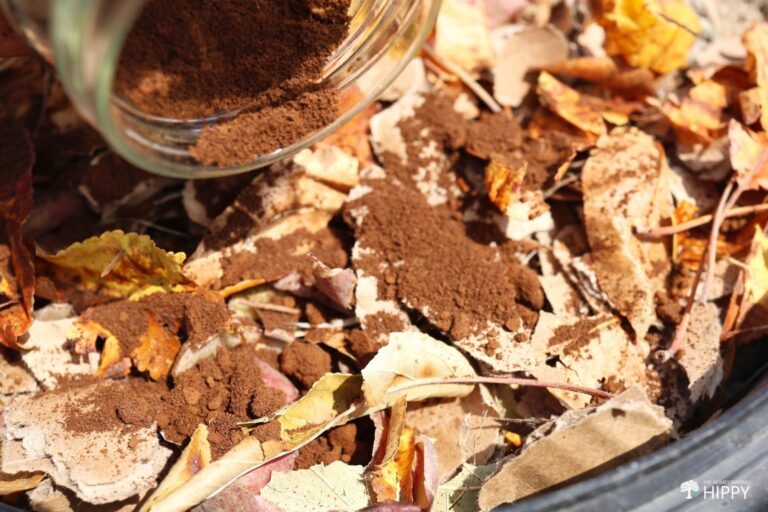
Coffee grounds make a great “green” addition to your compost pile, despite their brown appearance. They’re rich in nitrogen, which helps balance the carbon-heavy “brown” materials like leaves or straw. Adding coffee grounds to your compost speeds up decomposition and produces a richer, more nutrient-dense compost for your plants.
Coffee grounds are safe to add in moderation and won’t make your compost too acidic when mixed properly, but they shouldn’t be the only green you are putting in.
Many Common Garden Plants Love Coffee
Coffee grounds can be just the thing for all kinds of plants that need a boost of nutrition, but they’re an especially good choice for nitrogen-hungry plants that prefer acidic soil.
Veggies like spinach, kale, cabbage, broccoli, and lettuce are excellent candidates for amending with coffee grounds, as are blueberry bushes.
Ornamentals like rhododendrons, azaleas, hydrangeas, and more are likewise well-served by them. Even trees like magnolias or evergreens can benefit from a light application now and then.
The nitrogen fuels lush, green growth, while the slight acidity of used grounds helps maintain the soil pH these plants crave. Just be sure to monitor your soil’s pH as usual going forward. I’ll tell you how to add it to your plants in a bit…

Save Your Used Grounds!
Here’s something that so many aspiring green thumbs mess up when reaching for coffee grounds for garden use. Make sure you only fertilize with used grounds! That is, grounds that have been run through the brew cycle.
You don’t want to use fresh grounds for several reasons. Not the least of which is throwing away fresh, good coffee means you’re paying too much for what fertilizer you’re actually getting. Second, fresh grounds are far more acidic than used grounds and can easily tip your soil pH balance too far.
Another reason is the caffeine content in fresh grounds. Caffeine can have benefits when it comes to repelling certain pests and even disrupting the lifestyle of certain harmful fungi, but it can damage or even kill more sensitive plants. You definitely don’t want that!
Used grounds, on the other hand, have had most of the caffeine and acidity leached out during brewing, making them a safer, gentler choice for your garden.
Using Coffee Grounds: Dos and Don’ts
Like everything else we do, and especially everything we do in the garden, it’s all about knowing what’s correct and what you should avoid. Coffee grounds as fertilizer have a few do’s and don’ts to keep in mind. Follow these guidelines, and you won’t go wrong with them, I promise!
Do
Test Soil Levels: Before adding coffee grounds, test your soil’s pH and nutrient levels. This ensures you’re not overloading it with nitrogen or making it too acidic, which could harm plants that prefer neutral or alkaline soil. A simple soil test kit will do the trick.
Dry Before You Apply: Wet coffee grounds can clump and encourage mold or fungal growth. Spread them out on a tray or newspaper and let them air-dry before using them in your garden or compost. This also makes them easier to sprinkle evenly.
Use With Other Amendments: Coffee grounds are a fantastic addition, but they’re not a complete fertilizer. Pair them with other organic amendments like compost, manure, or bone meal to provide a balanced nutrient profile for your plants.
Work Into the Soil: Lightly mix or till coffee grounds into the top inch or two of soil around your plants. This helps them break down faster, prevents clumping, and ensures nutrients reach the roots where they’re needed most.
Don’t
Overapply: More isn’t always better. Too many coffee grounds can lead to nitrogen overload, which causes excessive leafy growth at the expense of flowers or fruit. Stick to a thin layer (about ¼ inch or 6 mm) or a light sprinkling every few weeks.
Use Fresh Grounds: As mentioned, fresh grounds are too acidic and caffeinated for most plants. Always use brewed grounds to avoid harming your garden.
Apply a Mound or Thick Layer: Dumping a pile of coffee grounds on the soil surface can create a barrier that blocks water and air from reaching roots. It also invites mold and pests. Spread them thinly and mix them in for best results. If nothing else, try to scratch up and stir them into the top 1 inch of the soil.
Ways to Use Your Coffee Grounds
I’ll bet you don’t know just how versatile coffee grounds are as fertilizer. No matter your garden, your plants, or your preferred method of fertilization, you can get good use from them.
I’ve used coffee grounds in all of the following ways and can report that they’re highly effective. Try a few or all of them and see what works best for your workflow.

Direct Application
Sprinkle dried coffee grounds around the base of your plants, then lightly work them into the soil with a hand trowel or rake. This method is perfect for nitrogen-loving plants like leafy greens or acid-loving shrubs.
Apply about ¼ inch of grounds every 4-6 weeks during the growing season, and water thoroughly afterward to help the nutrients soak in.
In Compost
Add coffee grounds to your compost pile as a nitrogen-rich “green” material. They’re a great way to balance carbon-heavy materials like dried leaves or cardboard. Mix them in well and turn the pile regularly to prevent clumping. You can add up to 10-20% coffee grounds by volume without throwing off the compost’s balance.
As Starter
Mix coffee grounds into your seed-starting mix or potting soil for a nutrient boost. A ratio of one part grounds to four parts soil works well for most seedlings.
This gives young plants a gentle dose of nitrogen to support early growth without overwhelming them. Just make sure the grounds are dry and well-mixed to avoid mold.

As Liquid: “Tea”
Brew a nutrient-rich liquid fertilizer by steeping used coffee grounds in water. Fill a bucket with 1 part coffee grounds to 5 parts water, let it sit for 24-48 hours, then strain out the solids.
Use the resulting “ tea” as liquid fertilizer to water your plants, especially acid-lovers like the aforementioned blueberries or hydrangeas. Apply once a month for a quick nutrient boost.
In Your Worm Farm
If you have a vermicomposting setup, your worms will love coffee grounds. They’re a favorite food for earthworms, providing nitrogen and organic matter that worms break down into rich castings.
Sprinkle a small handful of dried grounds into your worm bin every week or two, but don’t overdo it: too much can make the bin too acidic for your worms.
The Mold Question
If there’s one cautionary statement you see pop up over and over again concerning the use of coffee grounds in the garden, it’s the likelihood that they’ll cause mold growth. Some folks, including some very seasoned growers, think the issue is so bad that you should never use coffee grounds!
So what’s the truth? Are coffee grounds a mold magnet or not? The accurate answer is not so pithy and simple. Coffee grounds can, when used carelessly and in certain conditions, facilitate mold growth.
Mold can form and thrive in wet, warm conditions with lots of organic matter to eat. Many kinds of mold also thrive in environments with lots of nitrogen. Guess what? Coffee grounds can supply all of that!
Using wet grounds in wet soil will provide more than enough moisture, the coffee itself is organic matter rich in nitrogen, and upon breaking down, that organic matter creates heat, raising the temperature…
And bam! That means a mold outbreak. All this can be prevented or at least mitigated by following the do’s I gave you up above.
If the soil levels are already showing lots of nitrogen, you don’t need to add more. Drying out the coffee grounds will keep soil moisture levels in check, and mixing the grounds into the soil or other substrate along with other amendments creates a balanced, healthy ecosystem that is less likely to foment mold formation and spread.
Plus, remember this, too: mold isn’t necessarily a bad thing. Mold is, almost invariably, a necessary byproduct of decomposition, and it’s decomposition that returns organic matter and nutrients to the soil.
Unless you see large concentrations of mold or notice it actively spreading to your plants, you don’t need to worry about your coffee grounds getting moldy.
And on the off chance that they do, or you find a clump that you missed that has turned into a science experiment, all you need to do is carefully, gently remove the grounds and a little bit of the surrounding soil before disposing of it far from your garden to prevent further spread. That’s it, no trouble!
Tim is a farm boy with vast experience on homesteads, and with survival and prepping. He lives a self-reliant lifestyle along with his aging mother in a quiet and very conservative little town in Ohio. He teaches folks about security, prepping and self-sufficiency not just through his witty writing, but also in person.
Find out more about Tim and the rest of the crew here.