
While ducks are relatively easy animals to raise and care for, they do still have specific needs that need to be met. Whether you are a first time duck owner, or have hatched more flocks than you can count, here are ten duck raising questions that both novices and experts often have.

1. How Many Eggs Do Ducks Lay a Year?
If you keep ducks for the purpose of fresh eggs, then it is only natural to be curious as to how many eggs you can expect to receive each year.
The answer to this question depends on the breed of duck that you have.
While every breed is different, here are some breed-specific average guidelines:
- White Layer Ducks – around 300 eggs a year
- Khaki Campbell – around 210 eggs a year
- Mallard – around 60 eggs a year
- Runner Duck/Cayuga/Blue Swedish/Buff Duck – around 180 eggs a year
As you can see, the number of eggs varies significantly, which is why it is important to pick a laying breed if your main purpose is egg production.
2. Do Ducks Need Water to Swim In?
Many folks are under the impression that ducks need daily access to a pond or a pool of some kind, but this is not true at all.
While ducks do love to swim, this is not a necessity. So long as they have a bucket of water deep enough for them to dip their whole heads in, this is enough.
However, giving your ducks somewhere to swim is a great treat for them. Keep in mind that ducks will turn the clearest water a thick brown in just a few minutes, so you will need to change this water daily.
3. Do I Need a Male Duck?
The answer to this question depends on why you are keeping ducks. If you want them solely for eggs or meat, or even as pets, you would be fine with just females.
But if you’re looking to hatch duck eggs, then you will need a drake to fertilize the eggs. If this is the case, you are best off opting for one drake for every four to six hens you have.
4. What’s the Best Way to Carry a Duck?
If you already own ducks, then you have likely already developed your own way of carrying them. If you’ve never carried a duck before, this is something to practice, because you never know when you will need to physically move one of your own.
Before you can pick a duck up, you first need to catch it. Cornering it is the easiest way to do this, but, if you end up using its neck to grab it by, make sure that you hold it still afterwards, and do not lift it up by its neck, otherwise you risk causing a serious injury.
Once you caught your duck, here are two ways in which you can lift it:
- Hold its wings together behind its back with one hand, and then use your other hand to support its abdomen
- Place one hand on either side of the duck, holding its wings down, and then lift it up
Once you are holding your duck, make sure to cradle it gently. It may try to struggle at first, but the more it gets used to being carried, the easier your job will be in the future.
5. Are Adult Ducks Noisy?
While ducks don’t tend to be quite as loud as a cockerel crowing, they do still make quite a bit of noise. Some breeds are louder than others, so if you have neighbors close by, you will need to pick quieter breeds, such as muscovies.
6. Do I Need to Clip the Wings of My Ducks?
Some breeds, such as runner ducks, cannot fly, so do not need to have their wings clipped.
If you own breeds that are quite flighty, then you may need to clip the wings in order to confine them to a particular area. If you do this, make sure that you only clip the feathers on one wing, as this unbalances the duck and leaves them unable to fly. Even though they may not enjoy having their wings clipped, the process does not cause them any pain.
On the other hand, if you would like to leave your ducks as nature intended, you can try taming them with treats, and set up an evening routine that they enjoy. This will encourage them to make their way back home themselves at the end of each day, even if they have flown off and spent the day elsewhere.
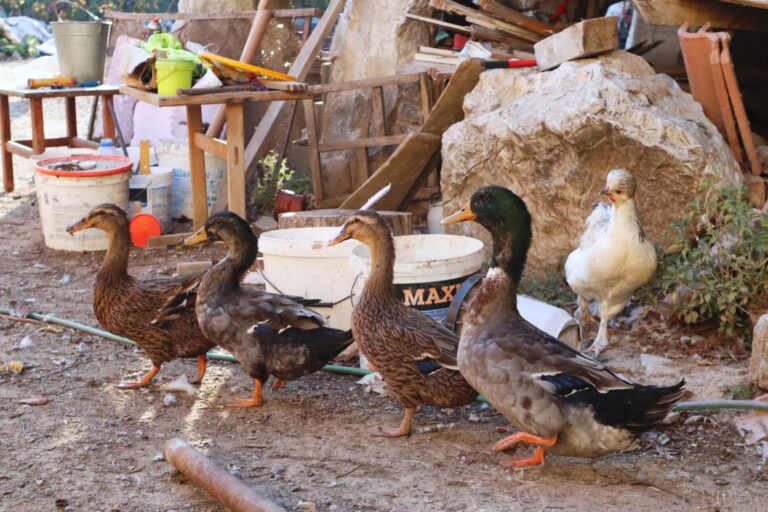
7. Can Ducks and Chickens Eat the Same Food?
While you can get special pellets for waterfowl, it is fine for your ducks to eat chicken layer pellets. However, ducks do need more niacin than chickens do, so you will need to supplement their feed with a niacin supplement, such as brewer’s yeast or peas.
8. Can I Raise Ducklings with Chicks?
While the answer is yes, you will need to pay extra attention to cleanliness and hygiene. Ducklings, as well as adult ducks, are really messy, and it doesn’t take long for them to completely soak the brooder that they are in.
Ducklings can handle these wetter conditions to an extent, but, if the brooder gets too wet, this could cause a chick to become too cold.
Keep in mind that ducklings also grow faster than chicks, so you will need to make sure that your chicks do not get trampled as the ducklings grow.
9. How Can I Tell the Gender of a Duck?
It can be hard to tell the gender of a duck while they are still young, but there are a few signs to look out for as they grow:
- Male ducks tend to grow brighter feathers during the mating season
- Male ducks tend to be slightly larger than females, often with a thicker neck
- Male ducks have a sex feather, which is a feather near the tail that curls upwards
- Female ducks tend to make much more noise than males
10. How Long Do Ducks Live For?
The lifespan of a duck will vary depending on its breed, as well as the way in which it has been raised.
Generally, domestic ducks will live for around seven to ten years, with their most common cause of death being a predator. However, fertility and egg production begin to decline after ducks reach around three years of age, which is why many homesteaders do not find it cost-effective to keep older ducks.