
Some of the biggest pests you’ll have to deal with on your homestead, year in and year out, are the humble flies. They may be humble, but boy are they annoying! Aside from zipping around to confuse and annoy you, flies spread disease and can contaminate food in the kitchen and the dining room. No good!
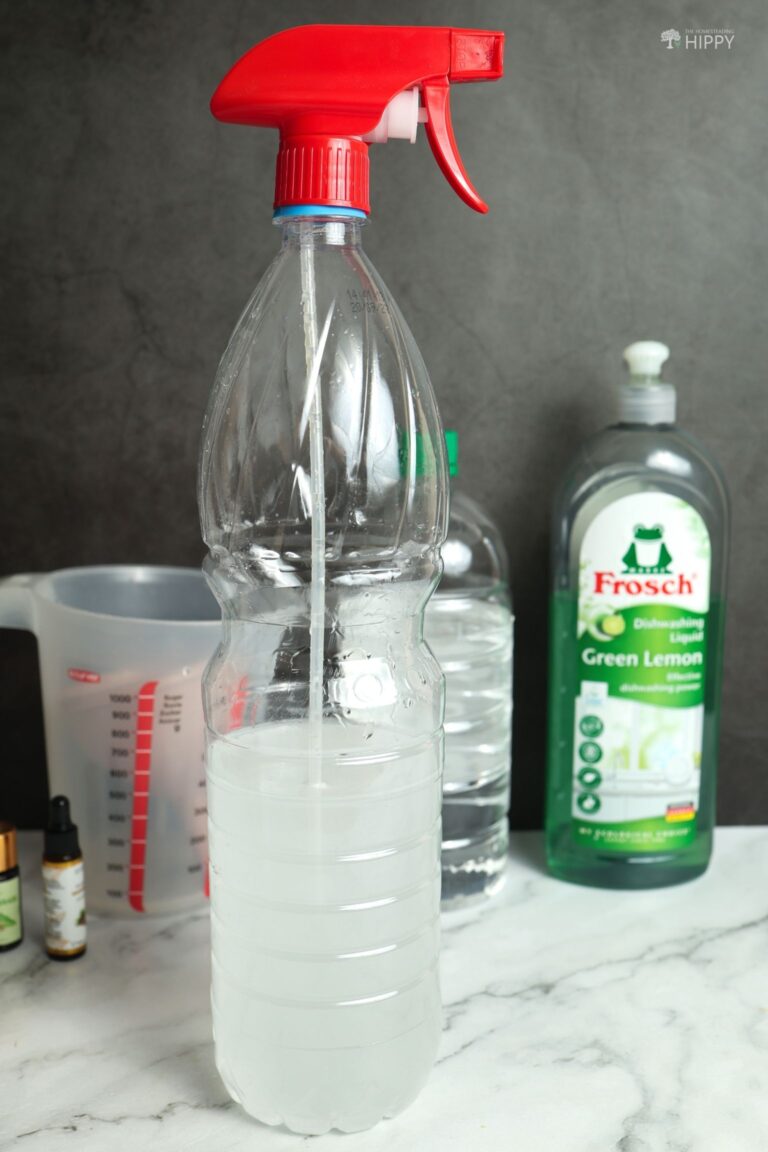
The best way to deal with flies in your house is to keep them from getting in in the first place, and the best way to do that is with a good fly spray. If you’re like me, you’re rightfully wary of over-the-counter stuff that’s full of crazy chemicals which will hurt your indoor air.
You should do what I did instead and make your own DIY spray for just a few bucks. It’s safe, uses minimal ingredients, and smells amazing! You’ll actually look forward to using it every day. Keep reading and I’ll tell you how to whip up a batch in no time…
Does This Spray Kill or Repel Flies?
This recipe might kill the flies if you spray them directly, but it is really a repellent. Fly spray means different things to different people: some think pesticide, others think about keeping them at bay.
I know it’s tempting to want to kill off the nasty little buggers, and that’s fine, but I like this approach better. It uses fewer ingredients, is gentler on most surface finishes, and it won’t leave nasty little fly corpses around your doors, windows, and in your home.
I promise you’ll find this spray to be highly effective, so much so that you’ll wonder how you went without it in the first place.
Ingredients
Gather the following ingredients for our recipe. Note that while the essential oils might be a little expensive to purchase up front, you only need a few drops of each to make a batch of fly spray, and even a single batch will last you for a long time. Thus, your initial investment can provide you many, many batches of spray, with each batch only costing a few dollars!
Tea Tree Essential Oil: arguably the most important ingredient on this list. Tea tree oil is known for its potent antifungal and antibacterial qualities, but it’s lesser-known for its amazing ability to repel all kinds of insects and most notably flies. It also smells incredible. You’ll need around 8 to 10 drops for a single batch, so even a small bottle will last you for a long time.
Cedarwood Essential Oil: the number two ingredient on our list is a potent insect fighter with an incredible, woody aroma. Cedarwood, and its oil, is naturally a ferocious insect repellent. Combined with the tea tree oil above, it is a powerful one-two punch against these nasty critters. Use 5 to 8 drops depending on how much you like the fragrance.
Lemongrass Essential Oil: another highly aromatic essential oil, lemongrass is an herb that is often grown as a natural pest repellent in gardens and around patios. It’s among the best all-natural insect repellents there are, and many types of parasitic flies, house flies, and horse flies cannot stand the stuff. 8 to 10 drops is all you need.
Isopropyl Alcohol, 1 Cup: isopropyl alcohol will help our mixture cling to surfaces and dry quickly. Use any of the common stuff you can get from the pharmacy section of your local supermarket.
Water, 2 Cups: plain, simple water. Distilled or filtered water is best, but you can use tap or well water as is if that’s all you have.
Dish Soap, couple of drops: liquid dish soap is a secret ingredient in this recipe. It’s something I often see left out of other recipes in books and on the internet. I say secret because most people seem to forget that oil and water just don’t mix.
Adding just two drops of dish soap to each batch will allow the ingredients to mingle thoroughly into a uniform solution that’s effective and easy to apply. Don’t overdo it or you’ll make the mix foamy and sudsy.
Supplies and Tools
Measuring Cups: self-explanatory. Precise control of ratios is important for an effective DIY fly spray.
Dropper or Pipette (optional): comes in handy for precisely measuring and adding your essential oils. Note that you might not need these if the bottles you buy have built-in droppers.
Spray Bottle or Garden Sprayer: depending on how big your house is, you might be able to get by with a trigger-actuated spray bottle or you might want to make a big batch and apply with a hand-pumped garden sprayer. Use whatever works best for you, but in any case only use a completely clean sprayer that has never held other chemicals!
Now you’ve got absolutely everything you’ll need. Time to whip up a batch of our spray!
Step by Step Instructions
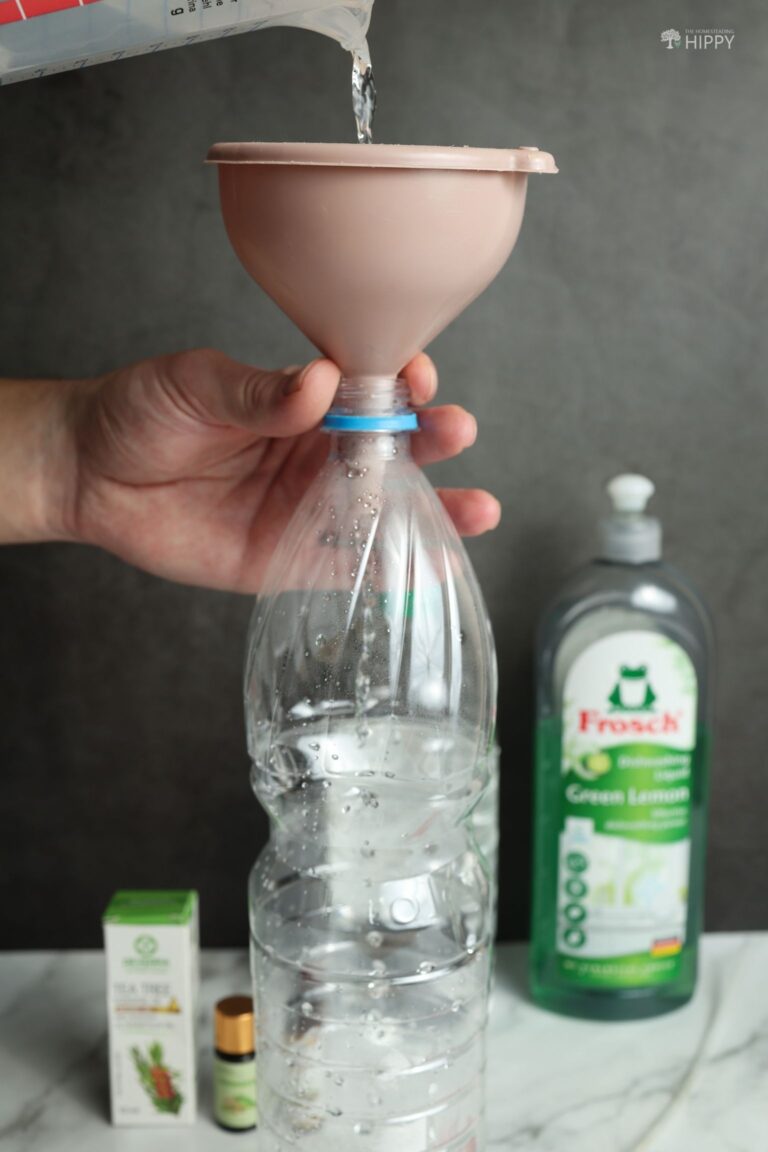
Step 1: add water and isopropyl alcohol to the sprayer. Use your measuring cups so you get the ratios exactly right. Be careful not to spill it. Work over a sink if you need to…
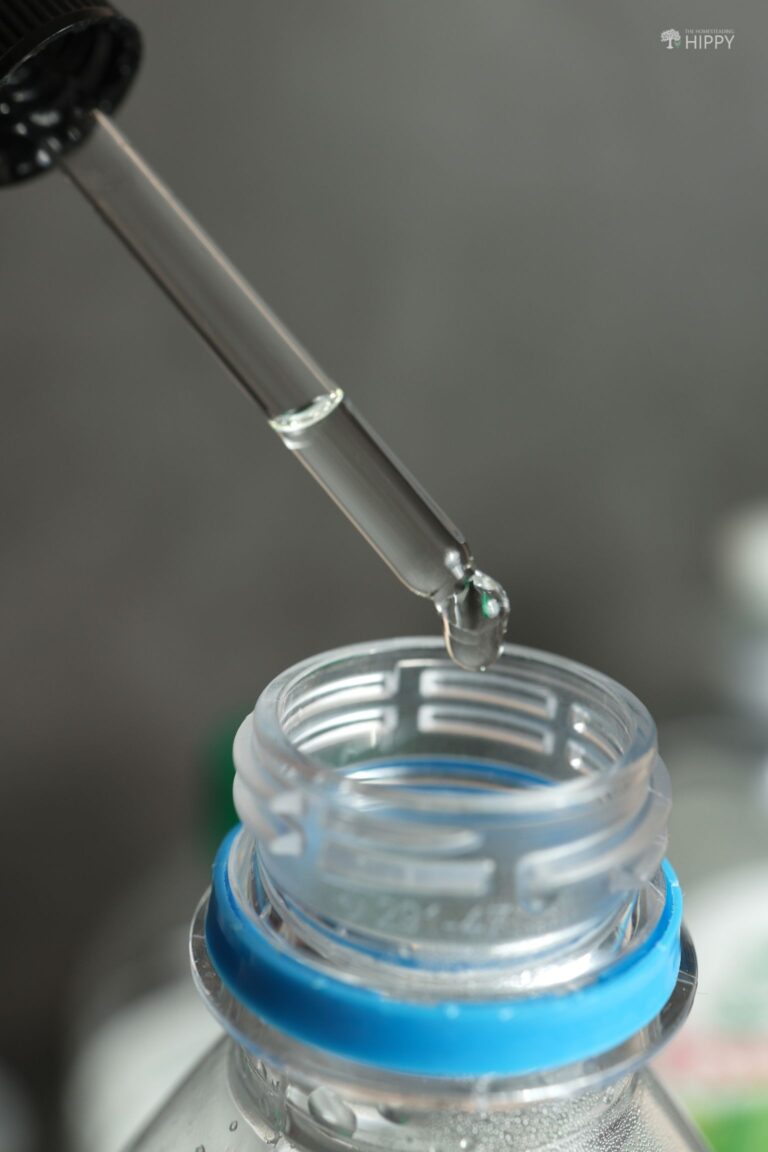
Step 2: add all oils. Using a dropper or pipette, carefully add the indicated number of drops of each oil to the sprayer container.
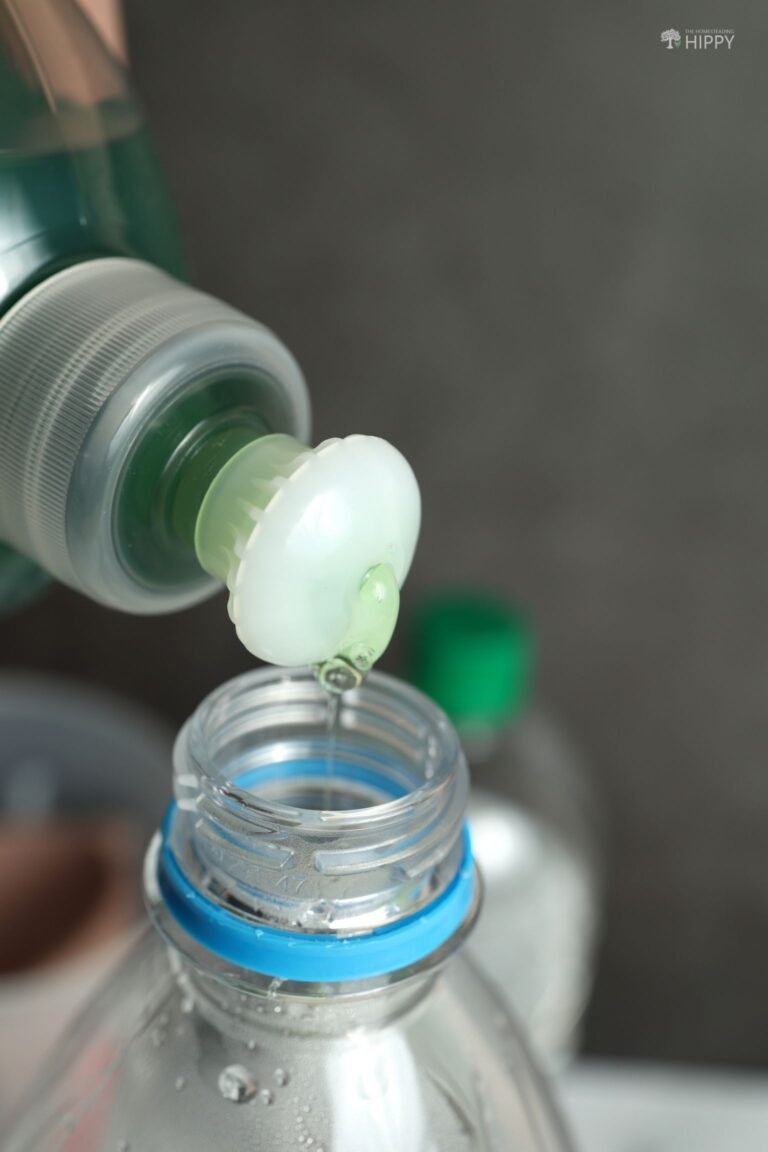
Step 3: add dish soap. If you’re making a small batch of fly spray, add a single sparing drop. If you have doubled or tripled the above ingredients to make a larger batch, add two drops.
Step 4: gently swish sprayer to thoroughly combine all ingredients. Do this for 30 seconds to a minute. This will allow all of the ingredients to thoroughly combine. Don’t shake the container too violently or you might make it all sudsy. If that happens, it’s okay; the suds will settle down after a while.
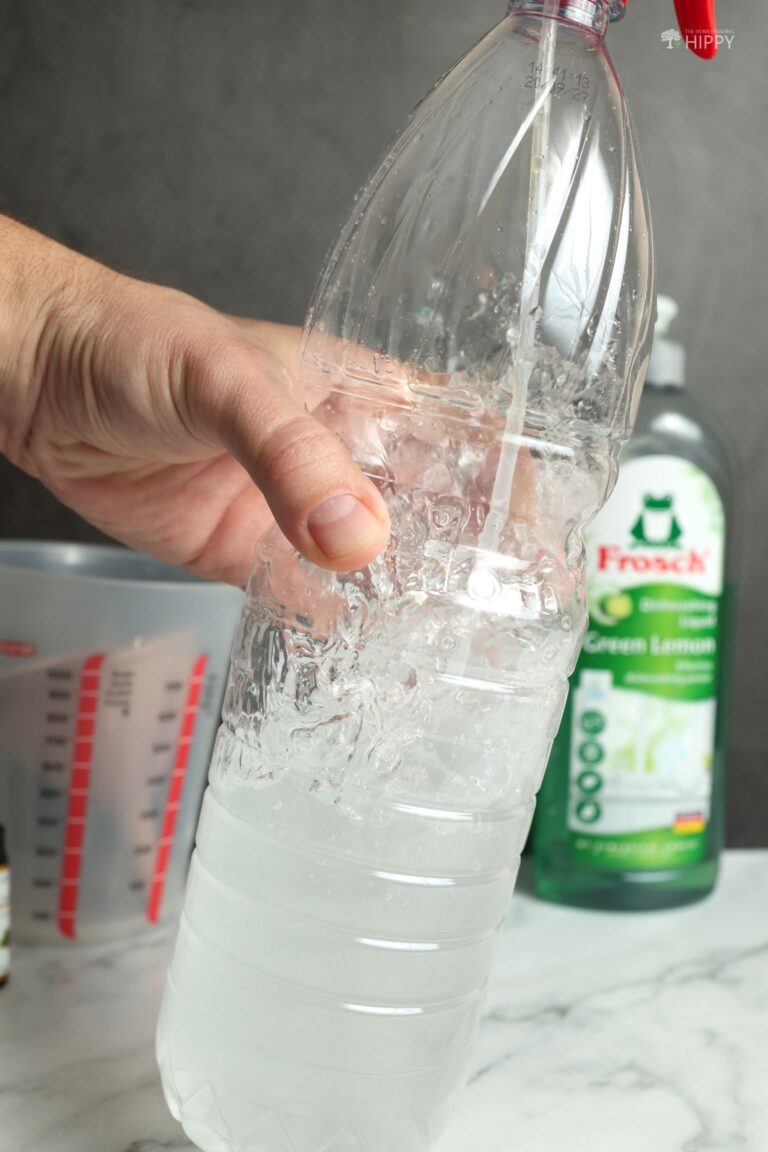
Step 5: finished and ready to apply! Your DIY fly spray is ready to use. Spray it around doorways, windows, and anywhere else that flies might try to get in or congregate. Spray enough to just moisten the surface; you don’t need to soak it. It will keep them at bay!
As Always, Test Surfaces for Colorfastness!
Homemade or otherwise, you should never trust that any product intended for surface application won’t harm the finish of said surface! You can use this spray indoors or out safely, but you should test just a few drops on an inconspicuous, out-of-the-way spot to make sure it won’t discolor or otherwise damage the surfaces in and around your home.
Plastics and many kinds of paint can prove vulnerable to both alcohol and the essential oils used in this recipe. Antique or chalk finishes are especially delicate, so use discretion.
I always advocate applying on the test surface and then giving it at least 24 hours, preferably 48, before you declare it good. Make sure you rub on the surface after time has elapsed to check for colorfastness; it might look okay but run when touched!
How Often to Apply Your Spray
My rule of thumb is that I reapply anytime I can no longer smell the fragrance of this spray. Depending on the weather, that’s every few days. And that’s okay because it smells so good you won’t mind!
Other good times to reapply are after cleaning any surface or, outdoors, after it rains. Naturally, if you notice an uptick in flies coming inside and hanging out around your home, go ahead and reapply.
Tim is a farm boy with vast experience on homesteads, and with survival and prepping. He lives a self-reliant lifestyle along with his aging mother in a quiet and very conservative little town in Ohio. He teaches folks about security, prepping and self-sufficiency not just through his witty writing, but also in person.
Find out more about Tim and the rest of the crew here.