
Far and away, the best part of having a garden is actual, real food security. When the farthest you’ve got to go to get the food you need for your family is your backyard or the back corner of your property, that’s an assurance that money can’t buy.

Many homesteaders boast that their gardens produce everything they need to feed their family for a year or longer. But is that true? And speaking of which, how much food does a person need in a year? How much of any given fruit or veggie do they eat yearly?
It might sound like an overstatement, but this question is actually important and warrants some discussion and analysis. In this article, we will figure out together how much of each plant you’ll need to put in your garden to successfully feed someone for a year.
The Most Important Question: Will Your Family Eat It?
Before we go any further, we’ve got to tackle what is arguably the most important—and certainly the most practical—factor for determining how much of any given produce your family will eat: do they like it, will they eat it, and how often do they eat it?
Look, it’s easy to get wrapped up in pie-in-the-sky assessments that focus on raw, hard data so we can reach a scientific answer to a question that, frankly, didn’t even need to be asked. I’m not in the business of trivia, though I like fun facts as much as anybody.
Simply put, I would only bother performing these calculations and planning accordingly for fruits and veggies that you know your family (or yourself) will actually eat on a regular basis, or items that are a regular ingredient in other meals.
If you can only get your family to eat Brussels sprouts under pain of death, there’s no reason to bother figuring out serving sizes per plant or anything else.
The Logistics of a Year-Long Supply
I see tons of errors out in the world concerning this little intellectual exercise. Some people approach the problem as a question of simple arithmetic to be brute-forced…
It usually goes something like this—typical serving size multiplied by the days in the year, and then divided by the total serving yield of X number of plants.
This is misguided. Everyone is different, and even people who like certain foods won’t eat them all the time, or will only eat them regularly as an ingredient in another dish or when prepared a certain way.
Accordingly, I will be working off of averages below in the next section, and I encourage you to do the same after assessing what your family actually eats and enjoys. Consider all of the following when working up your plan.
How Often is it Eaten (Frequency)?
How often do you or your family members eat the item in question? If it’s a main dish or side item that you eat several times a week and always enjoy, that will be high consumption or above average.
If you eat it only rarely or eat only a little bit every now and then, that would be classed as low consumption or below average.
In the following section, I will be using “average American” metrics for my examples, so keep that in mind.
How Much is Typically Eaten (Quantity)?
When the item in question is eaten, do you and yours eat a little bit or a lot? This can be trickier to accurately assess than you might think.
For instance, a relatively small supply of garlic, maybe 20 bulbs or even less, might take care of an entire family’s needs for a year or even longer; most folks use only a little when cooking, and only the truly hardcore or deranged eat garlic by the clove right out of hand!
Onions are similar in this regard because a small quantity typically goes a long way. Contrast that with items like lettuce, berries, and so forth, which are usually eaten just as they are and often in abundance.
How Much Does a Plant Produce (Yield)?
The next thing we need to know, and another factor that can be a little tricky to figure out, is the average yield of a single plant in our garden.
There are too many variables to get into here for the purposes of this article, but you’ll want to remember that some plants might produce multiple harvests in a season and that different varieties of every fruit and veggie are more or less productive.
Depending on where you live, you might be constrained to varieties that are less productive because they will still thrive in your environment. In any case, I will once again be using averages in the following sections to help you establish a useful baseline.
Serving Size?
Lastly, really think through the typical serving size, or amount consumed at any given meal, for each item you are considering planting.
Leafy greens, particularly, can be deceptive: a single head of lettuce might only produce a half-pound of edible leaves, but a typical serving size of lettuce is around a cup of fresh leaves. That cup, though, might weigh just one and a half ounces or a little more!
That single head of lettuce would provide multiple servings accordingly. The stats I provide you below will be useful in that regard as long as you have a baseline for consumption.
Other Considerations
Below are a few other factors to keep in mind before you actually get down to business.
Losses
It’s just a part of gardening. Bad weather, human error, pest infestations, and other problems will always knock out some of your plants or eliminate their yield. Plan on losing 10% of what you plant, maybe a little more, and adjust your projections accordingly.
Planting Space
Some garden plants are a lot more productive than others. Most of your leafy veggies are quite productive on a serving-size basis. Berries, on the other hand, tend to be pretty inefficient.
Whether it’s a large family or a lack of space, some plants just might not be worth it or even achievable if you are planning for a year’s supply.
Storage Capacity
Fresh produce has a decidedly short shelf life. Don’t forget that! You have to have space and the proper environment to maximize shelf life so that you can actually keep your hard-earned harvest fresh and edible, unless you are doing succession planting where possible.
Preservation / Preparation Methods
You can address shelf-life concerns by preserving your fruits and veggies. This could be canning, dehydrating, freezing, or something else.
Some veggies, like potatoes, yams, onions, and garlic, will last for many months in the right conditions as long as they are cured.
On a related note, don’t forget to account for preparation, too: if someone in your family eats lots of strawberry jelly but not fresh strawberries, you’ll need a much bigger harvest to make the equivalent servings of the product. I can’t help you with those calculations!
Figuring Out How Much to Plant
The following guidelines are averages for the typical consumption of produce by North Americans, along with serving sizes and the number of plants per year you need to plant to meet those yearly serving requirements. Use these figures as a rough guideline for your own calculations…
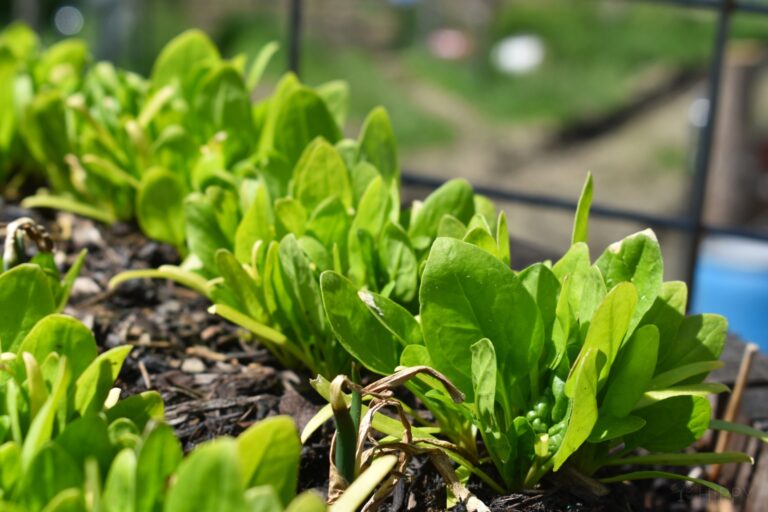
As a baseline, simply multiply the number of plants per year by the number of people in your household that eat them. E.g. if two people in your family eat spinach regularly, you’ll need 40 plants.
Lettuce
- Average Consumption: 10 lb
- Typical Serving Size: 1 1/2 oz
- Yield Per Plant: ½ lb per head
- Plants-Per-Person, Per Year: approximately 20
Arugula
- Average Consumption: 5 lb
- Typical Serving Size: 1 oz
- Yield Per Plant: ¼ lb
- Plants-Per-Person, Per Year: 20
Spinach
- Average Consumption: 10 lb
- Typical Serving Size: 1 1/2 oz
- Yield Per Plant: ½ lb
- Plants-Per-Person, Per Year: 20
Kale
- Average Consumption: 8 lb
- Typical Serving Size: 1 oz
- Yield Per Plant: 1/2 lb
- Plants-Per-Person, Per Year: 16
Green Beans
- Average Consumption: 8 to 10 lb
- Typical Serving Size: around 4 oz
- Yield Per Plant: 1/2 to 1 lb
- Plants-Per-Person, Per Year: 16 to 20
Peas
- Average Consumption: 5 lb
- Typical Serving Size: 6 oz
- Yield Per Plant: ¼ lb
- Plants-Per-Person, Per Year: 20
Broccoli
- Average Consumption: 8 lb
- Typical Serving Size: 4 oz (cooked and stemmed)
- Yield Per Plant: 3/4 lb to 1 lb
- Plants-Per-Person, Per Year: 8 to 11
Cauliflower
- Average Consumption: 8 lb
- Typical Serving Size: 4 oz (cooked and stemmed)
- Yield Per Plant: about 1 lb
- Plants-Per-Person, Per Year: 8
Cucumber
- Average Consumption: 10 lb
- Typical Serving Size: 4 oz (fresh)
- Yield Per Plant: between 5 and 7 lb
- Plants-Per-Person, Per Year: 2
Beets
- Average Consumption: 10 lb
- Typical Serving Size: 4 oz (cooked)
- Yield Per Plant: 1/2 lb
- Plants-Per-Person, Per Year: 20
Radishes
- Average Consumption: 5 lb or less
- Typical Serving Size: 4 oz (cooked)
- Yield Per Plant: 1/10 lb
- Plants-Per-Person, Per Year: 50
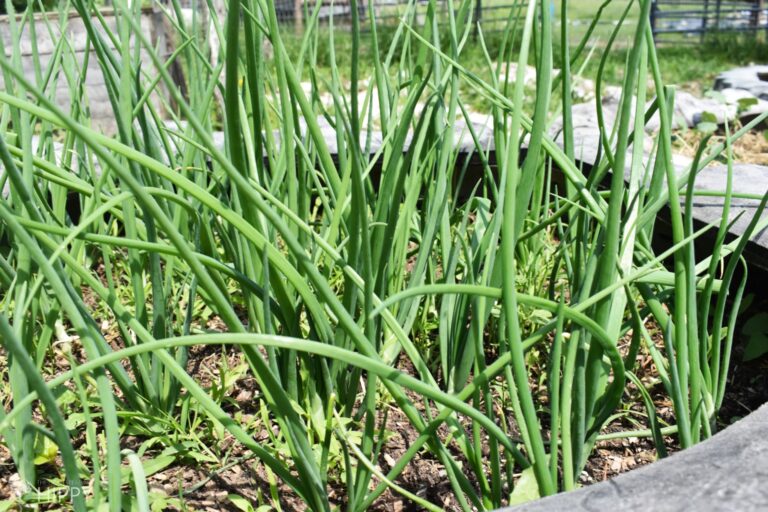
Onions
- Average Consumption: 10 lb
- Typical Serving Size: 5 oz
- Yield Per Plant: 1/2 lb
- Plants-Per-Person, Per Year: 20
Brussels Sprouts
- Average Consumption: 5 lb
- Typical Serving Size: 6 oz
- Yield Per Plant: 2 to 3 lb
- Plants-Per-Person, Per Year: 2 or 3
Peppers
- Average Consumption: 5 lb
- Typical Serving Size: 4 oz (fresh)
- Yield Per Plant: 1/2 to 4 lb, varies by type
- Plants-Per-Person, Per Year: 2 to 10
Potatoes
- Average Consumption: 50 lb or more
- Typical Serving Size: 6 oz (one cooked, medium potato’s worth)
- Yield Per Plant: 3 to 6 lb
- Plants-Per-Person, Per Year: 8 to 14
Sweet Potatoes
- Average Consumption: 30 lb
- Typical Serving Size: 4 oz (cooked)
- Yield Per Plant: 5 ½ to 6 ½ lb
- Plants-Per-Person, Per Year: 5 or 6
Strawberries
- Average Consumption: 10 lb
- Typical Serving Size: 5 oz
- Yield Per Plant: 1 to 2 lb
- Plants-Per-Person, Per Year: 5 to 10
Blueberries
- Average Consumption: 8 lb
- Typical Serving Size: 5 oz (fresh)
- Yield Per Plant: 5 lb
- Plants-Per-Person, Per Year: 2
Raspberries
- Average Consumption: 6 lb
- Typical Serving Size: 5 oz (fresh)
- Yield Per Plant: 2 to 3 lb
- Plants-Per-Person, Per Year: 2 or 3
Blackberries
- Average Consumption: 5 lb
- Typical Serving Size: 5 oz (fresh)
- Yield Per Plant: 4 to 5 lb
- Plants-Per-Person, Per Year: 1 or 2
Watermelons
- Average Consumption: 10 lb
- Typical Serving Size: 5 oz (fresh)
- Yield Per Plant: 15 to 20 lb
- Plants-Per-Person, Per Year: 1

Tim is a farm boy with vast experience on homesteads, and with survival and prepping. He lives a self-reliant lifestyle along with his aging mother in a quiet and very conservative little town in Ohio. He teaches folks about security, prepping and self-sufficiency not just through his witty writing, but also in person.
Find out more about Tim and the rest of the crew here.