
One of the most enjoyable things about keeping chickens is figuring out which breed is right for you. They all bring a little something different to the table, and learning more about different breeds is a fun pastime in and of itself.
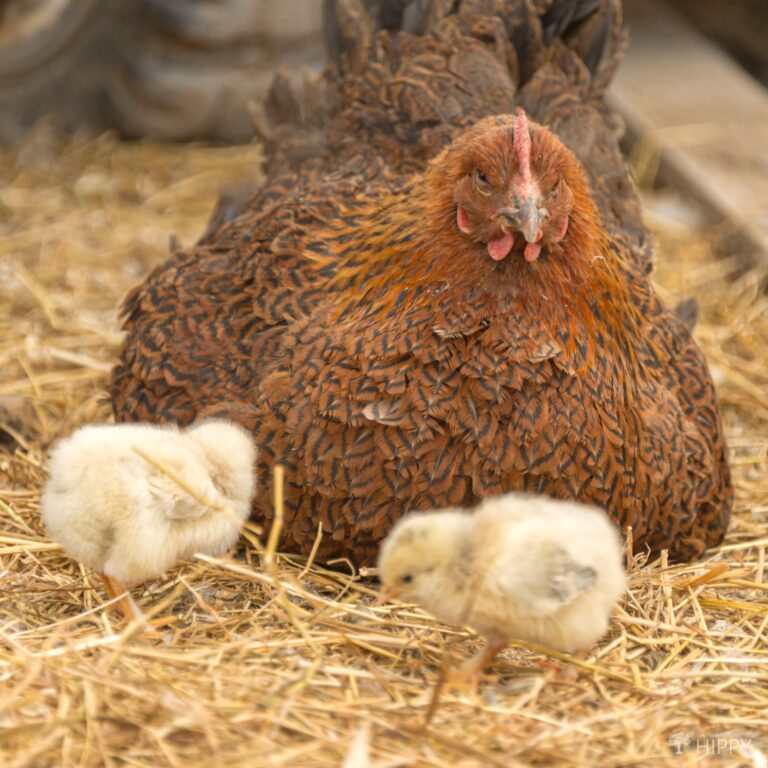
To help you zero in on your next addition to your flock, I’m bringing you a full overview of the Partridge Rock. This is a highly productive, healthy, hardy, and beautiful bird that’s perfect for high-production egg farming or just a small backyard flock that you can love and call your own.
You might have to look a little harder to find these birds at a good breeder, but I promise you they’re well worth it. I’ll tell you everything just below.
Quick Breed History
The Partridge Rock is a variant of the Plymouth Rock, a heritage breed that’s been with us since the 19th century.
Although of somewhat dodgy parentage, scientists have determined that these birds are the result of a pairing between Dominiques and Black Javas, with the intention of creating a capable dual-purpose bird that produces an excellent quantity of meat and is a reliable, year-long layer of eggs.
In this regard, the original breeders succeeded, and later on, in the early 20th century, the Plymouth Rock was crossbred again with the Cochin. That combination gave us the Partridge Rock, a domestic breed with the same excellent production characteristics but now with startling beauty!
Although it isn’t the oldest heritage breed by a long shot, like its standard Plymouth Rock sires, it remains highly respected both as a producer and as an exhibition bird.
Size
Partridge Rocks are larger chickens, averaging about 9 1/2 lb for roosters, but some big specimens can tip the scales at 11 lb, though this is comparatively rare. Hens average 7 1/2 lb and will rarely hit 8 lb — almost never larger.
Are There Bantam Partridge Rocks?
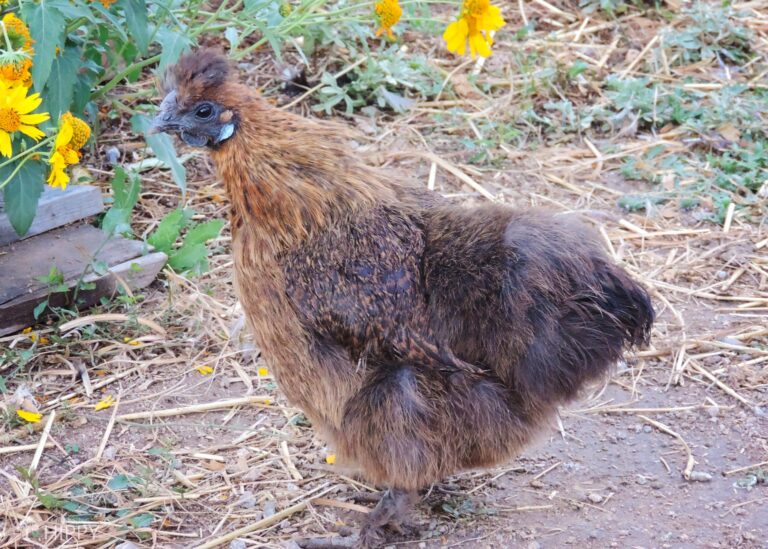
Yes, indeed there are! Partridge Rock bantams are gorgeous, adorable, and pint-sized: roosters max out at 3 lb and hens at 2 1/2 lb.
Physical Characteristics
The most immediately apparent physical characteristic of Partridge Rocks is their glorious feathers.
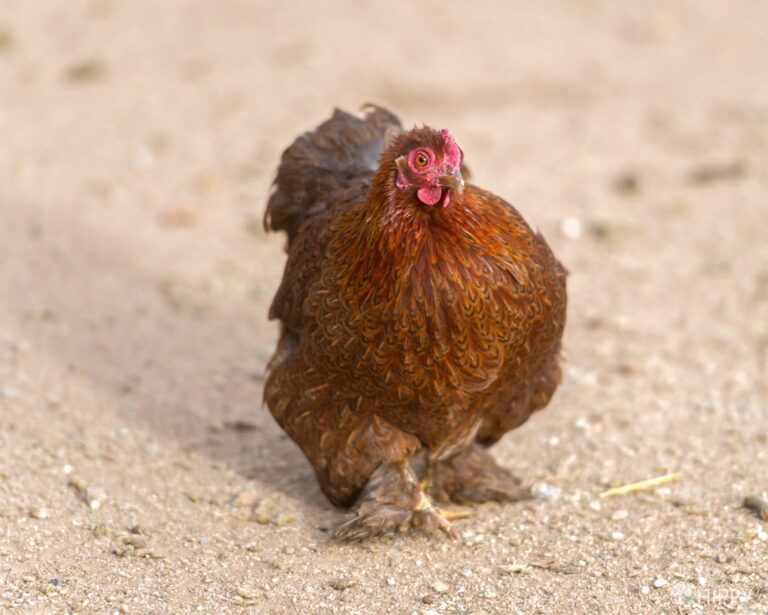
Roosters have an iridescent beetle-black breast, satiny, lustrous hackle and saddle feathers, red-tipped wings, and beetle- or ink-black tail feathers. Hens look very different but are still quite attractive, being a rusty to sienna brown all over with striking black penciling on their feathers.
Their feathering is smooth and tight, and their posture is upright with a distinct, crooked U-shape along the neck and spine. They have a single comb and yellow legs and skin.
Purpose
Primarily meat and eggs, but they’re also popular as exhibition birds due to their beauty and poise.
Like the original Plymouth Rocks, the Partridge Rock is an extraordinarily good all-purpose chicken. Roosters and hens alike have a high carcass yield, and with an average weight at slaughter of 9 1/2 and 7 1/2 lbs, homesteaders can get plenty of delicious, fine-grained meat.
The typical flavor of Partridge Rock meat is said to be uniformly good but not extraordinary one way or the other. This is perfect for families that are used to getting their chicken from the grocery store!
This breed is also a reliably great choice for egg production alone, as we will learn in the next sections. Just one or two healthy hens in lay can keep you, your neighbors, family, and friends completely loaded with fresh, delicious eggs!
Point of Lay
Around 20 weeks as a rule, sometimes 19 weeks. Compared to most other chickens, this is average. The very earliest that a hen will reach sexual maturity and start to lay eggs is 16 weeks, and the oldest is 24, so this isn’t too bad at all.
Egg Laying
Here is where the Partridge Rocks truly shine: a hen that is in her prime and healthy will crank out an astonishing 250 eggs per year on average, and some of these girls will produce up to 280!
Now, while that isn’t considered the best in the world anymore, it sure isn’t anything to sneeze at, either!
Even a modest flock of Partridge Rock hens can give you more eggs than you know what to do with, and for homesteaders who want to earn a little income on the side selling eggs, such a flock could certainly be the core of a profitable business.
Typically, Partridge Rock hens will lay this many eggs reliably for the first three years of their life, but after that, they will start to taper down pretty significantly.
The reduction is difficult to pinpoint as all of these birds are individuals to some degree, but a good rule of thumb is to expect productivity to be cut in half by age five.
Egg Color
Partridge Rocks lay light- to medium-brown eggs.
Broodiness
Moderate to high. Most Partridge Rocks will get broody, and it is very hard to break them of this behavior. When a hen goes broody, she’ll stop laying eggs! That’s a problem for a breed like this, obviously, so the solution is for you to stay on top of egg collection religiously.
I should also point out that these birds have a reputation for being pretty fierce defenders of their nests when they decide to sit. This can make them problematic to deal with if they nest inside the coop or anywhere else.
Some good news, though: Partridge Rock hens tend to be good and doting mothers. If you want to expand your flock the old-fashioned way, you can count on them to do it!

Temperament
Variable. Partridge Rocks tend to be skittish and a little flighty. However, many owners report that they are easy to handle and even friendly if given plenty of interaction while they are chicks.
In mixed flocks, they tend to be copacetic, neither overbearing nor completely submissive. However, they tend not to defend themselves fiercely when confronted by bully birds, so think twice before adding them to an established flock that has a rigorously enforced pecking order.
Activity and Foraging
Partridge Rocks tend to be more active than other breeds, but not excessively so. They are capable foragers and enjoy having more room to roam, explore, and stretch their wings, so a slightly larger-than-average coop and run is a good idea. Plan on at least four square feet per adult bird in the coop, and 12 to 15 square feet of space per bird in the run.
This is a great breed for free-ranging, and they are capable hunters of bugs, slugs, and other yard and garden critters.
Typical Diet
Partridge Rocks will subsist just fine on a typical diet of chicken feed. Baby chicks should get starter feed, and once they reach about 1 1/2 months old, they should be changed to grower feed. Adults can get standard feed or layer feed accordingly.
Supplemental food in the form of mealworms and other insects, along with a choice selection of fresh fruits, veggies, seeds, and so forth, will round out their diet and prevent menu fatigue.
Overall Health
Excellent, as a rule. Partridge Rocks are known and loved by veteran keepers for their terrific overall health, hardiness, and resistance to diseases and parasites.
You’ll still need to give them the usual battery of vaccinations to protect against Marek’s, fowl pox, bronchitis, and other illnesses, and provide preventative food and water supplementation to keep parasite loads within acceptable parameters.
Lifespan
Pretty good, around 8 to 10 years on average like most typical Plymouth Rock birds. However, given excellent care, Partridge Rocks can live up to 12 years.

Tim is a farm boy with vast experience on homesteads, and with survival and prepping. He lives a self-reliant lifestyle along with his aging mother in a quiet and very conservative little town in Ohio. He teaches folks about security, prepping and self-sufficiency not just through his witty writing, but also in person.
Find out more about Tim and the rest of the crew here.
Thank you for all of the great info!! My son is raising them as his 4 H birds this year.