
If you’re anything like me when I was starting out, when you think of raising sheep, you probably think of huge, gently rolling pastures that play as a home to an immense flock of sheep. It really is an idyllic image! But it’s one that isn’t entirely founded in reality, and it kept me from getting sheep of my own for a long time.
It turns out that sheep don’t need nearly as much space as you might have been led to believe. It’s entirely possible and indeed economical to raise sheep in a much smaller space.
If you have a small working homestead or just a really big backyard, you might have all the room you need! Keep reading, and I’ll share with you my tips for you to raise sheep properly on a small farm.
Start with a Small Flock
This first tip is one of the best pieces of advice that I can give you, or anyone who is thinking of raising sheep in a small space. Start out with a small flock. Definitely start out with one that’s smaller than you think your land can handle until you’ve got plenty of experience!
The reason for this is that, like so many things in life, it’s easier to add more if it turns out you’re wrong, but much harder to get rid of them or remove them.
You might start out with eight or nine sheep on an acre, and things could seem to be going swimmingly at first. But then the problems crop up, and if you or your land just aren’t up to the task, then you’ve got to either find a home for these sheep, splitting up the flock, or cull them.
But by the same token, you don’t want to go too small. Sheep are highly social and will only stay healthy in a flock environment with other sheep.
If you have at least three-quarters of an acre to work with, I recommend you get three sheep, all ewes. If you have less, start with just two, but hopefully, you’ll be able to expand a little so they have more company than just each other.
Pick Smaller Breeds
This is an obvious tip, but you would be shocked at how many people overlook it! If you have a small property or plan on keeping your sheep in a small barn or pen, you don’t want to come home with Suffolks, Lincolns, or Texels.
These big, burly sheep can weigh upwards of 200 or even 250 lb in the case of ewes, and rams can clear 300 or even an astonishing 350 lb! These bigger breeds need more room, and ideally, you’ll need more room to handle them safely.
A much wiser choice will be a small breed, and there are plenty of productive ones out there no matter what it is you want from your flock. Shetlands, Babydoll Southdowns, and Ouessants are all good choices for wool, meat, or even just keeping as pets.
Choose a Breeder or Seller in Your Neck of the Woods
Now let me tap the brakes just a bit on that last tip. It’s a good idea to choose a small breed if you’re working with limited space.
But before you go researching breeds and getting your heart set on the ideal one for your property, it’s better to start shopping in your immediate area for breeders and sellers.
Ideally, buy from someone no more than one hour away and definitely no farther than two if you can avoid it. This will better ensure the sheep you bring home are well-acclimated to the conditions on your property.
Sheep, just like goats, are quite sensitive to environmental changes, and traveling cross-country to buy your favorite breed only to bring them to a new environment that makes them sick is going to get all of you off on the wrong foot, or should I say hoof.
Cleaning Up is a Constant Chore
One drawback you must prepare for if keeping sheep in a smaller space is the fact that cleaning up after them is going to be a more common occurrence and also even more important.
Sheep poop and pee quite a lot, and in a smaller space, that will quickly start turning the ground into a nasty bog. That, in turn, will lead to the proliferation of disease and parasites and also attract flies in untold numbers.
Flies lead to flystrike, which turns into more health issues and the whole thing quickly devolves into a vicious cycle that will leave you and your flock stricken.
So, like it or not, you need to get out there and clean up poop, put down fresh straw, cover wet spots, and try to remediate muddy conditions if you can.
The more disciplined and diligent you are about doing this, the healthier your flock will be and, in the end, the more sheep you’ll be able to reliably and safely keep in a smaller space.
If you have a giant pasture that your flock can roam over, you might not need to go out there and clean it up hardly ever, but that sure isn’t the case when keeping them in a small space.
Stay on Top of Parasite Prevention
Speaking of parasites, no matter how diligent you are at keeping their surroundings clean, parasites are just going to be more common and more troublesome on smaller properties.
This is simply a matter of the parasite life cycle being more amenable to confined spaces and to animals that are kept in a smaller area.
We won’t go over all the many critters that can infect your sheep here, but I’ll give you a quick rundown of some of the most common parasites that you will soon become intimately familiar with.
Barber pole worms, brown stomach worms, hairworms, and liver flukes all have a life cycle that is closely connected to the soil, with their larvae typically developing in and remaining in the ground or on it until they are subsequently ingested by sheep while they eat.
Liver flukes have a life cycle that starts in the water and infects snails, and the snails then continue the life cycle by contaminating soil and water sources which sheep come into contact with, but the outcome is the same.
Don’t panic, and definitely don’t give up since this seems to be a battle you can’t win…
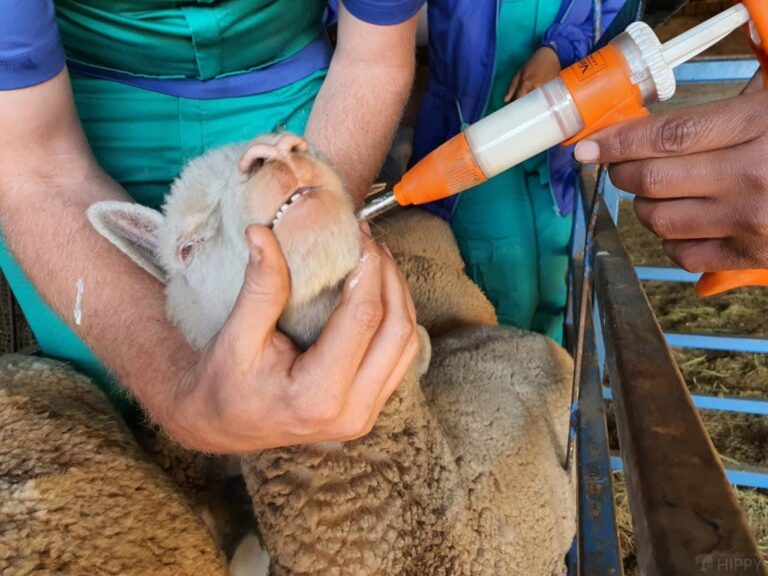
The solution is instead to stay on top of regular inspections and checking for parasites, and then use the right medicines, drenches, or other curatives and preventatives to reduce and eliminate parasite load.
Done properly, this won’t harm your sheep at all, and will keep them from getting truly sick. On small properties, your best bet is to assume that your sheep are infected or are going to be shortly, and then act accordingly to treat them preventatively.
Hoof Care is Even More Important on Small Properties
Another healthcare consideration for small properties is the need for increased inspection and trimming of hooves.
If your sheep aren’t able to walk around as much, especially on harder ground or rocky soil, their hooves will grow continually and require trimming. You can do this yourself and it’s easy enough with a little practice and assuming, of course, that your sheep won’t fight you too badly.
But more than that, smaller properties mean that sheep are more often on damp soil or mud, or else soil that has been contaminated by waste since they will be “going” on and walking on the same areas constantly.
This constant or regular exposure to wet ground will easily lead to infections, abscesses, and other issues with their hooves. These ailments are particularly likely if sheep already have a hoof issue or foot injury.
Regular checking of the hooves will allow you to deal with all of these issues before they are severe, and that will keep your flock happier and healthier.
Of course, sheep typically don’t like having their feet and legs handled, so it’s up to you to do this often, even when it’s not required, so they are docile and compliant when you need to do it for real.
Plan on Supplemental Feeding
If you are allowing your sheep to graze a pasture, chances are that they’ll only be able to get all their nutritional needs met from it if your pasture is exceptionally rich or if you have very, very few sheep.
Understanding what your pasture can do for your flock is a matter of assessment and testing, but in my years of experience, my personal rule of thumb is that I can only count on two or three adults being fully supported on a single acre, and even that is a struggle over time.
Accordingly, you’ll need to provide supplemental food for your sheep in the form of hay, and every now and then, a handful of grains or two to help them keep their energy up and get well-rounded nutrition.
I know plenty of owners living on small properties that feed their sheep hay throughout the year, letting them out to nibble on grass only by way of letting them stretch their legs and explore a little bit. This is more labor-intensive, of course, but certainly viable!
Sheep Don’t Need a Huge Shelter
Something that will be a big relief for folks who are working with very limited space, or just a limited budget, is the fact that sheep don’t need some big barn to stay in.
Sheep are, so much of the time, pretty happy to spend most of their time outdoors. They’ll usually take cover from heavy rain and from intense sun and heat, but otherwise, they’re fine roaming or laying around outside.
You don’t need a big, fully-featured structure for your sheep to live in or retreat to, though this is certainly nice to have if you already have one. A simple three-sided shelter, sometimes referred to as a run-in shelter, is enough for their needs as long as it will keep rain and snow off of them.
Just make sure you allow anywhere from 15 to 20 square feet per adult in the shelter and they’ll be comfortable.
Make Sure Your Sheep Are Friendly
Because keeping these animals in such a small space necessitates far more frequent interaction with them – checkups, inspections, cleaning up, etc. – things will go a lot smoother if they are friendly with you and trust you.
Sheep are a lot smarter than you think, and they can follow commands, but they’re also wary and easily spooked.
If you are frustrated, aggravated, upset, and short-tempered with them, they will start moving away from you, and where one sheep goes, all the others will follow. Flock animals, remember?
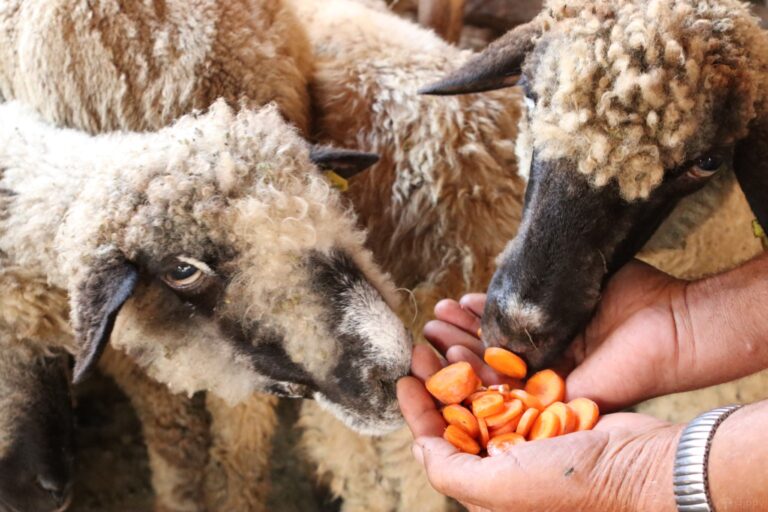
You should take every opportunity to be friendly with your sheep. Pet them, talk sweetly to them, take care of them, and give them treats.
They will all soon associate you with happy feelings and will be eager to follow you or trust you when it’s time to take care of chores or lead them somewhere.
Dealing with recalcitrant sheep is always a pain in the butt, because they can be quite stubborn, but trying to deal with them on a small parcel is a nightmare because you’ll have to do it so much. Don’t let that happen!

Tom has built and remodeled homes, generated his own electricity, grown his own food and more, all in quest of remaining as independent of society as possible. Now he shares his experiences and hard-earned lessons with readers around the country.
Find out more about the team here.