
Chickens are like every other domestic animal in some ways. For instance, they depend on us to keep them safe from a variety of threats. Yes, your average chicken is still fairly in touch with the instincts passed down to it by its ancient jungle fowl ancestors, but ask any veteran keeper, and they will tell you that sometimes their birds get into plenty of trouble that was otherwise avoidable.
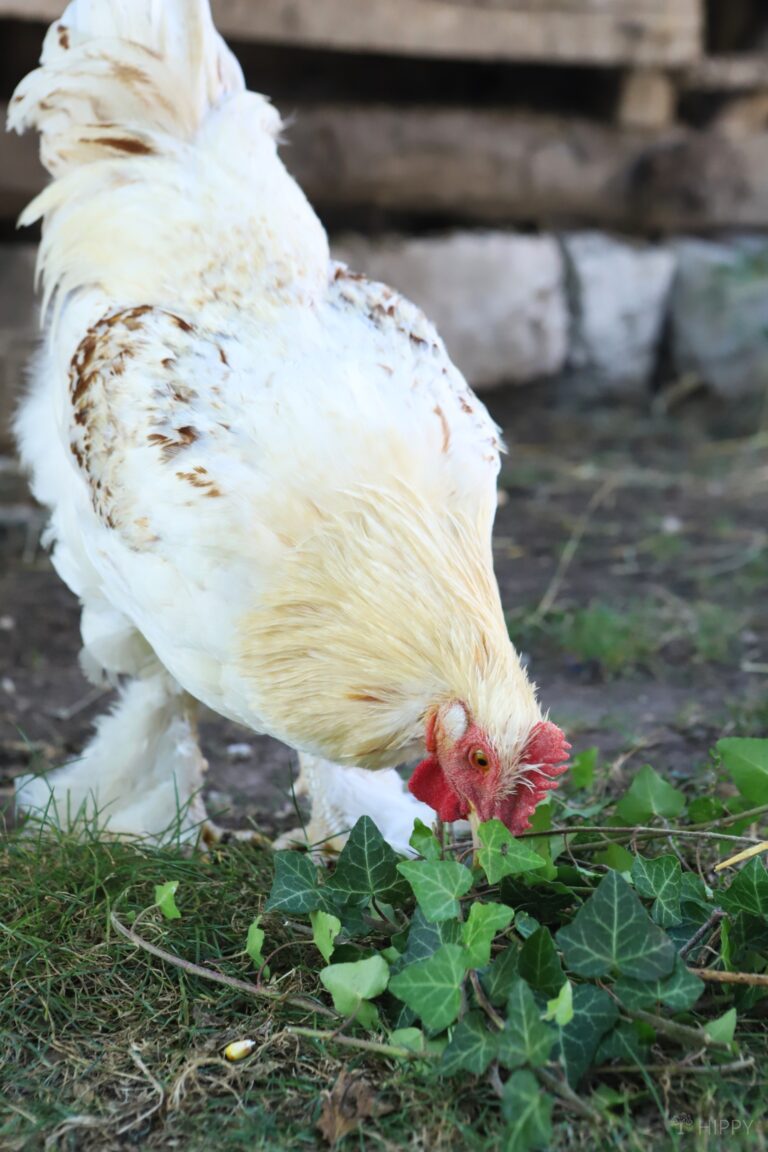
One of the worst things that can happen is letting your chickens get into toxic plants. It’s true that they have fairly good instincts for avoiding dangerous food, but you can’t rely on these instincts 100%.
It rarely fails that an inquisitive or hungry chicken will try to take a nibble out of just about anything that looks tempting, and that includes some plants that can kill them with just a single bite.
Accordingly, it’s critical that you identify and remove these plants from your property if there is any chance whatsoever that your birds could get to them or that they could contaminate their feed. Check out the 20 worst perpetrators below.
Castor Bean – Ricinus communis
A perennial shrub and one of the single most dangerous plants around for all manner of livestock. Luckily, it grows only sporadically in the U.S., predominantly in Southern California and Florida.
The seeds are ferociously poisonous, containing ricinine and ricin, alkaloids that cause seizures, progressive paralysis, and severe diarrhea. These toxins also prevent protein, DNA, and RNA synthesis. As little as 0.1 mg per kilogram of body weight is lethal to chickens.
The plant is best identified by its elongated, glossy lobed leaves and clusters of ivory or yellow flowers with large spiny seed pods.
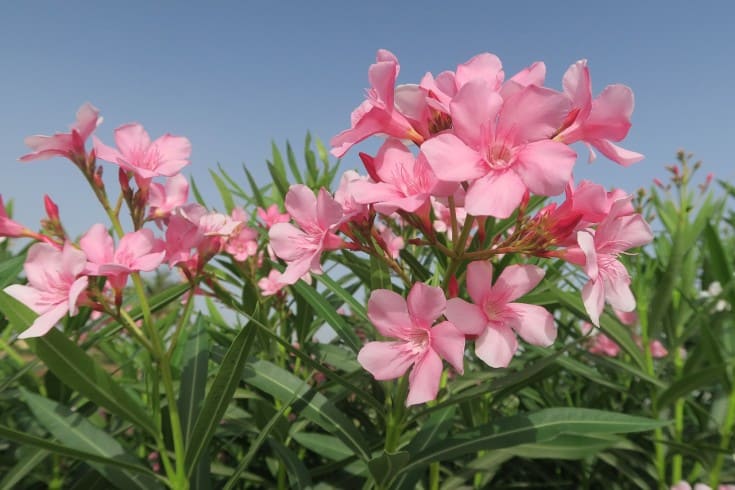
Oleander – Nerium oleander
This gorgeous evergreen shrub has bright pink blooms is a mainstay ornamental in subtropical regions.
Though it is most commonly found in gardens and landscaping, it can be found growing wild in the hotter parts of the U.S., particularly Nevada, Arizona, and Texas.
Oleander, also known as Rose Laurel, is one of the deadliest plants around for chickens. All parts of the plant have glycosides, poisons which can cause total cardiac collapse, liver degeneration, and sudden death.
It’s so toxic that even a single leaf can lethally contaminate your chicken’s water supply, and even a single, solitary nibble will kill a healthy adult bird.
Yew – Taxus spp.
Beloved for their beauty, especially around fall and winter holidays, pretty much all yew species are infamously toxic. Identifiable by rows of thin, flexible spiny leaves with pointed tips growing on either side of the stems, accompanied by red, olive-like berries as another reliable indicator.
Every single part of all yew plants is extremely toxic, with a mixture of alkaloid poisons called taxines.
These toxins interfere with calcium channels in the cardiovascular system and cause sudden cardiac collapse. Symptoms include labored breathing, loss of coordination, and pale tissues, but yew poisoning kills so quickly that most chickens just fall over dead before owners notice anything is amiss.
Yew grows throughout the North American continent in temperate zones and in cooler, Northern reaches as a tree or shrub.
Water Hemlock – Cicuta maculata
Yet another devastatingly poisonous plant on our list, water hemlock has historically been used as a method of suicide and execution.
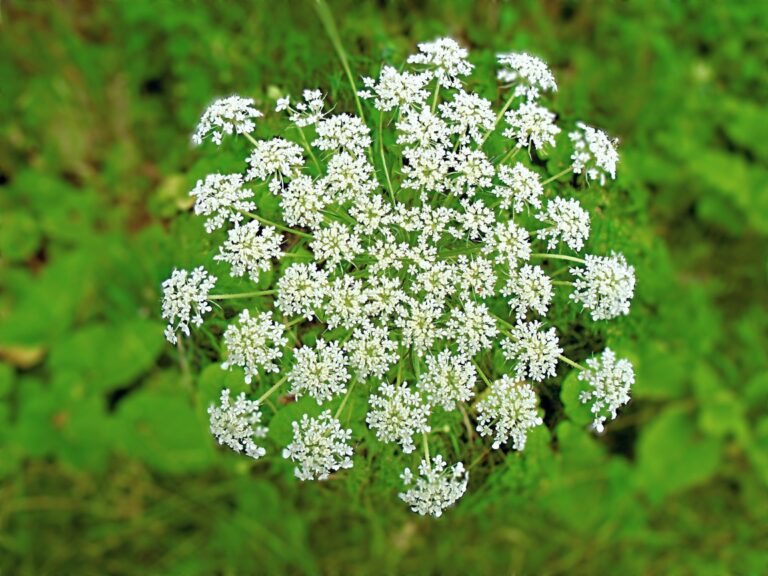
This semi-aquatic plant grows starbursts of tiny white blooms that closely resemble Queen Anne’s Lace, aka wild carrot, and accidental poisoning is very common for that reason.
All parts of young and mature plants alike contain cicutoxin, a deadly neurotoxin. Roots are especially dense with the poison.
Water hemlock usually causes respiratory failure within a matter of hours, often preceded by seizures and clicking of the beak. It can be found throughout the U.S. near water or in constantly moist soils.
Poison Hemlock – Conium maculatum
Water hemlock’s even deadlier cousin, poison hemlock is thankfully not quite as common throughout the United States but still widely distributed.
Once again, it is easily identifiable by clusters of tiny white flowers growing in umbels, and also by its immense height, regularly clearing 8 feet.
The cocktail of alkaloid toxins are slightly different compared to water hemlock, and cause a short period of energetic excitability followed by progressively worse depression, eventually resulting in total respiratory collapse.
Trembling, blue or purple combs and wattles, and weakness or staggering followed by collapse are usually the only symptoms you will notice.
Jimsonweed – Datura stramonium
Also known as devil’s trumpet, Jimsonweed lives up to its nickname. It grows via a single large root and spreading taproot system. Stems are green or purple, smooth, and branching.
Blooms are white or purple and trumpet-shaped with egg-shaped, spiky pods containing small, dark seeds. Jimsonweed grows all across the United States except in Idaho and Wyoming.
The entire plant, and especially the seeds, contain tropane alkaloids which interfere with metabolism and cause nervous system collapse and persistent muscular contraction. Death is alternately the result of respiratory collapse or cardiac arrest.
Deadly Nightshade – Atropa belladonna
With its delicate and alluring purple or lavender blooms and appealing, dark berries, Deadly Nightshade is attractive to livestock, children, and uninitiated hikers.
Often clearing 6 ½ feet, leaves, berries, and roots are all packed with a multitude of toxic tropane alkaloids, including scopolamine and atropine.
These toxins interfere with the central nervous system, resulting in general depression, greatly increased pulse and respiration, and often sudden death. They’re especially deadly to birds, and a single berry will easily kill an adult chicken in no time.
Even a few nibbles from other parts of the plant are usually sufficient to kill. Unfortunately, this plant is found worldwide and all over the U.S.
Angel’s Trumpet – Brugmansia spp.
It has a lovely name, but Angel’s Trumpet is a major risk for chickens and other birds. It’s native to the tropics and the southernmost parts of America, but is a popular ornamental and so might appear wild anywhere.
The drooping, pale-colored blooms resemble trumpets or horns, as the name suggests, and have an appealing fragrance.
All parts of the plant are very dangerous to chickens and contain similar toxins to deadly nightshade, specifically a variety of tropane alkaloids like tigloidine, meteloidine, and belladonnine.
These toxins, as ever, attack the nervous system generally and muscular contraction specifically. Cause of death is usually respiratory collapse or heart attack.
Monkshood – Aconitum spp.
A common sight in the mountain ranges of the United States, the upright stands of purple and indigo blooms make wild monkshood a breathtaking sight, but this is one you must be on constant guard against if you have chickens.
All parts of the plant are crammed with diterpene alkaloids that will result in a gradual but fatal slowing of the heart within a few hours. Worse, initial symptoms are primarily diarrhea, sometimes accompanied by tremors, and so are often mistaken for something innocent and far less fatal.
Monkshood is also notable because the toxin is easily absorbed through the skin, so your birds don’t even have to eat it to be affected… In any case, a tiny amount of the poison is usually enough to kill an adult bird.
Foxglove – Digitalis purpurea
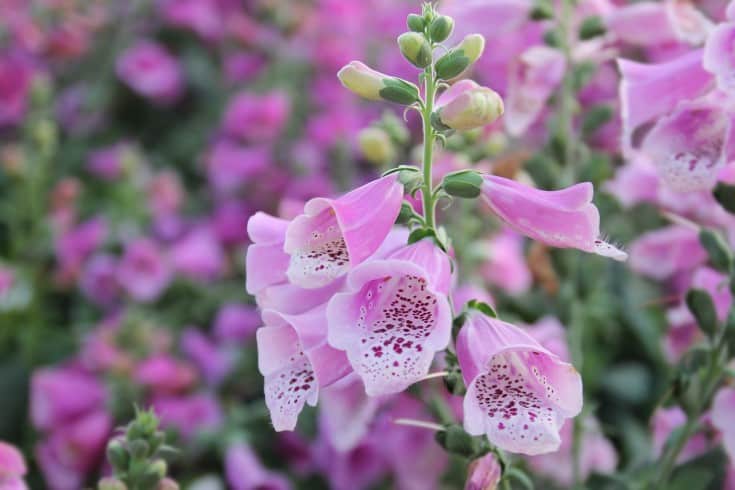
Originally native to Europe, Foxglove is now found growing wild sporadically throughout New England and along much of the Pacific coast in the United States and parts of Canada.
It got here because it is another gorgeous and interesting, though still deadly, plant. The erect stems consist of drooping, pale, finger-shaped flowers that are quite showy, but once again we find poisons throughout the entirety of the plant that will affect the heart.
Digoxin and digitoxin will sometimes cause seizures prior to death, but if chickens eat even a little bit of a leaf or flower, they are probably doomed.
Theoretically, immediate intervention by a vet and administration of an antidote could save their life, but this is very unlikely to occur prior to death.
Mountain Laurel – Kalmia latifolia
Also known as spoonwood and calico bush, Mountain Laurel is a large, densely branched evergreen tree, sometimes found growing as a shrub.
It is a fixture of the Appalachian Mountains and elsewhere in the country alongside streams and in cool, forested areas with moist soil.
Flowers are pink and white, bowl-shaped, and surrounded by thick, leathery, pad-shaped leaves. The fruits are small pods containing tiny seeds which are appealing to chickens and other birds.
Each contains high concentrations of grayanotoxins that interfere with the nervous system by prematurely activating sodium channels. Symptoms include loss of coordination, increasing paralysis, severe diarrhea, and total loss of appetite.
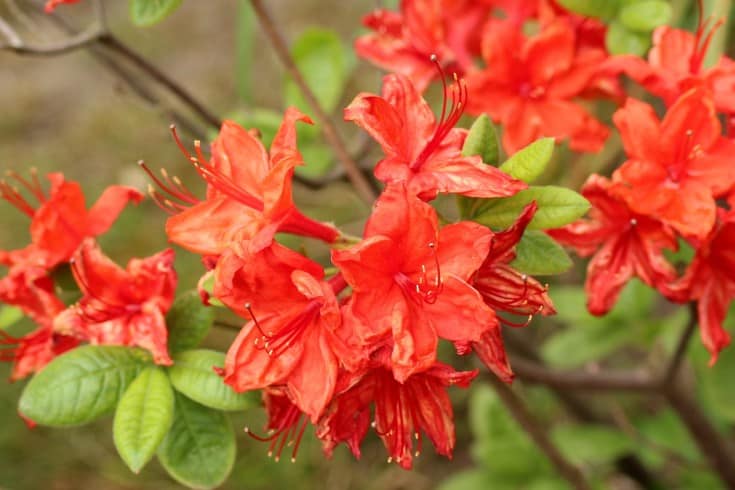
Azalea – Rhododendron spp.
One of the most widespread and beloved ornamental families in the world, with deciduous and evergreen varieties, Azaleas sport flowers of all different colors and differing shapes.
All parts of the plant contain grayanotoxins that interfere with the nervous system and more specifically with the rhythm of the heart and other muscles.
All kinds of azaleas and rhododendrons might result in sudden death in chickens if ingested, or severe gastrointestinal upset and seizures if they have not ingested a lethal dose. Theycan be found anywhere, so stay on the lookout and learn to identify them!
Larkspur – Delphinium spp.
Another wide-ranging genus of plants native to the northern hemisphere and sold around the world for their beauty. All parts of all larkspur plants are poisonous thanks to high concentrations of diterpenoid alkaloid toxins.
Unusually, larkspur species are at their most dangerous when the plants are young and developing, and once they reach maturity and start flowering.
They are less toxic once they are established and prior to flowering, and the toxicity of individual plants varies greatly, so handle these with caution. Ingestion results in seizures, staggering, extremely rapid heartbeat, and sudden death.
Sago Palm – Cycas revoluta
Sago palm is a cultivated outdoor palm is native to subtropical regions but can still grow and thrive in warmer temperate zones. All parts are extremely toxic to chickens and humans.
The poison, cycasin, causes massive gastrointestinal upset, severe liver damage, and sudden death. The seeds are likely to appeal to chickens and may easily contaminate chicken feed owing to their small size.
Autumn Crocus – Colchicum autumnale
Also known as meadow saffron, this herbaceous perennial is often seen still flowering in the fall after all of the leaves have fallen from the trees, hence the name. It’s easily identified by the delicate and long-petaled purple or white flowers sprouting from a prominent underground bulb.
All parts of the plant are quite toxic to chickens… Colchicine alkaloids cause respiratory shock and possible suffocation. Small doses are survivable. Rush your birds to the vet if you notice weakness or bluish skin on their combs or wattles.
Lily of the Valley – Convallaria majalis
One of the most drop-dead gorgeous and fragrant plants on our list, Lily of the Valley spreads voraciously and sprouts from underground rhizomes, so it is extremely difficult to manage and completely eliminate once it is established.
This is another massively dangerous and poisonous plant for chickens, and it contains a wide abundance of toxic glycosides that affect the cardiovascular system along with saponins which can ravage the gastrointestinal tract.
Found growing sporadically across the northern Central U.S. and New England, but it could show up anywhere owing to its popularity.
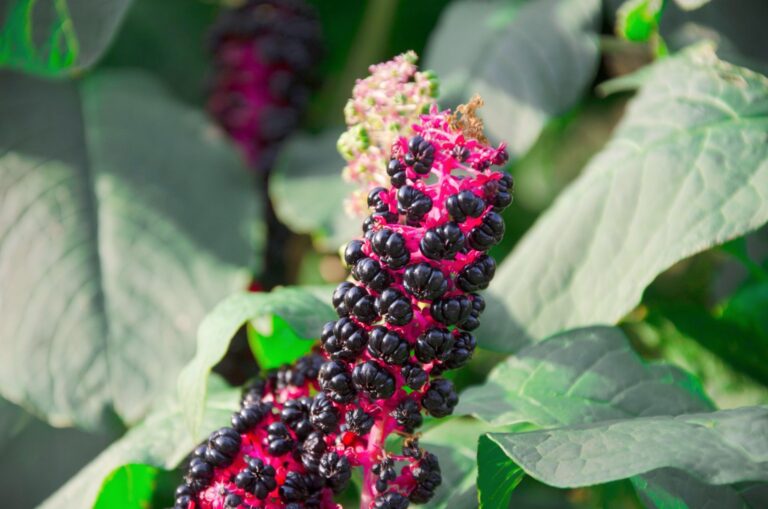
Pokeweed – Phytolacca americana
A constant problem for homesteaders and farmers, pokeweed is readily identified by its bright red stems that sprout big, green globular berries that turn dark purple as they mature. The main trunk of the plant, from which it will regrow every year, is also red or burgundy in color.
Every part of the plant is poisonous to chickens, with roots and seeds being especially dangerous. Toxin levels increase as the plant matures, and include oxalates, various saponins, and alkaloids.
Poisoning results in convulsions, anemia, and internal hemorrhaging. Young birds that get poisoned may suffer from lifelong growth deformities.
Lantana – Lantana camara
A perennial with showy, color-changing flowers, this ornamental is native to Central and South America but has been sold as an ornamental for so long that it can be found growing naturally across the entirety of the Southern U.S.
Once again, every part of Lantana contains poisons in the form of triterpenes which can cause pronounced liver and kidney damage in chickens and also, worryingly, photosensitization, which is usually the first sign that something has gone wrong.
Death is slow to come, usually killing after 2 weeks or so by liver or kidney failure. Declining chickens might last as long as a month.
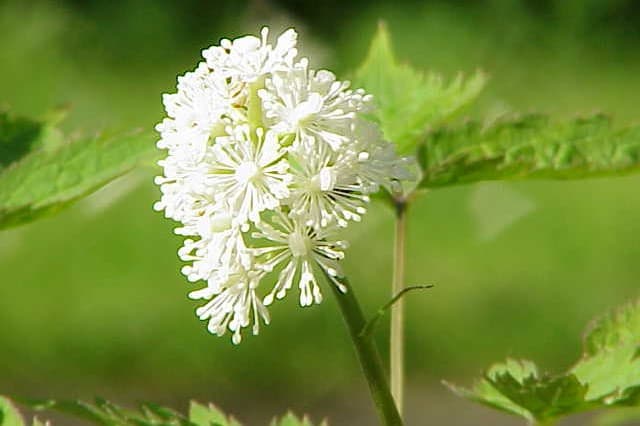
Chinaberry – Melia azedarach
Although it’s not the most toxic plant on our list, Chinaberry has turned into an invasive pest that readily colonizes disturbed areas, wastelands, and roadsides all across the southeastern United States.
You can identify it by its five-petaled lavender flowers and small, hard, yellow berries. These berries contain terpenes and also some unidentified toxins that can cause seizures, paralysis, loss of coordination, and death in chickens.
Coffeeweed – Senna occidentalis
Found sporadically in fields, at the edge of streams and lakes, in gardens, and sometimes along roadsides throughout the central and southern U.S., Coffeeweed flowers are yellow and grow alongside flat, mahogany-brown sickle-shaped seed pods.
Although all parts of the plant are poisonous, the seeds are especially so, as they contain high amounts of dianthrone.
Although most symptoms of poisoning are relatively mild, including general weakness and depression, diarrhea, and sometimes paralysis in high doses, even mild doses can severely impact the ovaries of laying hens, causing dysplasia, yolk leaking, and sometimes necrosis.

Tim is a farm boy with vast experience on homesteads, and with survival and prepping. He lives a self-reliant lifestyle along with his aging mother in a quiet and very conservative little town in Ohio. He teaches folks about security, prepping and self-sufficiency not just through his witty writing, but also in person.
Find out more about Tim and the rest of the crew here.