
If you have animals on your homestead, the ideal for you, like me in so many others, might be letting your animals roam over the pasture in harmony. What could be more fun, or cuter? It’s an iconic image for a reason, and I must admit it is awfully nice to let your critters just do their thing without much worry over their interactions. But I must tell you: this is the exception so much of the time, not the rule.

For families that have chickens and a dog or two, this can feel like an insurmountable problem. Every kind of predator, including domestic canines, loves to eat chickens. As you might imagine, this can set the stage for trauma, but with training, and the right approach, it is possible to train your dog to get along with and even watch over your birds. Keep reading and I’ll tell you how, step by step.
Be Warned: Most Dogs Retain Their Prey Drive and Chickens Tend to Trigger It
I must emphasize this point before we go on. Pretty much all dogs, from a cute little Pomeranian to the sweetest and most trustworthy Golden Retriever, have a prey drive. This is the urge to chase and bite and shake and kill and eat small, scuttling, squealing creatures that run away from them.
Does that description remind you of anything? If you said a chicken, pick any prize off the third shelf. Jokes aside, this is no laughing matter. Chickens are right to be afraid of dogs and most instinctively are. When they get startled and run from a dog, it’s going to entice the dog to chase with disastrous results.
Understand that every now and then you’ll find a dog that simply cannot be trusted around your flock no matter what you do. In my experience, this is a lot more likely with breeds that have a legacy of hunting, particularly hunting small game, like terriers. Keep that in mind as you read on. I’ll walk you through what to do in the following sections.
Foundation is Everything: Start With a Trained, Mature Dog
Unlike the advice you’ll sometimes see floating around that encourages you to introduce your dog and chickens to each other when they are both babies, I don’t subscribe to this methodology. Simply stated, puppies are too energetic and difficult to control and teach, and chicks are too fragile altogether.
Don’t do this. Instead, wait until your birds are grown and your dog is properly into adolescence, or fully mature.
Also, I wouldn’t even attempt to cohabitate any dog with chickens if the dog wasn’t really well-trained. I mean to say he will come, sit, stay, drop it, and generally follow your commands in spite of his instincts. A well-trained dog will usually make for an easy introduction. An unruly dog is a nightmare.
Your Chickens Should Trust You, Too
Don’t neglect your birds in this relationship! If they know you, trust you, and generally follow your lead, they’ll have a much easier time accepting your dog. Your canine should see you as the pack leader and your chickens as the flock leader.
This is easily done with most chicken breeds simply by interacting with them on a daily basis. Take care of them, give them treats, pet them if they allow that sort of thing, and generally be a positive force in their life. A calm owner with a calm dog in attendance is a lot less stressful for a chicken than a barking, snuffling threat.
Introduce Your Animals With a Barrier
Okay, you’ve got a happy, trusty flock and your trustworthy dog. Time to let nature take its course, right? No!
You should introduce your dog to your chickens, or vice versa, by keeping a barrier between them for the first time. Keep your chickens in their run, for instance, or else set up a protected enclosure for them that will give them plenty of standoff distance from the dog.
This can prevent disaster, so don’t skip out on it no matter how promising the situation looks up front.
Never Let Your Dog Harass The Chickens, Even Through a Fence
Note also that even with a barrier between both species, you should never, ever let the dog harass the chickens. Chickens are easily stressed, and they can become stressed to the point that they just fall down and die of a heart attack. Imagine how the poor bird feels seeing what is, historically, its single greatest predator bearing down on it? Scary stuff, right?
Unless you have a very calm dog that is extremely mellow and mindful, I recommend you keep the dog on a leash or even kneel down and keep the dog in your arms so that you can remove it from the equation at a moment’s notice if it’s getting too revved up on account of the chickens.
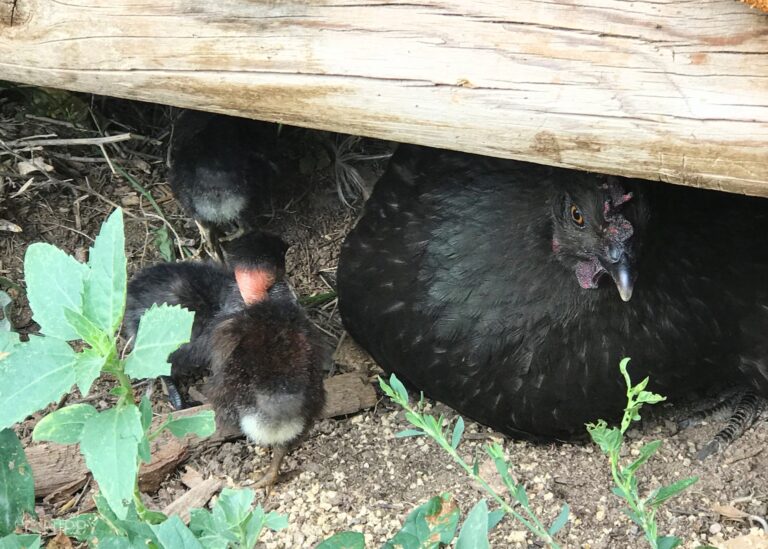
Once Both Are Calm, Let the Birds Out With Dog on a Leash
Repeat the above process several times until you notice both the dog and the chickens staying calm and copacetic whenever they see each other, even at close range. Based on how the birds react, let the dog get closer and sniff them and get used to them, but only with a barrier in the way.
Once this has become the norm, let the chickens out of the enclosure into your yard or take the dog into a larger enclosure but make sure it is on a short leash. See how things go.
It’s normal for the chickens to get distance from the dog to maintain personal space, but be watchful to make sure the dog doesn’t lunge or try and pursue too forcefully. Again, watch out for the vicious cycle: a chicken will run, the run spurs the dog on, the dog follows or lunges, multiple chickens take off flapping and running, and then they all do, and now the dog is overstimulated…
Repeat this process regularly until you are absolutely sure, or as sure as you can be, the dog isn’t going to try anything. And, not for nothing, watch out for aggressive chickens that might peck and hurt your dog! Both are deal breakers.
Make Sure Your Dog Still Minds You
During the above procedure, test your dog by giving him a little more leash to do what he wants and then see if he’ll follow his usual commands normally. Obedient dogs are a blessing, here!
If you notice that your formerly mindful dog is suddenly disinterested in listening to you or obsessed with the chickens, be cautious and keep an eye on him! Trouble might be brewing!
When Dog and Chickens Seem Completely Calm, Try Unleashing the Dog
Moment of Truth time: when you have all confidence that there won’t be any trouble, let your dog off the leash and let the chickens free range as normal. In a perfect world, absolutely nothing will happen.
Now, this is where things get interesting. Chickens have their own personalities, as do dogs, of course. It’s possible that individual chickens and your dog may actually become big buddies, playing and hanging out together. This is the ideal and makes for great social media fodder. In these cases it’s okay if the dog, or the chicken, playfully tease and chase each other.
If you want animals for any length of time you know what the difference looks like between playing normally and playing going out of control. Be alert and keep an eye on them.
Assuming all goes well and ends well, congratulations, you’ve trained your dog to get along famously with your chickens.
Be Ready to Intervene!
Even if your dog is wonderful with your flock, you should always be ready to jump in and break up a problem. I don’t mention this to make you worry, I do it from experience. Things just happen between the two species, and that’s all I’m going to say…
If you are very fast and very fortunate, you might be able to stop your dog from killing or maiming one of your birds. But I should also point out that dogs, even small dogs, typically inflict lethal injuries on chickens before it’s possible to save them, so be prepared for that in case the worst should occur.
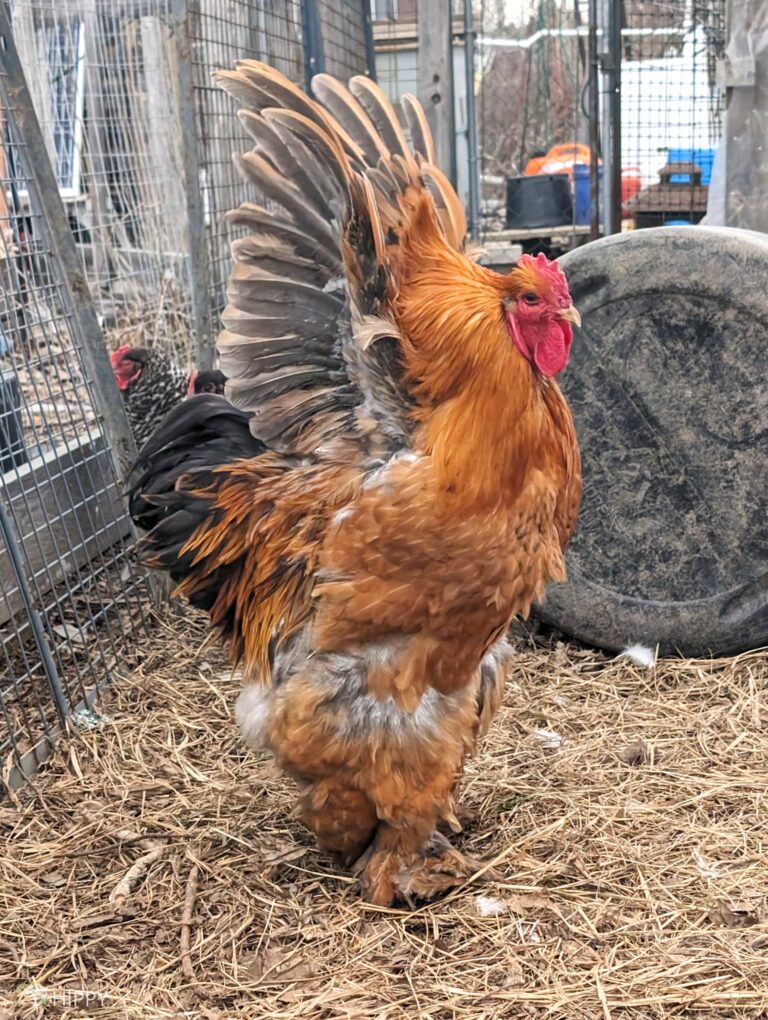
Roosters Can Be Troublesome
Like every single other day in a chicken owner’s life, roosters can be a pain in the ass here. Unless you have a truly docile rooster, it is likely that their natural protective instincts will prompt them to defend the flock from the dog, and even if they don’t do that it is usually roosters that will peck and scratch at your dog more than the other birds.
This is often painful and scary for the dog, and ergo your pooch might retaliate. Be extra vigilant if you have a rooster mingling with your flock, or you might consider exiling it to a rooster colony if peaceful cohabitation between the species is your ultimate goal.
7 Dog Breeds That Tend to Be Good Around Chickens
There are loads and loads of dog breeds out there that stereotypically don’t do well with chickens. Terriers are among the worst, being hardwired to go after small, fluttering animals as they are. Retrievers and working dogs can also make for a difficult uphill battle.
However, breeds that are inclined toward livestock herding and farm work have been specifically bred for patience and tolerance of animals with minimal aggression, and they can be great choices if you’re going into this adventure without a dog, presently. Other good choices are breeds that are famous for agreeableness and minimal aggression.
My short list of strong picks is below.
English Sheepdog
A big breed with a long, shaggy coat. As long as you can manage their strong herding instinct, which may inadvertently stress chickens, the English sheepdog is a great pick because of its protectiveness and famously low prey drive. Be prepared to spend time on grooming; matting is a big problem without care.
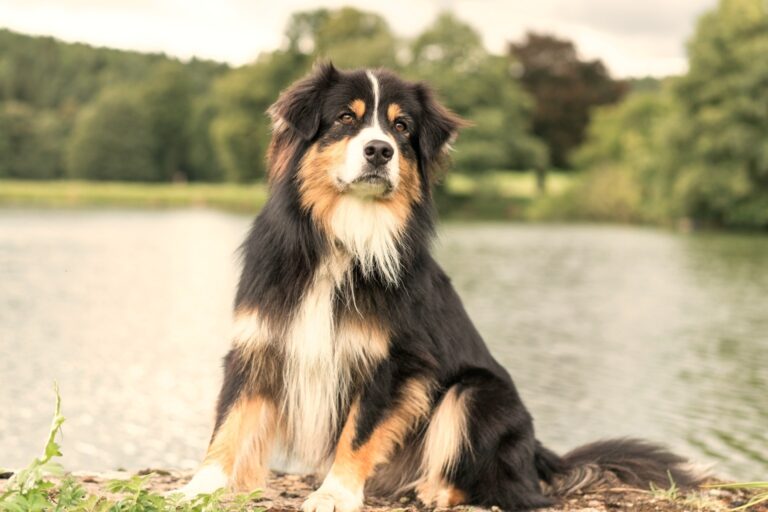
Australian Shepherd
Highly athletic and energetic, very intelligent. Australian shepherds can be difficult to manage unless you specifically train them to watch over chickens like they would sheep, goats, or other livestock. Given good upbringing and lots of exercise, though, they are quite gentle.
Anatolian Shepherd
Ancient, stoic, and possessed of stupendous protective instincts, this large and striking Turkish breed is an inspired pick if you are particularly worried about predators. They’re willing to go toe to toe with just about anything, but otherwise they have a very low prey drive. A great pick for free-ranged birds. Note you will need lots of space for them.
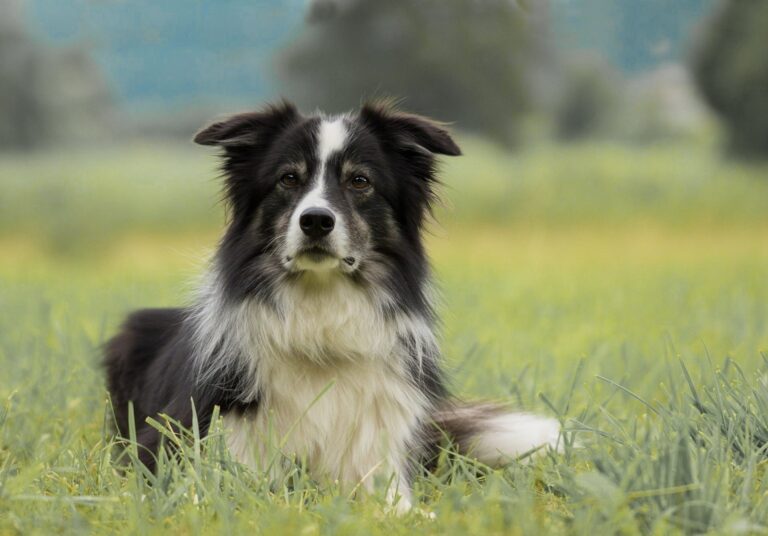
Border Collie
Among the most intelligent dog breeds, if not the single most intelligent, border collies are super-herders, and a great choice for raising around chickens as long as you start obedience training young. They have a noted tendency to chase, which can be tricky to manage, but they make a great guardian dog too, so you take the good with the bad.
Great Pyrenees
Huge and gentle. That’s everything you need to know about the Great Pyrenees. These dogs are tend to be relaxed around familiars despite their imposing stature, and they get along great with pretty much every other animal, chickens included. Their physical presence alone is a strong deterrent to small predators like foxes, raccoons, and coyotes. A great guardian dog pick, but they have strong “guard” instincts, meaning they bark a lot at strangers, movement, etc.
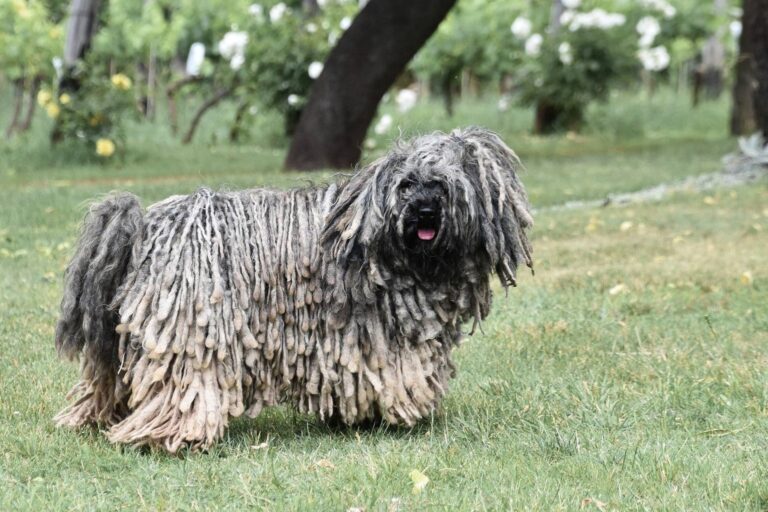
Komondor
Best known for their unique, crimped coat, this massive Hungarian dog tends to be rare and expensive, but they are intelligent, gentle with family, and highly trainable. One pitfall to watch out for is their standoffishness around strangers; a strong will when socializing is a must. This is the chicken-owning dog connoisseur’s herding breed of choice.
English Bulldog
These stocky, wrinkly dogs sadly often suffer from health problems, but in my experience they are all sweethearts that rarely cause problems for people or chickens. They are tenacious during a tug of war, but will rarely go after other animals for any reason. If you want a friendly, laid-back dog that won’t cause your flock any problems, English bullies are a fine choice.
Tim is a farm boy with vast experience on homesteads, and with survival and prepping. He lives a self-reliant lifestyle along with his aging mother in a quiet and very conservative little town in Ohio. He teaches folks about security, prepping and self-sufficiency not just through his witty writing, but also in person.
Find out more about Tim and the rest of the crew here.