
Are you wondering how to get started with goats on your homestead? Well, you’re not the only one – after chickens, goats are the fastest growing livestock animal in the US today. They’re becoming very popular on homesteads because they’re easy to care for and useful. They don’t require pastures, are easily handled and housed, and can provide meat, milk, fiber, fertilizer, and brush control.
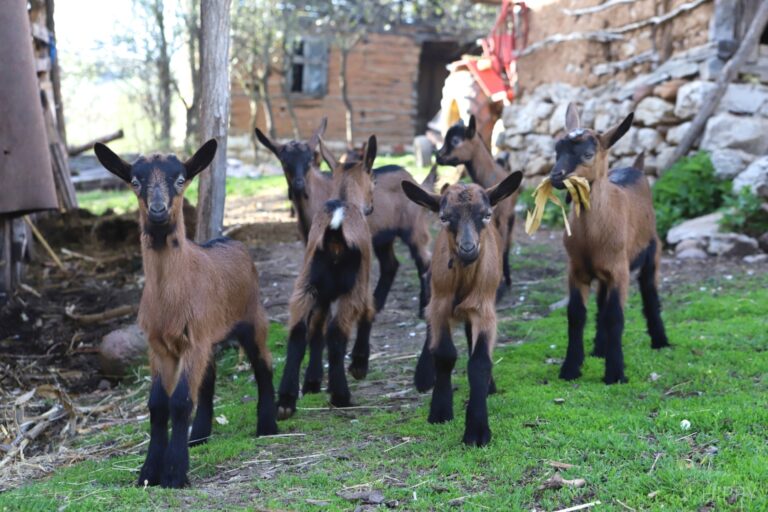
Goat milk and meat are actually preferred over cow milk or meat in most of the world; and homesteaders in the US are catching on. But, before you bring them home, here are some things to think about.
Adorable, fun, quirky and useful for so many things… it’s no wonder goats are becoming a popular animal for homesteaders! Here’s what you need to know before you get them on your homestead!
Table of Contents
Find the Right Breed
Goats are divided into three types; meat, dairy, and fiber.
Several of the main breeds that are available for each type in the US are shown below, along with typical weights and sizes. Any of the breeds can be used for both meat and milk; but they’re classified according to their main use.
There’s also one breed within each type that’s considered miniature (the Pygmy, Pygora, and Nigerian Dwarf), and that can be kept in suburban settings (if local zoning allows it) because of their small size.
| Breed | Type | Buck Weight (lbs.) | Doe Weight (lbs.) | Doe Height (in.) |
|---|---|---|---|---|
| Boer | Meat | 270 | 210 | 30 |
| Kiko | Meat | 200 | 130 | 28 |
| Fainting | Meat | 140 | 80 | 21 |
| Spanish | Meat | 175 | 130 | |
| Pygmy | Meat | 75 | 55 | |
| Angora | Fiber | 105 | 85 | |
| Cashmere | Fiber | 150 | 100 | |
| Pygora | Fiber | 85 | 70 | 18 min. |
| Alpine | Dairy | 170 | 135 | 30 min. |
| Saanen | Dairy | 170 | 135 | 30 min. |
| Oberhasli | Dairy | 150 | 120 | 28 min. |
| Toggenburg | Dairy | 150 | 120 | 26 min. |
| Nubian | Dairy | 175 | 135 | 30 min. |
| LaMancha | Dairy | 170 | 135 | 28 min. |
| Nigerian Dwarf | Dairy | 95 | 75 | 22.5 max. |
To choose a breed, it’s important to determine what you want the goats for: will it be primarily for milk, meat or fiber), what breeds are available in your area, the cost, and breed size.
If you’re planning to drink the milk or eat the meat, then it’s important to taste that breed’s milk or meat (milk taste particularly can vary substantially from breed to breed). If fiber is the goal, then make sure the breed you’re interested in produces the right kind of fiber.
You also need to decide whether you want purebred goats; it’s easier to sell their offspring, but if they’ll be used for meat anyway, it may not make sense to invest in purebreds. And finally, think about size.
Standard-sized goats can be a lot for small women and children to handle whereas the miniature breeds are easily handled by almost anyone. Make sure everyone’s comfortable with the breed size that you’re choosing.
Once you’ve picked a breed, it’s a good idea to visit some reputable breeders.
You will want to look over their goats, ask questions, and make sure you’re happy with the support they’ll provide if you buy from them. It’s often hard to find experienced goat veterinarians, so having a “mentor” can be invaluable.
There are also several serious goat diseases that you’ll want to avoid (CAE, CL, Johnes, Brucellosis, and TB); and reputable breeders will provide evidence that their herds are disease free.
It’s better to avoid goats from auctions, as they can bring hidden problems or diseases with them.
Goats are very social creatures, so a herd should start with at least two.
But since goats multiply rapidly (they usually have at least 2 or 3 kids per year), a herd can grow quickly from just a few does (mature female goats).
Male goats (bucks) are quite smelly during the mating season, and many choose not to keep bucks if there are other good bucks in the area that can be used for stud service.
If a buck is kept, it’s often housed separately from the does, and also needs a companion (another buck or wether (castrated buck)). Bucks are housed separately so that the buck smell doesn’t affect the milk, and so that it’s known when the does have been bred.
You can buy goats from a breeder, another farm, or at a livestock auction. No matter where you choose to buy your goats, ask the following questions:
- Are the goats registered? If they are, with which registry?
- Have they been vaccinated?
- Are your goats routinely tested for diseases? If so, which ones?
- Has your herd had any health problems – and have they tested negative for caprine arthritis encephalitis virus (CAEV) and caseous lymphadenitis (CL)?
- Do you bottle-feed or dam-feed kids?
- Has there been an issue with abortion or febrility problems in your herd?
- What do you feed your goats?
- If raising goats for meat, what is the average market weight?
- How much milk and fiber do you get from your goats?
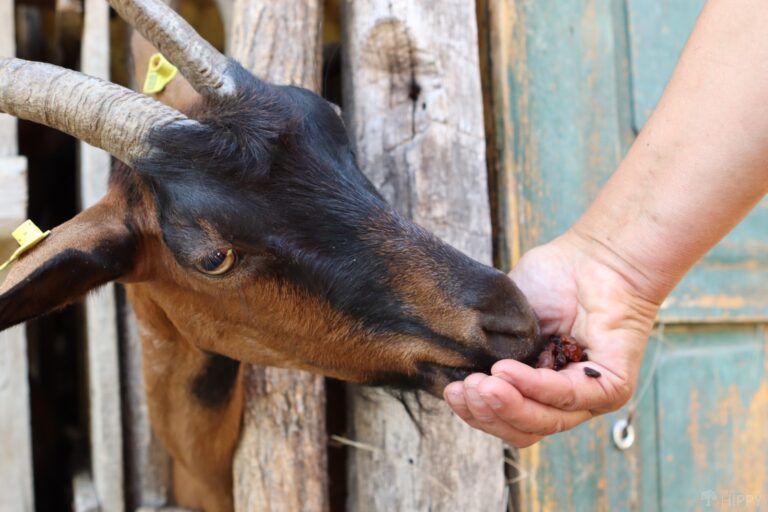
Housing Your Goats
Goats don’t need much in terms of shelter, but they do need some protection from the elements and potential predators.
Goats are unusual types of livestock in that they despise getting wet. Cows, sheep, pigs, and other kinds of animals don’t mind being wet, but goats need to have a place where they can get out of the rain.
Provide your goats with at least 20 square feet indoors and 200 square feet of pasture space outdoors per goat – the more the better. You’ll want to make sure you rotate the pastures often to prevent problems with parasites. If you can, provide the goats with some rocks to walk on in the pasture space. This will help naturally keep their hooves trimmed.
If you can’t provide each goat with an adequate amount of space, you need to get fewer goats. It’s as simple as that.
It’s not just you who loves goats – all kinds of predators, from wolves to wild dogs and everything in between, want to get at your goats, too. A strong fence will help keep them out. Inspect and repair the fence regularly to make sure there aren’t any holes in it. You’d be surprised at how small of a gap most goats can fit through!
When you’re taking a look at your property to build your fence, do make sure it is “goat-proof.” Not just the fence, that is, but the rest of the property.
If you’re allowing your goats to free-range, as many people do, you need to make sure that there isn’t anything that can get them into trouble. Many common plants that people use for landscaping, like oleander or foxglove, can be incredibly toxic to goats.
Not only that, but you should take some steps to protect trees, plants, and parts of the year that you don’t want goats messing with. You don’t necessarily have to exclude your goats from roaming in that area but you may want to take some protective measures, like wrapping the trunks of the trees.
Goat housing ideally includes a barn with room for the goats and their kids, water, feed storage, lights, and an area to milk in (if you’re going to be milking).
All that’s absolutely required; however, is a three-sided shelter to keep them dry and out of the wind. They do need protection from predators (coyotes, mountain lions, stray dog packs, etc.), so housing them in a barn often makes sense.
Milking, kidding assistance, feeding, and watering are also much more comfortable for us when they’re in a barn.
Goats need a minimum of 10’ to 15’ square feet of indoor space if they also have access to outside space. When planning space, keep in mind that like chickens, goats multiply quickly and can be habit forming.
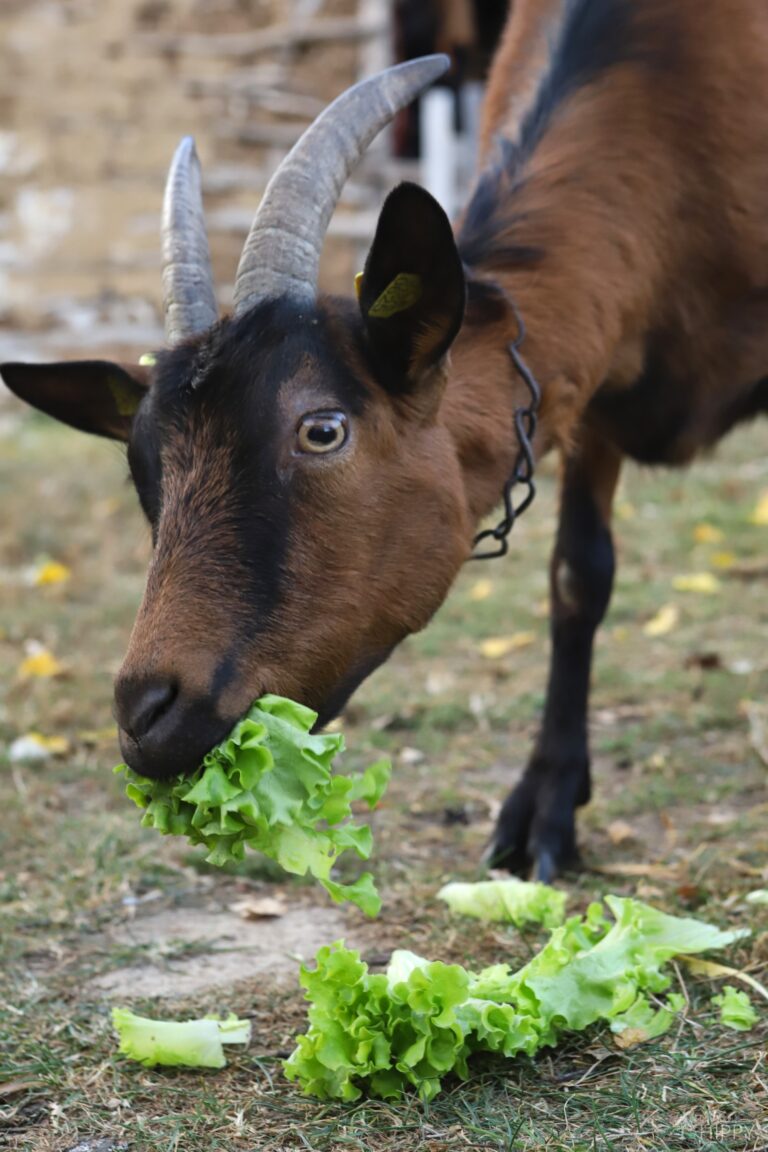
Feeding Goats
Contrary to popular belief among non-owners, goats can’t eat just anything and they certainly can’t eat garbage: they are remarkably sensitive, delicate eaters that need an optimized and carefully tuned diet in order to thrive.
Goats need a constant supply of hay in their diet as the mainstay, and also supplementation in the form of various minerals for dietary support and good health overall.
Hay must be high quality and nutritionally optimized for the needs of your flock, and which hay you should feed them is a complex topic that can take up a whole article by itself. Whatever variety of hay you give them, it must be fresh, free of mold, and also free of debris like twine, wire, litter, and other things that can block up their stomach and kill them.
Goats that switch primary foods too quickly, get too much of one food, or eat something that is too rich, too sugary, or simply not compatible with their biology will likely suffer from bloat, and bloat can kill them if you don’t intervene.
What type of supplements your goats need will be dependent on the environment they live in, dietary shortfalls and more, but you can generally count on goats needing selenium, magnesium, and a good multivitamin all the time as a matter of course.
Goats prefer wooded browse to manicured pastures because they like to reach up to eat rather than down like sheep or cattle.
They also happily eat things we consider nuisances like poison ivy and brambles. In addition to browse; they need good hay, goat minerals, water, and grain (when pregnant or milking). If an area for browsing can’t be provided, goats will do fine on hay alone for roughage.
When it comes to feeding your goats, remember that they need hay, grain, minerals, and any other supplemental feed you want to give them. Stock up on this before you bring your goats home.
Hay is essential. A good quality hay of alfalfa is the best choice, but a timothy/grass mixture with alfalfa pellets can help provide them with the nutrients and protein they need, too. If your goats are able to forage on fresh pasture during the day, you don’t have to give them hay – but it doesn’t hurt.
Grain isn’t always necessary. It can help up the calorie intake of your goats, so if they’re thin, grain can help. Lactating does should always be given grain, though, to help them stay in peak condition.
They also need plenty of clean, fresh water – this should be offered free choice, as should the hay and mineral supplement (grain can be provided more sparingly if you choose).
Make sure the water dishes are cleaned out regularly to help them stay clear of manure and other contaminants.
In addition to the feed and water itself, you’ll also need gear like food storage containers, a hay manger or feeder, a mineral feeder, food bowls, and water buckets.
Some people also choose to give their goats free-choice baking soda. This can help address bloat and digestive problems.
Bottom Line: goats love to eat but they are relatively finicky eaters and need a carefully optimized, high-quality diet with mineral supplementation in order to stay healthy.
Goat Care
Noise Level
We better get one of the big ones out of the way. Goats, in my experience, tend to be noisy and consistently so.
More than most other animals, goats seem to be in love with the idea of hearing themselves bleat, bawl, and scream. And yes, I mean scream.
Some goats, disturbingly, have a vocal register that is closer to a human scream or even laughter rather than these stereotypical “baa-ing” you’re probably thinking of.
Why are they making so much noise? They could do it because they are hungry. They might do it because they are too hot or too cold, they might do it because they are bored.
They can do it because they are impatient, because another goat is too close to them or their favorite buddy in the herd is too far away.
Maybe they see something threatening. Maybe the sun came out or maybe it went away. Maybe you didn’t give them their favorite treat or give them enough attention.
There’s really no telling with goats compared to most other animals, and I’ve never spent more time trying to calm down distressed critters than I have when trying to comfort goats.
And the worst part is, goats are smart enough to use this against you as a weapon to get treats or get their way. Make no mistake.
Of course, there are some breed differences to contend with. Some goats, like Nubians, tend to be very loud, consistently vocal, and highly prone to flying off the handle. Others, like Boers, are usually calmer, quieter, and more reserved- but that’s only by goat standards. They make plenty of noise, too.
Bottom Line: goats are among the noisiest animals you can keep, and can definitely drive you crazy if they’re close to your house.
Keeping Goats in Place
This is the second major problem associated with goats, although some people might dispute it and call it the first. There are no livestock species on Earth, none, that comes close to goats when it comes to escaping captivity.
Goats are remarkable climbers and good jumpers, and they’re able to get a toe hold on even the most marginal surface. Keep in mind, in the wild, these animals are climbers that often live in steep hilly or mountainous terrain.
Accordingly, they can climb right up and over your fence or jump over it from a conveniently placed perch or obstacle. They also have a distressing tendency to wriggle through fencing or, somehow, dig under it assuming they just don’t bash their way through.
Goats will always be a severe test of your fencing and don’t be surprised if you have to spend a lot more money on taller, stronger fences than you had anticipated in the beginning.
And, you’ve got to have fences. You have to. Goats aren’t like chickens in that they will dependably stay pretty close to the coop that they’re used to…
Goats can and will get distracted and wander off, and both billies and does prove to be almost cat-like in their urge to roam. This natural curiosity, stubbornness, and remarkable agility make keeping them contained a constant pain in the butt.
Worse, you can’t stake them out either: goats are equally notorious for getting tangled up and trying to kill themselves with tethers and run lines, whether or not they have horns.
A carefully designed enclosure made out of strong, tall fences and absolutely no obstacles that goats can use to jump over is mandatory for keeping them safely and also keeping your sanity.
Bottom Line: goats are remarkably difficult to keep contained or in place and prone to causing mischief when they escape.
Shelter
When it comes to shelter, goats are, finally, pretty easy to get along with. They don’t need particularly good shelter, as a simple three-sided enclosure is often more than enough to keep them happy and healthy unless conditions are absolutely abominable.
Goats tend to do okay in really cold weather as long as they don’t get wet and can get in out of the wind, rain, and snow.
Most goats grow seasonal coats to help them cope with bad conditions, and if they can all huddle together in a simple shelter that has even a little bit of windproofing, they’ll usually do just fine.
Of course, you can keep goats in an enclosed barn, shed or other kind of shelter but here once again that might cause more problems than it solves: goats have sensitive, delicate lungs and they are vulnerable to illness, infection, and injury if forced to breathe stuffy, contaminated air. And believe me; goats will start contaminating the air soon enough if you keep them cooped up…
Sadly, goats, unlike pigs, have absolutely no qualms about peeing and pooping right where they are, whether they are huddled together in close quarters, indoors, or anywhere else. And, surprise, goats pee an awful lot. So much that they can quickly cause harmful levels of ammonia to build up in the air if they are kept indoors. High ammonia levels mean lung irritation and resulting illnesses, meaning sick goats. We’ll talk more about hygiene and care issues in a minute.
Bottom Line: a simple, three-sided shelter is often best for goats. Any other shelter must have excellent ventilation and be kept clean at all times.
Friendliness
Goats are friendly. Yeah, sure, I’ll agree to that. Goats can be quite friendly, even, especially if you have something they want or if you raise them from kids. They are intelligent, and they can form strong bonds with people, but their bond and care for you will never override their craving for self-indulgence and general mayhem.
As a rule, as long as goats have been properly socialized with people, whether or not it was you, you can count on them being generally easy to get along with outside of breeding season and kidding.
On that note, billy goats, properly called bucks, that are sexually intact must always be watched with caution: They tend to be bigger, stronger, and have more substantial horns compared to does, and they are very twitchy.
And when females are in heat the bucks can become highly aggressive and downright hostile. A large goat that rams or head butts you off of a charge will easily knock you down and can quite possibly break bones or cause other serious injuries. They can also kick, thrash, and generally make themselves a nuisance in other ways.
But does, or nannies, shouldn’t be underestimated either, especially if they weren’t socialized well or if they are with kids. They will instinctively try to protect their kids from intruders and perceived threats, and sometimes hormones make them a little crazy- even if you raised them from a tiny baby themselves.
Bottom Line: goats are generally friendly if raised right and socialized properly, but intact bucks cannot be trusted, especially during mating periods.
Browsing and Grazing
Goats love to browse. If you let them out to free range, they will immediately seek out the choicest, tastiest, and best foods on your property and start scarfing it down until it is all gone. Note that “best” is a determination that the goats make, not you.
Letting goats browse and graze on your property is of course tempting, and lots of herders do it, but you must be very careful to analyze the content of your pasture for benefits and for hazards: goats that fill up on otherwise nutritious, fresh forage but eat too much of it can suffer from bloat or other problems.
Likewise, they tend to instinctively avoid genuinely dangerous plants but not always, and if they eat something that’s toxic, you’ll probably have a sick goat on your hands very soon- and maybe even a dead one!
If you aren’t willing to scout out your property, cull harmful plants and cultivate the right ratios of good ones based on the size of your herd you are better off keeping them contained and on a managed diet of your choosing.
Bottom Line: goats that are allowed to free range cannot be trusted to make good dietary choices at all times, and overindulgence is harmful to them.
Health: Do They Get Sick Easily?
In my experience, goats tend to be far sicklier compared to other livestock species.
For starters, they are of course vulnerable to the usual battery of illnesses that tend to affect livestock, particularly stomach and intestinal parasites and also coccidia, respiratory tract infections, urinary calculi and more.
But goats are also remarkably prone to suffering poor health due to dirty living conditions, dust, harmful vapors, and a lot more. They aren’t these incredibly rugged animals that you might think they are just by looking at them.
If goats get injured, get too stressed out, eat food that is moldy, old or contaminated, you can expect them to get sick. You’ll either need to become an amateur veterinarian yourself or else get very acquainted with your local livestock vet if you want to keep your goats healthy.
Bottom Line: compared to other livestock species, most goat breeds tend to get sick often.
Is it Easy to Breed Goats?
Generally, yes. So you must be very cautious to keep sexually mature bucks and does apart until the does are large enough to breed safely; they can get pregnant too soon and that will endanger the life of the mom and the kids.
Otherwise, does will go into heat, or estrus, once roughly every 3 weeks, and the estrus period will last from between half a day to three days.
If a buck is around and can get to her, he’ll copulate with her and then anywhere from 120 to 152 days later, the doe will kid, usually producing two babies.
This part is easy, but you should also know that billy goats that get ready to mate are ferociously, and I mean atrociously, disgusting: he will urinate all over himself and release a uniquely malodorous billy goat smell called musk.
I can’t describe it to you, but don’t worry: once you smell it you’ll never forget, though you wish you could.
And, as expected, if you have more than one billy goat and they’re ready to mate, the males will fight each other endlessly over access to the ladies, often resulting in severe injury.
Bottom Line: aside from the nastiness of billy goats, breeding goats is straightforward and easy.
Vulnerability to Predators
Goats are only vulnerable to larger predators like coyotes, feral domestic dogs, wolves, big cats, bears, and, in the case of kids and smaller breeds, larger birds of prey. In some areas, wolverines, badgers and the like could be a cause for worry though this is uncommon.
Billy goats might try to defend the herd from predators if they can get to them in time, but your best bet for protecting your goats from predator attack is strong, sturdy fencing as usual.
Bottom Line: it’s not too difficult to keep billy goats safe from predators most of the time.
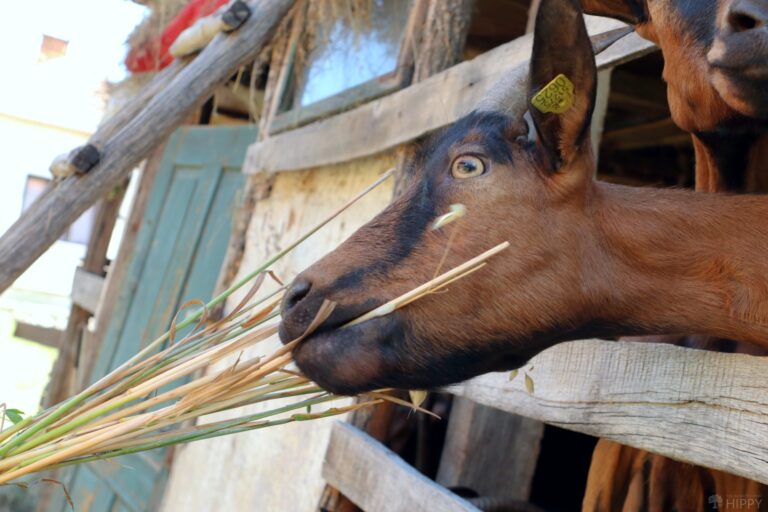
Fencing for Goats
Goat fencing is very important, as goats are veritable escape artists.
There are many options available, but woven wire fencing that’s at least four feet tall is highly recommended, and welded wire fencing is not (goats break the welds by rubbing and standing on the fencing).
Many owners combine woven wire fencing with electric strands at the top and bottom (on the outside). The electric wire at the top keeps the goats off the fence and the electric wire at the bottom helps keep predators out.
Woven wire spacing of 2” x 4” rather than 4” x 6” is recommended if horned goats or miniature breeds are being fenced (so the horns don’t get caught as easily and the miniatures can’t slip through).
Signs of a Sick Goat and Common Goat Diseases
Goats are pretty tough little creatures, but like any kind of animal, they can get sick or injured from time to time. It’s a good idea to build a “homestead first aid kit” with all the medical supplies you might need to address issues when they arise.
Each person will vary in terms of what is kept in this first aid kit, but as a general rule of thumb, you’ll want to have some of the following items on hand:
- Needles and syringes
- Vaccinations (such as CDT) and antibiotics
- Wound-stopping spray (like Blu Kote or Red Kote)
- Bandages or gauze
- Hoof trimmers
- Vitamin supplements, like a B12 supplement
- Oral drenching guns
- Baking soda
- Nutri-Drench
- Vet wrap
- Dewormers
- Milk replacer and colostrum supplement
- Pain medications
- Surgical scissors
Goats will, for the most part, let you know when something is wrong and they aren’t feeling well. If you notice any of the following symptoms, you may want to investigate for potential diseases:
- Not getting up
- Pushing their heads against the fence or wall
- Not eating or chewing cud
- Not urinating or defecating (or feces isn’t pelleted)
- Pale eyelids or gums
- Holding ears oddly
- Udders are red or hot
- Coughing
- Unusual vocalizations
- Isolation
- Nasal discharge or eye discharge
- Grinding teeth
If you detect these symptoms, you may want to call a vet. Take note of the goat’s specific symptoms and how long it has been sick. Take its temperature, check its gums and heart rate, and notice whether the goat has any visible injuries or similar problems.
Record all of these observations for the vet to reference. You may have to take a urine or fecal sample before they arrive, too.
Internal Parasites
There is nothing that kills a goat faster – or that kills goats more often – than internal parasites. Worms are so common and while chemical wormers are often required, you can also turn to natural remedies.
What’s important is that whichever you choose, you are diligent. If you use a chemical dewormer, rotate between different products so that the worms do not become resistant. Most goats need to be wormed at least once a month, more often for herbal remedies.
You can tell your goat is suffering from internal parasites if it has a rough coat, pale gums or eyelids, or is just acting off. You may need to do a fecal test to determine this for sure.
Hoof Problems
Goats are also very prone to hoof problems. You will need to trim the hooves of your goats several times a year, or even once every month or so, depending on how rocky your pastures are.
Overgrown hooves can cause all kinds of problems for goats, including serious injuries, lameness, or even, in extreme cases, death. Make sure you trim hooves regularly with a good pair of trimmers!
Other Common Diseases
Other diseases to watch out for include CAE (Caprine Arthritis Encephalitis), Johne’s disease, and CL (Caseous lymphadenitis). Make sure your goats have been vaccinated.
Coccidiosis is another common illness among goats, often caused by goats being kept in wet, dirty areas or those that have unclean water. The chief symptom is diarrhea – you can do fecal testing to determine if this is the problem.
Breeding Goats
If you choose to breed goats – as many people do – there are a few other things to be aware of.
The first is that it’s generally a good idea to keep goats with other goats anyway – you may want to keep both males and females in this case, but you definitely should if you plan to breed!
When you have made goats, or bucks, be aware that they can be completely different animals during breeding season. They can urinate on themselves before breeding and also be a bit more aggressive during this time.
Like other types of animals – such as deer – goats are short-day breeders. They’ll come into heat as the days start to get shorter in the fall. The does will start getting more vocal and you’ll notice some of the behaviors from the bucks as mentioned above.
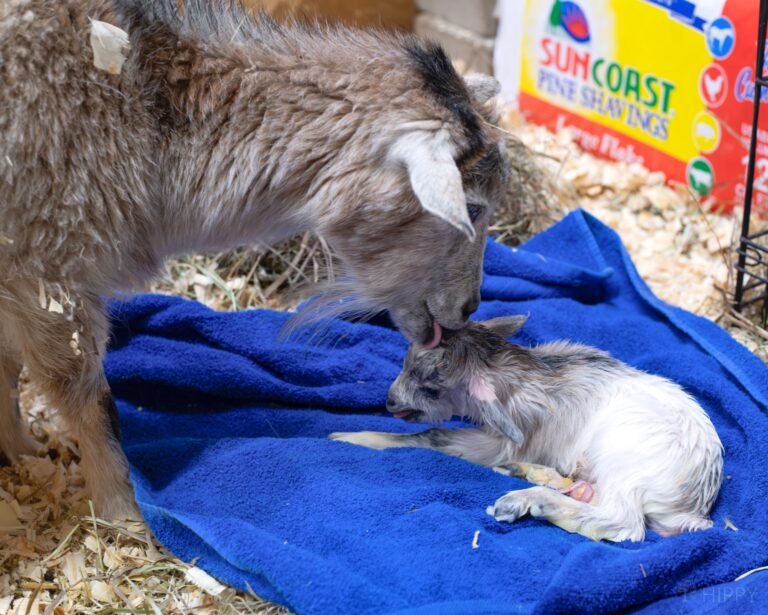
Does birth once a year to at least one kid, but it’s not uncommon for goats to have twins or triplets. You’ll need a dry, warm spot for the mothers to give birth, along with a separate stall for pregnant goats where you can monitor them beforehand.
Goats usually give birth unassisted, typically in March or April. However, it’s a good idea to be there just in case there are any problems.
Making a Profits Raising Goats
If you’re interested in meat goats, many find that goat meat (chevon) is easier to digest than beef or pork, and it’s low in fat (see below), making it a great source for homestead meat.
The markets for meat goats include those for goat meat, show goats (4-H or FFA), breeding stock, and pack goats. Today, the meat goat industry is the fastest-growing livestock industry in the US, mostly because of the ethnic demand for goat meat.
| Cooked Portion (3 oz.) | Calories | Fat (g) | Sat. Fat (g) | Protein (g) | Chol-esterol (mg) |
|---|---|---|---|---|---|
| Goat | 122 | 2.6 | 0.79 | 23 | 63.8 |
| Chicken | 162 | 6.3 | 1.7 | 25 | 76.0 |
| Beef | 179 | 7.9 | 3.0 | 25 | 73.1 |
| Pork | 180 | 8.2 | 2.9 | 25 | 73.1 |
| Lamb | 175 | 8.1 | 2.9 | 24 | 78.2 |
With dairy goats, it’s obviously the milk that’s of interest – and that can also be made into yogurt, cheese, and butter for use on the farm.
Milk from breeds of goats with higher butterfat content is typically sweeter and creamier than those with lower butterfat content. Selling goat milk or milk products is often difficult, as many states prohibit the sale of raw milk, and it may be against the law to sell milk unless you’re a Grade “A” dairy.
If you’re planning to market goat milk, it’s a good idea to check your state rules carefully and proceed cautiously. There are; however, ready markets for goat milk soap, breeding stock, and show animals.
| Breed | Typical Yearly Milk Production (lbs.) | Typical Butterfat (%) |
|---|---|---|
| Alpine | 2000 | 3 – 4 |
| LaMancha | 1700 | 4 – 4.5 |
| Nubian | 1600 | 4 – 5 |
| Oberhasli | 1600 | 2.5 – 3.5 |
| Saanen | 1900 | 2.5 – 3.5 |
| Toggenburg | 1950 | 3 – 4 |
| Nigerian Dwarf | 800 | 6 – 10 |
Homesteads with fiber goats can process the fiber into batts, roving, yarn, and knitted products for extra income.
In addition, the market for fiber goats is growing so there’s also good demand for breeding stock and kids.
Besides all the practical reasons for keeping goats; goats are loving creatures that are just plain fun to have around.
They’re very social, and if handled regularly from birth, form strong bonds with humans. And there’s no place happier than the goat barn during kidding season – goat kids are irresistibly cute! What are some reasons you are thinking of adding goats? Be sure to pin this for later!


Heather’s homesteading journey started in 2006, with baby steps: first, she got a few raised beds, some chickens, and rabbits. Over the years, she amassed a wealth of homesteading knowledge, knowledge that you can find in the articles of this blog.
Learn more about Heather and the rest of the writers on this page.
This is a great post! I’ve been thinking about goats lately, just in case we end up somewhere that we could have them 🙂 I’ll be bookmarking this one!
I want some Nigerian Dwarfs once we move onto a homestead. Great post!
This is so interesting and full of information that I’m definitely pinning for later. Hubby and I would love to buy more acres and actually have goats for dairy – thank you!
I didn’t realize that goat meat was so low in calories compared to others. I learned something new today!
We are thinking of goats! I’ll be showing this to my husband and daughter 🙂 Thanks for posting!
That you for this! We are new to goats as of this last October (about to go through our first kidding) and this is the kind of information I devoured before we made the leap. Don’t tell my chickens, but I think the goats have my heart. 🙂
Danielle
TheHandcraftedHomestead.com
Great information. Right now we don’t have room for a goat but I really want to move to a farm soon and get a few barn animals. I have no experience or clue where to start. This helped so much, thank you for the information, tips and the guidance on goats for us if we do decide to take that journey. (still up in the air)
We have been going back and forth when deciding to get goats. We want them for the milk, but don’t know what to do with them when we go on vacation. Since hubby will be retiring soon and our hope is to travel 4 to 6 weeks out of the year (Yellowstone, here we come!) we don’t know who will take care of the goats when we are gone. That being said, we would sure love to have goat milk to make yogurt, icecream and cheese! Hmmm….. we will have to think a little harder on that one!
Great information! Eventually I will have my retirement farm, and posts like this help me decide what stock I need. Thanks!
Very informative article. Thank you;
wow i did not know nigerians had the highest milk fat content i thought nubians was thanks great site.
To get around the restrictions on the sale of milk, you might be able to lease the goats so the customer would pay the lease and pick up the milk produced.
David, you’re right, in some states it’s legal to sell “goat shares”, pay the farmer to milk and take care of the goat, and pick up your goat milk.
We are so wanting to get 2 dwarf nigerian goats for milking. We have the areas marked out for housing / milking and a pen for play area.
The info here was very helpful !!
Thank you !!
You are a very good source of information, I will be following your posts for our homestead… Good write up!