
Because fire is so important on the homestead or in the wild, particularly in grid-down and other survival situations, you’d be smart to have a good supply of fire starters on hand that can get your wood burning no matter the conditions.
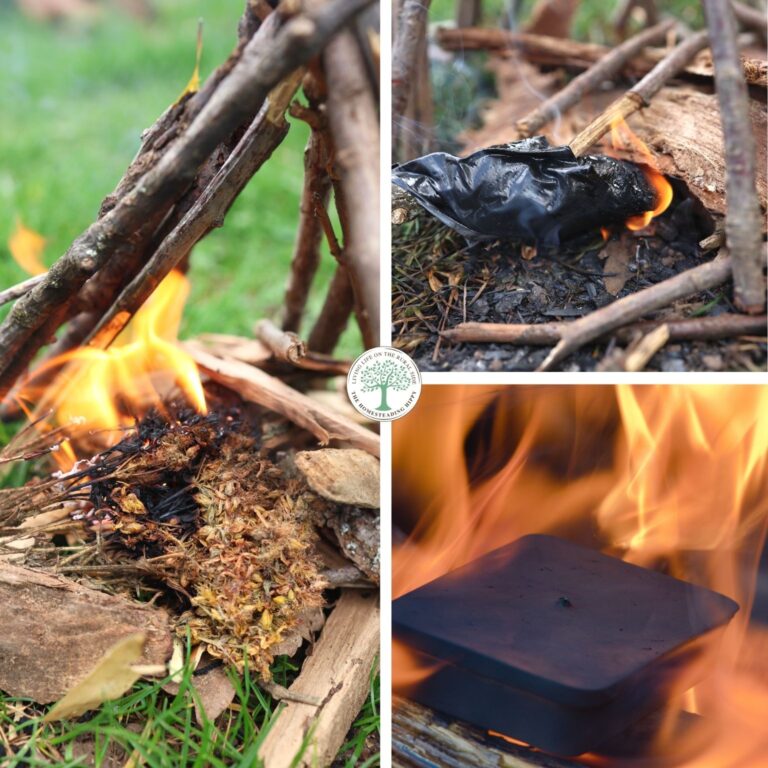
But you don’t need to burden yourself with paying a bundle for commercially made fire starters. Super effective and dirt cheap fire starters are easy to make with stuff you have around your home right now. Keep reading and I’ll tell you about 30 “recipes” that will help you make a crackling fire in a flash – and for pennies.
Homemade Survival Matches
One of the best, and simplest, DIY fire starters. Have you seen those overpriced hurricane or survival matches in stores and online? Of course you have, we all have.
Did you know that these matches are basically just sturdy grill matches with a weatherproof wax coating? Instead of getting gouged at checkout, make your own by using sturdy, strike anywhere matches and dipping them in some melted paraffin wax.
Make sure the head of the match is completely covered, then set them aside to dry on parchment paper or an old baking sheet. Store them in a waterproof container for transport, carefully scrape away the wax on the head then strike when you need to light a fire.
Beeswax Fire Starters
A traditional, cheery and highly effective fire starter can be made by melting beeswax and then pouring it over a small and very dry pine cone. You can make your life a little easier by first wrapping a short length of twine or jute around the top of the pine cone to serve as a primitive wick.
These fire starters are easy to transport, all natural and pleasingly aromatic, and that makes them a great choice for indoor or outdoor use. Just be sure you only use fully open and very dry pine cones; a young, green pine cone won’t burn the same way…
Vaseline Cotton Balls

An old school prepper trick that’s just as viable today as it has been for decades. A simple tub of Vaseline and a bag of cotton balls will only set you back a couple of dollars but it can produce hundreds and hundreds of lightweight, easily transportable and reliable fire starters.
All you need to do is dunk a cotton ball in the Vaseline and roll it around between your fingers until it has completely impregnated the cotton fibers. Put the finished fire starters in a Ziploc bag or an airtight container to keep them moist and make them easy to transport without making a mess.
Butcher Paper and Lint Firestarters
If you are in a hurry, on a very limited budget or just don’t want to get into some of the more intricate procedures needed to make other fire starters on this list, this is the option for you.
Get yourself some butcher paper or some heavy weight, brown packing paper, then grab a big handful of dryer lint out of your dryer or your laundry room wastebasket.
Starting with a piece of paper that’s about 4×6 inches, place a thin “sausage” of smooshed dryer lint on one short side. Roll it up like a cigar, secure the paper to itself with a little tape or glue, and then tuck in the ends of the cigar to help hold the lint in place.
These burn evenly, hot and for a surprisingly long time. A great option for general purpose use!
Paraffin Fire Discs
Probably one of the single best fire starters on this list, these little marvels burn long, burn hot, produce very little smoke, are cheap and easy to make, and they catch a spark like nothing else.
You have to spend a little time upfront making them, but I promise they are worth the time. I’ve linked a detailed walkthrough for these little pucks here, so be sure you check it out.
Hand-Sanitizer Cloths
You shouldn’t neglect the accelerant value of alcohol when it comes to making fire starters, and one of the most abundant and convenient sources of the same is hand sanitizer.
Believe it or not, most varieties will burn quite readily, especially if combined with flammable material! You can use scraps of cotton, burlap or other flammable fabric soaked in hand sanitizer to make a great impromptu fire starter.
Like several other designs on this list, they are easy to transport and will last a long time stored in a Ziploc freezer bag or other airtight container if you prefer to make them ahead of time.
Dryer Lint TP Tube

Another good option for folks prepping on a budget, or when you need a fire starter right this second with minimal prep. Head back to your laundry room and grab some dryer lint and then harvest or scavenge a toilet paper tube, paper towel tube or tube from wrapping paper.
If you’re using a longer tube, cut it down into 4-inch sections, then stuff the interior loosely with the dryer lint. Frizz the lint on one end a little bit then light it and it will burn steadily from one end to the other with a sizable flame.
As you might expect, this fire starter must be kept fully dry for it to work, so keep it in a waterproof container if you’re taking it to the field.
Waxed Birch Bark Bundles
Nature produces no shortage of excellent, ready-made fire starters, and all seasoned outdoorsmen know that birch bark is one of the very, very best. You can make it even better, though, and a little more suitable to long-term storage and easy carrying by waxing it.
Simply melt some beeswax or paraffin wax and then use tongs, forceps or something similar to dip your birch bark pieces in the wax before setting them aside to dry.
Note: you should make sure the individual bark pieces are themselves completely dry so you don’t accidentally lock in moisture which will work against you!
Mini Swedish Torch
Sometimes simplest is best, and that’s definitely the case with this fire starter. A Swedish torch is just a specially prepared log or branch, and doing the same thing on a smaller scale makes for an excellent and long-lasting fire starter…
Simply find a very dry stick about the diameter of your thumb, split the end with two perpendicular cuts through the center, then hold the resulting staves open with two slivers of wood. Light the end like a match and then start your fire.
Cordage “Tumbleweed”
Fire starters don’t have to be technically intricate to work well. Grab yourself some paracord guts, cotton twine, jute or anything similar and tie several pieces together in the middle with a knot to make a frilly little pom-pom looking thing. Tease open the ends of the string to make them all frizzy and the resulting tumbleweed will light up easy and burn fast.
Dehydrated Citrus Peel
This is bound to be a surprise to some readers, but did you know that orange peels, lemon peels and the peels of other citrus fruits are highly flammable? It’s absolutely true! Well, at least if they are thoroughly dried first.
It turns out that the aromatic oils which give these fruits their distinctive flavor and aroma are extremely flammable, and you can take advantage of it as a natural fire starter.
All you need to do is tear the peels into small chunks, a couple of inches in diameter, and then thoroughly dry them out. A food dehydrator works perfectly for this, but you can dry them in an oven on a baking sheet set too low, around 150° F, or even by sun drying them. Once they break instead of bend they are ready. Put a match to them and they will light right up!
Egg Carton Firestarter
If you need a quick project that can make enough fire starters for a whole season of camping, or you’d like to make a bigger batch to distribute to your family or mutual assistance group, this is the method for you. Grab yourself a paper egg carton, stuff the individual open cells with shredded paper, wood shavings or similar material, then douse them all with melted beeswax or paraffin wax. Wait until they cool and firm up and then tear the carton apart at the seams to make 12, or 18, individual fire starters.
Cardboard Match Firestarters
You might have everything you need to get a fire going but unfortunately conditions might conspire against you. Matches work great, but if it’s a little too windy or a little too damp they’ll need a little help.
If you’ve got any corrugated cardboard handy, itself pretty nice tinder, you can make a long burning firestarter by shoving individual matches through the little gutters of the cardboard. Do this for about five rows.
You can light one match head and it will immediately light all of the others and then start burning the cardboard, letting you place it and go hands-free to stoke the fire.
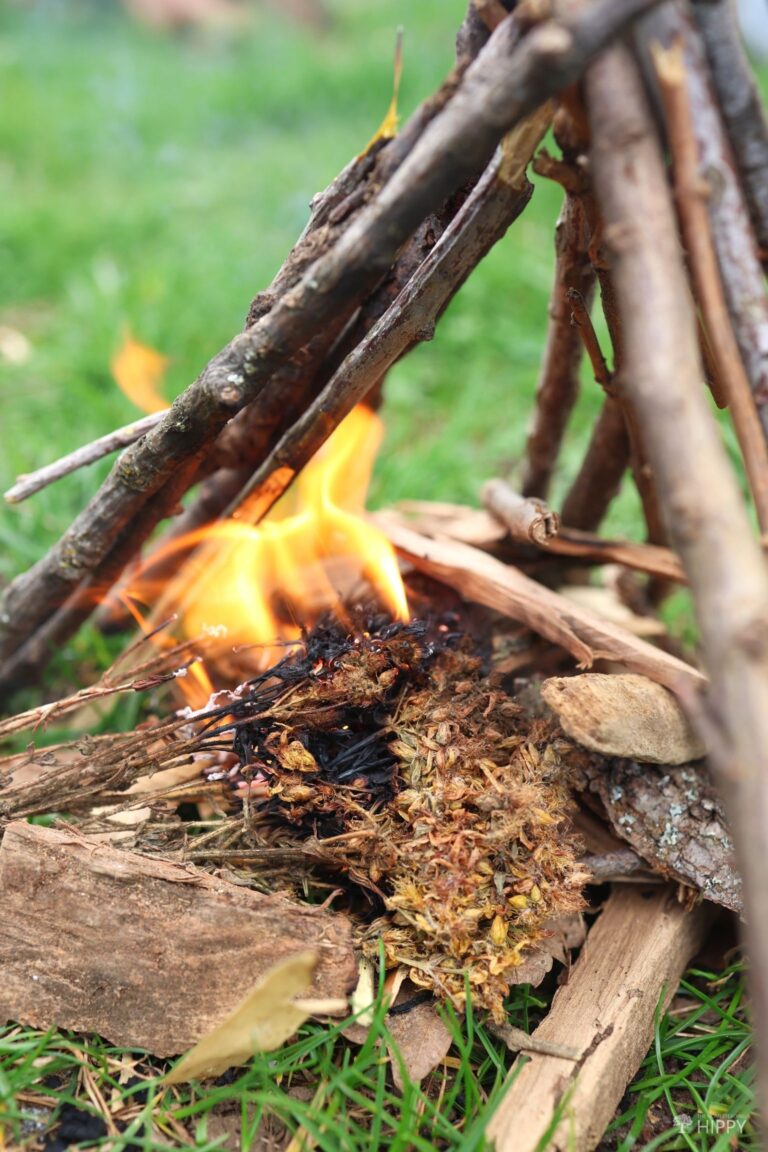
Herb or Weed Bales
One of the very first things that neophyte preppers learn about making a fire is that you need to gather the right kind of fuel. Dried vegetation, specifically light, loose, flaky stuff, tends to work the best. You can put this principle to use by making little rolled up bales of dried herbs or weeds to serve as a handy and versatile firestarter.
You can use almost anything for this purpose, but the goal is to pack it densely together so it holds its shape while leaving one end loose, fluffy and ready to accept a spark. Tie your bales together with your cordage of choice and they’ll be ready to store or carry when you need them.
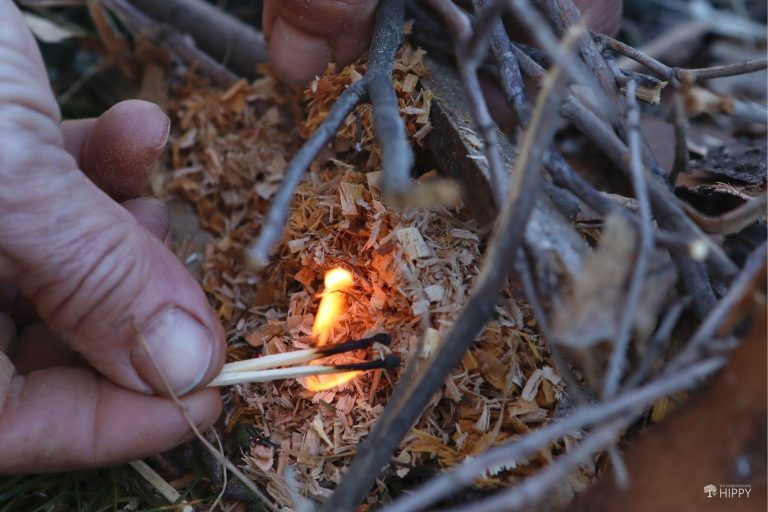
Sawdust Fire Starters
It sounds silly, but don’t sleep on this one. This is another one of my very favorite designs: hot, bright, long lasting, reliable and dirt-cheap.
Sawust will easily ignite on its own, so you can use it as is, or you can mix it with wax so it”s easier to carry and hold the sawdust together.
The gist is this: you’re using an old cupcake pan and paper cupcake liners, sawdust and melted wax to make little cupcake shaped pucks that are a cinch to transport. A little bit of effort will make you a big batch!
Paper Cupcake Fire Starters
A variation on the previous method, if you don’t have any sawdust or don’t care to track it down from a friend or neighbor, you can use shredded paper of any kind to good effect. Sawdust works best, but these are still very good and well worth your time.

Crushed Chips
It’s been said that the mark of a real prepper and the defining characteristic of many a survivor is how well they can improvise.
You might not have access to any of the other methods we talked about so far, or any tools to make them, but if you’ve got some salty, carbohydrate laden snacks close at hand, like corn, tortilla or potato chips, you’ll be well on your way to making a fire that can keep you warm.
All you need to do is crush the chips into two different consistencies: a coarse bed of little flakes, and then a finely crushed consistency that’s like sand. Sprinkle the former on your kindling, then sprinkle some of the latter on top of that before lighting and it will go right up!
Greased Paper Towels
If you live by the maxim waste not, want not, this is the method for you. If you fry up bacon in a frying pan or griddle, and you don’t save your grease for cooking purposes, wipe it up with paper towels, squeeze out the excess, and then leave your paper towels out to dry.
Once grease impregnated, they make a great fire starter. Store in a plastic bag or other airtight container until needed.
Waxed String

A super simple and quick multifunction option, melting beeswax or paraffin wax and then dunking some natural fiber cordage in it, I like jute but cotton also works, will help to weatherproof the cordage and also provide you with excellent fire starting material in a pinch. This is a great option for a minimalist kit or any folks living in wet, rainy regions.
Waxed Tea Bags
Speaking of dried out plant material, that’s exactly what you’ll find inside every tea bag! Savvy outdoorsmen have long known you can bust open a tea bag to use the contents as tinder in a pinch, but you can make a complete fire starter out of a tea bag by dipping it in melted wax and then letting that cool.
Highly portable and very easy to light, this can be a good option for folks who have a supply of stale tea gathering dust in the cabinet at home.
Newspaper Twig Bundles
Twigs are a mainstay tinder, but you can make them even better by first wrapping them with some torn up strips of newspaper. Newspaper will catch fire much quicker and more easily than the twigs by themselves, and that in turn will help get them going. Easy to whip together as needed, but make sure you keep the newspaper, and the twigs, dry.
Wax-Dipped Gauze Strips
Gauze catches fire very readily owing to its light, airy nature. You can provide a little more fuel, and better waterproofing, by dipping strips of rolled gauze or gauze pads into melted wax. As with every other similar project on this list, set them aside to completely dry before storing them, and don’t leave them in your car or another hot place because the wax can melt again.
Wax-Dipped Makeup Pads
Another variation, if you will, of the previous method, a friend of mine turned me on to this technique when his wife donated some of her makeup pads to him for shop use. Makeup pads are dense and sturdy compared to gauze, and so they tend to burn hotter and longer.
A nice side effect is that, when dipped in wax, they absorb even more. This makes them incredibly weatherproof, and all you’ve got to do to get them ready for use is break them up a little bit and scrape away a little wax on the outside.
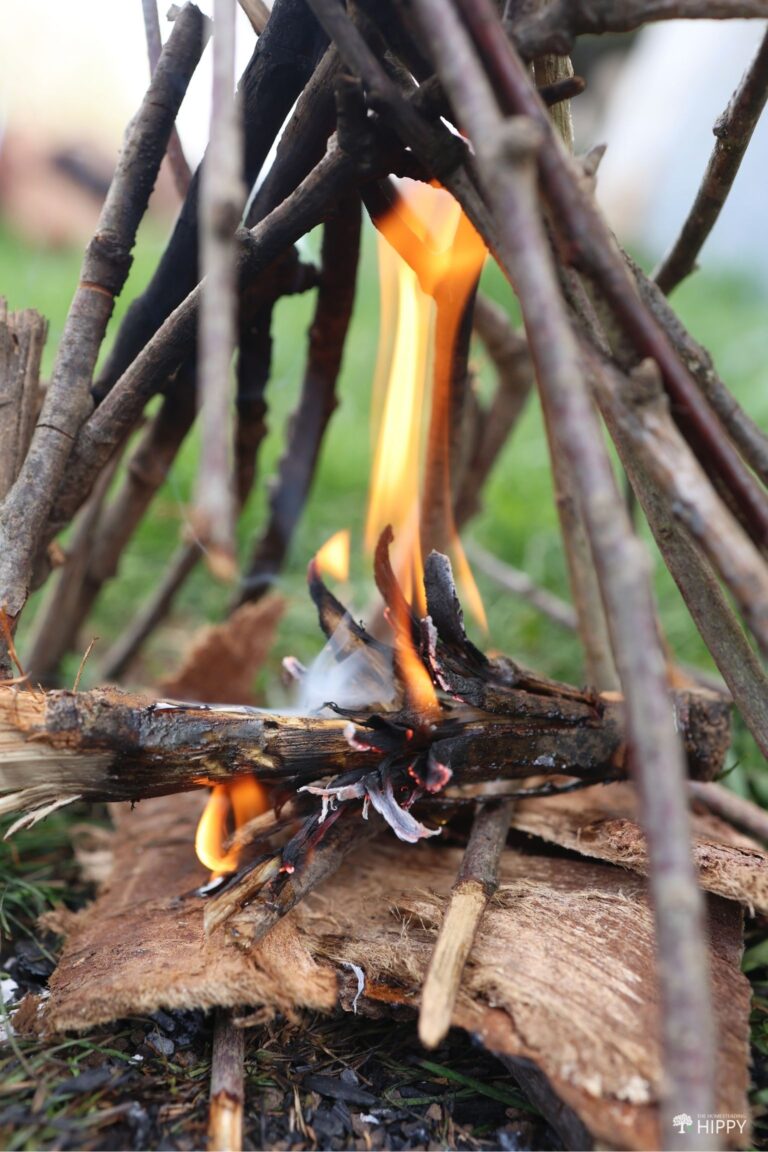
Fire Feather Sticks
A classic Bushcraft skill, feather sticks are just sticks that have been shaved and split until they look a little furry, or a little bit like an upside down Christmas tree. Increasing the surface area and revealing the dry, more resinous wood near the core of the stick makes for a superior fire starter. This is a skill that all preppers and campers should know, so check out the link to learn how.
Char Cloth
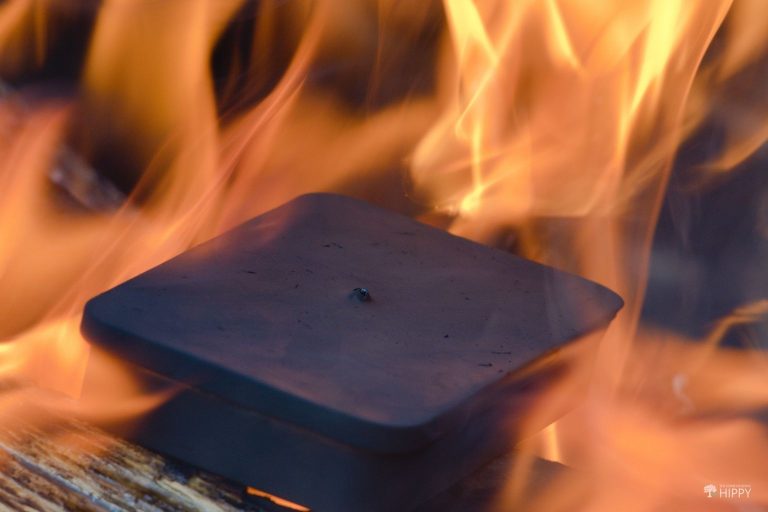
Another time tested and indispensable fire starting aid. Char cloth is essentially cloth, any natural fabric, that’s been turned to charcoal. This is done by first enclosing it in a heat-proof container (like the Altoids tin above) and then placing it in or near a fire. After a little while, the cloth will carbonize and turn extremely flammable.
Cowboys, trappers, campers and adventurers have all relied on char cloth for ages and there’s no reason you can’t. There’s a trick to making it, but you should definitely learn how. Again, check out the link for a detailed walkthrough.
Duct Tape Torches
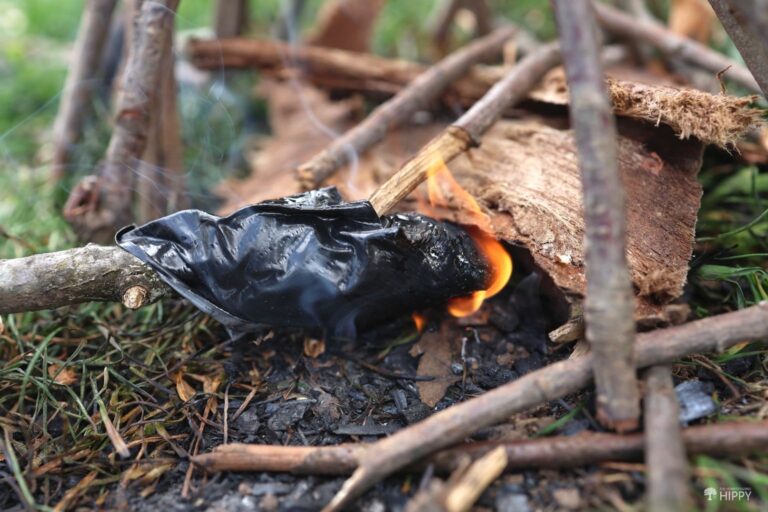
This clever technique was taught to me by one of my mentors long ago. Find yourself a nice sized stick about the diameter of your index finger or a little bigger, then tear off four or five strips of duct tape and place these strips near the end of the stick, evenly spaced, with just a little bit of the duct tape sticking out past the end of the stick. The end result should look like the stick has a little crown of duct tape on top.
Light the end of the stick or the duct tape tails and they will burn hot and steady for a long time. This is another super method for getting a fire going when your fuel is damp or otherwise stubborn.
Burlap Torch
Grab a square of burlap, anywhere from 4 to 6 inches depending on how big your desired fire is, then slather it with petroleum jelly before rolling it up like a cigar. The petroleum will help the burlap catch fire quickly, and the burlap itself will burn evenly and relatively slowly.
Inner Tube Strips
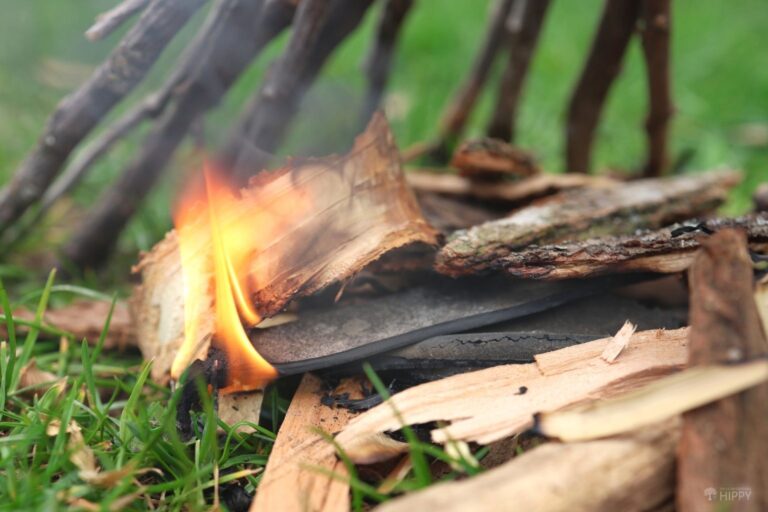
Another oldie, but another goodie. I know some folks will balk at burning rubber, literally, but it does the job when you’re in a serious situation and it’s not like you’re going to be sitting there burning tires as your primary fuel.
Simply grab an inner tube from an old bicycle tire, lawn mower tire or whatever, cut it in half and then start cutting pieces out of it. A good size is a strip that’s 1 inch wide and two to three inches long. Just light it up with your lighter or matches and it will smolder for some time even in damp conditions.
Self-Starting Fire Starter
One of my favorite, simple fire starters is a self-contained solution, meaning you won’t need a separate tool for ignition. Grab some strike anywhere grill matches, wrap the sticks tightly with scrap cloth or twine, then dunk the whole thing into melted paraffin or beeswax. Set aside to dry.
When it’s time to light your fire, carefully scrape the wax off of the match head, then strike. The wax keeps everything waterproof until it’s time to use and then serves as additional fuel when it’s time to build your fire.
Pitch Sticks

Another one of the very best fire starters found in nature is pine pitch. This yellowish, resinous material is extremely flammable and is easily collected by scraping deposits away from living trees or, especially, deadfall.
Dump the collected pitch into an old can or other pot, slowly melt it over gentle heat, then scoop up generous globules using twigs or other small scrap pieces of wood. Once it hardens it transports wonderfully. You can light it up directly later and it will easily ignite surrounding materials.

Tim is a farm boy with vast experience on homesteads, and with survival and prepping. He lives a self-reliant lifestyle along with his aging mother in a quiet and very conservative little town in Ohio. He teaches folks about security, prepping and self-sufficiency not just through his witty writing, but also in person.
Find out more about Tim and the rest of the crew here.