
There is hardly anything better than genuine sheep’s wool. It’s versatile, insulating, and durable. It’s just awesome… And whether it is your favorite wool garment, a decorative fleece, or even a nice wool rug, it’s something you want to enjoy.
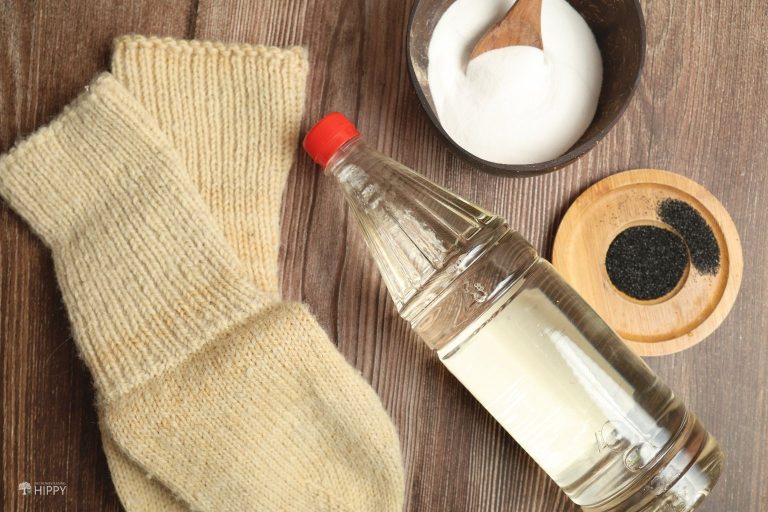
But it’s hard to enjoy it when it has a peculiar barnyard odor. Sure, our wool products come from sheep, but we don’t want to smell like sheep, do we?
This aggravating problem can range from annoying to embarrassing, and the aroma itself ranges from rustic tang to nasty backside, often presenting when the wool gets wet or conditions are humid. It’s enough to turn you against your favorite things, but I’m here to help with seven quick ways to get rid of that unwanted sheep stink!
Why Does Wool Stink So Bad?
It’s hard to believe that a pure white fleece, or your favorite woolen garment or other textiles, can actually smell.
Sure, sheep aren’t the cleanest of animals, and anybody who has raised them will confirm that they get as filthy as any other livestock, but once a fleece has been thoroughly washed or, even better, processed into yarn or thread, shouldn’t it smell like clean fabric?
It should, but that’s just not the case all the time, and that’s because wool contains grease. That’s right, Grease! And it can be as yucky as it sounds, though it is an important part of wool quality and longevity.
Grease consists of lanolin, a natural substance that is present in the wool itself, dirt, and some nasty stuff called suint.
Suint is basically sheep sweat that has dried out in the fibers and contains potassium salts and other elements that have a distinctly, let’s say, sheepy aroma!
If your wool smells a little gross, it’s likely because there is too much suint, dirt, and other unwanted matter in the grease.
But the grease helps preserve the wool’s good attributes, so we don’t want to get rid of it, but we do want to eliminate the other stuff. That means we need the right approach to cleaning it out or getting rid of the smell.
Ground Rules for Washing Fleeces
Several of the following methods rely on washing the fleece. That’s okay; you can wash it contrary to what your mom might have told you about your favorite sweater when you were little.
The trick is that you have to wash wool garments and natural fleeces properly to protect the individual fibers from felting and also to keep from removing more grease than is absolutely necessary.
The ground rules for washing fleeces are pretty straightforward, but you can’t forget them:
- Soak only, no agitation. Agitation causes felting.
- Submerge the fleece or garment in water; don’t pour water onto it.
- Use hot water and avoid sudden temperature changes. You should start the fleece in piping hot water that is about 140° F / 60° C. For subsequent soakings, you want to gradually reduce the temperature slowly so you don’t shock it and cause felting.
Note that hot water alone does not cause shrinkage! It is a combination of hot water and agitation which causes shrinkage. That’s why one of the rules above is to just soak the wool in hot water. I know, grandma would never lie to you but scientists have tested this ceaselessly and we know for sure, now.
For all of the DIY methods below, follow these three rules and your fleece or favorite wool garment will keep its quality, shape, and dimensionality.
I’ve put these methods in order from least aggressive to most aggressive, and I recommend you try them in order if you are determined to get rid of sheep stink.
Try to Air it Out
The very first thing you should do if you have a smelly fleece or garment, especially if it is one that hasn’t been washed in a while or is only faintly odorous, is to air it out really well.
Fresh air and sunshine are great for freshening wool, and most of the odor-causing components present in the fibers will die down when thoroughly dried out and given good airflow.
Place the fleece somewhere where it can get plenty of both, and if you can’t or don’t want to place it outside, lay it flat, or properly hang it somewhere in your home that is dry and has good, moving air. Give it anywhere from several days to a week and then reassess.
Seal It Up with Activated Charcoal
Sometimes odors are just clinging to the fleece or fabric rather than coming from inside it.
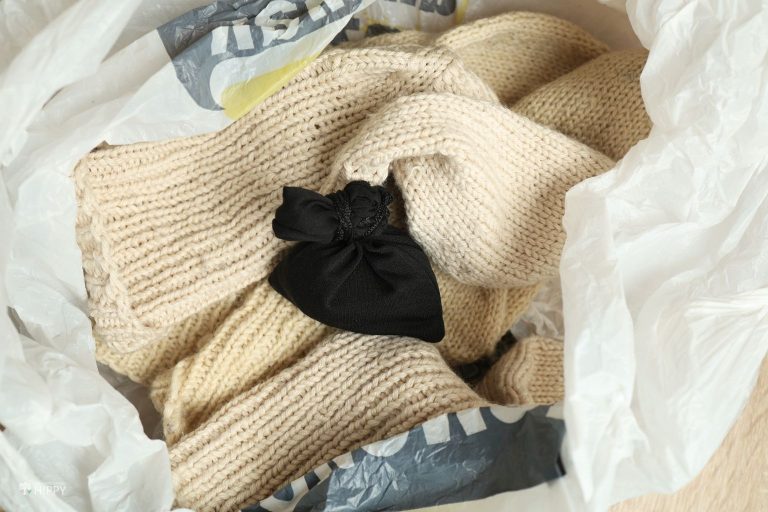
In cases like this, you might be able to eliminate them by placing up the offending item in a large, airtight, plastic bag containing some activated charcoal odor absorbers. Activated charcoal has a well-deserved reputation for removing smells when used in this way.
Seal it up tight, give it a couple of days, and then check on it. You might need to give it a little more air as described previously to be sure. If you still notice a bad aroma, it’s time to move on to more intensive methods…
Soak it Several Times in Warm Water
The first and gentlest washing procedure you should try is a repeated soak in warm water. To do this properly and safely with minimal risk of damaging your item, place it in a mesh laundry bag, then prepare a tub or some other container that can easily hold it.
Fill the container or tub with hot water, again around 140°F, then place the mesh bag on the surface of the water and let it slowly sink. It won’t sink immediately, so after a couple of minutes, gently push it down until it’s submerged.
This temperature is hot enough to dissolve the suint and carry away dirt and other debris with it, but it shouldn’t get rid of the lanolin that keeps the wool in good shape. You should notice the water discoloring. Set a timer for 15 to 20 minutes.
Once the timer goes off, gently remove the mesh bag with your item, set it aside, and drain the water, refilling it with hot water that is slightly cooler than previously.
Place the bag back inside as before, letting it sink or pushing it down gently. Again, set the timer for 15 to 20 minutes and watch for the water to discolor.
Repeat this process once or twice more at your discretion, then take the wool out, spin the water out in a washing machine or hand spinner (spin only, medium speed: no heat!) then lay it out flat on a mesh rack to fully dry.
AT NO POINT USE A HEATED TUMBLE DRYER IN THIS PROCESS!

Soak with Vinegar
For really stubborn smells that just won’t go away, you can repeat the above process using common white distilled vinegar. It will help clean and neutralize offending odors.
Use any brand you want. Put about a tablespoon in the second load of water, but you want the last one to be a clean water rinse.
If you are worried about a vinegary tang clinging to your item instead, add a tablespoon of common hair conditioner to the second-to-last soaking after you’re done with the vinegar.
Try Baking Soda
We’re getting into more serious territory now. If the plain water rinse didn’t work, and vinegar can’t quite cover the odor, reach for baking soda.
You don’t want to do this carelessly, though, because it’s alkaline enough to potentially harm the wool, though this is unlikely unless you really go crazy.
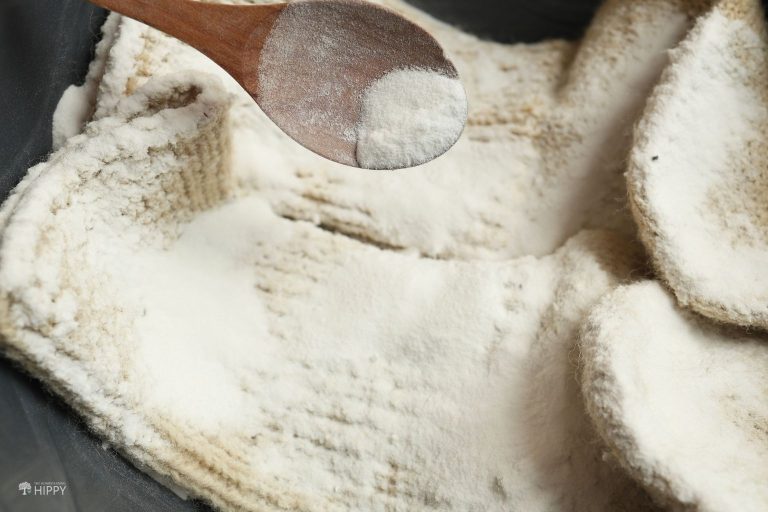
All you need to do is sprinkle a generous amount of fresh baking soda on the item in question and then leave it for up to 12 hours. Depending on what the item is, you can then shake it out gently and brush it as appropriate to remove it.
Give it a sniff and see if it’s any better. If it isn’t, repeat the plain water wash procedure above and then reassess.
In my experience, using baking soda in this way and then following up with a wash will take care of about 75% of stubborn odors in fleeces or garments.
Use a Wool-Specific Enzymatic Cleaner
Sometimes you have to reach for the big guns, and those, in our case, are raw wool or fleece-specific enzymatic cleaners that will remove all kinds of nasty stuff and, hopefully, not take too heavy a toll on the lanolin in the grease.
Companies like Unicorn and Kookaburra make excellent washes. Look them up.
The basic procedure is the same as the one outlined above, but check the instructions that come with your product and follow them to the letter as long as they don’t advise high heat or agitation: both will always result in ruination!
Note that excess washing, especially with heavy-duty cleaners like this, will quickly start to degrade even the most durable and best wool or fleece. This is not a step that should be performed lightly if you want your item to last as long as possible!
Send it to Professional Cleaners
Sometimes, it’s best to admit defeat and prevent frustration. Let the pros handle it.
Sending your garment, fleece, rug, or whatever to professional cleaners who specialize in handling all kinds of wool can save you time and potentially save your item…
Skilled individuals and businesses can rescue all but the gnarliest wool from its seemingly invincible stench, and for a small outlay of cash, you can be a whole lot happier with your prized possession.
There may or may not be such businesses or individuals in your area, but you should be able to track them down easily enough on the internet. Some of them even perform their services by mail, so you might not have to travel very far to get this done!

Tim is a farm boy with vast experience on homesteads, and with survival and prepping. He lives a self-reliant lifestyle along with his aging mother in a quiet and very conservative little town in Ohio. He teaches folks about security, prepping and self-sufficiency not just through his witty writing, but also in person.
Find out more about Tim and the rest of the crew here.