
Plenty of homesteaders raise different livestock on their property. Keeping animals separately is one thing, but raising them together, actually letting them cohabitate, is another thing entirely! Some animals get along a lot better than others, with sheep and goats being a great example.
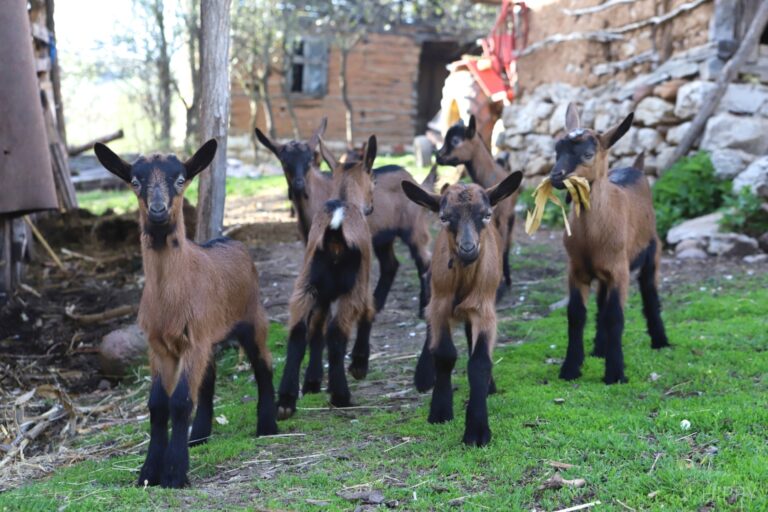
Both are herbivores, both are ruminants, and both belong to the family Bovidae and subfamily Caprinae. They really are close relatives, and they even look alike! If there were ever two livestock species bound to get along, it’s these two…
That said, if you just throw them into an enclosure together and close the gate behind them, you’ll be setting the stage for disaster.
You need to learn what not to do to raise sheep and goats together if you’re going to do it successfully! I’m here to help you with this guide.
Don’t Assume Grass Alone is Enough for Goats
Something lots of beginning shepherds get wrong is accounting for the different dietary necessities of goats and sheep. Both of them are strict herbivores, as I mentioned, yes, and both are ruminants, but there are quite a few differences between these two animals.
Sheep eat much lower to the ground when grazing, consuming primarily various broad-leafed plants and grasses. And, this will be important later, note that sheep are true grazers, meaning that they’ll have lots of the same thing over and over throughout the day.
Goats, in contrast, are browsers. They like to eat the choice bits off of many different kinds of plants, and they typically eat at or above eye level.
They will eat grass, but they eat less of it than sheep if they have any other options, preferring instead to eat the parts of various trees, shrubs, and bushes, including shoots, bark, twigs, blooms, and a lot more.
What this means is that providing suitable pasture to sustain both species at the same time can be pretty difficult.
The more plants that are growing to help your goats, the less room there is for grass, and more grass that is ideal for sheep typically means fewer plants that are good for goats.
Careful analysis of the edibility and nutritional content of your pasture, as well as the carrying capacity for each species, is important if you want to let them free-range together.
In any case, you’ll be smart to assume that they’ll need some supplementals even during the growing season. As usual, hay, along with a little bit of grain when and if needed, will be your mainstay.
Never Let Sheep Get at Goat Feed or Nutrients
Whether you let your goats and sheep forage full-time on rich pasture, give them some supplemental food, or provide full-time hay and other food, you must never let sheep eat provided goat feed or nutrients.
That’s because specially formulated products for goats often contain copper, and a lot of it…
Goats, compared to most other animals, need lots of copper for good health, and seasoned goat herders will tell you that copper deficiency is a major and sometimes chronic problem for them. Sheep need copper also, but they need far, far less than goats do.
If your sheep are allowed to or accidentally gain access to goat feed and supplements containing high copper, it could quickly poison and even kill them.
This is one of the biggest challenges with keeping goats and sheep together because you can’t simply plunk down feed or minerals that your goats need and let them have at it as if they were housed by themselves.
Because of this, you should either plan for a specialty copper supplementation program using copper boluses or, potentially, injections, or else set up special, separate paddocks so your goats can get what they need with no risk of the sheep getting the same.
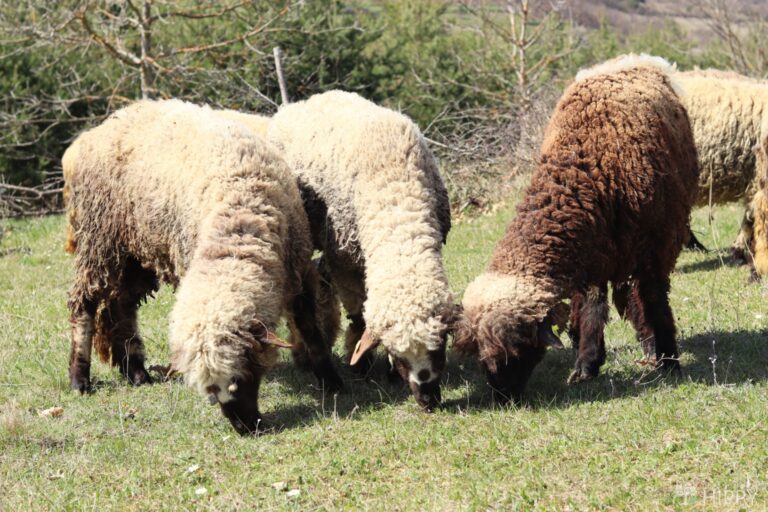
Don’t Let Sheep and Goats Overgraze a Pasture
More food-related troubles with keeping goats and sheep together. No matter how rich and how big your pasture is, you must take care to keep your herd and flock rotated regularly. I recommend no later than every 3 or 4 days, or once a week at the absolute most.
Because these two species tend to eat different plants when left on their own, they will quickly deplete a pasture of all plant growth, and that will be even harder on your land than normal if you were just keeping a single species.
Aside from overtaxing the land and ecosystem it hosts, letting your goats and sheep graze for too long increases the risks of both species contracting parasites, and especially those that would typically infect the other.
You can follow typical rotational grazing strategies or put them into a new pasture entirely to prevent this; just rotate before the land is too depleted!
Don’t Overcrowd Your Animals
You already know that every kind of livestock animal needs a certain amount of space in order to thrive. For goats, this is a minimum of 250 to 300 sq feet / head outdoors for browsing. Sheep need a little bit less, typically around 200 to 250 sq feet / head for grazing. That is per adult, mind you.
Keeping them together, you’ll want to allow extra room so that each species has enough space to keep to itself, if desired, and also to reduce competition for food.
Again, sheep and goats both eat grass and certain kinds of plants, so you don’t want them getting ornery because the food is running low. That’s why I like to allow around 15% more than what the baseline requirements suggest.
To figure out how much pasture you’ll need for both groups of critters, first establish how much each will need.
Let’s say you have 10 goats, and let’s say that they’re on the larger side and so will allow them 300 square feet per, for a total of 3,000 feet. Then let’s say we have 15 sheep, and again a bigger breed that needs more room.
At 250 feet per head, that comes out to 3,750 square feet. Combining the herd of goats with the flock of sheep, our outdoor space requirement is 6,750 feet.
Increasing that by 15%, we get a figure of 7,762.5, so we’ll round it up and say we need 7,770 square feet to comfortably house both the sheep and goats.
If at all possible, allowing extra room for them to cohabitate will always keep problems to a minimum.
Don’t Let Horns Become a Problem
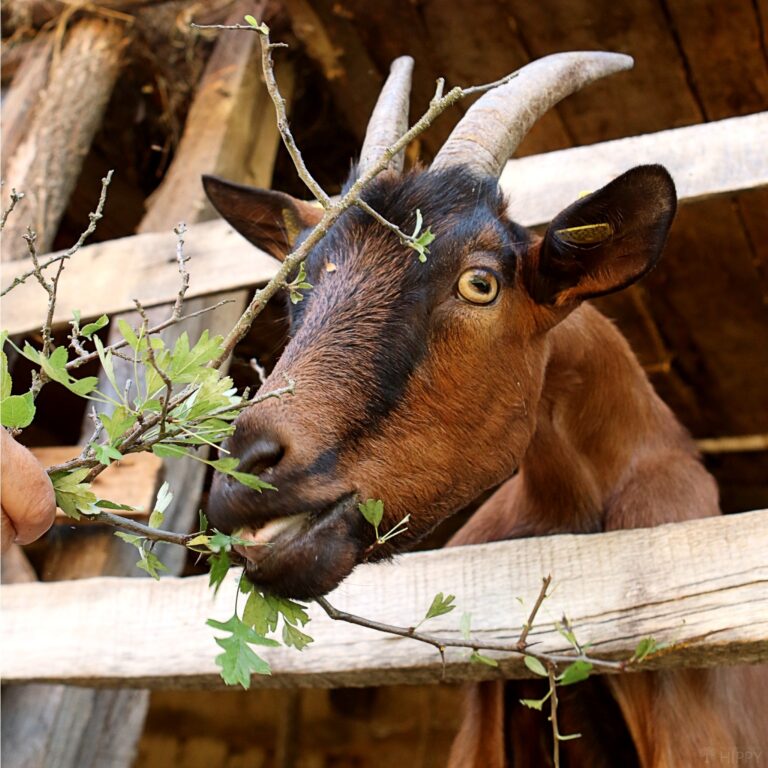
No surprises here, many goats and sheep have horns. Some breeds always have horns, others might have horns, and some individual animals have their horns removed, a process called disbudding, or dehorning if it’s done later in life after maturity.
Tolerating or even allowing horns on either species is a separate subject. You can make a great case for avoiding horned goats or sheep as it tends to prevent trouble for them and trouble for you.
Nonetheless, some people don’t mind them or don’t care enough to remove them or select for polled breeds.
But I can tell you this: if you plan on keeping goats and sheep together, I think it is critical that all of them be hornless. It’s true that both species tend to get along pretty well, but conflict and outright fighting are hardly unheard of.
And don’t think that just because they are used to, literally, knocking their heads together among their own kind that means they’re suited to do so with a different species.
Goats and sheep use different strategies and attack patterns when squaring off to settle issues of dominance or protect their personal space or territory.
If they do come to blows, severe injuries are far more common compared to the same situation between two animals of like kind.
I’ve seen too many instances where keeping horned sheep and goats together – either or both – results in disaster. I am a hardliner on this: Make sure all of your animals are polled or disbud them young if you plan on keeping them together.
Never Neglect Shelter Options for Both Species
Sheep and goats both need shelter from inclement weather, but what’s considered inclement for each species is totally different!
Goats don’t have the huge wool coat that sheep do. That means they lack the insulation to deal with frigidly cold, wet weather. When the temperature plummets or when it’s raining, goats will usually head for cover.
Sheep, on the other hand, suffer from just the opposite: when the temperature skyrockets, and especially when the sun is intense, they will start looking for shade. Turns out wearing a giant woolly coat in hot weather is a sure way to overheat!
Nevertheless, both can make use of the same kind of livestock shelter, with a basic three-sided hutch being adequate to protect them as long as there’s plenty of room for them inside and it’s reasonably protected from drafts and leaks.
It’s possible to use a single shelter because both animals will use it on an alternating basis according to their needs, but this can lead to a major problem when both of them want to seek shelter at once. Having two shelters, just in case, is not a bad idea…
Don’t Skimp on Fencing
I know goat owners out there are already nodding their heads! Sheep are a lot easier to keep contained compared to goats. They don’t jump very well, and most of them aren’t as agile or such expert climbers as goats are.
But goats absolutely can and will escape through, over, or under your fencing if given half a chance. Accordingly, your fencing must be at least four feet tall, preferably a little taller, and heavily reinforced so it can’t be pushed over by goats.
I’ve heard plenty of hilarious (and tragic) stories of goats escaping shortly after being introduced to a sheep enclosure because owners assumed that their fencing was enough to keep them inside. Not hardly!
If you don’t want to spend a fortune putting in or upgrading heavy-duty fencing, do what I do and invest in electric. One, maybe two attempts to get past an electric fence will teach goats and sheep that they need to stay well away from it.
This will also make subdividing your pasture into smaller paddocks for rotation easier in the future, so the sooner you go to electric the easier time you’ll have with keeping both species together for the long haul.
What You SHOULD Do to Keep Both Together
So, to recap, here’s what you should be doing if you want to keep goats and sheep together happily and healthily.
Provide Varied, Ample Forage and Browse
If you are letting sheep and goats forage and browse on the same pasture, it must be highly varied in terms of plants and nutrients, and provide plenty of food for both species. Remember that they will need extra so there isn’t competition between them!
Have Separate Feeding Stations When Supplementing
When providing supplemental food, or if you keep your sheep and goats in a pen, make sure both have separate feeding stations. Sheep should be able to eat with their heads down, goats with their heads up.
Is critical that you prevent sheep from gaining access to goat minerals, pellets, or supplements because copper poisoning can kill them quickly.
Rotate Pastures Often
Rotate a shared pasture regularly, no less than once a week preferably. The combined efforts of goats and sheep will quickly deplete grasses and other plants, and if you let them overdo it the land will be slow to recover. Also helps to ease the parasite burden and transmission rates between both species.
Allow Lots of Room
Goats and sheep both need plenty of room, but you’ll need to allow more room if you are keeping them together to prevent conflict. A good rule of thumb is to increase the baseline calculation for the combined square footage requirements of both species by about 15% to account for this.
Ditch the Horns
I strongly recommend you only keep polled disbudded goats and sheep together. If the two should come to blows, severe injuries can result due to their differing styles of attack when solving social issues.
Provide the Right Shelter at the Right Times
Goats and sheep both need adequate shelter. Sheep typically need protection from intense sun and heat, goats from severe cold and rainy conditions.
A typical three-sided livestock shelter that is in good repair is adequate for both species as long as it isn’t facing the wind, leaky, or drafty.
Consider building an additional pen so that your flock and your herd can take shelter at the same time, separately, if the weather turns nasty.
Install Proper Fencing
Sheep are pretty easy to contain even with basic fencing, but goats are a different story. If you’re going to keep goats with your sheep, the fencing must be adequate for the goats.
That means it needs to be tall, at least four feet, and strong to resist butting, pushing, and climbing attempts. A smart bet, as always, is electric fencing because it offers a strong psychological disincentive to would-be escapes of either species.

Tim is a farm boy with vast experience on homesteads, and with survival and prepping. He lives a self-reliant lifestyle along with his aging mother in a quiet and very conservative little town in Ohio. He teaches folks about security, prepping and self-sufficiency not just through his witty writing, but also in person.
Find out more about Tim and the rest of the crew here.