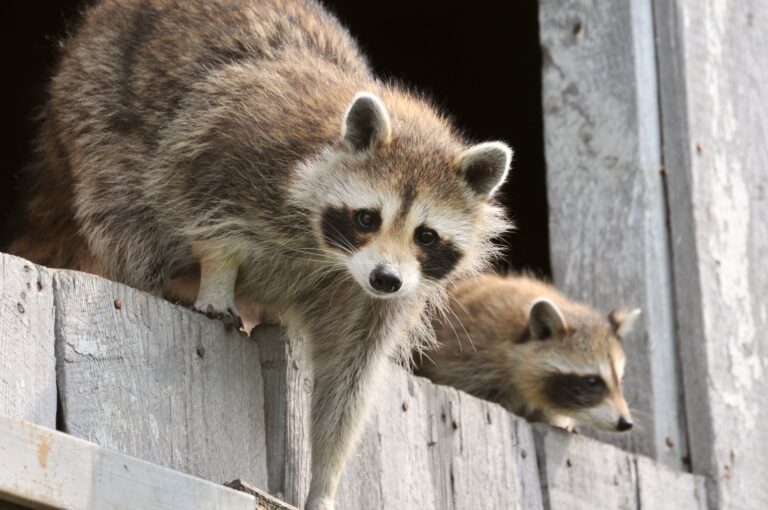
Wherever you live as a homesteader, and whatever you’re doing on your homestead, it’s only a matter of time until you’ve got to deal with unwanted pests. One of the most persistent, destructive, and paradoxically cutest pests around is the raccoon.
Who could stay mad at one of these charismatic little critters? Those black masks, those ringed tails, and those little hands! They are great fun to watch on the internet or out in nature, but if you let them settle in on your property, you’ll have no shortage of trouble.
Stolen trash, dead or injured animals, and maybe even a raccoon living in your attic or soffits; all that and more await you! Happily, you don’t have to kill the cute little things in a trap to get rid of them. It’s possible to keep them away using other means. Keep reading and I’ll give you 11 tips to do just that.
Secure Your Trash
The first, best, and most important tip I can give you. Nothing, and I mean nothing, attracts raccoons to your property and invites them to stick around like an all-you-can-eat and easily accessible trash buffet.
Raccoons are excellent climbers, highly intelligent, and very dexterous, and that means they can easily scamper up your trash can, lift the lid, and then tear into your bags, making a huge mess as they go.
The best thing you can do to keep them out is to invest in a heavy-duty trash can that has a raccoon-proof latching lid or a provision for putting a simple locking device on it. Also, make sure your trash is tied up tightly to help prevent odors from getting out and attracting them in the first place.
Lock Up Your Compost Pile
On a similar note, if you make your own compost, and you should, it is also likely to attract raccoons, at least during the early stages of decomposition.
Kitchen scraps are solid gold for any good compost pile, but the smell of such organic matter, even if you keep the pile turned, will be a raccoon magnet. It’s got an even higher chance of doing so if you put dog or cat manure in there.
There’s not much you can do about this in terms of sealing it off. Compost piles need plenty of ventilation. You can, though, make sure the bin or pile itself is enclosed in such a way that raccoons can’t get to it, and you can put a heavy latching lid over the top. That will keep raccoons from getting into it and making a giant mess.
Eliminate Easy Food and Water Sources
This is an easy one to forget if you’ve got pets, and a tip that’s easier said than done if you’ve got other animals. Raccoons are relentless, reprobate thieves, and they love nothing more than getting an easy meal. The easiest meal around is a bowl of dog or cat food left out right next to a big bowl of water.
If that’s not an option, they will happily steal chicken, goat, horse, and other kinds of animal feed.
Wherever possible, keep food securely contained or disposed of. Make it a point to only feed your animals the right amount of food at prescribed times to eliminate leftovers.
Secure Any Animals That Are Prey to Raccoons
It’s not just your animals’ food that is also food for raccoons; the animals themselves might serve as prey for them!
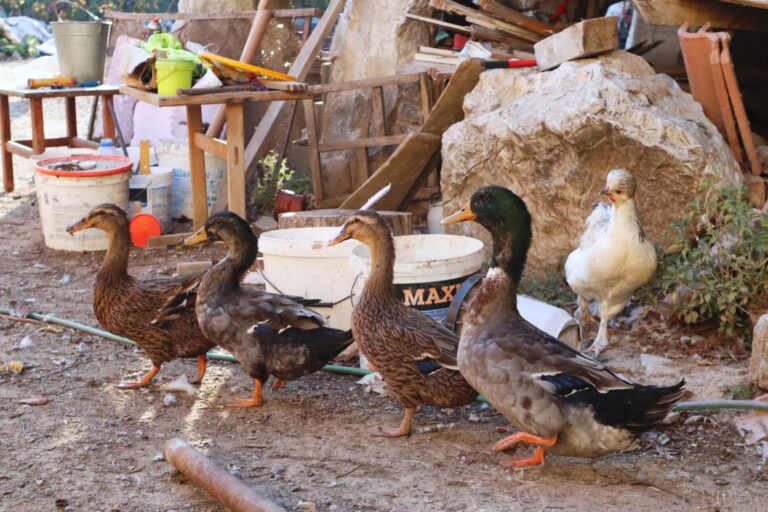
Raccoons are among the most notorious predators of chickens in domestic settings. They are more than capable of dispatching adult chickens, and they’ll make short work of chicks and eggs. The same goes for most duck breeds.
Fish in small ponds, like koi or goldfish, are also on the menu. There’s not much you can do to truly conceal the presence of your animals from raccoons, but you can prevent deaths, and discourage repeat visits, by keeping your vulnerable animals in secure shelters with raccoon-proof latches.
Keep Your Property Clean and Tidy
As a general rule of thumb, pest animals are more likely to hang around on disorderly, overgrown properties. Places with less activity and more cover say “move on in” to raccoons.
If your property is due for a good spring cleaning, and your buildings a good scrubbing, now’s the time to do it. This is especially important concerning animal waste and odor, as both will readily attract these little bandits.
Close Up Access Points on All Buildings, Porches, and Decks
You never, ever want a raccoon to get in your house or live near it! Ask me how I know.
But again, accomplishing this is easier said than done. You’ve got to make sure attic vents, eaves, soffits, porches, decks, and patios are all absolutely secured against the intrusion of raccoons, along with your sheds, animal shelters, and any other structures.
Use sturdy wood and good fasteners, and don’t be afraid to close off smaller passages with hardware cloth or something similar. Make sure the openings on anything you use for this purpose are small, no more than 3 ½ inches square. Raccoons look huge, but it’s mostly fur; they can squeeze into little spaces!
Install Motion-Activated Lights
Just like human burglars, raccoons prefer to operate in the dark, where they feel safer and more secure. Motion-activated lights on buildings, or even freestanding ones, can spotlight them and make them hesitant about continuing. They’re worth setting up as another layer in your deterrent strategy if you can do so conveniently.
Be warned, though, that this works best in conjunction with other strategies, because raccoons quickly adapt to such things if there are no consequences.
Try Motion-Activated Sprinklers
One of my favorite methods for running off raccoons is to use motion-activated sprinkler systems. They are just what they sound like; when the sprinkler detects movement, usually through an infrared sensor but sometimes through a laser, it turns on and showers everything nearby with water. Some of them even automatically aim at the trespasser like a water gun!
The resulting noise, movement, and shock of getting suddenly wet is a strong deterrent to raccoons. But raccoons are bold and will endure discomfort and a certain amount of fear to get food, so this strategy might not prove effective on its own.
Scatter Cayenne Pepper, Garlic, or Peppermint
Like so many animals in nature, raccoons have incredibly sensitive olfactory organs. Despite their preference for garbage, tuna, and other stinky foods, there are some things they simply cannot tolerate.
Things like cayenne pepper, peppermint and garlic, and more can be scattered around periodically, and especially along their usual paths or near entrances, to run them off. Make sure you refresh on a weekly basis, or more often if it rains.Also, keep your own nose perked; if you walk your property where you’ve placed any of the above and don’t smell them, they are weakened and should be replaced.
Try Spraying Predator Urine
Raccoons are pretty low on the totem pole in the animal kingdom, all things considered, and they are very sensitive to any indication that their predators might be near.
If you’re willing to put up with something smelly yourself, predator urine works wonders in my experience. Here’s the trick: find out what predator is most common in your area and then seek out a urine spray. Bobcats, coyotes, wolves, and so forth all work well.
Consider an Ultrasonic Repellent Device
If you exhaust all other possibilities, consider an ultrasonic repellent device. This is a love-it-or-hate-it option, as some people swear by them and others promise they are junk or gimmicks. These things emit a sound at a frequency humans can’t hear, and the nice ones even have a tailorable output so you can set it to affect certain animals and not others, like your dogs or cats, for instance.
If you’ve ever had mice infest your home or chicken coop, you know they are problematic enough. But they don’t hold a candle to their larger cousins: rats! Rats are bigger, stronger and more difficult to deal with than mice. They spread disease and spoil food just the same, but they can also easily injure or even kill mature chickens and poor little chicks, to say nothing of eggs, which don’t stand a chance.
Rats also tend to be far more persistent than mice, especially when they’re in groups. Keeping them out of your chicken coop is a major challenge, but I’ll share with you 17 ways to keep them out for good below!
Close and Seal All Gaps in Coop
This should go without saying. Your first order of business is to locate and seal all gaps and holes in the coop through which rats could enter. The rule of thumb is exactly that: anywhere that a rat’s skull can fit, the rat can fit, and their skull is about the size of your thumb. So they can and will fit through a hole 1 inch in diameter.
Close holes with wood or metal, and stuff gaps with steel wool and caulk over it to deter chewing. Make sure doors and hatches close tightly.
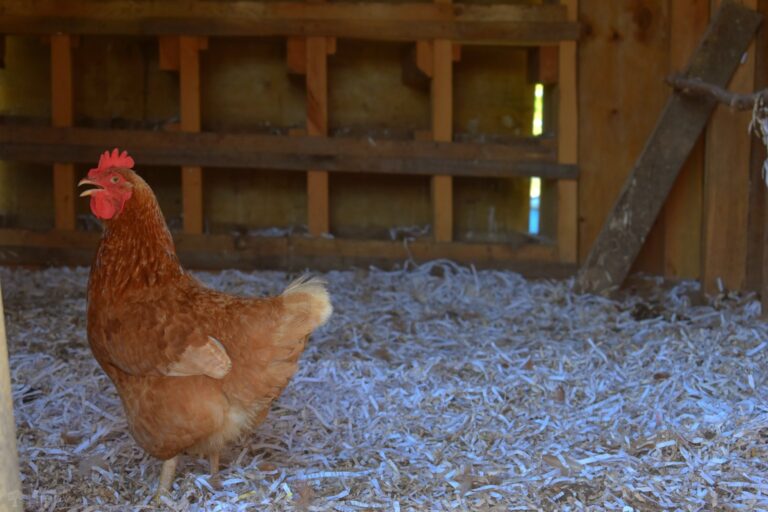
This golden comet hen already noticed a possible way is for rats. Have you? 🙂
Change Coop Litter Regularly
This is a chore you should be doing regularly anyway, but if you’re using a deep litter method, or you’re just lazy like I am, you must make it a point to change out the litter regularly. Rats will be attracted to chicken droppings, bits of food and the general aroma of saturated litter.
Secure Vents and Windows, Too
Think vertically. Rats, like mice, are expert climbers, and if you can’t figure out how rats are getting in, they might be sneaking in up near the roof line, through a window or through a vent. Fix gaps as detailed above or secure openings with metal mesh.
Patrol for Ratholes and Fix Promptly
Rats have large and powerful incisors that can go straight through wood in very short order. A rat can bore through the cladding or floor of your chicken coop in an hour or less, and that means you’ve got to regularly patrol and inspect for their holes and fix them to prevent easy access. Do this at least once a week, and every day if you have had rat issues in the recent past.
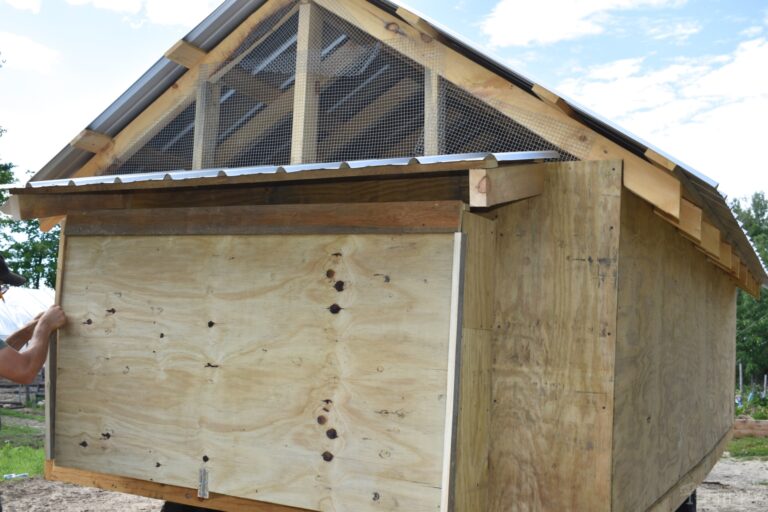
The outside of a large chicken coop. Notice the opening covered with hardware cloth at the top. Keep in mind that rats are good climbers, so even if the opening is fairly high, tehy can still get to it!.
Line Coop with Hardware Cloth or Sheet Metal
If you live in rat country, you’ll need to armor your coop with ¼-inch hardware cloth or solid sheet metal. Generally, making a belt around the base of the coop that is two feet high is sufficient. Consider doing the same thing for the underside of the coop if it is raised, but don’t forget to allow for both drainage and ventilation.
Keep Coop and Surrounds Clean
Don’t forget to address messes outside the coop, too. If you keep your coop squeaky clean but the surrounding area is a nasty mess, rats will come for that and then stick around once they smell the chickens inside. Rake up messes, keep grass cut and make the area around the coop less comfortable for rats, and you’ll have fewer of them.
Keep Chicken Feed in Steel Containers
This is the number one reason people get rats in their coop. Rats are looking for easy food, and loose chicken feed is about as easy as it gets. Rats can go straight through paper, cloth and plastic containers. If you keep feed placed conveniently near the coop, or in a nearby outbuilding, make sure it is in a metal container with a tightly fitting lid.
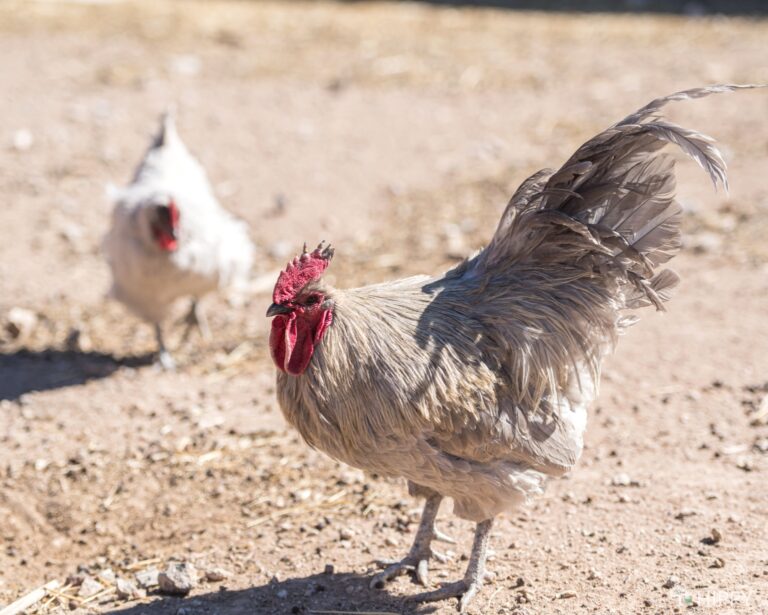
Lavender Orpington rooster being defensive of hen
A Rooster or Bossy Hen Can Kill or Deter Rats
The best defense is often a good defense, and a good defense starts with where the attack will take place. A large rooster is more than capable of killing an average or small rat, though the outcome isn’t certain. The same can be said of a big and bossy hen, though they tend to be less aggressive than roosters. If you’re willing to put up with a rooster, and if you’ve ever considered getting one, now is as good a time as any.
Moderate Feeding to Prevent Excess Food Supply for Rats
An easy mistake to make in the battle against rats is overfeeding your chickens. The more food that is left on the ground, uneaten, the more often you’ll have rats scrounging around, and often more of them! You should be feeding your flock according to their caloric needs and no more.
Secure Water Sources, Too
Don’t forget to deal with water, too. Open bowls of water, or troughs, or any other open watering station is obvious, but don’t forget about ponding and pooling from containers left out, old tires, leaky faucets and the like. All of these are more likely to entice rats to stay nearby.
Try Natural Rat Repellents
Rats are like most animals in that there are odors they find highly repellent. Cayenne powder, strong mint essential oil, garlic and other herbs and plants can help to keep rats at bay. Mint is especially effective, but note that it dissipates quickly and needs to be refreshed every 3 days at most. Sprinkle or distribute these things regularly around the perimeter of the coop and at likely entrance points to give rats a strong incentive to look elsewhere.
Concentrated capsaicin, the spicy stuff that makes hot peppers taste hot, is also a good choice for more determined rats; it is an olfactory as well as physical irritant, and can be added to bait stations to disincentivize rats from looking for food in the area. Like mint oil, it wears out pretty quickly and needs to be refreshed often. You can find even more ideas here.
Eliminate Rat Hiding and Nesting Places
This can be a bit trickier, and more involved, but it’s well worth it. Rats may nest in leftover tunnels from groundhogs or other critters, hide under buildings, wood piles, overgrown gardens, compost bins, junk vehicles and any other place that offers cover and security.
If you can spot rats moving around, watch where they go or where they are coming from, and then start working through the possibilities. Evict them from their usual home and they might take their chances elsewhere.
Get a Cat or Terrier
Rats, like all small rodents, are instinctively terrified and repelled by their natural predators, namely dogs and cats. Cats are supreme rat hunters, and a good farm cat that will actively hunt can make short work of the rat population on and around your property, and best of all do it at night while you are asleep and rats are most active.
Set Lethal Traps in Out-of-the-Way Places
Much of the time rats will be in places you can’t reach easily. To counter this, set up lethal snap traps, electronic traps or whatever else you prefer in and around these places. Check them regularly to dispose of caught rats and reset them for future victims.
a metal live mouse trap
Use Live-Catch Traps in Areas Where Chickens Are
Obviously we don’t want our chickens to run afoul of the traps we set for rats, but sometimes a trap in or right next to the coop can help. Live-catch traps work wonderfully for this, as they won’t hurt chickens and good designs don’t need manual resetting. You can check the trap, dispose of the rat inside and put the trap back without worrying over your birds.
Big Bucket Traps Can Depopulate Rats Quickly
If your property is overrun with rats, very likely if you have an old barn or overgrown land, break out a bucket trap, or in this case a half-barrel trap. The design is basically a ramp leading to a baited rolling tube suspended over the barrel like this one:
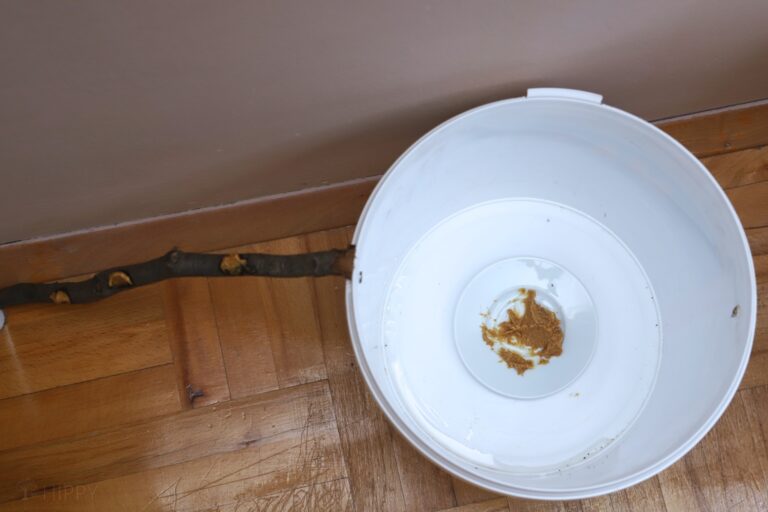
bucket mouse trap with ramp
Rats scamper out on the tube to get the bait, the tube rolls and dumps them into several inches of water, wherein they drown. It’s not the most humane method of execution, but highly effective and traps like this don’t require much babysitting from you, which is a plus.
Call in an Exterminator
If you’ve got the money and are in over your head, don’t be afraid to call in a specialized rat exterminator. Professionals have the experience, tools and intuition needed to quickly, effectively and safely eradicate rats from your property so you can get back to some semblance of normal life with your flock.
If you were hankering to grow fruit in your garden or elsewhere on your property, but your patch isn’t particularly sunny, don’t give up hope just because you fear struggling with the shade. Although most fruits do best and produce the best harvests with abundant sunshine, there are many that grow just fine in partial shade.
I’m going to tell you about such fruits in this article. Whether you want to can, preserve, make jams and desserts, or just eat them out of hand, you are bound to find at least a handful of your favorites on the list below. Grab your gardening gear, and we will get right into it. And if you’re looking for some vegetables that like the shade, go here.
Berries and Berry-Alikes
Elderberries
Another one of my most favorite fruits, and my very favorite berries, this North American native shouldn’t be eaten out of hand because the berries are poisonous until they are processed and cooked. But once they are, elderberry jam is one of life’s great pleasures.
These hardy plants will still be quite vigorous in partial shade as long as the soil is rich. Fertilize prior to planting and during growth for best results.
blackberries
Blackberries
You’ll see lots of berries on this list, and we’re starting with one of my favorites. Most gardeners know that blackberries need lots of sun in order to produce big, abundant fruits, but most don’t know they will still supply you with plenty of slightly smaller berries even in a shady spot.
The trick to maximizing shady production is to take excellent care of the plant. Thin off any puny or dead parts so the plant will maximize resources toward the fruiting parts.
Thimbleberries
Here’s another wild berry that isn’t, as a rule, cultivated for commercial sale. Endemic in the northwestern part of the United States all the way up to Alaska, thimbleberries look a little bit like a raspberry that’s been flattened out into the shape of a mushroom cap.
Flipped upside down, they look much like their namesake. Juicy, tart and tasty, they are very fragile and can be tricky to harvest, but they are worth it.
Currants
Dense, sweet and tart, currants are one of my very favorite fruits for processing into preserves and using in baked dishes in place of raisins. They do exceptionally well in full sun, but are surprisingly tolerant of shade generally.
You can maximize your harvest of currants by planting multiple varieties close together so they can cross-pollinate.
Salmonberries
If your soil stays chronically wet, salmonberries are probably the right berry for you. Tart and sweet with a unique flavor, these are great for permaculture gardens or any shady spot.
Unlike most of the other fruits on this list, this is the one that needs partial shade at a minimum! Intense sunlight will dry them out and kill them. These things are really juicy and perfect for eating out of hand, so give them a try.
Lowbush Blueberries
Everyone loves blueberries, and even if your garden doesn’t get quite as much sun as you’d like, you can still enjoy clusters of these singularly delicious fruits. Lowbush variety blueberries are native to forest habitats, and so naturally they have to tolerate plenty of shade from a forest canopy.
Expect them to do great wherever you plant them as long as you can manage soil acidity, which is their Achilles heel. Aim for a soil pH of 5.0, and monitor regularly throughout the growing season.
Nannyberries
One of the most singularly unique berries on our list is one that most people have never tried and never seen in grocery stores. This wild berry is a prolific grower that requires little care other than aggressive management to keep it from spreading out of control. Most people describe the flavor as tropical. I don’t think they taste like anything else, but they do taste good!
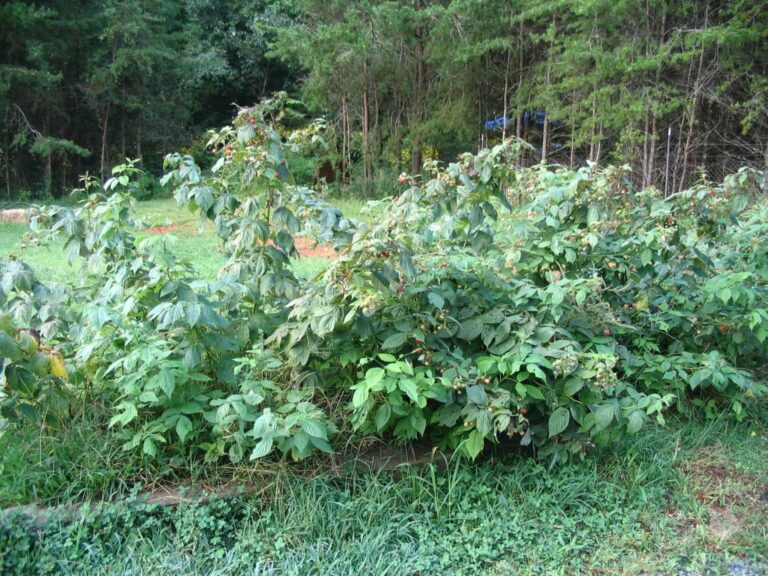
raspberry bushes in raised bed
Raspberries
Like so many of the berries we have already talked about, you’re always best giving raspberries as much sun as they can get if you want the biggest harvest and the sweetest fruits. That said, most cultivars tolerate partial shade quite well so long as you do regular pruning back of dead, dying and unproductive runners.
Teaberries
These tiny red berries have a slight minty or menthol flavor that makes them totally unique and an interesting addition to your usual berry dishes. They tolerate partial shade well as long as they’ve got acidic, well-drained soil. Make sure these get plenty of water throughout the growing season, or they won’t fruit well!
Gooseberries
A gorgeous shrub sometimes used for landscaping, most folks have never had one of these tasty, interesting berries. The berries look like oversized, striated grapes, a bit like a transparent miniature watermelon, with a sweet and tart flavor.
Make sure your shrubs get excellent airflow for good growth and fruiting; prune as needed to prevent them from turning into a thicket if planted close together.
Mountain Strawberries
Another particular variety of a common fruit that you’ve certainly never had, mountain strawberries are, as you’d think, a type that typically grows in high elevations. Cooler, dry weather with less daylight is a recipe for success if you want to grow your own. Note that these strawberries are continual producers, meaning you’ll need to harvest sporadically throughout the growing season, typically late summer through early fall.
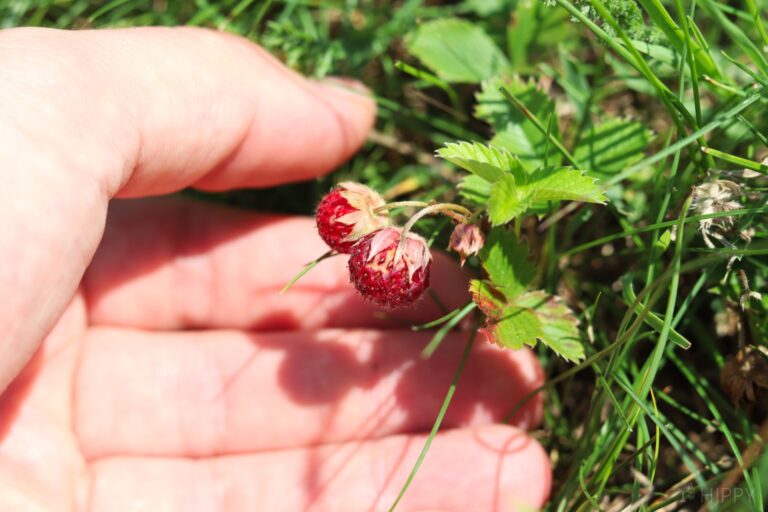
Wild Strawberries
These actually tolerate shade really well, and have a different flavor from regular strawberries. And, like most other berries, they yield the most fruit when they get more son, not less. Even so, they can grow a decent amount in partial shade.
Lingonberries
Another fruit that most folks have never tried, and another plant on our list that’s better known for its ornamental qualities thanks to its bright green, waxy leaves and pretty little pale pink flowers.
These evergreen berries grow well in cool weather and most shady locations, spreading by underground runners. Make sure you manage those if you want to keep them in place and prevent them from infiltrating nearby landscaping or other parts of your garden.
Serviceberries
I swear I’m not making this one up. And yes, it is an actual berry. You might know them as Juneberries or saskatoons depending on where you live. Thriving in colder regions, these are one of the best options if you live in the Northern US and are very tolerant of partial shade and subpar soil conditions.
Mulberries
This US native is a perennial favorite of birds and other foraging creatures, but they are just as good processed into jam or baked into pie or cobbler.
Mulberry trees do well in full sun as expected, but they are surprisingly capable even in shady spots. Keep in mind that a mulberry tree can be a big commitment if you aren’t investing in a dwarf variety; they get big, and pretty fast!
Tree Fruits and Stone Fruits
Pawpaw
A soft fruit with a mashable and mild pulp that is tropical, almost banana-like in flavor, pawpaw trees naturally grow under the canopy of other, taller trees, and so they can put up with plenty of shade.
alpine goat jumping to reach a peach from a tree
Peaches
Most folks wouldn’t believe that this summer superstar could deal with anything less than full sun, but it’s possible for peaches to get a few hours of shade per day and still turn out wonderfully sweet fruit. Make your life easy by choosing a variety that will grow based on your space allowance.
Quince
Quince used to be a delicacy in the early years of America, but it has since been relegated to the dustbin of history by most people. That’s a shame, because this is another unique fruit that deserves a spot in your kitchen. Like elderberries, though, these must be cooked and processed to be eaten; they are too hard and astringent otherwise. You’ll find that these trees are very hardy and can grow well in many different environments.
Barbados Cherries
Barbados cherries are a unique variety, being a type that craves warm weather but still tolerates partial shade very ably. Nominally growing into a huge tree, they can also be trimmed into compact shrubs and still produce lots of sweet, red fruit.
Something else that might help you is that this variety works quite well in large containers, so if you battle cold springs and short summers where you live, put these near the top of your list if you’re a cherry fan.
Loquats
An extremely popular fruit throughout much of Eastern and Southeastern Asia, loquats are stone fruits that can do well with as little as 4 hours of sunlight a day. If you’re ready to shake things up in the kitchen, you’ve got to give these a try in cobblers, pies, turnovers and other desserts.
Apples (Cooking varieties)
I know this is bound to surprise plenty of you! Probably the very last fruit you’d expect to see on a list of shade-tolerant fruits, chosen carefully, there are many cooking apple cultivars that can produce well, even thrive, in partial shade (Granny Smith, Discovery, James Grieve).
Japanese Plums
A smaller plum tree known for early blooming and highly fragrant flowers, Japanese plums are sweet and abundant given even a little bit of care. Full sun is best, but in my experience, partial shade will barely slow them down. Expect 24 to 36 months of growth before they are ready to fruit for the first time.
Pomegranates
Another exotic fruit on our list, and one that’s infamously difficult to eat, pomegranates are highly nutritious and the trees themselves are truly beautiful. This is a great choice for a pollinator-friendly plant because the blooms are attractive to many insects and hummingbirds. They do best in full sun, but they’ll tolerate partial shade — just expect a smaller harvest for the trade-off.
Sour Cherries
One of the most popular ornamental cherry varieties, thanks to their showy springtime flowers, is also one of the best picks for a shady spot. They’re also one of the most versatile, culinarily: although quite tart, they’re delicious out of hand or processed into jams and pie fillings.
Like most berries we will talk about on our list, the key to getting good performance in the shade is staying on top of pruning, watering and other health factors.
Pears
One of the few large fruit trees that can do really well in colder climates, you’ll want to get pear trees plenty of sun if you can, but know that they can tolerate partial shade. As long as you’ve got good afternoon sunlight most days, you can find a pear variety that should grow well on your property.
Chokecherries
Chokecherries aren’t true cherries at all; same genus but different subgenus. These are so astringent they can make you sick if you eat too many out of hand, but processed into jam or filling with plenty of sugar, they have a wonderful flavor. These are particularly hardy plants that will tolerate a fair bit of shade as long as they are planted in sandy, loamy ground.
Black figs ready for harvest
Figs
Fig trees, specifically varieties that produce smaller fruits, are one of the best shady-growth plants you can pick, as they will still grow aggressively and vigorously given just a little bit of care. Prune as needed for best results, but be conservative: most fig cultivars will naturally die back somewhat in the wintertime, so anticipate that before you snip.
Vine Fruits
Muscadines
Muscadine vines grow perfectly in hot and humid environments, and that’s a good thing because they are native to the Southeastern US.
Most cultivars produce best when they get lots of sun, but they can still yield a decent crop if they get some shade – more than most people think! As long as they get at least 5 1/2 to 6 hours of direct sunlight throughout the day, they’ll do okay. Note this is another fruit on our list that needs a vertical support like a trellis or fence.
Kiwi
Hard to believe a tropical fruit like this could ever be accepting of shade! But it’s true, though you’ll need the right variety. The best variety for growing in the shade is specifically Actinidia arguta, or hardy kiwi.
This one needs a little bit of setup, because kiwis grow on thick vines that require some kind of vertical support structure. You’ll also need plants of both sexes if they’re going to produce any fruit, and they’ll need a couple years to grow before you get a harvest.
Honorary Mention: Rhubarb
Okay, cut me a little slack here. Rhubarb isn’t actually a fruit, but culinarily it’s used like a fruit more times than not, so it gets a spot on my list here. It will grow just fine in a shady spot as long as it gets around 5 hours of sunlight daily. Remember, its leaves are toxic! The celery-like stalks are the edible part once they are mature.
If you dream of homesteading but feel like it is only ever going to be the stuff of dreams because you don’t own any land, don’t despair just yet! It turns out that homesteading is a way of life. It’s a lifestyle and, partially, an attitude. It turns out you can homestead anywhere, whether you’ve got a home in the middle of the suburbs or even an apartment in the middle of the big city.
Don’t believe me? Put me to the test. Keep reading and I’ll tell you about a few dozen ways to do it even if you don’t own a scrap of land.
Be Ready for Tough Times
Homesteaders must always be self-sufficient, and a big part of that is being ready for emergencies. Get ready for the tough times by putting away some money, food and other needed resources. That way, when things go bad you’ll be ready to help yourself, your loved ones and your neighbors.
Be Frugal
Homesteading isn’t as cheap as a lot of people make it out to be, and everyone I know that’s done it understands how much it costs. Accordingly, most homesteaders that don’t go into the life independently wealthy tend to be very frugal. That’s something you can practice yourself right now.
Help Your Neighbors
It’s always good to be a good neighbor, but homesteaders more than most depend on their neighbors. In times of real trouble, it’s usually your neighbors that will ride to your rescue. But it’s a two-way street: you should volunteer to help your neighbors now so hopefully they’ll help you when the time comes.
Barter Your Skills or Goods Locally
Bartering is the world’s oldest economic system, and it’s one that many homesteaders depend on today. No matter what you do, what you have and where you live, you’ve got something at your disposal that others will find valuable. Go to swap meets and put up social media posts to start bartering today; it’s a skill you should practice like anything else!
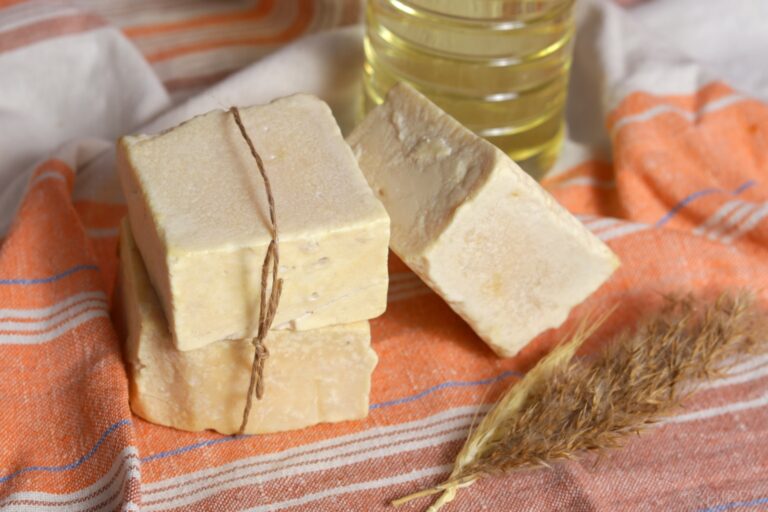
three bars of homemade soap
Make a Batch of Soap Yourself
Speaking of – and I think this one deserves a separate spot in our list…
Instead of paying too much for the chemically-laden garbage at the store, why not make your own from fat and lye? It’s something people have been doing for centuries, and it’s easier than you think. Once you see how easy it is, I doubt you’ll go back to the other stuff.
Improvise With Your Tools
Most tools have a very specific purpose, but ask any seasoned tradesman and they will tell you that, with experience and ingenuity, many can be put to other purposes.
Make Safe Cleaning Solutions
Homesteading is about getting back toward a simpler way of life, and part of that is getting rid of all the crazy chemicals that modern life has exposed us to. Most homesteaders I know, including my own family, make their own cleaning products at home. You should do the same.
Start Cooking for Yourself and Family
Tell the truth. If you are anything like me, you probably live, or lived, on fast food and takeout. Life just moves too fast most times, but that isn’t an excuse. Save money and be healthier by skipping that and cooking your own meals, breakfast, lunch and dinner. That’s what you’re going to be doing on your own homestead one day, after all!
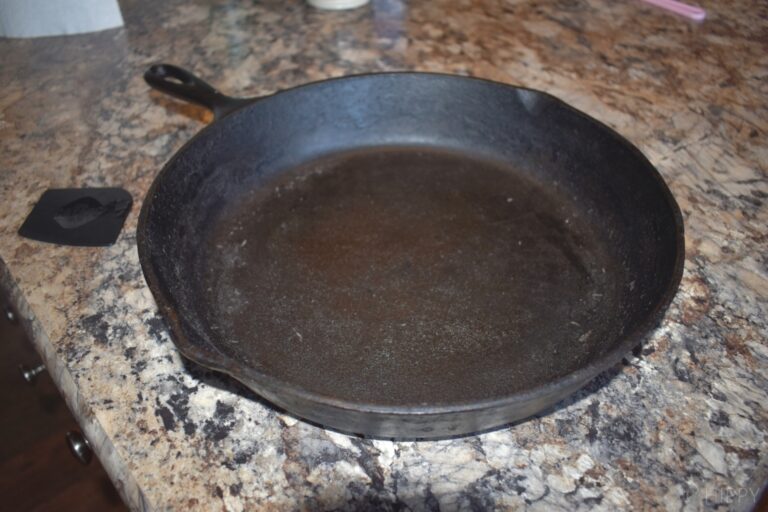
a seasoned cast iron pan
Switch to Cast Iron Cookware
Speaking of cooking, the cookware of choice for enterprising homesteaders is cast iron. Accept no substitutes. Super versatile, long-lasting, easy to use and without any crazy non-stick coatings that will poison you over time, this is the time-tested best option you can get for your own kitchen.
Mend Your Own Clothes
Homesteading is hard work, and hard work often means tattered, punctured and torn clothing. Don’t throw it out! Fire up a sewing machine or grab yourself a sewing kit and patch or repair it yourself. Waste not, want not, remember?
Make Your Own Herbal Remedies
There’s no shortage of medication on the market to soothe any disease. Allegedly! Smart homesteaders know that nature furnishes all remedies in the end. Familiarize yourself with medicinal plants for basic ailments such as cold and flus.
Pour Your Own Candles
Whether as emergency lighting or quaint mood lighting, it’s hard to beat a good old-fashioned candle. Learning to make your own candles from things like tallow can save you a bundle over store-bought, and it’s something every homesteader should know how to do.
jars with canned pears
Learn to Can
This is a quintessential skill that no household should go without. Canning is one of the very best and easiest ways to preserve your own food, long term, at home. It’s part art and part science, but something anyone can master, and you can do it anywhere you’ve got a kitchen. I recommend you start with water bath canning since it’s cheaper and easier to pull off.
Try Pickling and Fermenting Fruits and Veggies
One of the more neglected options for at-home food preservation, pickling and fermenting can produce extremely long-lasting products but also uniquely delicious ones. Who doesn’t love a crispy, crunchy, perfect pickle on a sandwich or a nice side of tangy sauerkraut?
Freezing is another food preservation skill that almost everyone has access to but few people take the time to do it. Proper packing, timing and other considerations make all the difference in longevity and quality for homesteaders.
We actually have some articles about freezing, that will show you how easy it is to preserve:
One of my personal favorite methods for long-term food preservation. Dehydrated foods are great for including in soup and stew mixes, long-term storage or just making tasty, unique snacks.
This is another skill you can practice anywhere, and one that’s invaluable for homesteaders because it’s one of the few options for room-temperature storage you have. To get started, you head over to our dehydrating archive.
a small tray of baked oatmeal cookie balls
Learn to Bake
Another fundamental skill that is slowly degrading in this country, but it’s one that every homesteader must know. The basics of baking are so fundamental they’re almost elemental, but nonetheless this is a skill that requires practice. Making different kinds of bread, for different purposes, is surprisingly challenging, too.
Hang Laundry to Dry in the Sun
Your great-grandma did it, and you should do it too. Hanging up your laundry to dry outside will produce fresher clothes, brighter whites, and clothing that just feels indefinably good. It’s also sustainable and eco-friendly – and cheaper!
Grow Kitchen Herbs on a Windowsill
Every at-home cook needs an arsenal of herbs and seasonings, but the dried stuff can’t hold a candle to fresh ones. Luckily, most herbs grow like weeds, literally, and it’s very easy to make a small window box to supply yourself with some herbs that will take your dishes to the next level.
Make a Micro-Hydroponics Setup
Hydroponics is the practice of growing plants in a nutrient-rich water substrate. It sounds high-tech, but the fundamentals are simple and the results are undeniably bountiful. You might not have room for a full-size garden where you’re at, but you can install a small, tabletop-sized hydroponic setup and get great results.
Save Seeds
On the subject of gardening, smart homesteaders will make a point of saving the seeds from particularly bountiful plants. Creating a seed library of productive plants will really come in handy next season.
Build Yourself a Mini Root Cellar
Long before the advent of refrigerators, people kept their produce in root cellars. Depending on where you live, you might not have the permission or wherewithal to dig a proper one, but you can probably create one using a container that you can partially bury.
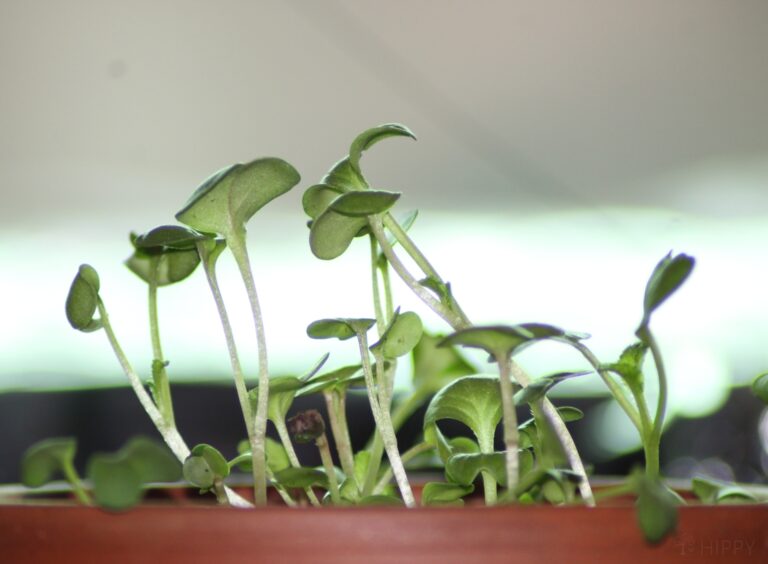
sprouted radish seedlings
Sprout Seeds Indoors
You can practice starting all kinds of common garden plants, including veggies, indoors by sprouting seeds in egg cartons or other containers. This can help you learn fundamentals, or get a jump on growing season if you have a place to plant them later.
Embrace Fixing Things Yourself
Comfort and convenience are temptations that have overtaken all of us in the modern world. There’s always someone you can call and pay to fix a problem. Homesteaders often don’t have that luxury. Instead, they roll up their sleeves and do it themselves, and so should you.
You can start small by learning to sew torn clothes, then move on to bigger things such as wooden objects, tools, and one day, even electronics!
Learn Basic Woodworking and Carpentry
An indispensable skill, because there’s almost nothing that wood can’t do with a few fasteners, tools and a little bit of know-how. Even the most rudimentary woodworking skills will pay dividends on a homestead, and anywhere else you care to live.
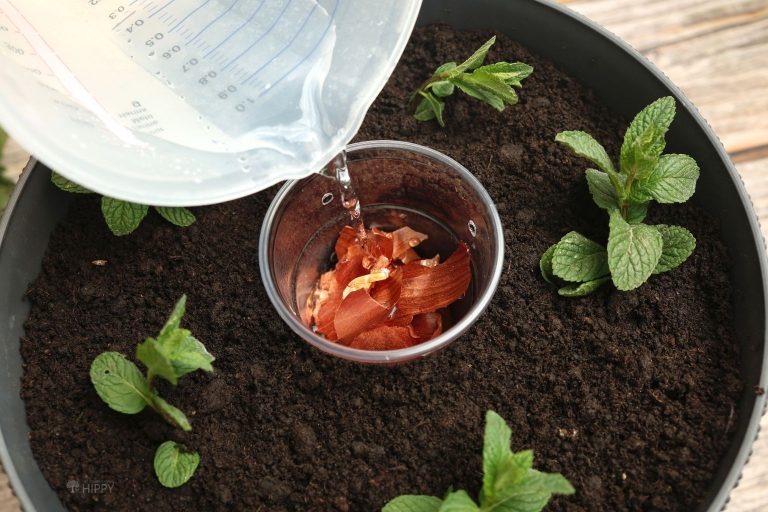
mini compost bin inside pot
Make a Mini-Compost Bin
Compost is every gardener’s best friend. This nutrient-rich mix of decomposed organic material can give plants everything they need to grow big and healthy. Best of all, you can learn to make this stuff yourself for free with a little bit of time and effort. You can even make a tiny one that fits directly inside the pot!
Learn Metalworking
A little more specialized than carpentry, basic metalworking is nonetheless within the reach of almost everyone. From repairing and using sheet goods to forging your own hardware, this is another vital skill that has stood the test of time for homesteaders.
Forage for Edibles
Nature furnishes no end of delicious and nutritious edibles. Learning to identify which are safe, and where to find them, is a vital survival skill that can help you pad your pantry.
Cultivate Mushrooms
Foraging for mushrooms can be a bit risky for obvious reasons. What isn’t risky is cultivating your own safe, delicious varieties from known spores. They make great ingredients in all kinds of dishes, and this is a fun pastime in itself.
Catch and Store Rainwater
Water is always a premium commodity on the homestead. Adopt that mindset now by catching and storing rainwater using windowsill or balcony collectors for subsequent use in your potted plants, kitchen herb container or other potted plants.
Learn to Fish
Another indispensable skill, sometimes you just got to catch a fish. A well-stocked lake, pond, or river can supply you with endless dinner if you’ve got the skills and the equipment. I know more than a few homesteaders that subsisted on fish from nearby waterways while they were building their homes!
Churn Some Butter
It’s not just for the Amish! Home-churned butter simply blows everything you can get from the store right out of the water, and it’s so easy. Well, simple: it does take some elbow grease! Learn to make this kitchen staple yourself.
Make Your Own Simple Cheeses
It’s true! You can easily make your own simple cheeses like mozzarella or ricotta at home with a little bit of effort and some fresh milk. The homemade stuff is amazing, and you don’t need a bunch of land and your own cows just to make it yourself.
Cure or Smoke Meat
Cured or smoked meats are some of the most delicious and delectable varieties, but before it was the hallmark of certain dishes, these processes served as preservation methods. They still do today, and so you should learn how to do it.
Brew Your Own Beer
Hey, life’s not all hard work! Home-brewed beer is affordable, delicious and just plain cool. It can also make great trade fodder with your friends and neighbors.
Spin Your Own Textiles
Sewing clothes is one thing, but actually making them from scratch is another. If you’re going to do that, you’ve got to make your own cloth and other textiles from scratch. It requires specialized tools and know-how, but this is another skill people have employed for centuries and you can too.
Start or Help in a Community Garden
Gardening, whatever the scale, is a core component of homesteading for most. If you’re an apartment or city-dweller, you might not have any land access whatsoever for a private garden, but most cities have community gardens. The ones that don’t sure could use one! And in either case, see if you can either help out at one or be the one to start it.
Try Vertical Gardening
If community gardening isn’t your thing, try vertical gardening on your porch, patio, balcony or even just inside a sunny window. Growing plants on specialized vertical supports or container racks is a great way to save room and maximize yields at the same time.
Use Solar Power When You Can
Modern solar power systems are more capable, affordable and user-friendly than ever and have been nothing short of a revolution for homesteaders. Small but efficient solar panels can be set on your balcony, porch, windowsill or even inside your space by a sunny window and left to charge devices or fuel up a power bank.
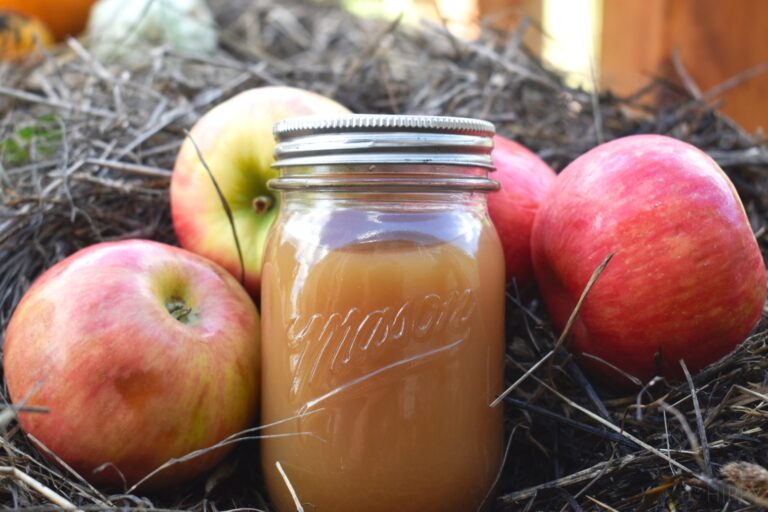
jar of homemade apple cider vinegar next to some apples
Make Apple Cider Vinegar Yourself
Apple cider vinegar, popularly called ACV, is many homesteaders’ best friend. It’s useful in recipes, it has potential health benefits, and makes a great ingredient in cleaning solutions. You can always get this stuff at the store, or buy the apples and learn to make it yourself, which is why I think you should!
Repurpose Stuff That’s Broken or Unused
Another hallmark of homesteading is not letting anything go to waste. Things that are broken, outdated or just sitting in a box somewhere can be given new life, and usefulness, with a little bit of ingenuity.
Join Your Local Ag Co-op
Or agriculture co-op. These member-owned enterprises typically operate on a one-for-all and all-for-one basis, and are great places to get what you need while contributing to what other members need. Indispensable for homesteaders, especially those living in remote rural communities.
Support Local Farmers and Suppliers
You might not be a farmer yet, but there’s no reason you can’t support your local farmers wherever you live! You aren’t just helping farmers, but you’re also building a network of people that can help you and, potentially, guide you.
Network With Like-Minded People in Your Area
Believe it or not, no matter your situation there are people all around you that are in exactly the same spot. In this case, people who yearn to homestead but don’t have the land to do it. You should seek out these people so you have people to motivate you, bounce ideas off of and keep you accountable.
Teach a Friend or a Class
Whatever you are already good at that could be useful to homesteaders, teach it to someone else. This could be a friend or even an impromptu class for neighbors or folks you’ve met during your networking efforts. Teaching others is a great way to further master any skill.
Host a Food Swap
Homesteaders that enjoy a bountiful harvest, of anything, typically share some of the haul with friends, neighbors and family. You can do the same with any of the foods we’ve talked about above! Celebrate your successes by showing off what you made happen and also giving back.
ABL: Always Be Learning!
There’s always more to do on a homestead, and most homesteaders strive to do as much as they can themselves. Accordingly, you should always be learning new skills: ABL! Homesteaders that love to learn about a variety of topics and skills are better rounded and more capable.
Sustainability gets talked about like it’s some pricey, all-or-nothing endpoint in your life, some finish line you have to cross so you can say, “I’m sustainable.” It simply isn’t. Sustainability is the sum of the actions you take daily, and most of them actually make you more self-reliant and cost little or nothing.
You can start being more sustainable now, today, with the approaches I’ve got on the list below. Some you might have heard before, a few might be new to you, but every one moves you closer to greater sustainability. Let’s get into it..
Keep a Flock of Chickens
Chickens are the most straightforward and affordable way to get into keeping livestock. They’re cheap to keep, robust, easy to handle and highly productive – eggs and meat – year round.
Live Below Your Means
Debt is fragility that keeps you yoked to consumerism. Trim down your budget until you’ve got a little left over each month, then hold steady and save the rest. In doing so, you’ll be paring off anything non-essential as a matter of course.
Mend Your Clothes
No one’s going to make fun of you if you aren’t fashionable on the homestead, right? Even if you don’t know how to sew properly, I bet you’ll do a fine enough job sewing your clothes. This way you’ll prolong your clothes life and save a small fortune in the long run…
Slash Your Energy Use
Hang laundry to dry, seal up your home to stop drafts, use a solar over, take cold showers: Every watt you spare is money saved, and the environment will thank you!
A plastic rain barrel collecting water through rain gutters, next to some smaller plastic containers that are also used to collect rain.
Catch and Store Rainwater
A barrel under a downspout waters your garden and helps you clean vehicles and equipment for free. It’s cheap insurance against drought, too.
Always Favor Reusables Over Disposables
Not only is this cheaper, you’ll avoid running out of disposable right when you need them. Consider reusable:
Bags
Cutlery
Casseroles
Boxes
Stainless steel or glass water bottles
Metal straws
Cloth instead of paper napkins
Microfiber instead of paper towels
Silicone food storage bags instead of ziplock bags
Forage for Wild Food
Most areas on Earth are full of free food if you know where to look for them. Even town lots hide a few easily-picked plants. Foraging can save you a lot of money each month, and greatly increase food security.
Reuse Your Water
This is called “grey water” and it’s really all about reusing the water from the sink or shower that would otherwise drain away. Depending on whether it has soap in it or not, you can use it for things like watering your plants, washing your car, or flushing the toilet.
Decide You Have “Enough”
Know what you need, and how much you need, and stop buying stuff when you hit the benchmark. Once you decide to drop out of the consumer rat race, you can just live.
adding ground cherry pits co compost
Start a Compost Pile
Kitchen scraps and yard waste are free fertilizer with a little time and effort. Turning them into black gold can supercharge garden and raised bed returns. Learn what greens and browns to include and you’ll never need fertilizer again.
Start Baking!
Seriously, who doesn’t eat bread or other baking products every day? Learn to do make them yourself and you’ll not only save a ton of money, you’ll stop being reliant on yet another set of companies
Stop Wasting Food in the Kitchen
Don’t throw out those bones! They make great broths. Scraps of meat and veggie can feed your chickens. Leftovers are lunch tomorrow. Use everything that you can.
Use a Clothesline Instead of the Clothes Dryer
To be honest, I never used a clothes dryer myself. Even since I was a kid on my grandparents’ homestead, we would always hang our clothes out to dry. This is something I’m doing to this day, it saves me electricity and gives me peace of mind in case of grid down scenarios. The only downside is that you’ll have to be patient while your clothes are drying.
Walk or Bike When You Can
This way you’ll save a fortune on fuel, improve your health, not to mention you’ll slow down the wear and tear of your car. This isn’t always feasible, but when it is, make sure you wear lots of sunscreen (which you should, anyway, while working the field).Insulate and Weatherize Your Home
This won’t just save you money on heating, it will do the same during summer because you’ll use the AC less. Insulating your home may incur some costs, but if you do the math and figure out that it’s worth it, then why not?
Become a Thrifter
Yard sales, swap meets and classified ads on- and offline are loaded with good stuff that can be yours for pennies. And anything bought used is one thing that a factory didn’t have to make. Learn to haggle and you’ll stretch every dollar even further.
loading canning jars into water bath
Preserve Your Own Food
Store-bought preserved food costs a fortune and is packed with weird crap. Learn to can, dry and freeze your own harvests and you’ll eat better and waste less while staying ready for rainy days.
Plant Perennial Fruits and Veggies
Fruit trees, berry bushes and lots of veggies can produce returns lasting years off a single round of effort and little upkeep. Plant them once and enjoy.
Make It or Fix It Yourself
When something breaks, your first move should be figuring out how to repair it yourself. Most things simply are not that hard with a little time, effort and a few good tools.
Plan Your Expenditures Before You Spend a Dime
Don’t let slick ads or doomer talk open your wallet without your consent. Sit down with a pencil and pad, or a budgeting app, and take stock of your finances and situation. Only then should you act.
Learn to Hunt
The grocery store should not be your only source of meat. Taking game legally and ethically means yourself means you cut out a whole bunch of links in your personal supply chain.
Lean on Your People
No homesteader is self-sufficient alone, and asking for help from others helps everyone stay resilient and sustainable. Trade work and tools with neighbors and friends instead of hiring out, and you’ll save money while building bonds that pay dividends over time.
Cook From Scratch
Bulk whole ingredients cost less, keep longer and taste better than any boxed mix. Home cooking is the backbone of self-reliance and further enhances food security.
Build Up Your Skills, Not Huge Piles of Gear
Buying new tools is fun retail therapy. It feels great, but it is your skills that carry you through a pinch. Learning is almost always cheaper than buying a quick fix and sometimes even free.
Learn to Troubleshoot
Mountains of good gear and tools go in the trash, and mountains of money are wasted, because people assume things need replacment. Does that broken thing really need replacement, or just need servicing? Do you really need to call in a pro and pay them, or spend a little time searching for the solution? Your assumptions might be keeping you dependent and burning your cash!.
Set Up a Root Cellar
Ideally you want this below ground where the temperature is constant, and I don’t need to tell you why: most fruits and veggies can be stored there without you having to rely on a fridge to do it. In fact, many foods will last longer in the cellar so long as the humidity is low.
stacked beech wood next to wall
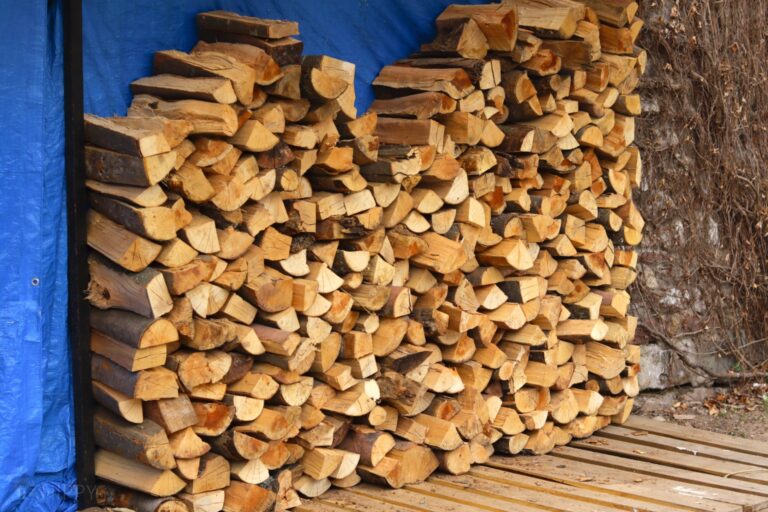
Gather Your Own Firewood
Now, there may be some legal aspects to this, so you’ll have to do your research about when and how you can collect firewood because the laws vary from state to state. But this will save you a lot of money on fuel or from having to buy the wood.
Buy in Bulk Only When It Pays
Buying bigger amounts of consumables often saves money, but not always. Do the math, and don’t forget to factor in deliver costs and wear-and-tear. If bulk isn’t the better deal, don’t do it!
Treat Mishaps as Practice
When the storm rips shingles off your home or barn, don’t reach straight for the phone with your contractor in mind. Tackle what you can safely, and call it a free training day: you’ll save a bundle and be better prepared for next time – and there’s always a next time!
Buy Things That Do Double Duty
A one-trick gadget, in the kitchen or shop, never earns its keep unless the task is super specialized. A tarp can serve as a tent and do more besides. A cast iron pan does more jobs than a teflon one. You get the idea.
Rotate Stored Food to Stop Loss
Food, batteries,chemicals, and more. All have a ticking clock while sitting, safely, in storage. Inspect regularly, always use the oldest first, and replace with fresh when you do use them.
Amend Your Garden and Bed Soil
Healthy, nutritious dirt grows more healthy food with less fuss and waste. Mulch it, compost it, and add other amendments as needed based on your plan.
Solve The Real Problems
It’s easy to procrastinate doing hundreds of little easy jobs while the big ones grow in weight and magnitude. Tackle the big stuff first, head-on, and you’ll have more energy for the little chores on the backend.
Make Your Stuff Last
Patched those old jeans. Give those old boots new soles. Tune-up an old tractor. Basic repairs make your stuff last twice as long, and that is the ultimate in economy.
Use a Fan Instead of the AC
If the temperature is not too hot, a fan will do a good job at keeping you cool. It should use less power and be easier to maintain.
banana pepper seeds
Save Your Seeds
Let a few of your best plants go to seed and you’ll never need to buy that variety again if you store them right.
Stay Fit and Healthy
You work better and longer when your body works better. Fit folks get more done, get sick less and are better off all around than unfit people. If you’re fat or weak, time to fix it.
Build Your Stockpile a Little Bit at a Time
It’s good to have needed reserves of essentials, but you don’t need to drop a ton of cash to get it all at once. A few extras here and there fill a pantry or storeroom economically and fast enough.
Learn Basic Vehicle Maintenance
This way you’ll save when someone else has to do it for you. Think oil changes, inflating a tire, and other small repairs you can do yourself.
Never Stop Learning
Books, videos, classes, YouTube, and the old-timer down the road who loves to talk. The more you know, the less dependent you are on paying for others’ skills and for things you don’t need.
For so many of us, ditching or transitioning out of our current lives and into one that’s on a homestead, a simpler lifestyle that’s so much closer to those of generations past, is a dream. Many of us, the fortunate ones, make the dream a reality.
I hate to say it, but the truth demands it: for so many of those folks, the best part of the homesteading lifestyle is the day they started and the day they quit it. Homesteading is, frankly, not at all like what many blogs and fashionable influencers try to sell you on.
Homesteading entails many challenges, and if you discover them too late, you’re going to be in for a very miserable time. In the effort of saving you a lot of pain, money and misery, I’m going to tell you about some nasty homesteading truths that few people will below…
You’ll Be Way, Way Busier Than You Are Now
Let’s get one of the major ugly truths out of the way. I know lots of homesteaders, and if I’m honest it included me back in the day, who thought a change in lifestyle would equal a lot more free time. Let’s call it a more sedate way of life…
My friends, nothing could be further from the truth. You’re going to have so much more to do, all of it entirely dependent on you if it’s not a family affair, that free time, much less leisure time, will be a thing of the past. You’ll be moving and busy from sunup to sundown, and make no mistake.
The Lifestyle Can Be Expensive
Another blind spot for most people when it comes to homesteading is the idea that it will somehow be a much cheaper way to live. Again, it just isn’t so!
For starters, you’ve got to buy or lease a property and then improve it if you’re starting from scratch. That means a home or some kind of other dwelling, installation or development of utilities, preparing the land for agriculture, space for animals and all the rest.
This stuff is always expensive and it’s usually a lot more expensive the farther out you go. Then there’s all the tools, equipment, livestock and all the rest that goes along with it…
Existing Money Troubles Don’t Go Away
Speaking of money, keep in mind your financial troubles don’t just go away when you start a homestead. Any debts you’ve got are still your own, however you came by them.
If you struggle to afford your current lifestyle, unless you are dropping off of an upper-middle-class or upper-class situation, your month-to-month expenses likely aren’t going to change. Like I said, they will probably get worse, and that means the servicing of existing debt is going to get even harder.
You Can Buy Most Things You Need Cheaper
Everyone loves the idea of having the healthiest, tastiest farm-fresh veggies and eggs you can get and all for pennies on the dollar, but is this really true? Honestly, in most cases, I don’t think it is. I didn’t say that I don’t think it’s worth it, but I don’t think, when all is said and done, raising your own food and other necessities yourself is a cost-saving move.
If you want fresh eggs, you’ve got to get the chickens. Chickens are cheap, but they’ve got to be fed. They also need a place to stay, and that means a coop. Then there’s your protection from predators, and that means fencing and a run. Chickens need health care, which means medicine, supplements and the like.
All of this adds up and factors into the cost of that free egg you grab out of the nesting box every morning. Unless your family is eating a metric ton of eggs every month, you’re far better off just buying a carton from the grocery store. By the way, if you want to learn more about the pitfalls of raising this bird, I wrote a separate article right here.
Your Neighbors Might Still Be Raging A-Holes
One of the things that first attracted me to the homestead lifestyle is the idea of living more self-sufficiently and being a lot closer with my one or two neighbors.
I’m blessed and fortunate to say that my neighbors have been absolutely wonderful people that I count among my closest family, but that’s not been universal among fellow homesteaders I’ve talked to.
In fact, you are likely to find that your neighbors are still just people with all of their flaws and peccadillos. You might not like them, and they might not like you. But now you are even more dependent on the people around you, and this can make for real friction far worse than living in suburbia. Remember that the Hatfields and McCoys fable is entirely real and still talked about for a reason…
Your Days End When the Work Is Done, Not at 5 O’clock
If you are anything like me and enjoy ordering your life on a very set, rigid schedule, homesteading just isn’t for you. The only constant is that you will be getting up early and staying up late.
Said another way, you don’t get to clock out and just take a load off at 5:00. Things are always going to go wrong. Animals will get out, get sick or get hurt. Weather will threaten your buildings and your herds. All kinds of emergencies great and small are yours to deal with, and crucial deadline items must, absolutely must, be done, hours invested be damned.
Some Relationships Will End
One of the most painful truths regarding homesteading is that many of your relationships will end because of it. Moving out to a homestead means you’re going to lose touch with a lot of people you talk to regularly right now. The divergence of lifeways is just too much to overcome.
Something else to keep in mind is that many people will not understand or even become hostile to your new way of life. They won’t understand it, won’t agree with it and won’t support it. Regrettably, this includes your immediate family. Sadly, I know two couples that divorced because of homesteading!
It’s a serious thing, and you should consider this carefully before committing.
Less Time for Family and Friends
Assuming you do keep in touch with your existing family and friends, owing to everything I talked about above, you must make peace with the fact you’re going to have a whole lot less time for all of them unless they live on the homestead with you.
Most of your friends will not come visit, straight up. Your family members that do come visit will visit a lot less for reasons you’ll understand here in a minute, and you yourself will not be able to get away from the homestead to visit them for any length of time.
Isolation and Loneliness Is a Real Risk for Some
This goes hand in hand with the previous two items we just talked about. If you just have a spouse living with you, or if you’re making a solo run at this, you’d better be acquainted and comfortable with loneliness.
It will get lonely and isolating in a way that most people haven’t experienced. The constant work and drudgery, the demands of a lifestyle, and the lack of social contact that is typical of living as a component of society will add up quickly for some, and it can become debilitating.
Vacations Will Be a Thing of the Past
Do you take vacations yearly? Maybe two or more if you are lucky?
Well, you can kiss all that goodbye if you’re going to homestead. Animals especially demand constant oversight, but it can be the same way with crops, too. Your daily chores must be attended to religiously with no excuses, and that means, unless you’re going to hire a farm sitter, there will be no vacations in your future.
You’ll Find Out How Many Skills You Really Lack
It has been said that the best way to find out what you’re made of is to jump into the deep end of the pool. Well, unless you grew up on a farm or in a similar setting, jumping into homesteading is like jumping into the water over the Challenger Deep.
However handy and crafty you think you are, homesteading will quickly reveal what skills you are sorely deficient in.
The Learning Curve Is More Like a Learning Cliff
On a similar note to the skills check I just mentioned, learning as you go is almost always a valid strategy, but I’ve liked to say for years that when it comes to homesteading, the learning curve is extremely steep.
That’s because your outcomes, your personal outcomes, are directly tied to your competency. Mishandle a pregnant or injured animal? You’ve got a death on your hands. If you have a dead, big animal on your hands like a horse or cow, now you’ve got a very real problem concerning how to move it. Don’t have a forklift or a hoist? It’s not going to be pretty…
More than most other things, failing to meet the mark with homesteading is going to make for even more demoralizing, backbreaking work. Prepare for it now.
Better Get Used to Working Sick and Hurt
If you come down with a bug or get hurt and have a normal job, you can always take sick time. Even if you don’t have official sick leave as part of your employment contract, most bosses understand an occasional day out of the office for these sorts of things.
Your animals, crops, fences and all the rest won’t understand and won’t wait. Working wounded, as I like to say, is just a normal day around any working homestead. If you don’t have true grit, if you aren’t made of sterner stuff, don’t even think about it.
You’ve Got to Become Your Family’s Own “First Responder”
Consider also that the likelihood of illness and injury on a homestead means you’ve got to be Johnny-on-the-spot concerning your wellness and your family’s wellness. Basic first-aid skills and supplies are a must, as is a working knowledge of home remedies and treatments. This is especially vital for folks living on remote homesteads far from civilization.
Services You Take for Granted Will Often Be More Expensive
The farther away you go from society, the more expensive everything gets. Water, electricity, waste disposal, internet, deliveries and on and on. Since most people aren’t homesteading on the edge of town, you’ve got to be prepared for this hidden price bump before you sign on the dotted line.
Check Your Expectations Concerning Property Aesthetics
I’ve got to level with you. I have only ever seen a truly pretty homestead on the internet. Most homesteads, even ones that people love and enjoy and have made into real homes for their families, look like crap.
Mismatched, improvised and jury-rigged materials everywhere, slap-layouts and the general air of post-apocalyptic chic are the rule of the day. This is simply because people cannot spare the time, effort or money to focus on aesthetics. Many have promised they’ll be able to beat the odds here, but almost no one does.
Everything Is Dirty. So Dirty. Always Dirty…
Another truth piggybacking off the last one. Homesteading is simply dirty. Dirty is part of the lifestyle. Everything is going to become dirty and stay that way pretty much forever. Even the most careful and fanatical housekeeper around the homestead is going to be hard-pressed to keep their home and its surrounds clean.
Almost everyone just gives up. I have one friend that’s a compulsive cleaner, and she and her husband started homesteading some years back. They started strong, and Lord knows she tried, but eventually the endless, unwinnable battle damn near drove her to psychosis. If you are like her, see to it that you don’t end up like her.
Regulations Will Always Be There to Rear Their Ugly Heads
Homesteading is a simpler way of life only concerning the trappings and entanglements of our personal lives and work lives… but the government, at the county, city, state and federal level, cares not one iota for this, and all remain just as invasive as ever.
You’ll have to deal with property codes, taxes, enforcement concerning habitation, crops, animals, and a whole lot more. Don’t kid yourself if you think otherwise.
You Can Do Everything Right and Still Fail
One of the very ugliest, and penultimate, truths of homesteading is that luck will always be a factor. You can do everything correctly and still fail to achieve a good outcome.
The weather may conspire to knock down everything you’ve built or sweep away everything you’ve grown. Sickness may confound every cure and every preventive measure. You may be faced with every kind of breakage and setback for other tasks. It just might not matter how good and how diligent you are. Prepare for this and accept it.
Homesteading Might Not Fulfill You
The very ultimate truth should be a sobering gut check for most readers. Most of us turn to homesteading because we feel some itch that we can’t scratch. Some desire. Some kind of yearning for something we can’t quite articulate but think we understand.
You might go through all of this and more and understand, to your horror, at the end that homesteading just wasn’t for you. It might not fulfill you or make you feel whole. It might make you feel worse!
And if you figure that out at the end after it’s cost you your job, friends, family, sanity and finances, you’ll be in a very dark place. Have a heart-to-heart with yourself now and potentially avoid disaster.
Despite the appeal and promise of a simple life, homesteading can be expensive. Sometimes it can be even more expensive than living in town, on the grid and smack in the middle of society! Pretty much every project and every chore you undertake on your homestead will require supplies or components of one kind or another. Buying them means the bill adds up fast. Luckily, it’s easy, actually easier than ever, to find free homesteading supplies if you know where to look.
I’ve got 11 such places on the list below that will help you save a bundle and enjoy the homestead life of your dreams.
Bulletin Boards
Far and away my very favorite, and increasingly forgotten, place to get free supplies. Check bulletin boards at your local farm stores, grain and feed suppliers, livestock and equipment dealers and auctions, and everywhere else such things are found. Always, always, always stop to look at a bulletin board!
Usually you’ll see a little note, scratched out on a piece of paper or even a napkin, advertising free stuff to whoever will come and pick it up. I’ve nabbed dirt, mulch, chickens, tools, gravel and a whole lot more.
Farmers
Farmers in your county can be a great source of much needed supplies. Animal manure of all kinds – they will be more than happy to give you if you’re willing to clean it up and haul it away, but you can also expect to snag mulch, clippings, wood and other plant matter whenever they are doing improvements or bringing in harvests…
Many farmers are generous folks, too, and they may be more than happy to share eggs, fruits, veggies and more with you if you’re nice and neighborly.
a bulldozer clearing land
Owners of Unimproved Land
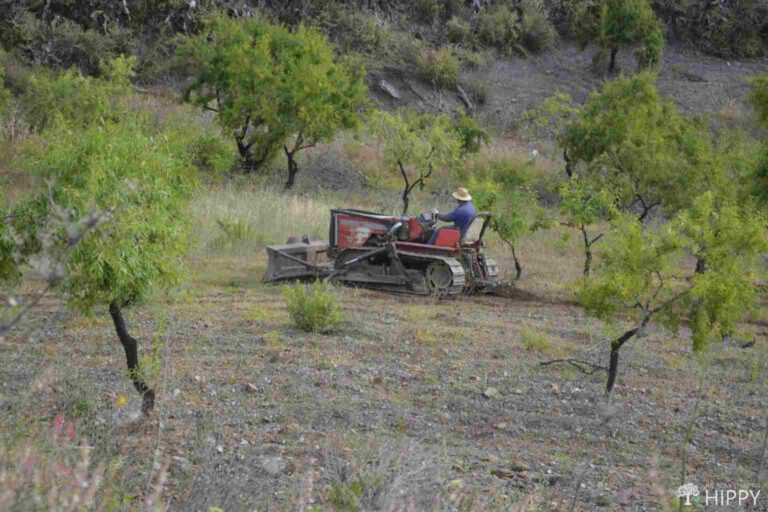
I’ve used this one with great success, and you can do the same if you’re willing to put in a little sweat equity. Anyone that owns a parcel of land without any improvements, that is to say infrastructure or buildings, generally wants to take care of it but this is a big and often expensive job.
Landowners that want to improve their properties need to clear them first, and that means trees need to be brought down. If you’re willing to do the work, most are more than happy to let you haul off the wood.
Demolition and Construction Companies
Get to know and become friends with contractors, construction companies and demolition companies in your area. The first two will often have building supplies left over, or waste that’s still perfectly usable, that they don’t want to mess with after a job is finished. If you’re willing to pick up and dispose of it, they might give it to you for free.
Similarly, demolition companies might be able to hook you up with takeoff hardware, bricks, planks and who knows what else that you can put to use around your own home or for your own construction projects.
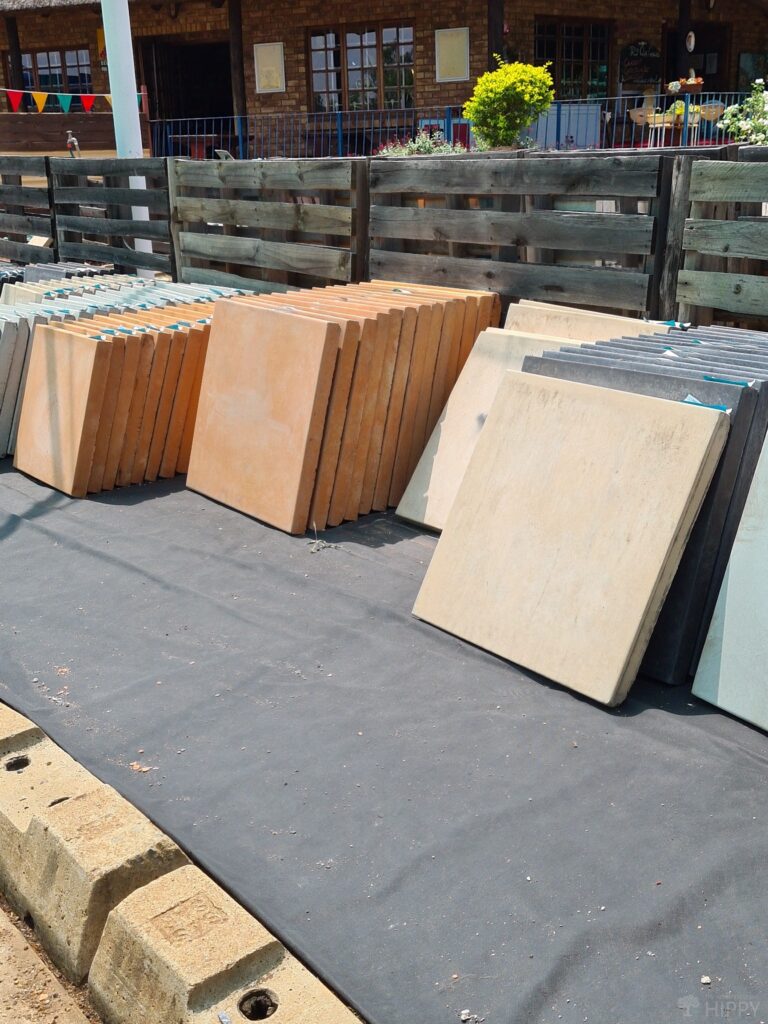
smooth pathways are very important for people in wheelchairs, blind people, and the elderly to reduce the risk of tripping and also to ensure that a wheelchair can move unobstructed, well-maintained paving stones work best and are readily available at most nurseries
Warehouses
Warehouses are your number one best source for every homesteader’s best friend: pallets! Pallets can be used as is for fencing, gates, run-in shelters, dog houses and more, or they can be broken down to harvest the surprisingly nice hardwood they are made from.
Warehouses are always dealing with a surplus of older or janky pallets that are still perfectly good for your purposes. Hit them up and see if they won’t part with them for free.
Hardware Superstores
Don’t scroll past this one. While it is true that you can’t walk out of these big box mega stores with anything you’re not willing to pay for, there are exceptions. One of the most useful, and coveted, by homesteaders are those giant cable spools in the wiring department.
Take the time to go in and acquaint yourself with the department heads in the store or the store manager. See if they will give those spools away for free or if the companies want them back. Most don’t, and if they’re feeling charitable they’ll let you come pick them up when they are empty. They make great tables!
“Buy Nothing” Groups
Buy nothing groups are exactly what the name says; these are local social networks or online social media sites where people post things that they’re willing to give away for free and sometimes make posts requesting things people are willing to part with. Freecycle.com is one of the best.
Getting in and getting known is a wonderful way to save a fortune on all kinds of things. However, you want to contribute yourself if you’re going to stick around so don’t be greedy.
Nextdoor.com
Nextdoor.com is a unique social media site that allows membership to certain boards based on your actual geographic area that you live in. The idea is that the people you see on the site are the people that actually live around you. People post free or give away items on here all the time in my experience.
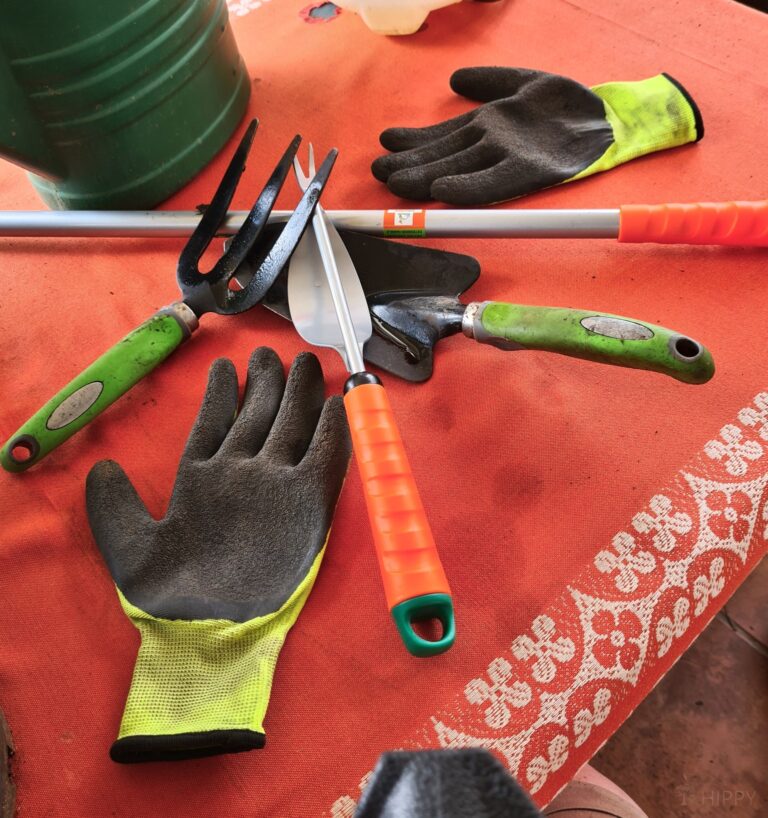
garden tools: gloves, garden spade, and extension pole
Craigslist
You know it, you love it. Craigslist is a little more than an online bulletin board service. It’s showing its age, and you got to be careful of weirdos and scumbags on here, but you can find great deals on free stuff.
Just remember to be careful, don’t meet anyone in a sketchy area and especially after nightfall, and bring some backup with you if you’re in doubt.
Facebook Marketplace
Most folks go on Facebook Marketplace to sell jet skis and ATVs, cars, furniture and knick knacks but depending on where you live and how far you want to travel you can find free deals on everything from dirt to building supplies and a whole lot more.
Family, Friends and Neighbors
Last but certainly not least, don’t neglect the power of your built-in social network. No matter who you are, you got at least a few family members, friends or neighbors. They in turn have plenty of people that they know.
Start shaking them down and letting them know what you need and what you’re looking for. The crucial item that will make your project a reality is probably someone else’s pain in the ass that they’ll be glad to be rid of.
If you’ve ever seen those peculiarly dressed folks going down the road in their horse and buggy throughout the northern stretches of the Eastern United States, you’ve seen the Amish. The Amish are traditionalist Christians known for their work ethic, adherence to simplicity and, for many of them, shunning of many modern ways of the world, including some things you and I recognize as part and parcel of society. Most famously this is automobiles, but for some of them it includes electricity and even modern fuels like propane!
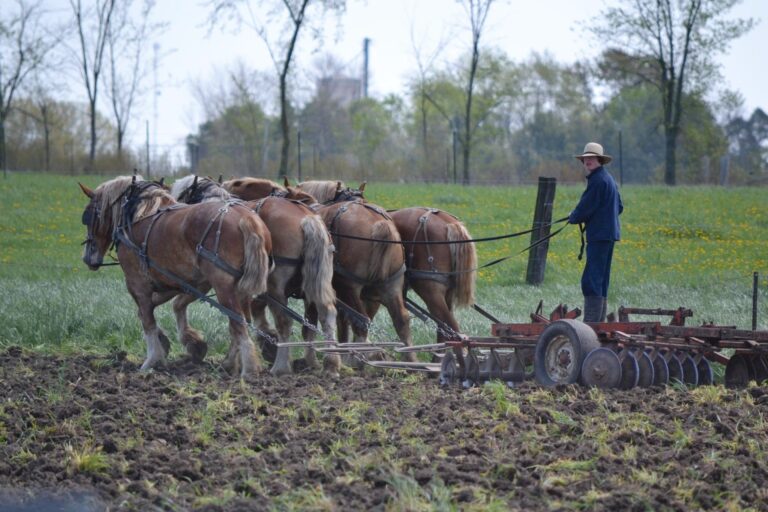
young Amish man plowing the field with 4 horses
Nonetheless (and in spite of some of the myths surrounding them), the Amish still get things done and lead full, fulfilling and happy lives. And simple ones! Many homesteaders yearn for a simpler, slower way of life, and if you’re one of them you need to check out this list of 30 ways that you can live just like the Amish do.
Get Up Early
The first item on our list would knock me right out of the race, and right out of Amish society! That famous work ethic that all Amish have means getting up early to get things done and maximize the day. This means getting up when the rooster crows at the latest, and often much earlier.
There’s something about getting up and getting after it before the sun is up that will prime you for success and make you appreciate getting to bed early that much more.
Work on the Important Stuff First
Have you ever sat down at your desk, pecked away on the keyboard and looked up 8 hours later with your to-do list still brimming with important items? Keeping busy doesn’t mean you are getting things done, and the Amish know that.
Whether it’s animals to be tended or crops to be brought in, they always focus on, and complete, the important tasks first.
Build and Maintain Community and Family Bonds
This is a constant criticism that the Amish level at modern society, and by golly they are right. The velocity of life today is simply breakneck. It’s easy to lose sight of the most important things, like creating and maintaining bonds of trust and fellowship with our family, neighbors, church congregation and friends.
It takes work, initiative and constant tending, but it’s one of the most important things in your life.
Embrace the Simple Things
Look around the room you are in at all the things you have. Whatever you covet, you are probably rich with stuff. Most of us are. The latest electronics, appliances, clothes, tools, cars or whatever.
The Amish now, and have always, deliberately gone against the grain when it comes to consumerism. A pleasant evening in a rocking chair watching the kids play is treasure enough for them.
Keep Your Home in Order
You’ll never walk into a dirty Amish home, or any other space, unless there is work actively going on inside. These folks are famously and fastidiously tidy, and you should be too.
This would be another failure point for me. I get so caught up in work and the things that I swear I have to do that I often fall behind on my household chores, inside and out. Stop wasting time and start taking care of your space.
Pass on Your Skills
More than anyone else in society today, the Amish depend on oral tradition for passing down vital skills. This is often a family affair but sometimes done between neighbors and friends as a kind of apprenticeship.
No matter who you are, I know there is something that you are good at, and you know someone, even if you don’t know who they are, that could benefit from your skills and would love to learn from you.
Make Horses Work for You
Those horse-drawn carriages the Amish are so famous for, called buggies, are only one way that they put horses to work for them. Instead of dropping big bucks on motorized farm equipment or lifting apparatus, if you have horses you should learn how to put them in service as beasts of burden.
They are a whole lot quieter, and frankly a lot more fun to work with anyway!
Work with Manual Tools
Another famous Amish trait, at least for most Amish affiliations, is their shunning of power tools, however they are powered. Instead they rely on all manner of classic hand tools, from hand drills and saws to treadles, hammers, axes and a whole lot more.
There is just something neat about manual tools, and they are a great workout.
Embrace Physical Labor
Quick. What’s the last physically exerting task you’ve been putting off? Procrastinating on?
Whatever it is, that’s got to stop. The Amish are never afraid to put in some sweat when it’s time to get things done, and neither should you be. Whatever the weather and whatever the task, they roll up their sleeves and get to it.
Keep Your Blades Sharp
Having the tools is one thing; taking care of them is another. One of the most important chores you’ve got is keeping the blades on all your different tools sharp. Axes, shovels, knives, shears, clippers, saws, whatever.
Grab your files, stones, hones and strops, a little bit of oil and keep those edges bright and hair-popping. Sharper blades help you work quicker but also safer.
Cut Grass with a Scythe
Speaking of blades, if you’re going to go Amish that means waving goodbye to your lawn mower, or at least your powered lawn mower. Have you ever cut your grass with a scythe? Believe it or not, these long, curved blades work awesome for the task.
A little bit of time and a little bit of effort is all it takes to get a professional-quality, level cut with absolutely no gas needed.
Light Your Way with Oil Lamps
If the Amish don’t use electricity and modern tools, how do they light their way at night? Candles, obviously, but if a safer and portable light source is desired they turn to oil lamps.
It’s the same sort of technology that your great-great-grandparents probably used, and with good purpose. Lamps are easy to use, easy to service and the perfect thing to keep around should the power and all other lights go out.
Heat Your Home and Cook with Wood
You’ll never find a single Amish home that lacks a wood stove. For many of them, wood is the primary, or even only, fuel they make use of on a daily basis. A good wood stove is more than capable of heating your home or workshop, and if properly equipped also makes a great cooktop.
Use Cast Iron for Cooking
On the subject of cooking, the Amish rely heavily on cast iron cookware. Skillets, baking sheets and, of course, dutch ovens.
The simple, almost elemental nature of cast iron cooking is perfectly suited for their simple lifestyle, and cast iron has been around and in use for many centuries now. It works just as well today as it did back then.
Milk a Cow by Hand
If you’ve never enjoyed fresh milk from your own cow, you don’t know what you’re missing. The vast majority of milk produced in America today passes through milking machines and other machinery, but the Amish don’t need or put up with all that.
They still milk their cows the way people always have: by hand. It’s definitely an art form, though, so you should learn how to do it if you’re going to keep cows of your own.
Churn Some Butter
Another quintessential Amish skill, or some would say pastime, is churning butter. Turning cream into butter is as simple as it gets, but simple doesn’t mean easy. It’s a whole lot of work and a whole lot of repetition, often shared between several members of the household.
Get yourself a butter churn and give it a go. I bet you won’t go back to the store-bought stuff.
Bake Some Bread
You just knew this was going to show up on this list. Baking is one of those things that every single household in history, pretty much, knew how to do, and today the opposite is true. Very little baking takes place unless people are heating up a freezer pizza!
That has to stop. Baking your own bread is very easy and the finished product far surpasses anything you’ll get at the grocery store.
Fork Out Your Stalls and Garden
Drive by any Amish homestead or farm and chances are good you’ll see someone moving around with a pitchfork in hand. They might be mucking out stalls, spreading hay or fertilizer or taking care of any number of other tasks with it.
A pitchfork can be a reliable tool around your homestead, too. The next time you’ve got work to do, reach for it instead of another tool.
Learn Carpentry
Amish-made goods, from furniture to homes, crafts to tools, are famous and rightly so for their quality woodworking and joinery. Many Amish grow up learning carpentry and are accomplished carpenters before they’d be old enough to graduate high school.
This once-ubiquitous skill has turned into a specialized trade today, and that’s a real shame.
Learn Blacksmithing
Many Amish aren’t totally opposed to buying simple metal hardware from the store, but many more will make their own nails, latches, hinges and more, and some families serve as dedicated blacksmiths to many others.
Blacksmithing is tons of fun and, for many men and some women, highly therapeutic. You need a lot less than you think to set up a simple but functional forge.
Learn to Sew and Mend Clothes
Another elementary skill that has grown ever more rare in modern society owing to our use-it-and-trash-it consumer culture. Sewing is vital for replacing buttons, mending tears, making modifications and even creating clothing out of, well, whole cloth!
More than most other skills on this list, sewing is one that you can learn yourself through practice and a good book or by watching videos online.
Grow Veggies
This is a no-brainer. The Amish eat simple, wholesome food and grow the vast majority of their vegetables themselves or get them from their fellows. I think everyone should eat food that they grow themselves, if only to get a little closer to where their food actually comes from!
Keep Chickens for Eggs
If you’ve never raised animals for food before, chickens are the best place to start. Many Amish keep huge flocks of them for their own eggs and for eggs to sell at market.
You don’t need to be intimidated. Chickens are very easy, and cheap, no pun intended, to both acquire and raise.
Raise Your Own Meat
Beef, pork, lamb: whatever kind of meat you prefer, if you want to do it the way the Amish do you’re going to have to raise, and slaughter, it yourself.
This is a very daunting task for some homesteaders, and not for everyone, but it’s great to know that you can do it.
Can Your Own Food
If you are running your garden and raising your animals right, chances are you’ll have a great surplus of food that you can’t eat before it spoils. Of course, if you’re honest and don’t have electricity, you don’t have a freezer, either…
Not to worry, because you can preserve food the old-fashioned way by canning, drying or other means. You should definitely learn how!
Be Frugal
One of the most fundamental Amish tenets is also the most difficult for us modern folks to practice.
Be frugal. That means you shouldn’t spend your money readily. Whenever you do spend money, try to stretch it as far as possible.
Buy Only What You Need
There are lots of things that are nice to have. Things that we think bring us joy and make our lives feel complete when we buy them. This is the single biggest symptom of modern consumer culture, and the joy we feel from buying things is always fleeting, ephemeral.
We can all stand to live more like the Amish when it comes to this.
Share When You Have Plenty
When times are going great for the Amish, be it a harvest, finances or anything else, they will share in times of plenty. I know I could do more in that regard, and you probably can too!
Life isn’t about accumulating the biggest hoard; it’s about sharing what you’ve got with other people.
Store Goods for the Lean Times
Conversely, times will not always be bountiful. Sometimes your pantry, and piggy bank, will be quite barren. You can hedge against this by saving ahead of time. You should always strive to put back resources for a rainy day, like the Amish do.
Have Faith
Last, and most important of all. The Amish are a profoundly religious, faithful people. Their relationship with God sustains and fortifies them, and fills them with a profound gratitude for even the smallest blessings. If, despite it all, you still feel like there’s a big missing piece in your life, it’s time for you to reconnect with your Creator.
If you own chickens, you’ve got to know how to pick them up. Whether you’re moving them around, checking their feathers or for injuries, or you just want to enjoy a little quality cuddle time with your favorite member of the flock, you’ve got to do it right.
holding a hen with safety gloves
Picking up a bird haphazardly is a great way for it to get injured and also for you to get some scratches yourself. Improperly restrained, your bird may struggle, peck, and scratch, and larger birds or roosters can give you legitimate injuries.
The good news is that picking up a chicken is just about as simple as it gets. You just got to learn how to do it, and I’ll teach you in this article.
Pro Tip: Don’t Stress Your Bird Unless You Have To
Before we go any further, I should remind you that you generally want to avoid stressing out your chicken if at all possible, and you should think twice about picking up one that’s already agitated – unless you’ve got no other choice.
If your chicken is running away from you, struggling, pecking at your hands and generally being resistant to the whole process, if you can put off picking it up for a little while you should. Give it time to calm down first.
If you must pick up a stressed chicken, hold it firmly but gently and keep control over it. A chicken that slips out of your grip is more likely to injure itself and that will make a bad situation worse.
Learn the Technique
Step 1: Place the chicken facing you. For picking up a generally agreeable bird, start with the chicken facing you. It can be on the ground, on an examination table or on any other surface.
Step 2: Place one hand under chicken, palm up. Using the arm you prefer for supporting the chicken, place your hand under the bird’s body, between its legs, with your palm facing up. Keep the chicken in place, if needed, with your other hand.
Step 3: Slip chicken’s legs between fingers, middle finger in between. Next, slip the chicken’s legs, at the ankles, between the fingers of the supporting hand, one on each side of your middle finger.
Apply gentle pressure with your fingers to restrain the chicken’s legs. This is the magic technique that is officially taught by poultry associations, farmers and other groups that deal with chickens day in and day out.
Step 4: Slide hand up to chicken’s belly. Now simply slide the supporting hand up to the chicken’s belly making sure its legs stay between your fingers as described in the previous step. Adjust pressure with the fingers of the supporting hand as needed to control the bird and maintain your grip.
Step 5: Cradle chicken with supporting arm, palm up. You can now easily support the weight of the bird. Bring your arm in close to your body, holding the chicken in the same manner that you would carry a football. This will reduce strain on your arm and provide much better control over the bird.
Step 6: Place other hand on chicken’s back. You can use your other hand for inspections or, if you need additional control, place it on the bird’s back near the base of the neck.
Step 7: Control chicken as needed. You now have total control over your chicken and can support and direct it easily. You can maintain this position for as long as practical or needed.
Step 8: To release, lower chicken to ground and let go of legs. Don’t just drop your chicken when it’s time to let it go. When it’s time to release, lower the chicken to a safe and stable level surface until its feet are touching it, then release your grip with the supporting fingers and lower the bird until it stands under its own power.
Helpful Hints
Using the technique above you can turn your chicken any way needed. Don’t be afraid to flip your chicken over, roll it to the left or right, or point it up or down as needed to inspect it for injuries, sickness and overall health. If your bird trusts you and you do this smoothly, you shouldn’t stress it out too bad. Just keep a good grip on it.
Reverse your grip if your chicken is trying to peck you. Even restrained, some will try to peck the daylights out of you while you’re holding them. Instead of dodging pecks to your chest, neck and face you can use the technique above only with the bird facing away from you so you can protect yourself as needed.
Avoid “pedaling” by rolling your supporting hand inward a little bit. Similar to pecking, some chickens will aggressively try to kick scratch, and others try to run instinctively even while they’re held off the ground. Using the technique above this is easily avoided simply by rolling your palm inboard a little bit, which will roll the chicken’s legs away from you.
Aggressive or frantic birds should be controlled some other way. If a bird is genuinely panicked for whatever reason or extremely aggressive, don’t try to pick it up with this technique. Shoo them into a pet carrier, drop a net on them or even a sturdy cardboard box instead for transport.
While ducks are relatively easy animals to raise and care for, they do still have specific needs that need to be met. Whether you are a first time duck owner, or have hatched more flocks than you can count, here are ten duck raising questions that both novices and experts often have.
ducks bathing in pond on the homestead
1. How Many Eggs Do Ducks Lay a Year?
If you keep ducks for the purpose of fresh eggs, then it is only natural to be curious as to how many eggs you can expect to receive each year.
The answer to this question depends on the breed of duck that you have.
While every breed is different, here are some breed-specific average guidelines:
White Layer Ducks – around 300 eggs a year
Khaki Campbell – around 210 eggs a year
Mallard – around 60 eggs a year
Runner Duck/Cayuga/Blue Swedish/Buff Duck – around 180 eggs a year
As you can see, the number of eggs varies significantly, which is why it is important to pick a laying breed if your main purpose is egg production.
2. Do Ducks Need Water to Swim In?
Many folks are under the impression that ducks need daily access to a pond or a pool of some kind, but this is not true at all.
While ducks do love to swim, this is not a necessity. So long as they have a bucket of water deep enough for them to dip their whole heads in, this is enough.
However, giving your ducks somewhere to swim is a great treat for them. Keep in mind that ducks will turn the clearest water a thick brown in just a few minutes, so you will need to change this water daily.
3. Do I Need a Male Duck?
The answer to this question depends on why you are keeping ducks. If you want them solely for eggs or meat, or even as pets, you would be fine with just females.
But if you’re looking to hatch duck eggs, then you will need a drake to fertilize the eggs. If this is the case, you are best off opting for one drake for every four to six hens you have.
4. What’s the Best Way to Carry a Duck?
If you already own ducks, then you have likely already developed your own way of carrying them. If you’ve never carried a duck before, this is something to practice, because you never know when you will need to physically move one of your own.
Before you can pick a duck up, you first need to catch it. Cornering it is the easiest way to do this, but, if you end up using its neck to grab it by, make sure that you hold it still afterwards, and do not lift it up by its neck, otherwise you risk causing a serious injury.
Once you caught your duck, here are two ways in which you can lift it:
Hold its wings together behind its back with one hand, and then use your other hand to support its abdomen
Place one hand on either side of the duck, holding its wings down, and then lift it up
Once you are holding your duck, make sure to cradle it gently. It may try to struggle at first, but the more it gets used to being carried, the easier your job will be in the future.
5. Are Adult Ducks Noisy?
While ducks don’t tend to be quite as loud as a cockerel crowing, they do still make quite a bit of noise. Some breeds are louder than others, so if you have neighbors close by, you will need to pick quieter breeds, such as muscovies.
6. Do I Need to Clip the Wings of My Ducks?
Some breeds, such as runner ducks, cannot fly, so do not need to have their wings clipped.
If you own breeds that are quite flighty, then you may need to clip the wings in order to confine them to a particular area. If you do this, make sure that you only clip the feathers on one wing, as this unbalances the duck and leaves them unable to fly. Even though they may not enjoy having their wings clipped, the process does not cause them any pain.
On the other hand, if you would like to leave your ducks as nature intended, you can try taming them with treats, and set up an evening routine that they enjoy. This will encourage them to make their way back home themselves at the end of each day, even if they have flown off and spent the day elsewhere.
ducks and a sultan chicken
7. Can Ducks and Chickens Eat the Same Food?
While you can get special pellets for waterfowl, it is fine for your ducks to eat chicken layer pellets. However, ducks do need more niacin than chickens do, so you will need to supplement their feed with a niacin supplement, such as brewer’s yeast or peas.
8. Can I Raise Ducklings with Chicks?
While the answer is yes, you will need to pay extra attention to cleanliness and hygiene. Ducklings, as well as adult ducks, are really messy, and it doesn’t take long for them to completely soak the brooder that they are in.
Ducklings can handle these wetter conditions to an extent, but, if the brooder gets too wet, this could cause a chick to become too cold.
Keep in mind that ducklings also grow faster than chicks, so you will need to make sure that your chicks do not get trampled as the ducklings grow.
9. How Can I Tell the Gender of a Duck?
It can be hard to tell the gender of a duck while they are still young, but there are a few signs to look out for as they grow:
Male ducks tend to grow brighter feathers during the mating season
Male ducks tend to be slightly larger than females, often with a thicker neck
Male ducks have a sex feather, which is a feather near the tail that curls upwards
Female ducks tend to make much more noise than males
10. How Long Do Ducks Live For?
The lifespan of a duck will vary depending on its breed, as well as the way in which it has been raised.
Generally, domestic ducks will live for around seven to ten years, with their most common cause of death being a predator. However, fertility and egg production begin to decline after ducks reach around three years of age, which is why many homesteaders do not find it cost-effective to keep older ducks.